By Kata | katabudapest.com | Published November 2, 2026
Locals call it the Seventh District, or Erzsébetváros. Most visitors know it as the Jewish Quarter, and after dark as the party district. The Budapest Jewish Quarter is small. You can walk across it in fifteen minutes. In that space there's the largest synagogue in Europe, a rebuilt piece of the 1944 ghetto wall, a memorial to a Swiss diplomat who saved tens of thousands of lives, dozens of painted walls, tiny bronze statues, the ruin bars Budapest is famous for, and some of the best cheap food in the city. And it's still a living Jewish neighbourhood, with synagogues in use, kosher shops and a community that never left.
This guide covers what to see, the history behind it, and where to eat and drink.
A Short History of the Jewish Quarter
Jewish families started settling here in the late 1700s, just outside the old Pest city wall, because for a long time they weren't allowed to live inside it. The area grew quickly. By 1910 almost a quarter of Budapest's population was Jewish, and this was the centre of community life, with synagogues, schools, hospitals, kosher butchers, bakeries, printing shops and theatres.
After the war the district slowly ran down. Many buildings stood half empty for decades, which is why, when the first ruin bars opened in the early 2000s, there were so many old courtyards to choose from.
The Budapest Ghetto: Facts Worth Knowing
The Pest ghetto was set up between 29 November and 10 December 1944, when it was sealed off with wooden fences and walls.
It covered less than half a square kilometre, roughly the area between Király utca, Dohány utca, Kertész utca and the Károly körút boulevard.
Nearly 70,000 people were forced to live inside, often more than ten people to a room, with very little food and no heating, through a hard winter.
The Soviet army reached the ghetto on 18 January 1945. By then thousands had died of hunger, cold and violence.
Many of the dead were buried in the courtyard of the Dohány Street Synagogue and on Klauzál tér, because nobody could leave to bury them anywhere else.
Since 2023, small stone markers with a bronze rod set into the pavement show where the ghetto border ran, on all 16 streets it crossed. Once you notice them, you'll see them everywhere.
The Synagogues of the Jewish Quarter
Three big synagogues stand within a few minutes' walk of each other, and each belongs to a different branch of Judaism. Together they're known as the Synagogue Triangle.
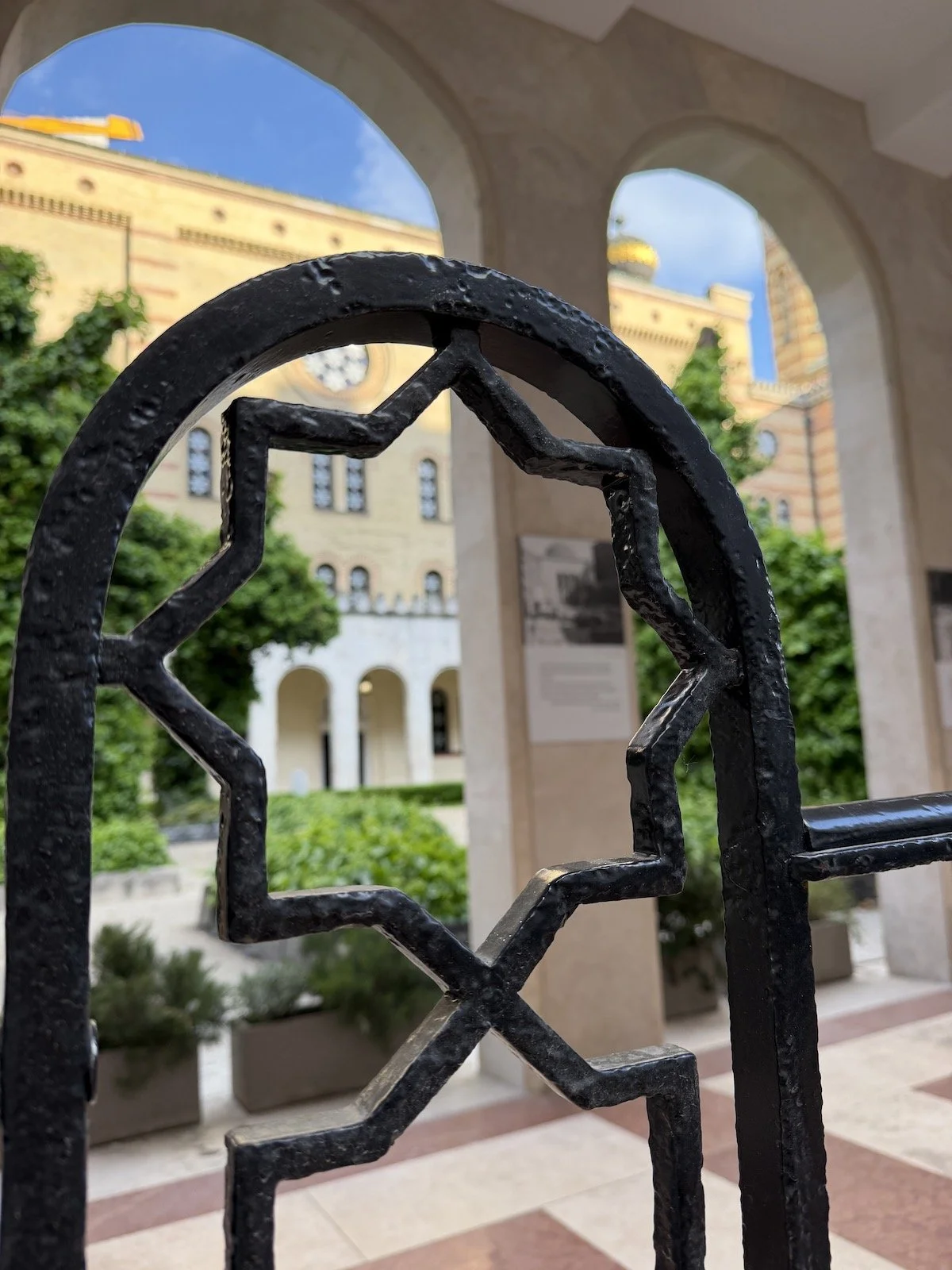
Dohány Street Synagogue. Also called the Great Synagogue, at Dohány utca 2. It opened in 1859, seats around 3,000 people, and is the largest synagogue in Europe. With its two towers and onion domes it looks more Moorish than Central European. It's a Neolog synagogue, a Hungarian reform tradition, so it has an organ, which surprises most visitors. Franz Liszt played on it. The complex also holds the Heroes' Temple, the cemetery in the courtyard and the Hungarian Jewish Museum, built on the spot where Theodor Herzl, the founder of modern Zionism, was born.
The Tree of Life. In the garden behind Dohány stands a weeping willow made of metal, by the sculptor Imre Varga, put up in 1990. Each leaf carries the name of a Hungarian Holocaust victim, and you'll often see people searching for one name. The garden is the Raoul Wallenberg Memorial Park, named after the Swedish diplomat who saved thousands of Budapest Jews with protective passports.
Rumbach Street Synagogue. Designed by the Viennese architect Otto Wagner and finished in 1872. It has eight sides and a red and yellow striped front, and it was restored in 2021 after decades in poor shape.
Kazinczy Street Synagogue. The Orthodox synagogue, built in 1913 by the Löffler brothers, with an Art Nouveau front and a beautiful blue interior. More about it here: Kazinczy Street Synagogue.
If you go inside, dress modestly. Men need to cover their heads, and a kippah is usually given at the entrance. The synagogues are closed on Saturdays and Jewish holidays, and opening hours and ticket prices change with the season, so check them before you go.
Memorials in the Jewish Quarter
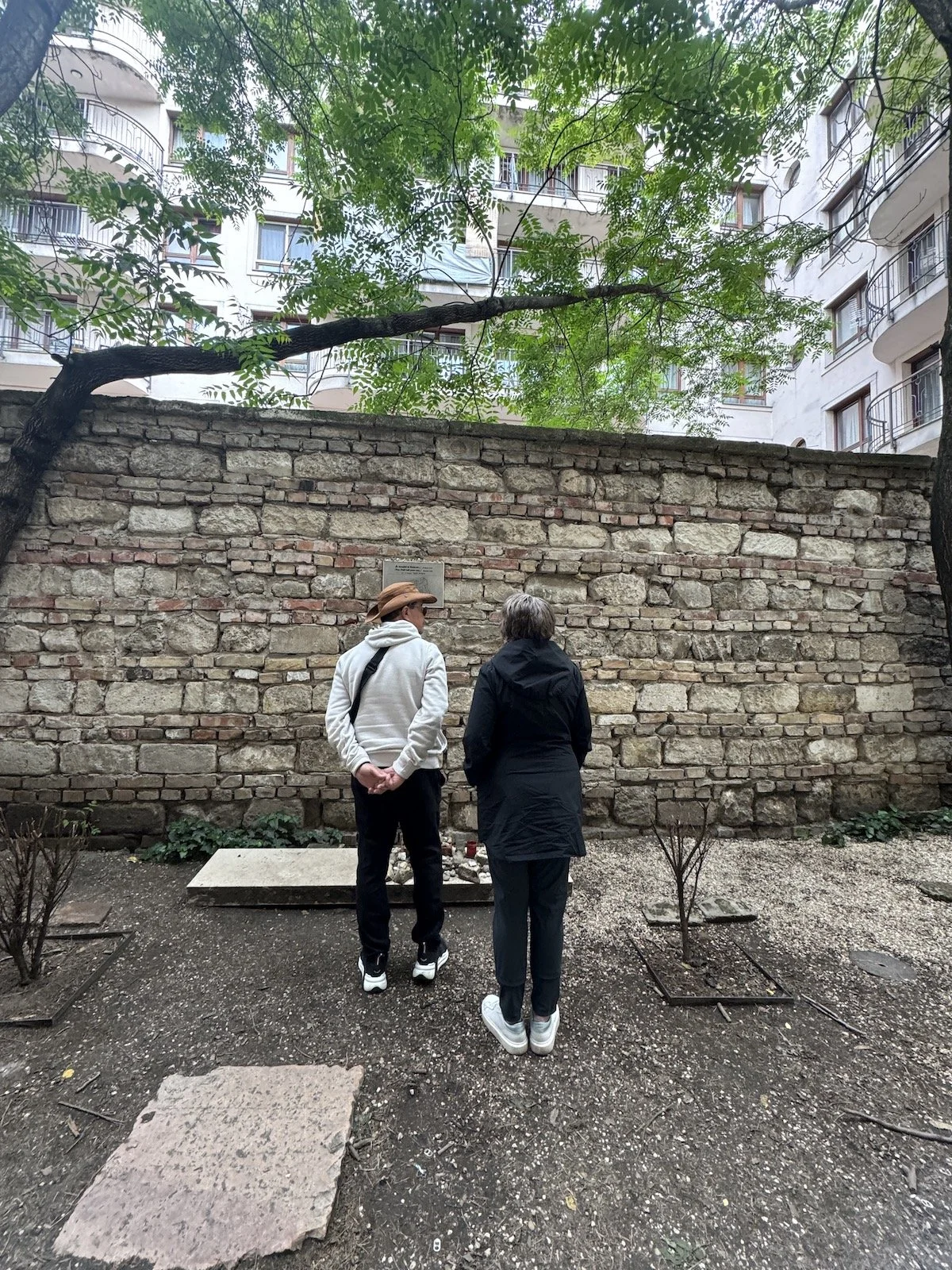
The Rebuilt Ghetto Wall in Király Utca. In the back courtyard of Király utca 15 stood the last original stretch of the ghetto wall, until the building behind it was pulled down in 2005. In 2010 a memorial wall was built on the same line, partly from original bricks. Getting in depends on the day. Sometimes you can reach it through a café, and sometimes the main gate of the building is simply open. If you do go in, please be quiet, it's a residential building and people live there.
The Ghetto Memorial Wall on Dohány Utca. At Dohány utca 32, where part of the ghetto wall once stood, there's a memorial wall put up in 2014. Rusty steel plates on the wall tell the story of Jewish life in Budapest in Hungarian, English and Hebrew, and a map of the ghetto is set into the ground in front of it. Small round holes in the map look like bullet holes. Look through them and you'll see old photos of the neighbourhood.
The Carl Lutz Memorial. On Dob utca, between Rumbach and Kazinczy, a figure lies on the ground and, above it on the wall, a golden angel lowers a long cloth to help. It remembers Carl Lutz, the Swiss vice consul who issued protective letters and set up protected houses in 1944, saving tens of thousands of people. It's the work of the sculptor Tamás Szabó.
Small Brass Stones. Look down at the pavement. Here and there you'll see brass plates with names and dates, in front of the homes of people who were deported from those buildings.
The iron shoes on the Danube bank are not in the Jewish Quarter, but they belong to the same story. They're about a 20 minute walk away: Shoes on the Danube Bank.
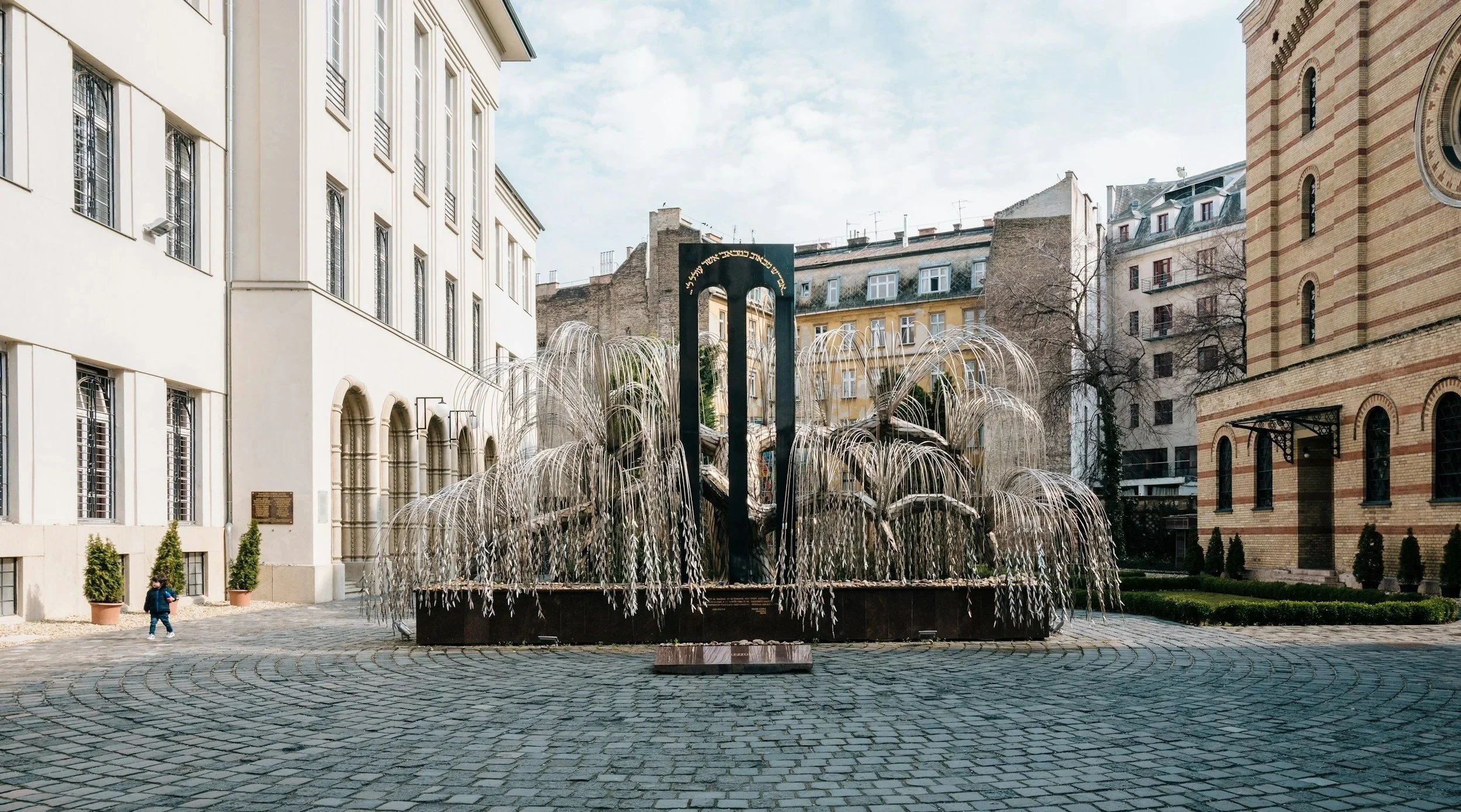
The Tree of Life, supported by Tony Curtis’s Emanuel Foundation, named after his Hungarian Jewish father
Jewish Life in the Quarter Today
Visitors are often surprised that this is still a Jewish neighbourhood, not a museum. The Orthodox community around Kazinczy utca has its synagogue, a ritual bath, kosher shops and Hanna, a kosher restaurant in a courtyard on Dob utca. There's a kosher bakery, community offices, Jewish schools and youth groups in and around the district, and on Friday afternoons you'll see families hurrying home before Shabbat starts. Every year a Jewish cultural festival brings concerts and events to the synagogues and streets.
The Main Streets of the Jewish Quarter
Király utca. The old main street of the district, once full of Jewish shops and workshops. Today it's a mix of design shops, cafés, bars and restaurants, and it gets busier the closer you get to the Gozsdu passage.
Dohány utca. Home of the Great Synagogue, at the edge of the old ghetto.
Kazinczy utca. The street with everything on it: the Orthodox synagogue, kosher shops, Szimpla Kert, street food and murals. Quiet in the morning, packed at night.
Dob utca. The Carl Lutz memorial, a kosher bakery, murals and lots of small places to eat.
Wesselényi utca and Akácfa utca. Less touristy, with good restaurants, Gettó Gulyás and Mazel Tov among them.
Firewall Murals and Street Art
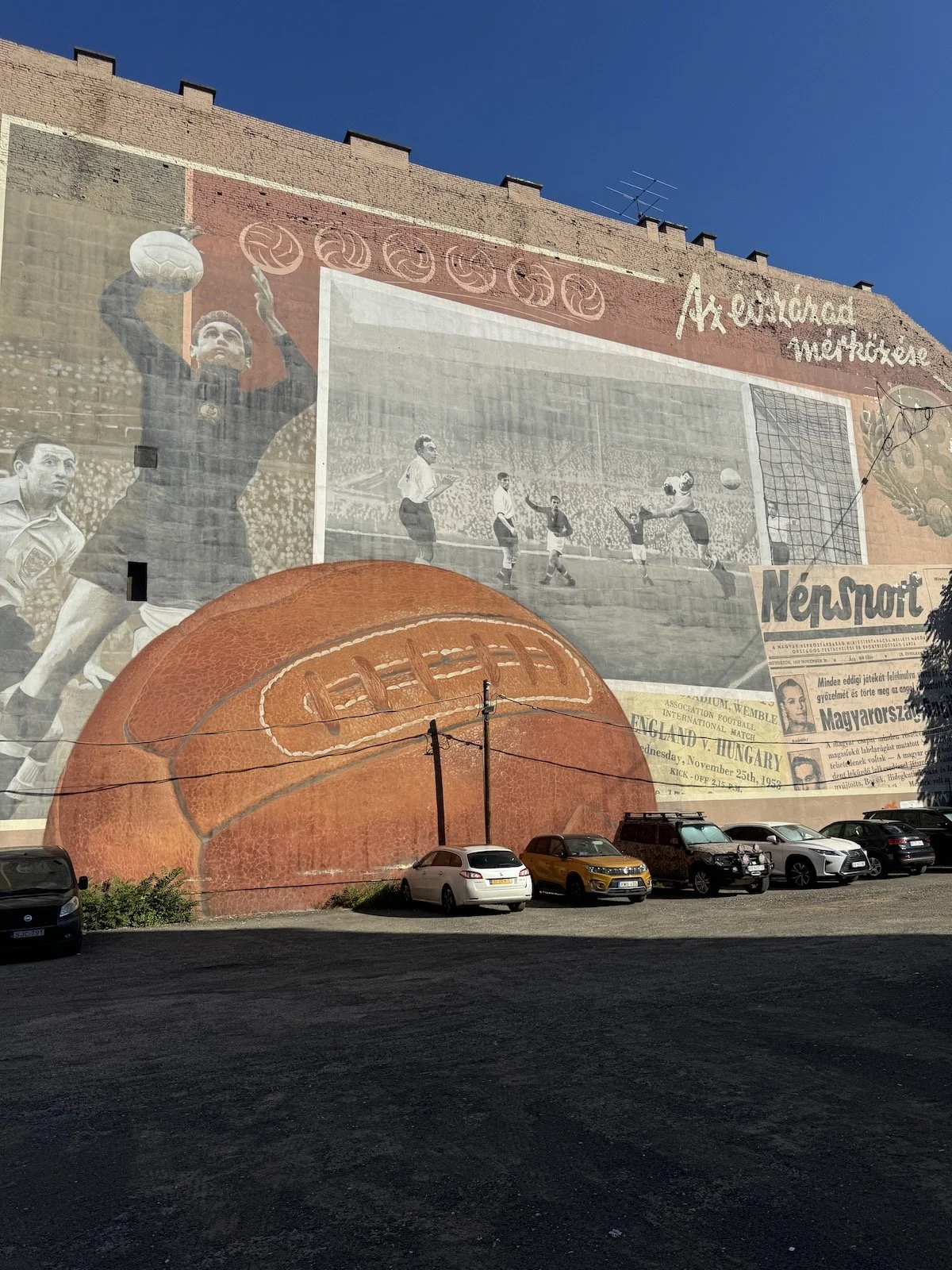
A firewall is the bare side wall of a building, left empty because the house next door was never built or was pulled down. The Seventh District has a lot of them, and over the past fifteen years many have been painted. Not all of them are about Jewish history. Some are about Hungarian inventions, football, famous writers or just city life. A few to look for:
Kertész utca 27. A wall full of Hungarian things: a Rubik's cube, Gyulai sausage, grey cattle and more. See how many you can name.
Kazinczy utca 43. A huge Hungarian grey cow reaching for a tuft of grass.
Rumbach Sebestyén utca 5. A giant Rubik's cube, the most famous Hungarian invention, painted across a whole wall. A great spot for a photo.
Rumbach Sebestyén utca 6 to 10. The football mural. It celebrates the "Match of the Century" in 1953, when Puskás and the Golden Team beat England 6:3 at Wembley. You'll see a goal going in, the match ticket and the front page of the next day's sports paper. Football fans love this one.
Rumbach Sebestyén utca 10. Queen Elisabeth, better known as Sisi, who Hungarians still love.
Gozsdu udvar. Inside the courtyards there’s a large mural painted for World Refugee Day in 2014, about people forced to leave their homes. Easy to miss when the bars are busy, so look up.
Dob utca 4. A tribute to Ángel Sanz Briz, the Spanish diplomat who protected Budapest Jews in 1944 and became known as the Angel of Budapest.
Walls get repainted now and then, and new ones appear every year, so expect a surprise or two.
Kolodko's Tiny Bronze Statues
Mihály Kolodko is a sculptor born in Ukraine who lives in Budapest. He makes small bronze figures, most of them no bigger than your hand, and puts them up around the city without asking first. There are a few in the Jewish Quarter.
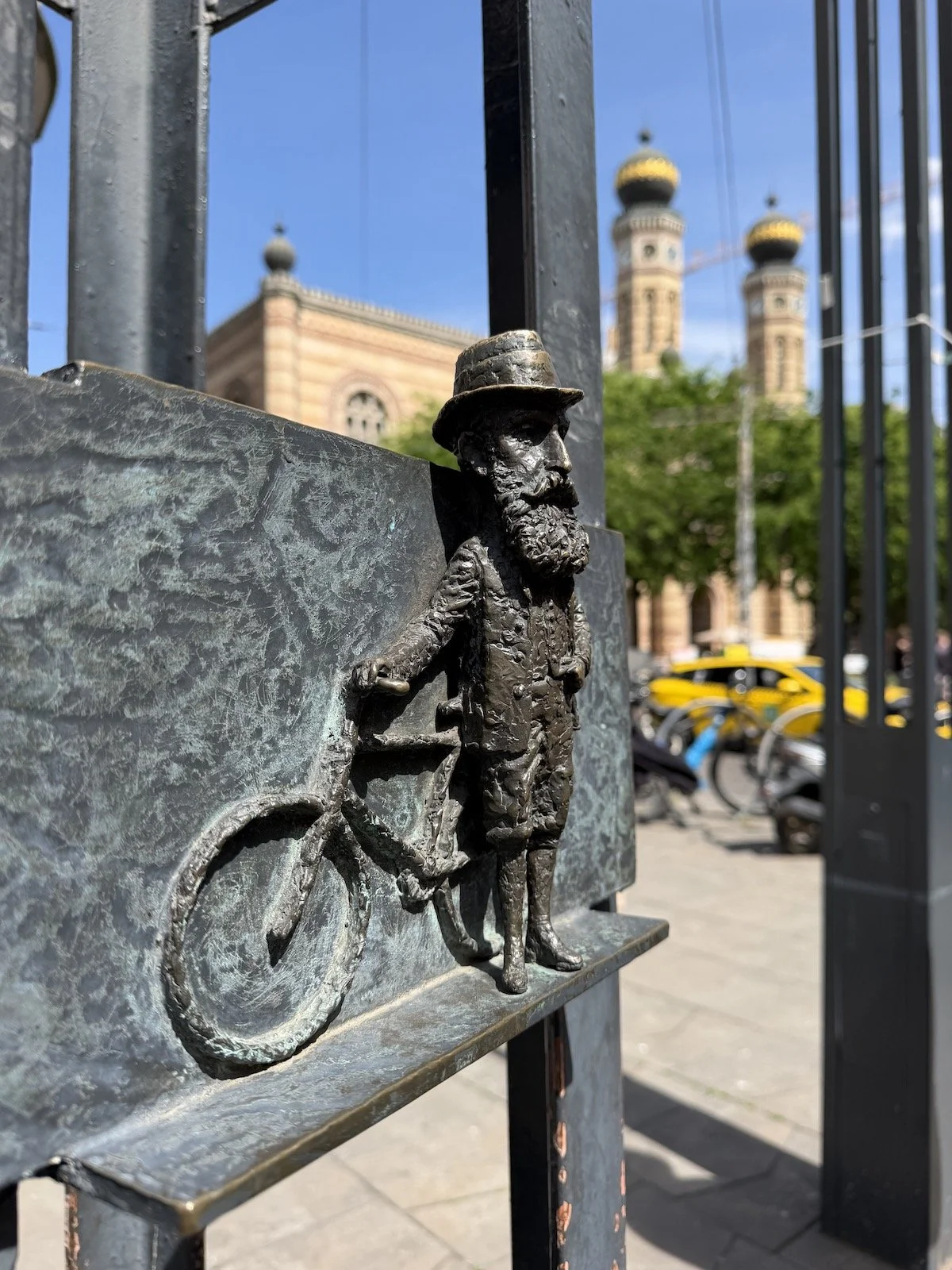
Theodor Herzl with his bicycle, close to the Dohány Street Synagogue, near the spot where he was born.
Rezső Seress, who wrote the sad song "Gloomy Sunday". He sits outside the old Kispipa on Akácfa utca, where he played the piano for many years.
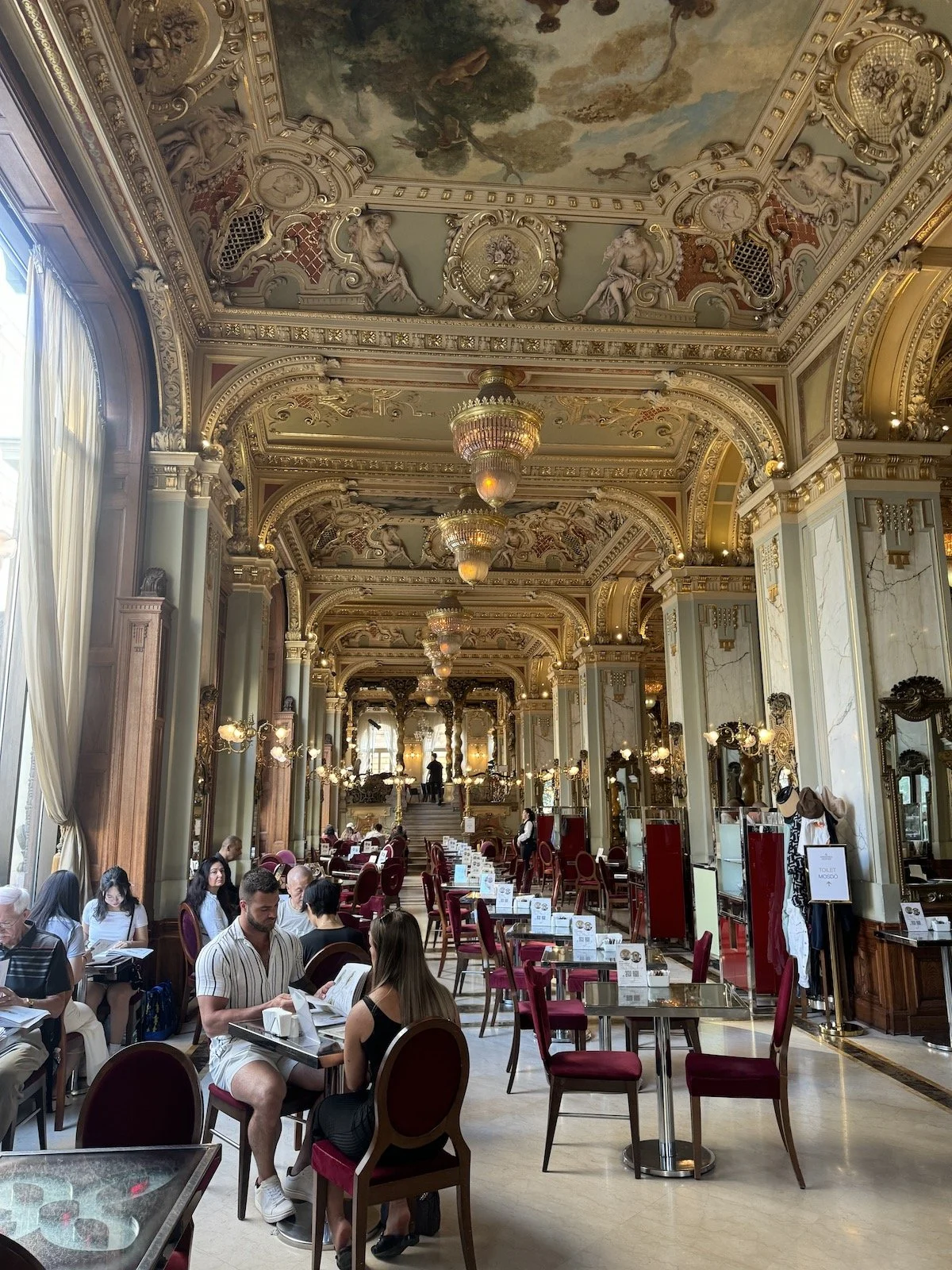
A diver bringing up a key, next to the New York Café on the boulevard. The story goes that the writer Ferenc Molnár and his friends threw the café's key into the Danube on opening night, so it would never close.
There's also a group of tiny dogs on the Buda side: Kolodko's mini dog statues.
Ruin Bars and Szimpla Kert
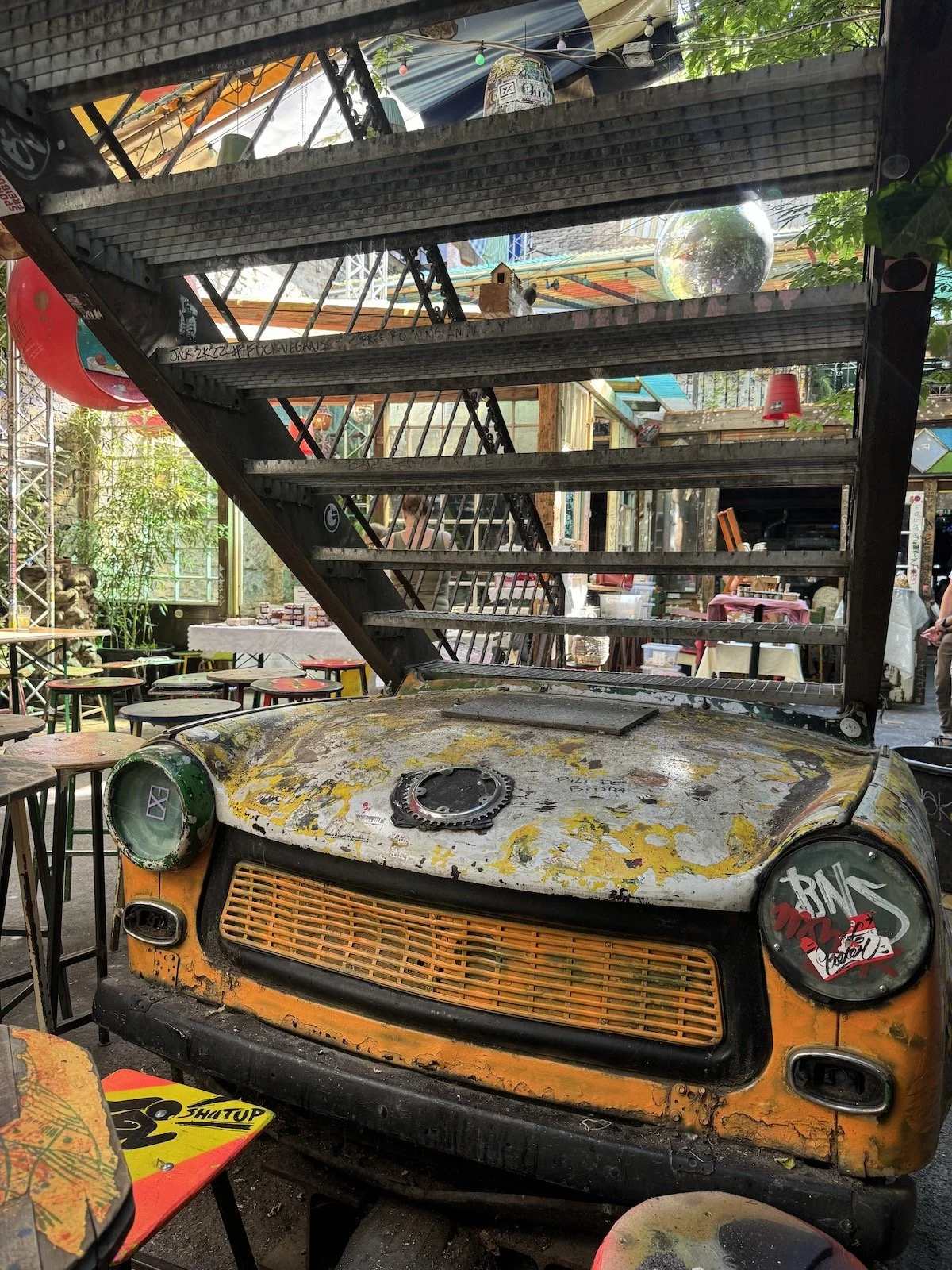
The first ruin bars opened in empty old buildings, with mismatched furniture, old bathtubs turned into sofas and plants growing everywhere. Today they're one of the main reasons young people come to Budapest.
Szimpla Kert at Kazinczy utca 14 is the first and best known, and it's worth seeing at least once. Go in the daytime first, when it's quieter and you can look around properly. On Sunday mornings there's a small farmers' market inside. Read more here: Szimpla Kert.
Instant and Fogas, on Akácfa utca, is a huge complex of bars and dance floors spread over several buildings, for those who want to stay out late.
Gozsdu udvar is not a ruin bar but a row of connected courtyards between Király utca and Dob utca, full of bars and restaurants. It's quiet in the morning and packed after 9 pm.
On Friday and Saturday nights the streets around Kazinczy and Király utca get very loud, with a lot of stag parties. If that's not for you, come earlier in the evening or on a weekday.
Restaurants in the Jewish Quarter
Gettó Gulyás, Wesselényi utca 18. Hungarian home cooking: goulash, stews, paprika chicken and old style desserts. Small and popular, so book ahead.
Mazel Tov, Akácfa utca 47. Middle Eastern food in a big courtyard full of plants. Good for groups. Book ahead for dinner.
Hanna, the Orthodox kosher restaurant in a courtyard on Dob utca, for traditional Jewish home cooking.
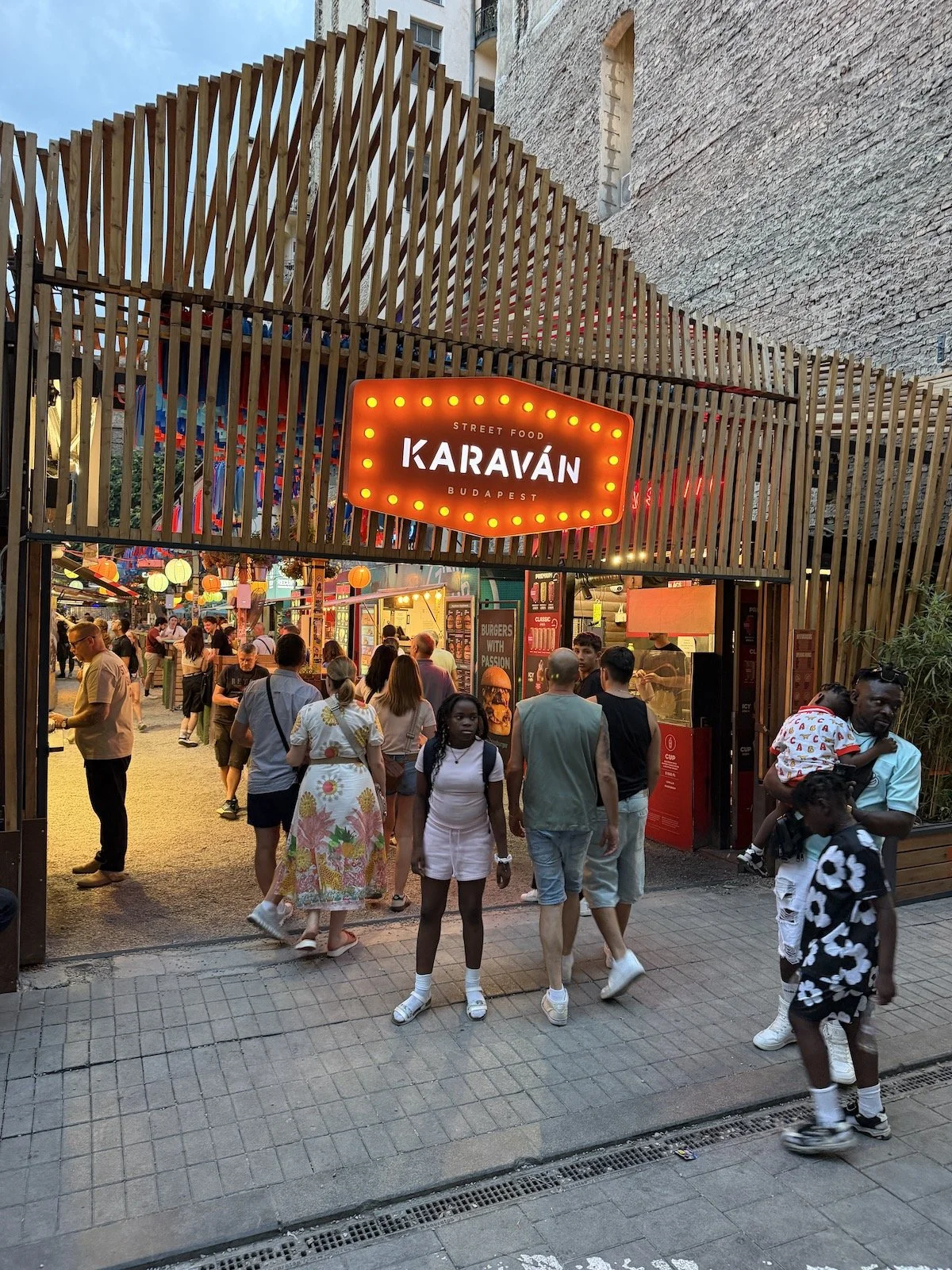
Karaván, the street food yard next to Szimpla, when everyone in your group wants something different.
Klauzál Square market, the old covered market on Klauzál tér, for a quick, cheap lunch with locals. Klauzál Square market
Looking for more Hungarian food? Here's where to find the best goulash in Budapest.
Cafés and Sweets in the Jewish Quarter
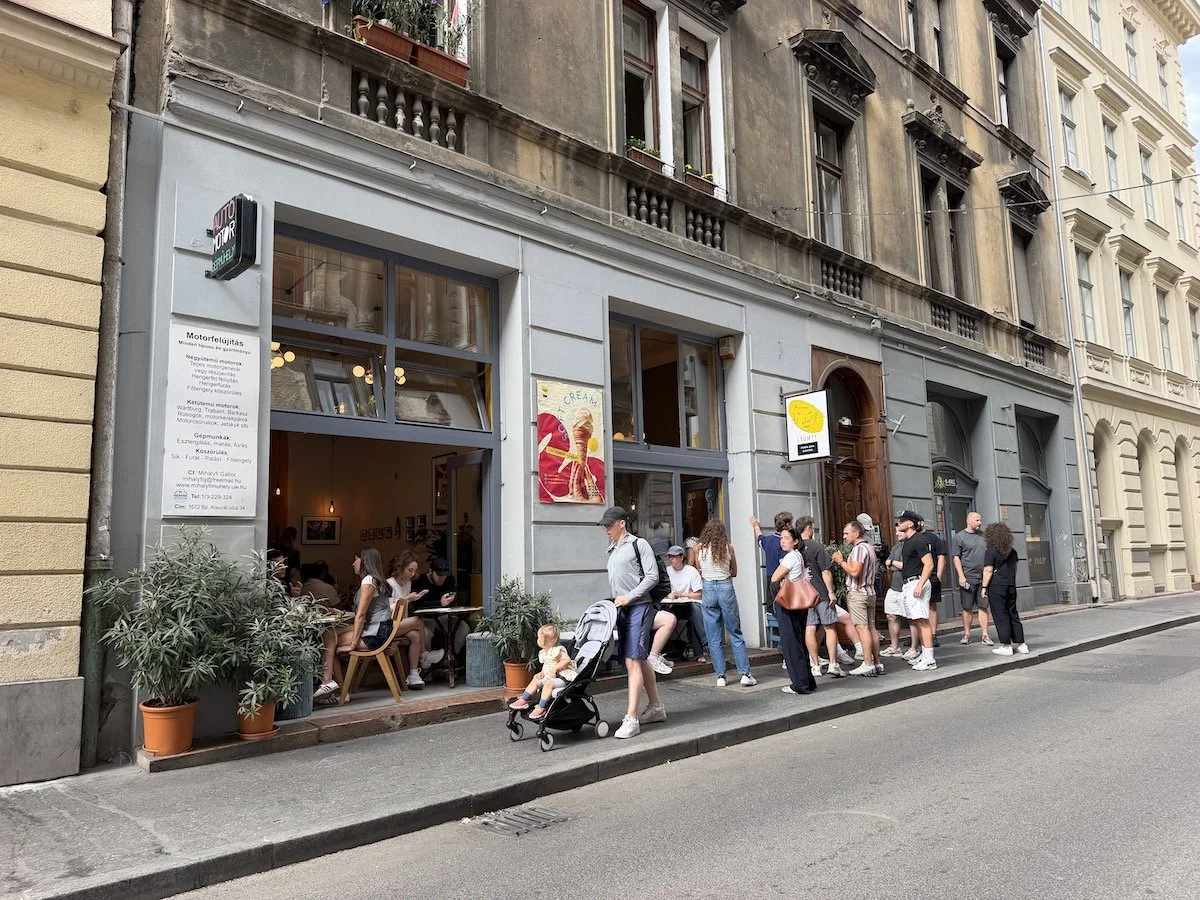
Kaptafa for brunch. Small, friendly, good coffee. Kaptafa brunch
Spinoza Café on Dob utca, a cosy café and restaurant with old Budapest decor.
Massolit Books and Café, on Nagy Diófa utca, a second hand bookshop with a café and a small garden at the back.
New York Café, on the boulevard at the edge of the district. Probably the most ornate café in Budapest. Expect a queue and tourist prices, but it's worth seeing once.
Hidden Corners of the Jewish Quarter
Madách tér. The huge arch over the street was meant to be the start of a wide new avenue through the district. It was never finished, so the old streets behind it survived.
The courtyards. Many old apartment buildings have inner courtyards with balconies running all the way round. If the gate is open you can usually take a look. Just be quiet.
Klauzál tér on a weekday morning. Grandparents at the playground, people walking their dogs. This is the neighbourhood on a normal day.
Gozsdu udvar before noon. Empty and quiet, so you can see the old buildings properly.
Interesting Facts About the Jewish Quarter
The Dohány Street Synagogue is the largest in Europe and one of the largest in the world.
Theodor Herzl was born next door to it, in 1860.
Franz Liszt and Camille Saint Saëns both played its organ.
Gozsdu udvar is named after Manó Gozsdu, a lawyer who owned the property in the 1800s.
Szimpla Kert moved into its building on Kazinczy utca in 2004 and helped start the ruin bar trend.
The three big synagogues all belong to different branches of Judaism: Neolog, Status Quo Ante and Orthodox.
How to See the Jewish Quarter
You can see all of this on your own with a map. Astoria (M2) and Deák tér (all three metro lines) are a few minutes' walk away. Give it half a day for the synagogues and memorials, and come back in the evening for dinner and the bars.
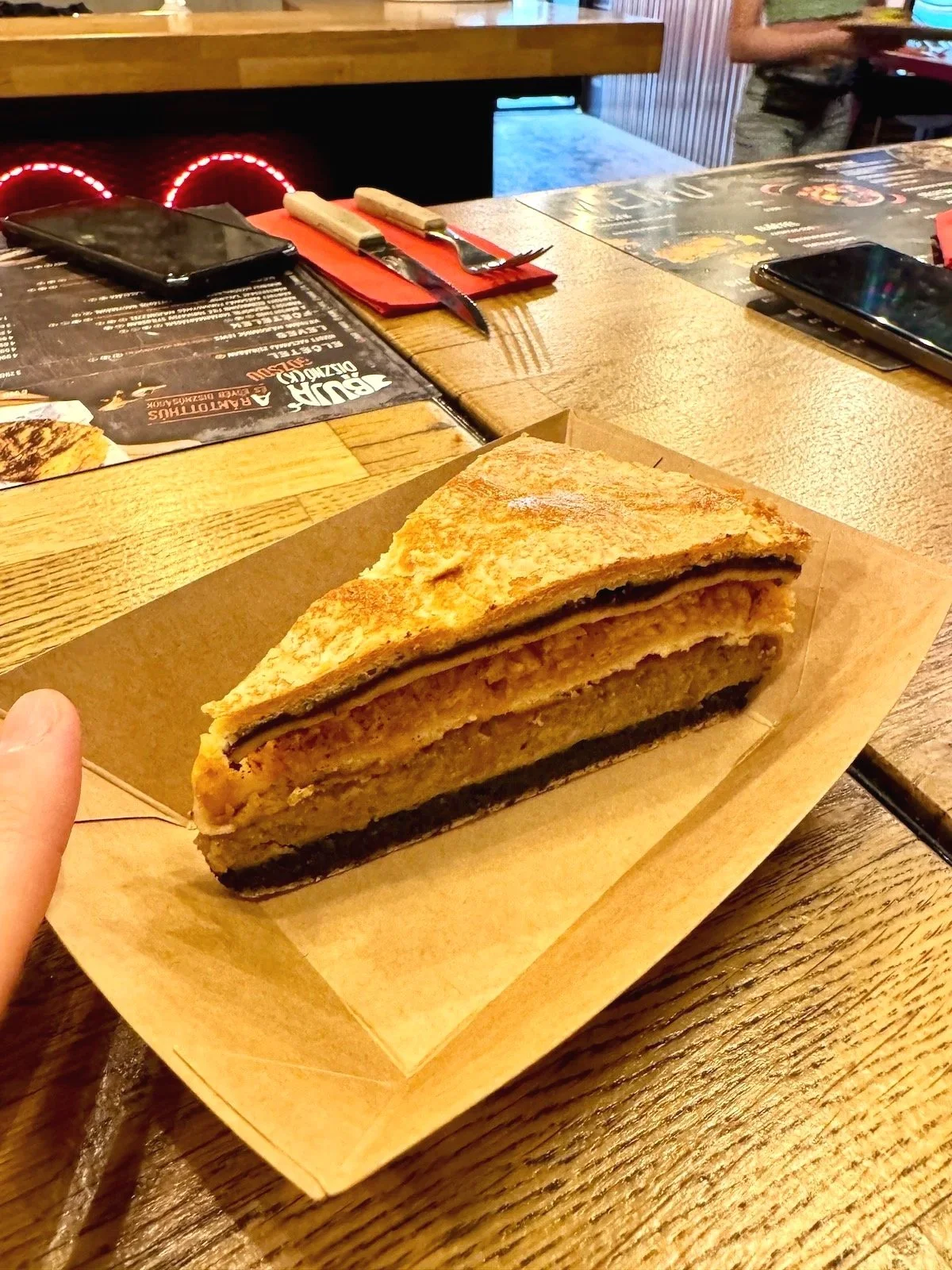
What a map won't tell you is the stories behind the doors. Kata's private Jewish Heritage walk starts at Dohány Street, goes round to the Tree of Life, then on to Rumbach and Kazinczy, with stops at the Carl Lutz memorial, a couple of murals and a bakery for flódni. It's private, so it goes at your pace.
Questions About the Jewish Quarter
Is the Jewish Quarter worth visiting? Yes. You get a lot of history in a small space, and it's also one of the best areas in Budapest to eat and go out.
Where is the Jewish Quarter in Budapest? In District VII, on the Pest side, between the Károly körút boulevard and the Erzsébet körút boulevard. The closest metro stops are Astoria and Deák tér.
Can you go inside the Dohány Street Synagogue? Yes, with a ticket. There's a security check at the entrance, you need to dress modestly, and it's closed on Saturdays and Jewish holidays. Opening hours change with the season, so check before you go.
How much time do you need? About half a day for the synagogues, the Tree of Life and the memorials. Add an evening for dinner and the ruin bars.
Is the Jewish Quarter safe at night? Yes, it's busy and well lit. It's loud on Friday and Saturday nights. Keep an eye on your phone and wallet in crowded bars, as you would anywhere.
Can I book a private Jewish Quarter tour? Yes. Kata is a licensed Budapest guide, and the Jewish Heritage walk is private, just you and your group. Get in touch with your dates.
Enjoyed this one? A few more from the blog you'll probably want to read next:
Where Budapest Really Shops: Inside the Klauzál Square Market Hall
Szimpla Kert: Is It Still Worth Seeing in Budapest?
Why You Should Visit the Citadella for Sunset in Budapest
Kaptafa Brunch: The Jewish Quarter Spot That Makes Breakfast Fun Again
Best Apps for Budapest and Hungary: What to Download Before Your Trip
Budapest Christmas Markets 2026: A Local Guide's Honest Guide
