Where Budapest Really Shops: Inside the Klauzál Square Market Hall
By Kata | katabudapest.com | Published Sept 17, 2026
Every guidebook sends you to the Great Market Hall on Vámház Boulevard. I love that place too — I've written about it, I bring guests there. But if you want to see how Budapest people actually shop, not how tourists shop, you walk fifteen minutes north into the Jewish Quarter and find the little market hall on Klauzál Square instead.
This is one of those places I almost don't want to write about. It's still mostly locals. No tour buses stop here. But I think the people who read this blog are exactly the kind of travelers who deserve to know about it, so here we go.
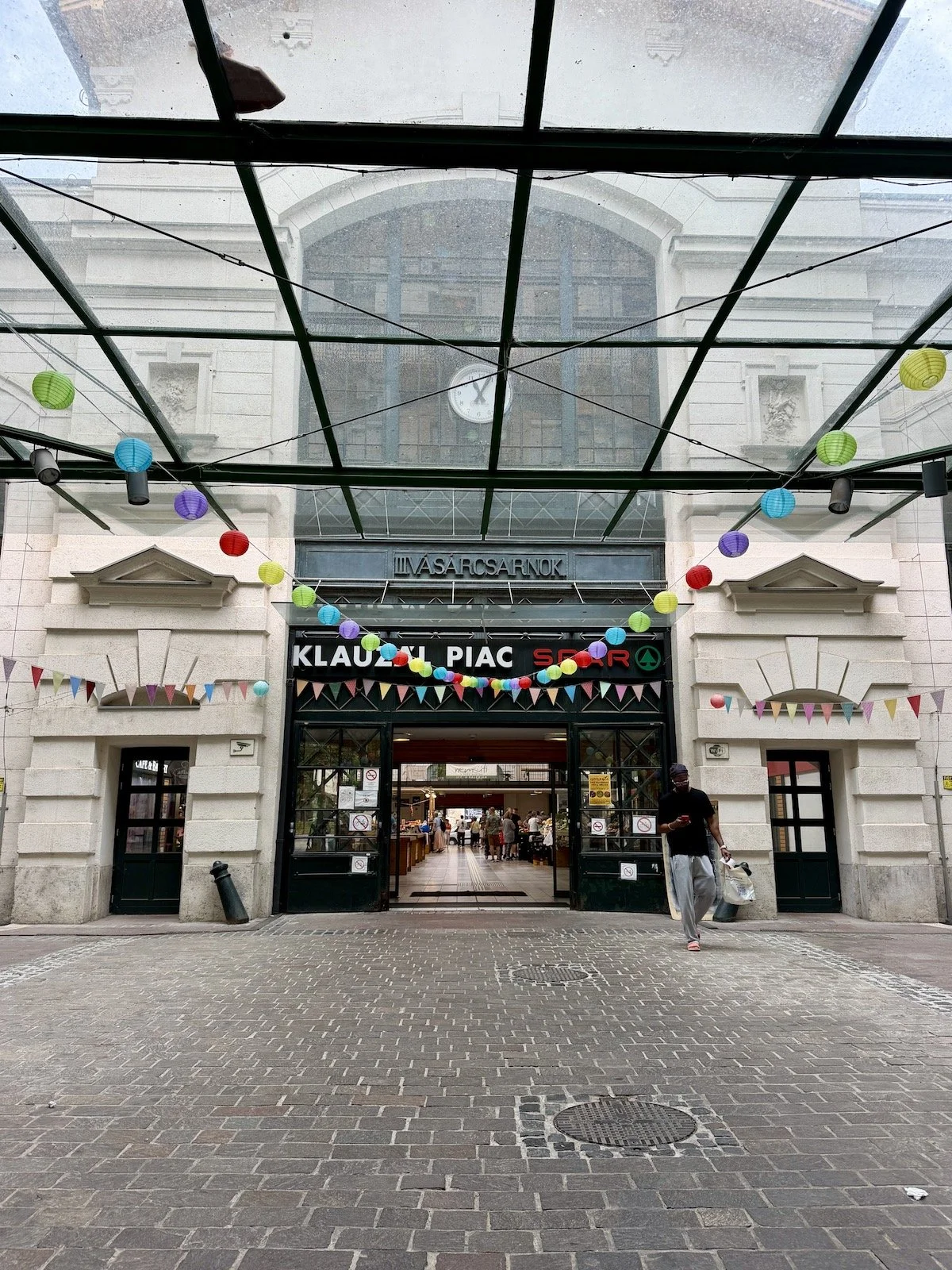
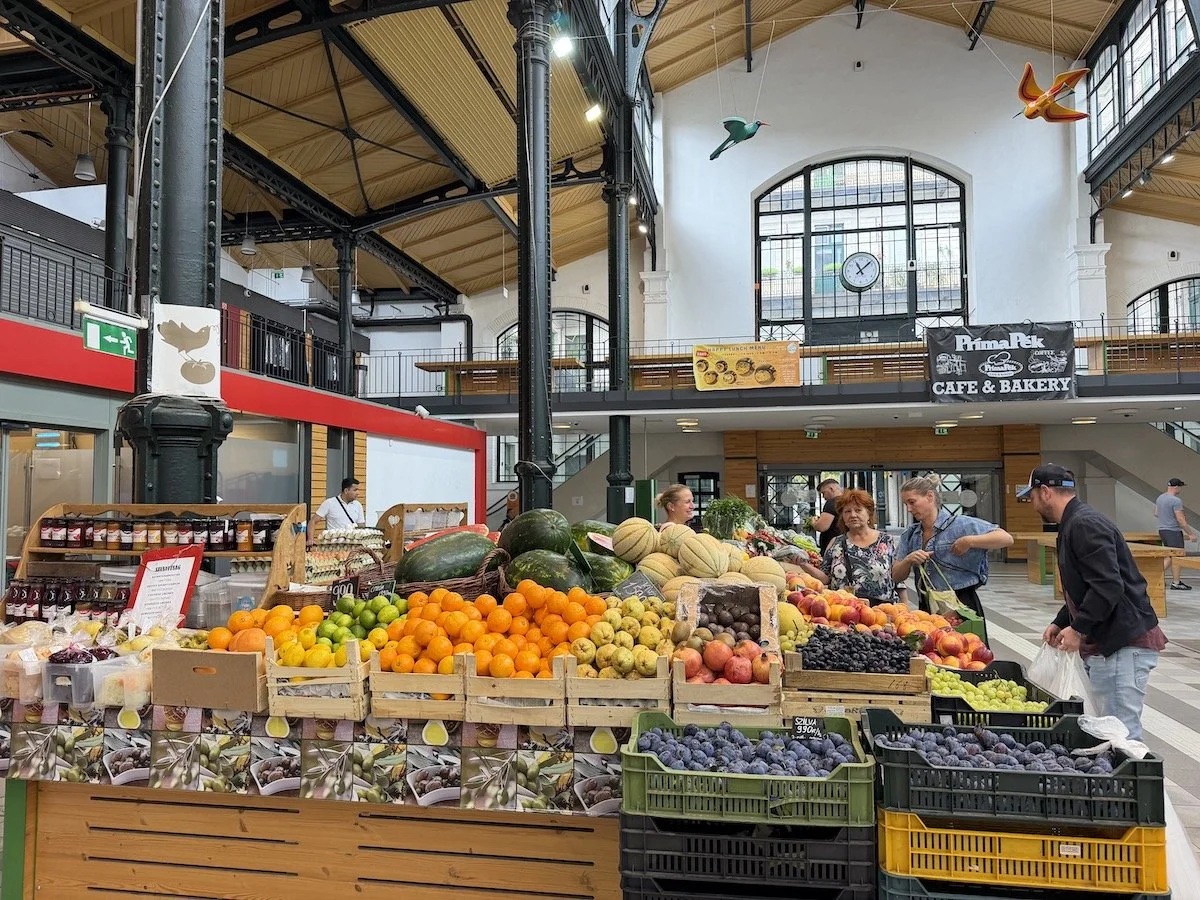
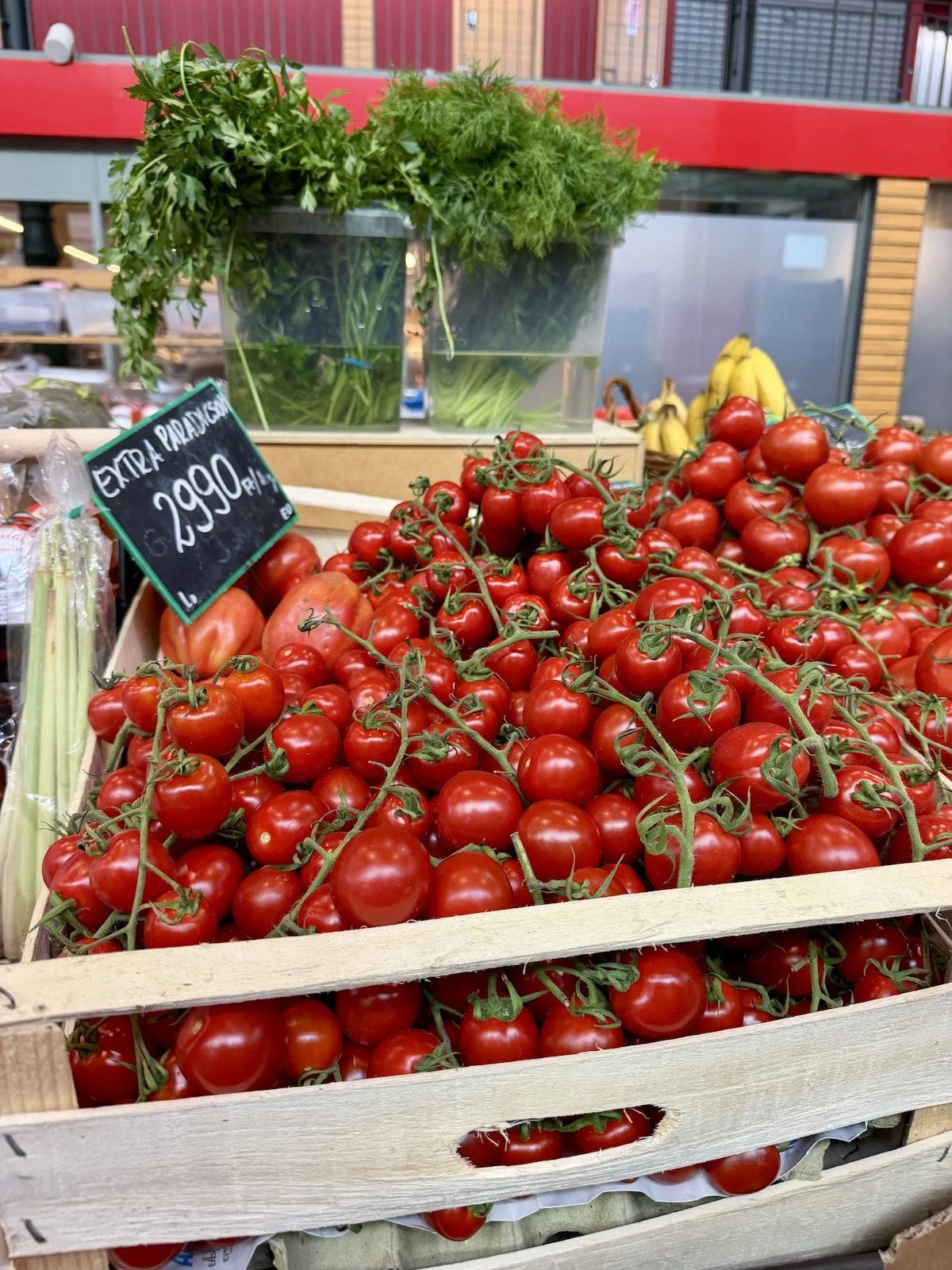
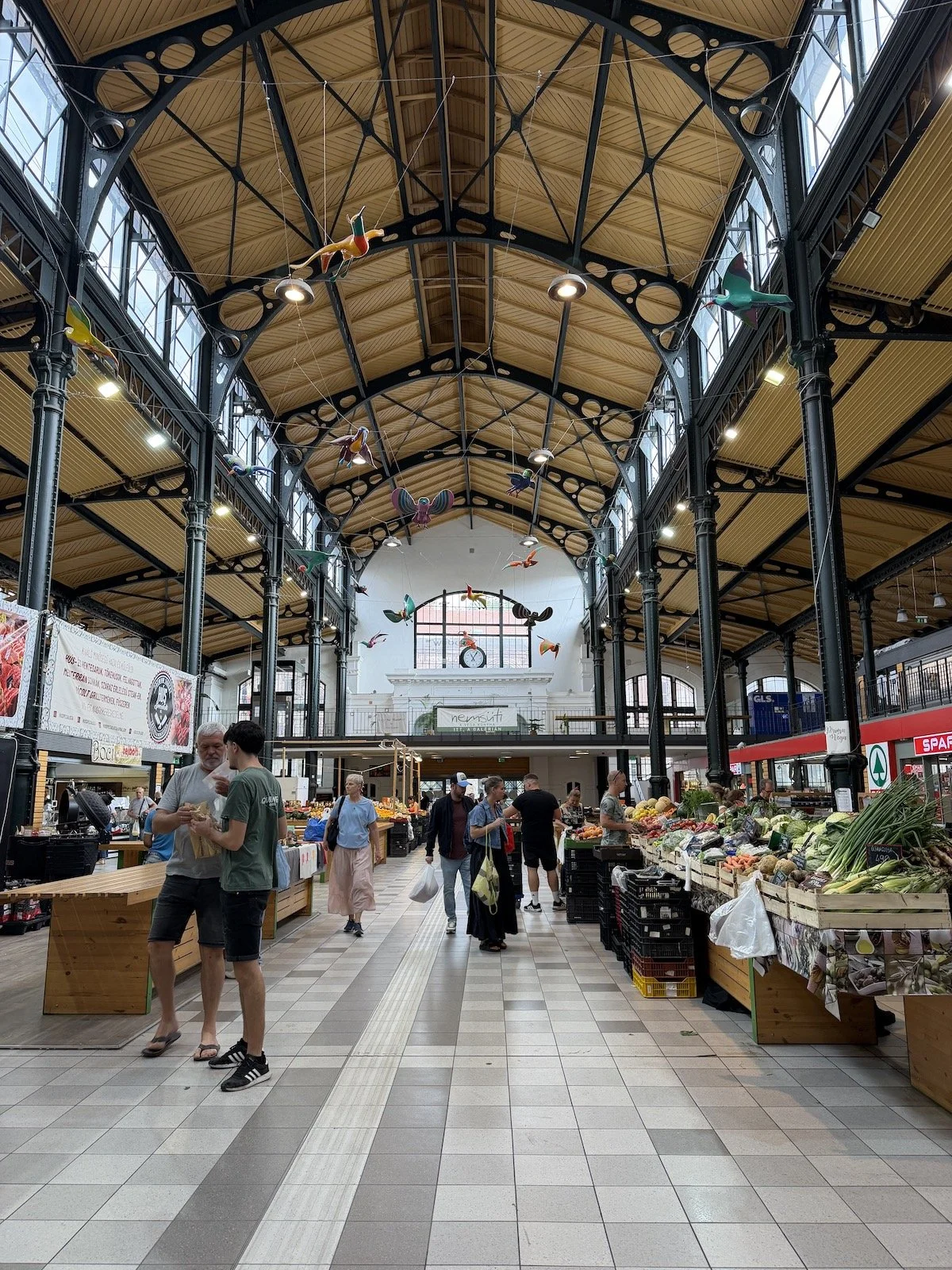
A market hall with a dramatic backstory
The building itself has a story worth knowing before you even walk in. In the 1870s, there was a theater on this spot — it opened in 1872 and burned down just two years later in a fire. Instead of rebuilding the theater, the city decided the neighborhood needed something more practical: a proper, hygienic place to buy food.
So in 1897, Market Hall No. III opened here (Klauzál Square itself was still called István Square back then, and wasn't renamed until 1907). It was one of five market halls Budapest built in that same burst of civic ambition, all designed to replace the chaotic open-air stalls that used to clog the city's squares. The architects, József Kommer and Pál Klunzinger, built it clever: an apartment building was constructed right alongside the market hall, and the rental income from those apartments let the city charge lower rents to the vendors inside. More than 300 stalls operated here in its heyday.
Because this is the heart of Budapest's historic Jewish Quarter, the hall also had something the Great Market Hall didn't: a dedicated kosher section, run by the local Neologue Jewish community. That kosher butcher shop kept operating here until the 1980s — a small detail, but one that tells you a lot about who this market was really built for.
The hall went through a rough patch in the second half of the 20th century, got a round of updates in 1987, and then had a full, careful renovation completed in 2015 that respected the original architecture while adding a new mezzanine level. It even made a Lonely Planet list of the year's best new travel experiences the following year — quietly, without ever losing its neighborhood character.

If you want to visit the best markets in Budapest with me, book your tour now.
Let's explore the best fresh markets together! →What you'll actually find inside
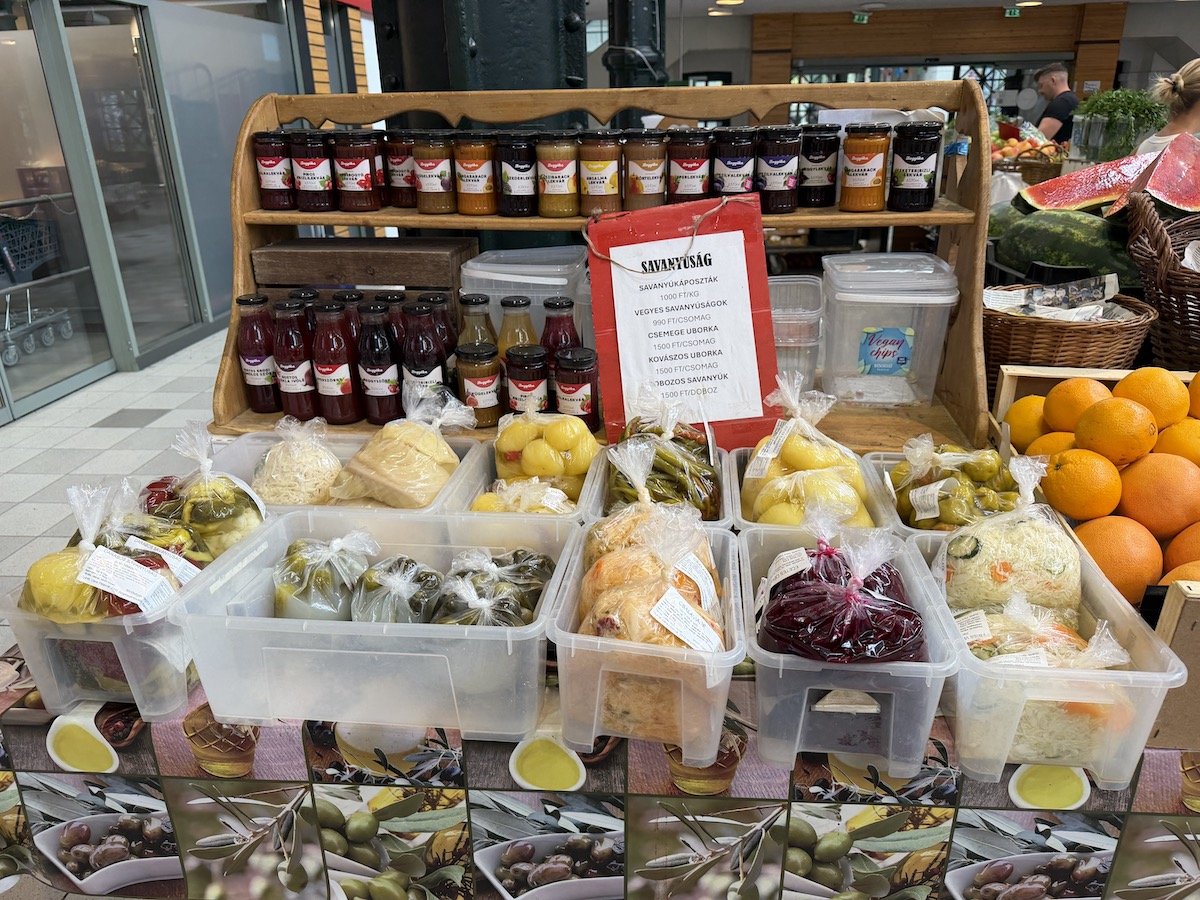
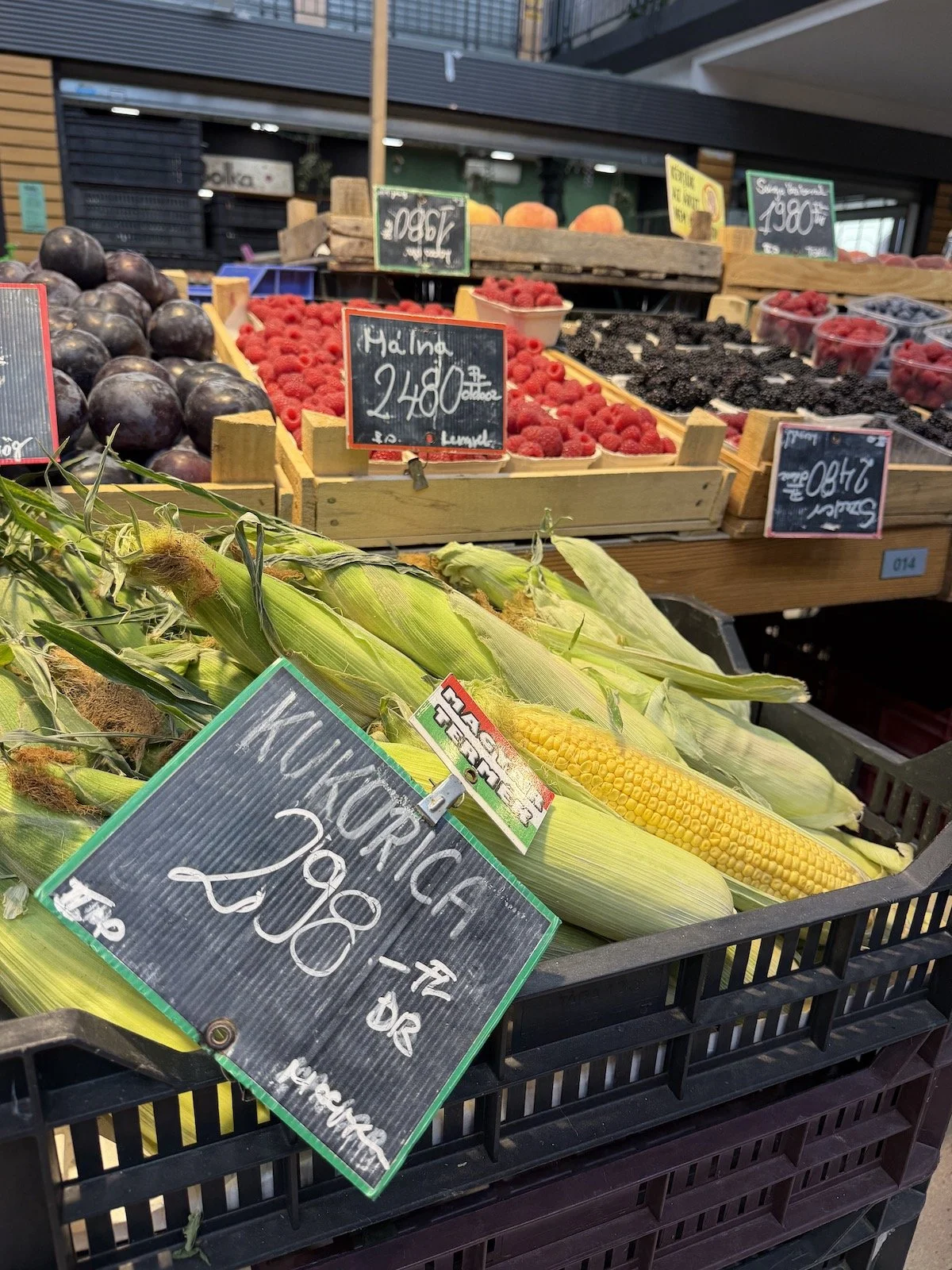
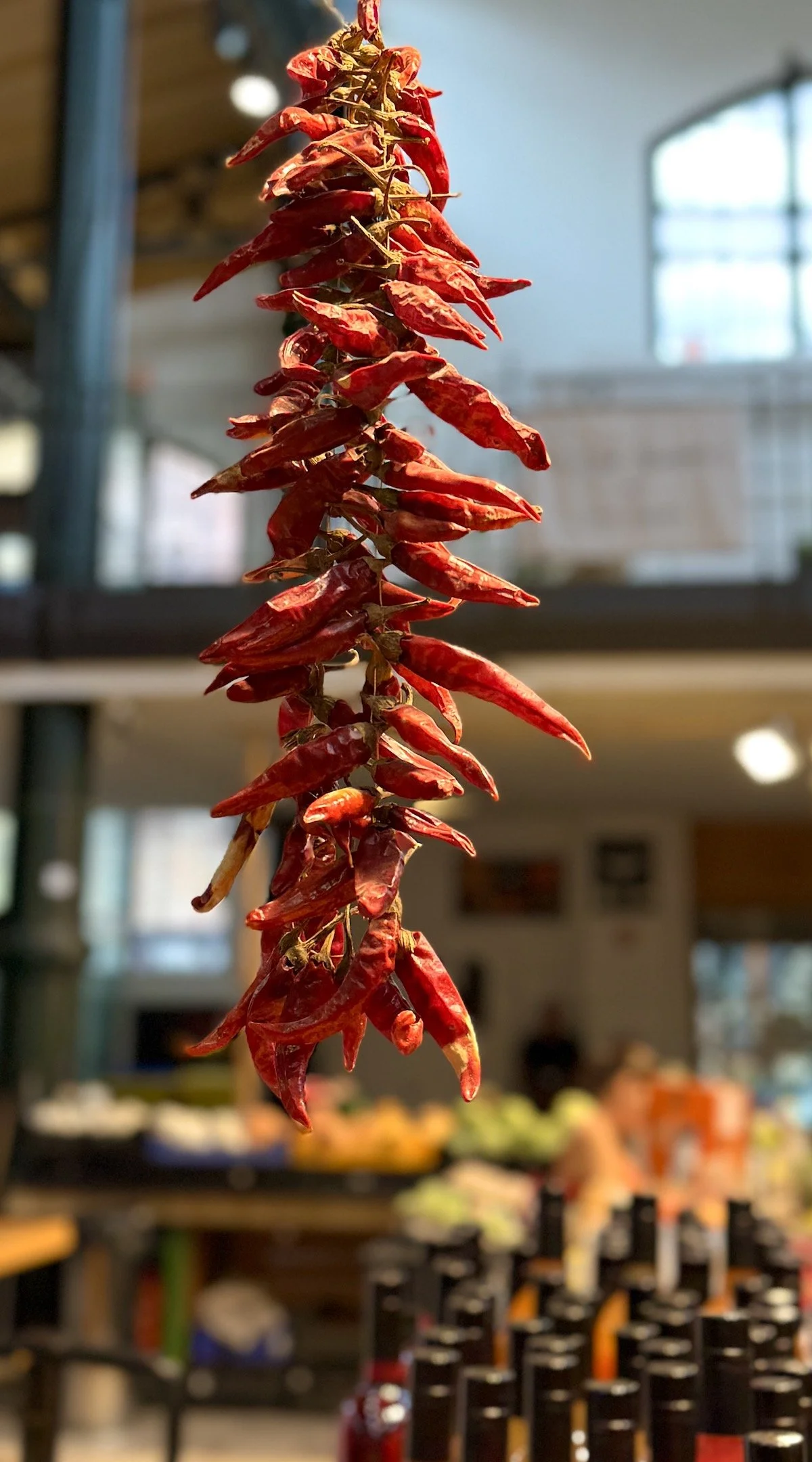
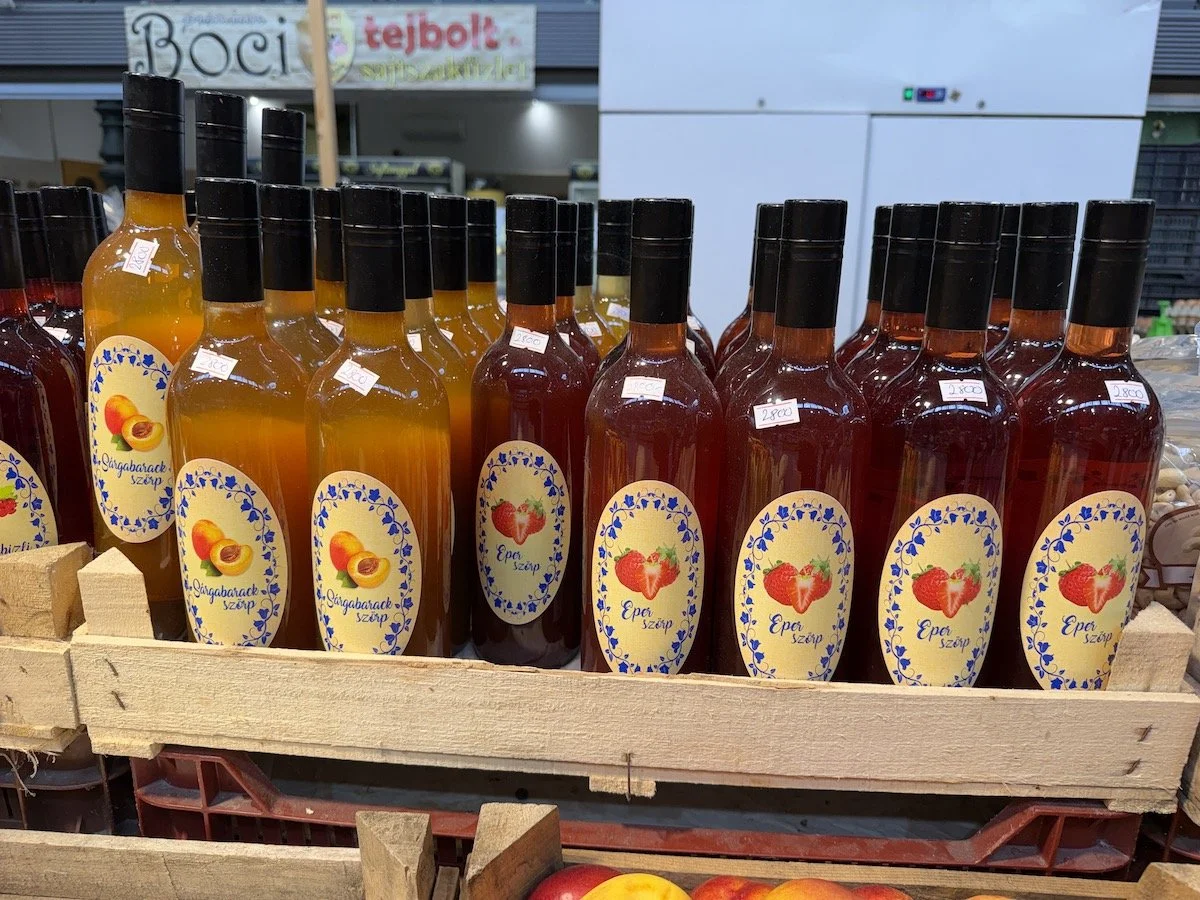
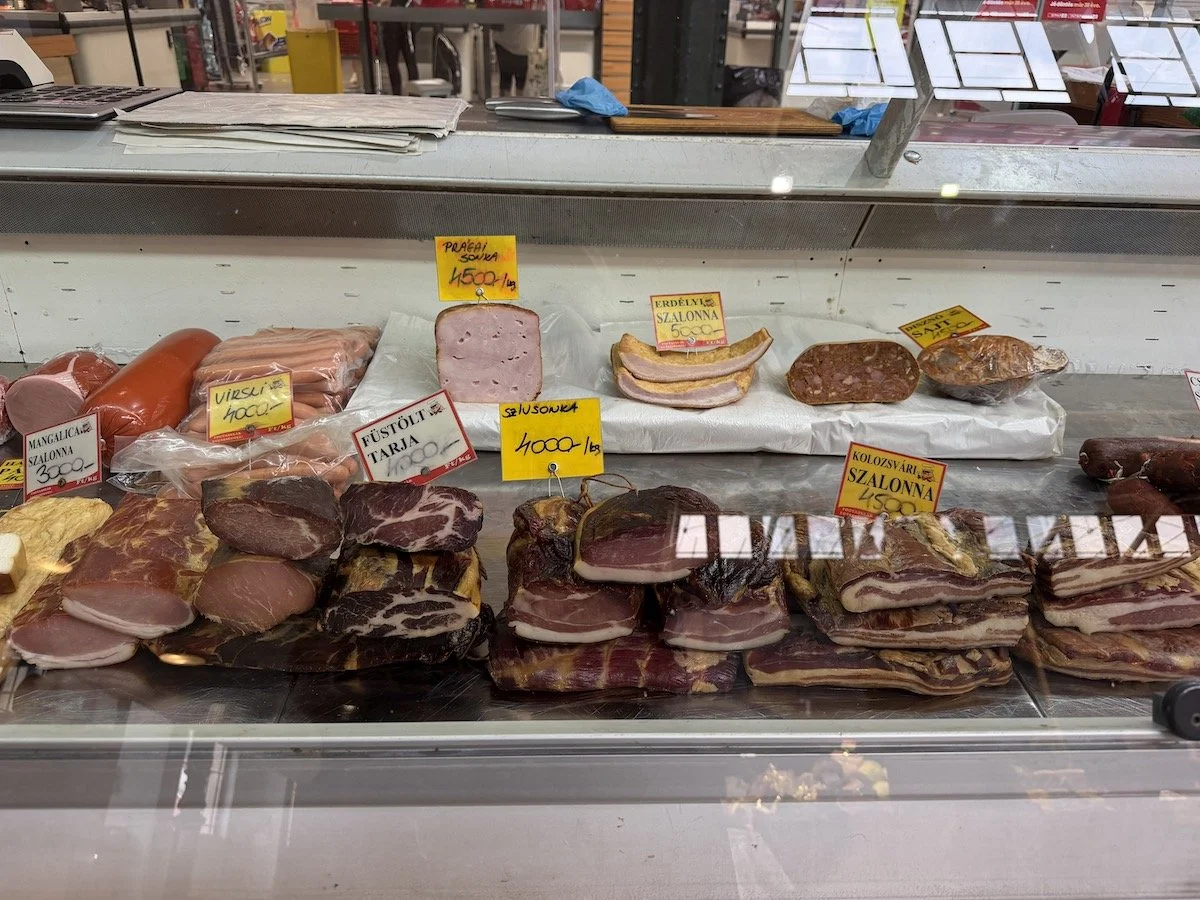
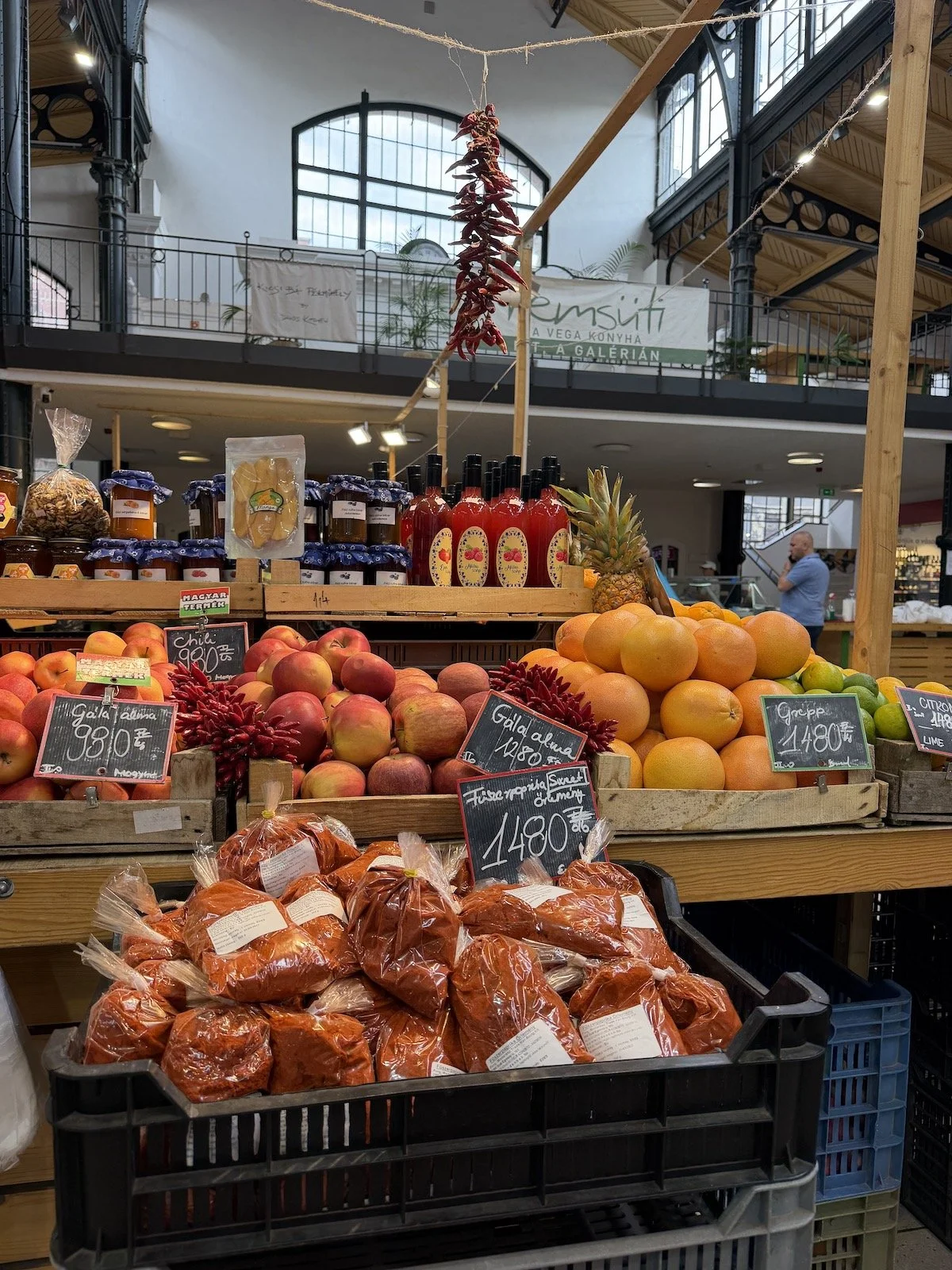
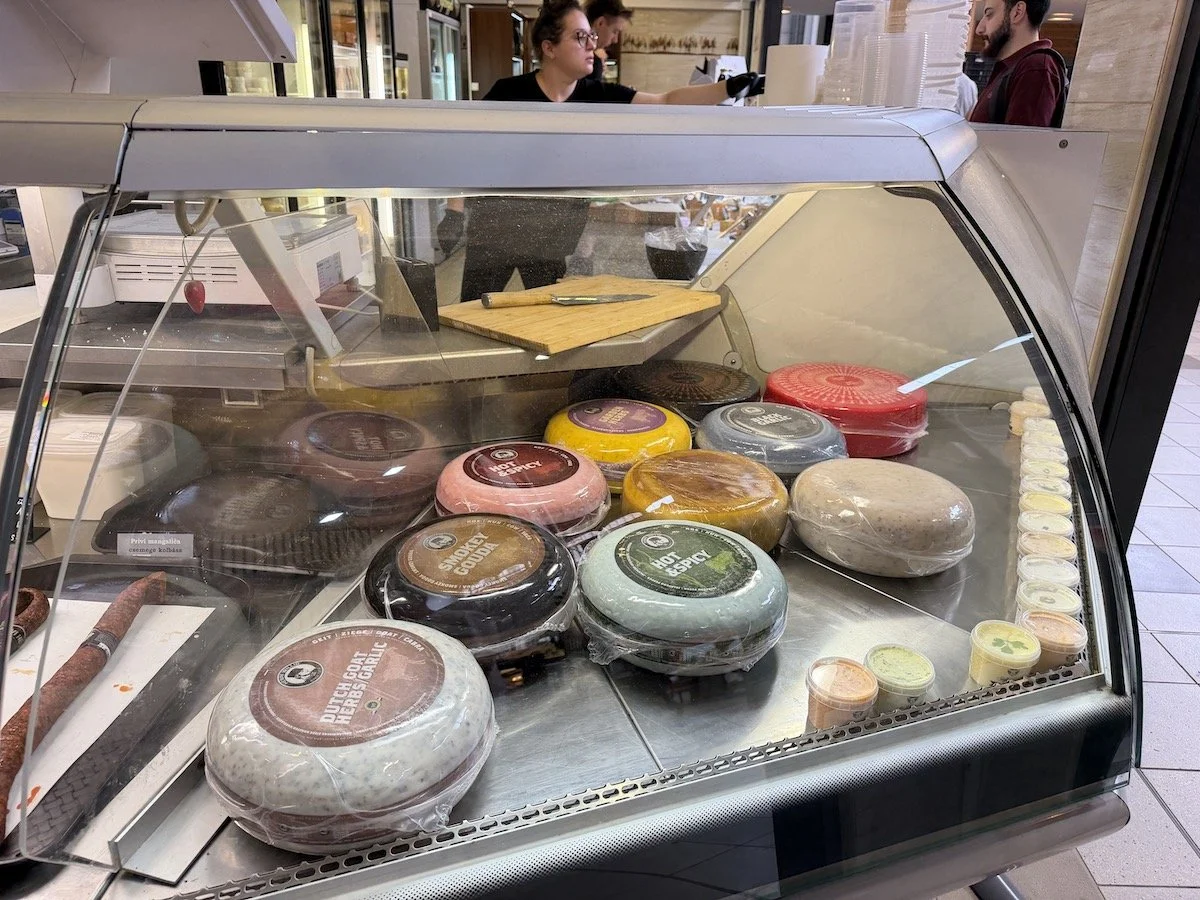
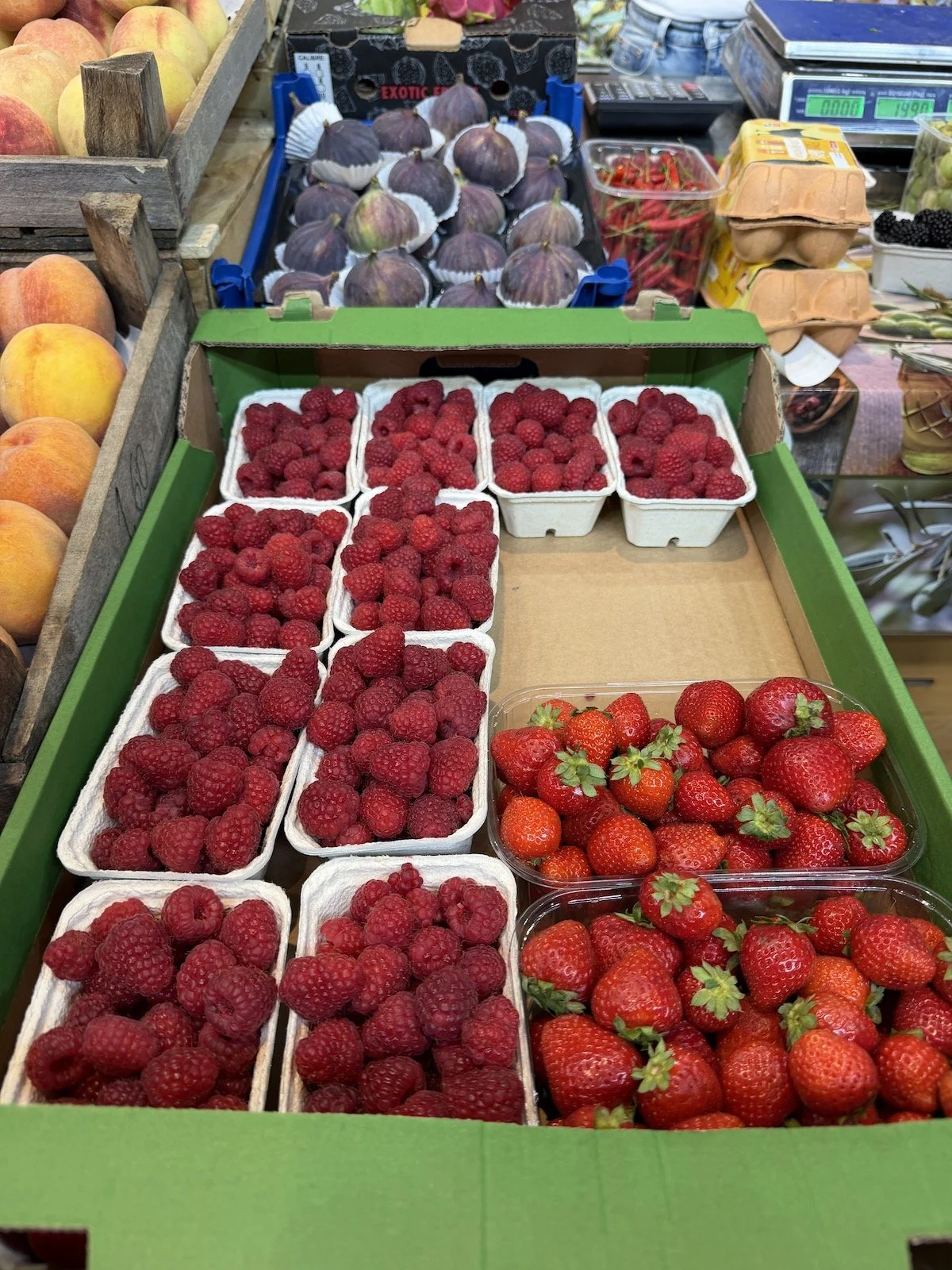
On the ground floor, you'll find the practical stuff: farmers' tables piled with seasonal produce, butchers, fishmongers, a proper grocery section, and stalls selling paprika, pickles, honey, and homemade jams by the jar. This is where people from the neighborhood come to do their actual weekly shopping — the vendors know their regulars by name.
Upstairs on the mezzanine, there's a more social, eat-in layer: small kitchens and food stalls doing Hungarian classics and casual lunches.
My advice: come hungry, walk both levels slowly, and just see what's fresh that day. That's how the locals do it.
The hidden gem within the hidden gem
Here's something most visitors never realize: on Saturdays, the market spills outdoors. There's an open-air stall market that sets up in the lot behind the hall, on Klauzál utca, where small producers sell directly — fruit, vegetables, flowers, sometimes homemade cheese or honey straight from someone's own farm outside the city. If you're in Budapest on a Saturday morning, this is the version of the market I'd actually send you to first. It's a completely different rhythm from the indoor hall — slower, chattier, and about as close as you'll get to rural Hungary without leaving downtown.
And don't rush off — the square itself is worth the visit
Klauzál Square, the little park the market hall sits on, is genuinely one of my favorite quiet corners of District VII. It's shaded, dotted with benches, and has a small playground that fills up with neighborhood kids after school. There's a plaque here honoring Attila Gérecz, a poet and martyr of the 1956 Revolution, tucked quietly into the everyday life of the square. This part of the Jewish Quarter survived the 20th century's upheavals and still carries their weight in small, unpolished ways — nothing here is dressed up for visitors, and that's exactly its appeal.
Grab whatever you bought in the market, find a bench on Klauzál tér, and just sit for ten minutes. It's one of the simplest, most honest things you can do in Budapest.
Getting there
Klauzál Square Market Hall sits at Klauzál tér, in the 7th district (Erzsébetváros), with entrances on both Klauzál Square and Akácfa utca. It's an easy walk from the Great Synagogue and the ruin bar district — in fact, it sits right in the middle of the ruin pub neighborhood, so it pairs naturally with a Jewish Quarter walk or a ruin bar evening.
Address: Klauzál tér 11, 1073 Budapest
Getting there: About a 12–15 minute walk from Deák Ferenc tér, or take tram 4/6 to Wesselényi utca and walk a few minutes east
Best time to visit: Weekday mornings for the calmest shopping experience; Saturday morning if you want the open-air stalls too
Frequently Asked Questions
Is Klauzál Square Market Hall touristy? Not really, and that's the whole appeal. Unlike the Great Market Hall, this one is used mostly by locals doing their everyday shopping. You won't find souvenir stalls or tourist-priced goulash here — just a real neighborhood market.
What's the difference between this and the Great Market Hall? The Great Market Hall (Nagyvásárcsarnok) is bigger, more central, and built for visitors — beautiful, but busy and geared toward tourist shopping. Klauzál Square Market Hall is smaller, quieter, and still primarily serves the local community, which makes it the better choice if you want to see how Budapest actually eats.
Can you eat lunch at Klauzál Square Market? Yes. The mezzanine level has small food stalls and casual eateries serving Hungarian dishes.
Is there an outdoor market too? Yes — on Saturdays, an open-air farmers' market sets up outside the hall, where small producers sell fresh produce, flowers, and homemade goods directly.
Is the market hall open every day? The indoor hall is open daily, though hours are shorter on Sundays. The outdoor Saturday market is, as the name suggests, only on Saturdays.
Want to visit places like this on a private walking tour of the Jewish Quarter, with a local guide who actually shops here? Get in touch and I'll build a route around the real Budapest — markets included.
Enjoyed this one? A few more from the blog you'll probably want to read next:
Best Goulash in Budapest: Where Locals Actually Eat It
Entering Hungary as a Non-EU Citizen in 2026: What You Actually Need to Know
20 Unique Things to Buy in Hungary That Locals Actually Love (Not Fridge Magnets)
Silvanus Hotel Visegrád: A Relaxing Lunch Stop with Danube Views
