Szimpla Kert: Is It Still Worth Seeing in Budapest?
By Kata | katabudapest.com | Published Sept 14, 2026
If you've spent more than ten minutes researching Budapest, you've already seen the name. Szimpla Kert shows up on every "best ruin bars" list, in the corner of half the photos your friends post from their trip, in every "hidden gem" article that clearly hasn't been hidden in years. So let's cut through the noise: is Szimpla actually worth your time, or is it just a pretty backdrop that peaked a decade ago?
As someone who's been guiding people through Budapest's Jewish Quarter for years, I'll give you my honest, unfiltered answer — plus the history that makes this place genuinely special, and why you absolutely need to come back on a Sunday morning.
A Very Quick History of the Original Ruin Bar
Before Szimpla, "ruin bar" wasn't even a category of nightlife. Budapest's District VII — the old Jewish Quarter — was full of crumbling, half-abandoned 19th-century apartment buildings after decades of neglect under communism. Rather than tear them down, a group of young entrepreneurs in the early 2000s started filling these derelict courtyards with mismatched furniture, string lights, and salvaged junk, and opening them up as bars.
Szimpla opened in 2002, but not where you'll find it today. Its very first home was a few streets away, in a small house — and here's the part most visitors never hear: it wasn't built with tourists in mind at all. The whole idea was simple (fittingly, "szimpla" means "simple" in Hungarian): a cheap, relaxed place for locals to grab a drink and hang out, at a time when Budapest's nightlife scene barely existed in its current form.
In 2004, a group of four friends who ran the bar got word that a crumbling building a few streets over, at 14 Kazinczy utca, was about to be torn down. It had been a row of apartments and, before that, a stove factory — one of the many once-grand buildings in the old Jewish Quarter left to rot for decades under communism and the years after. Rather than let it get bulldozed, the group took it over and moved the bar in as-is, ruins and all. The new spot even had its own name for a while: Szimpla Kertmozi, "kertmozi" meaning open-air cinema, since they started out screening films in the courtyard alongside the drinks.
That decision — to keep the peeling walls, the cracked plaster, and the mismatched everything rather than renovate it into something polished — is the moment "ruin bar" became a genre. Szimpla is widely credited as the original; the template that Instant, Fogas Ház, and dozens of others followed afterward. What started as a low-key neighborhood hangout for locals quietly became a magnet for artists and musicians first, then tourists, and eventually the whole cultural rebirth of District VII.
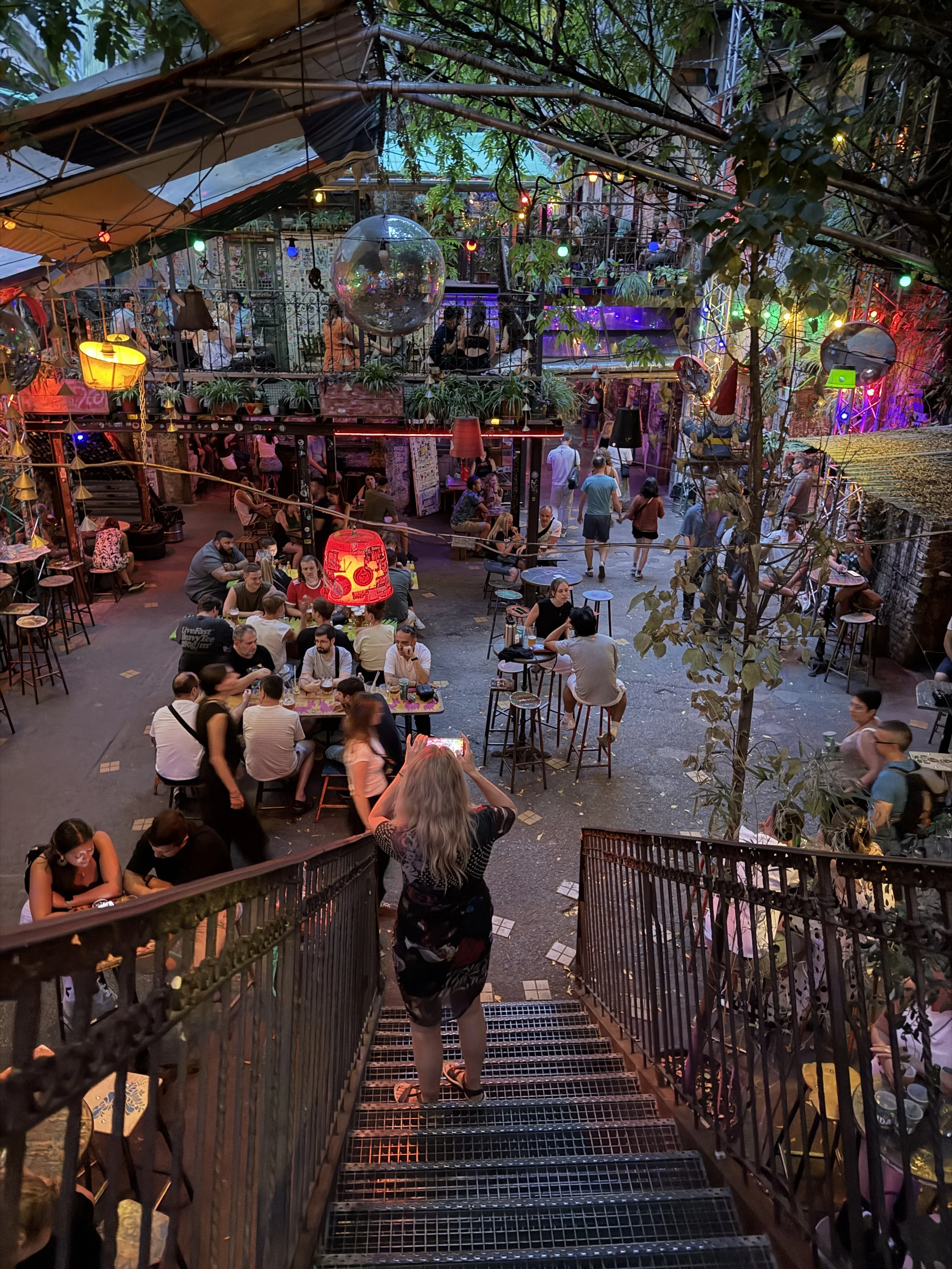
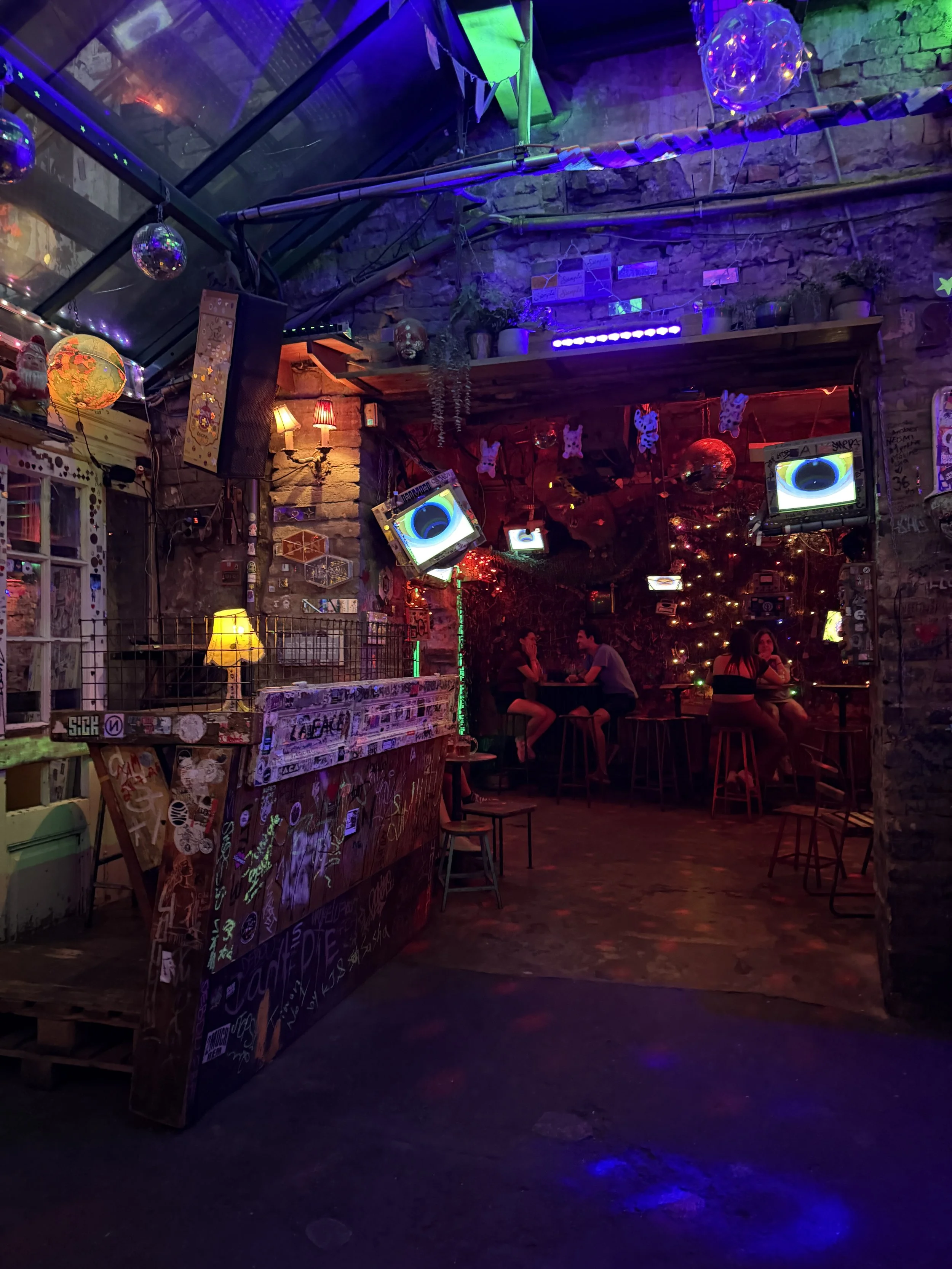
A few more fun facts most guidebooks skip: Szimpla still runs the Kazinczy Living Library, where instead of books you can "borrow" a real person for a conversation. It's also hosted a bicycle flea market (Szimpla Bringa) and rotating art exhibitions in its side rooms, on top of the live music and film nights that trace straight back to its cinema-in-the-courtyard origins.
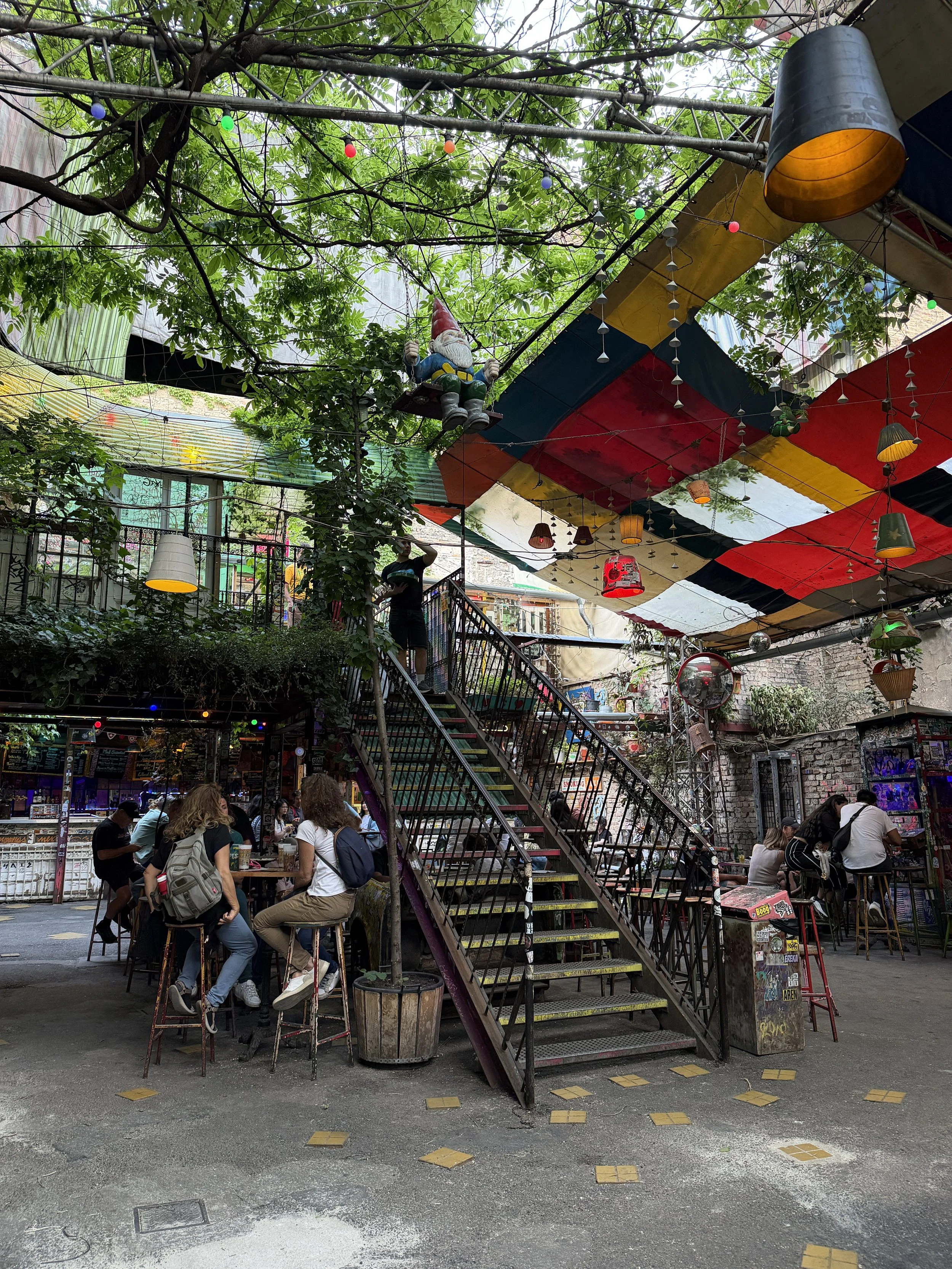
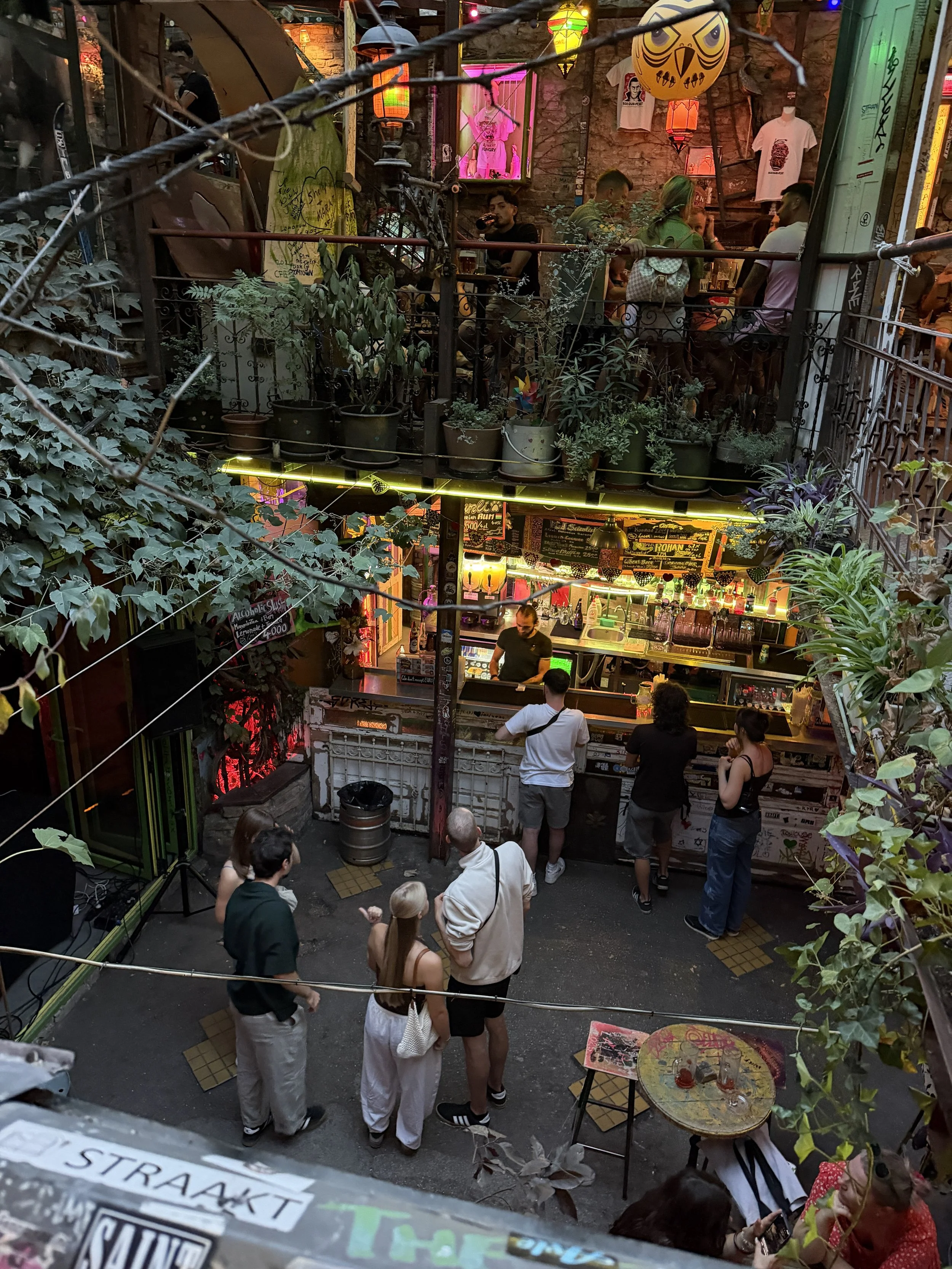
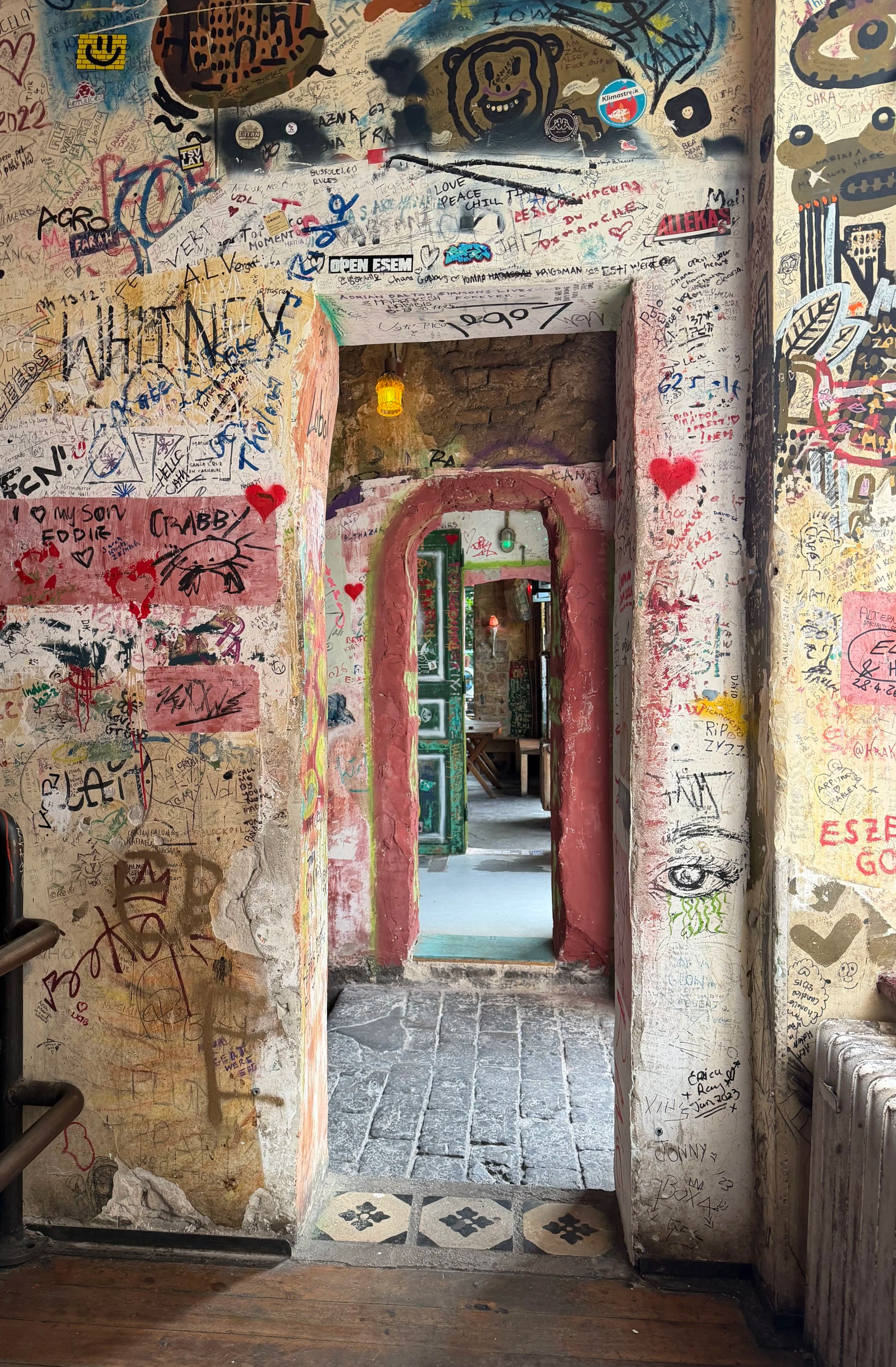
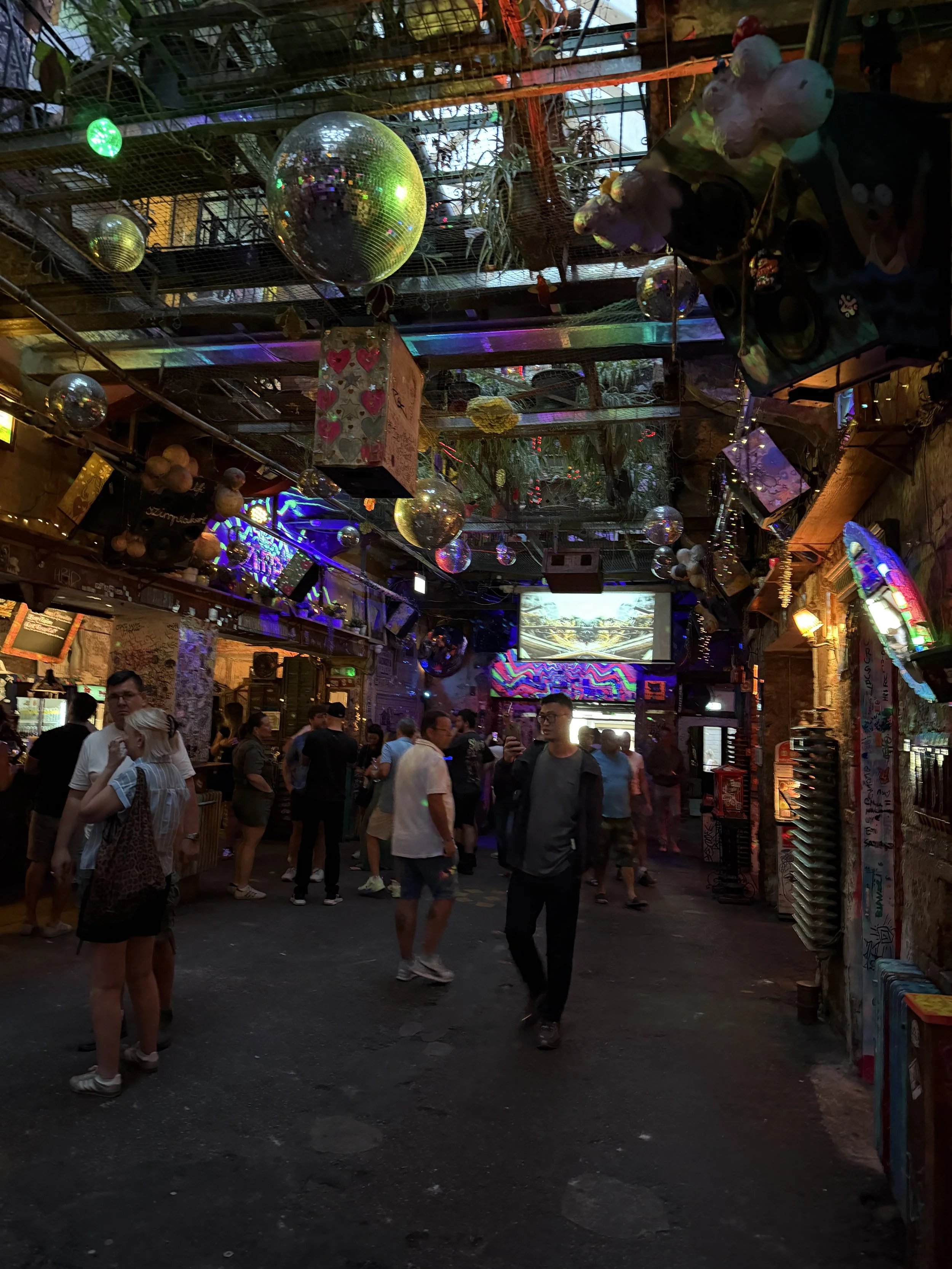
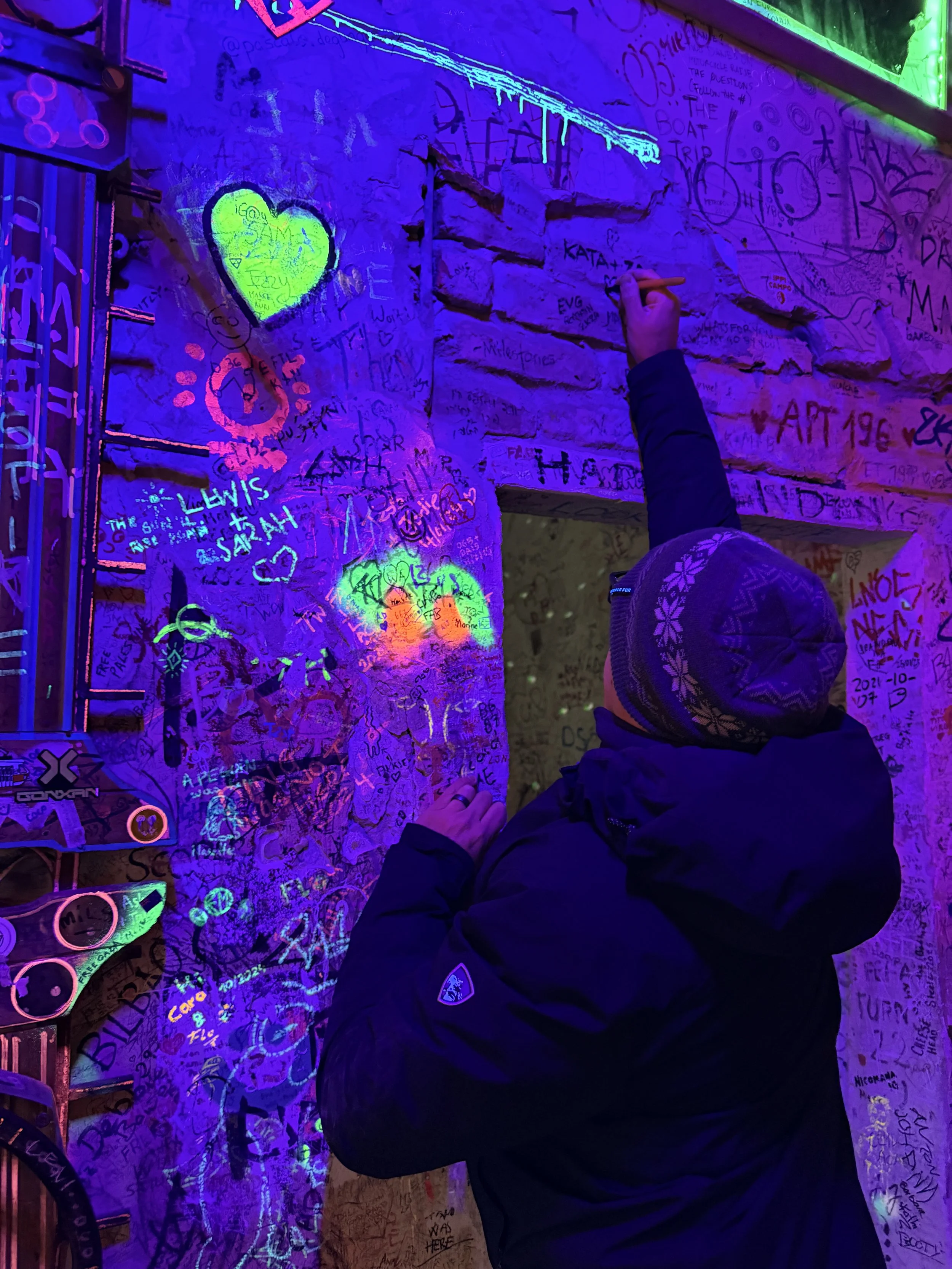
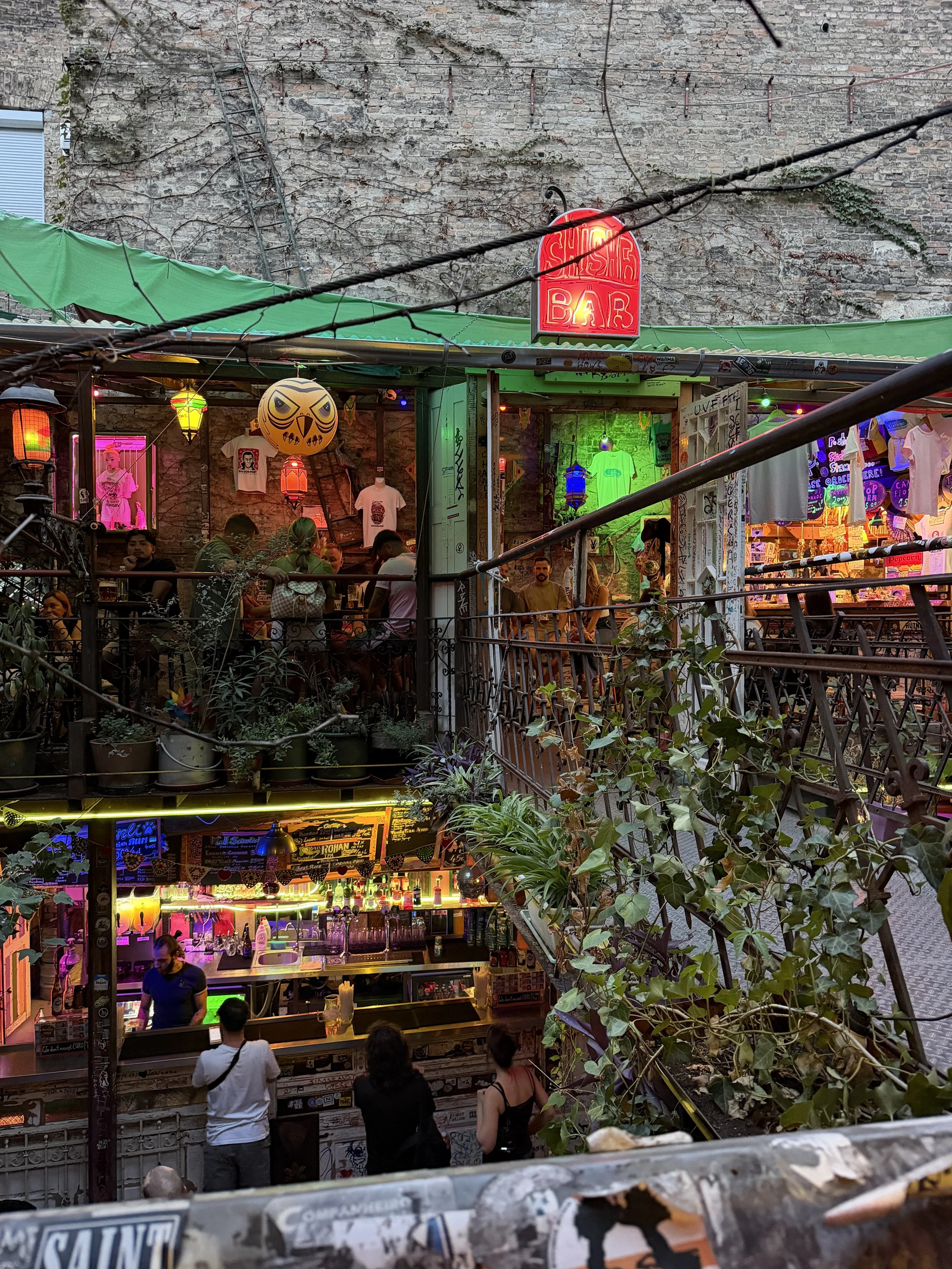
What makes Szimpla different from its imitators is scale and texture. This isn't one room with fairy lights; it's a sprawling, multi-level maze of rooms, a leafy courtyard, an old Trabant car turned into a seating booth, mismatched bathtub chairs, and walls covered in decades of layered graffiti and found objects. You could spend two hours just wandering and still miss half of it. It's genuinely one of the most exciting places in Budapest to take photos — every corner looks different, so don't be shy about wandering off to find your own favorite backdrop.

If you want to visit the best ruins bars with me, book your tour now.
Let's explore the Ruin bar district! →What It's Actually Like Today
Here's my honest take: yes, it's touristy. On a Friday or Saturday night, you'll hear more English, Italian, and Spanish than Hungarian, and you'll be shoulder to shoulder with a crowd that's there to soak up the atmosphere as much as sip a drink. If you're chasing a quiet, undiscovered local bar, this isn't it anymore — and hasn't been for a while.
But that's not really the point of Szimpla, and I'd argue it never was. It's not trying to be your neighborhood pub. It's a genuine, living piece of Budapest's story, and wandering through it still feels like nowhere else on earth. The layered, chaotic, beautifully weird décor hasn't been polished up for visitors — it's still exactly as strange and wonderful as it was when this whole scene started. For a first-time visitor to Budapest, it earns its place in your heart, not just on your list.
My honest advice: go once, go with curiosity rather than expecting a quiet drink, and don't make it your only ruin bar stop. Pair it with somewhere quieter for the actual conversation-and-cocktails part of your night.
A Fair Warning on Prices
I'll be straight with you: prices at Szimpla have climbed noticeably over the past couple of years, right along with the rest of central Budapest. A beer here will cost more than it would two streets over, and a lot more than it would outside the tourist core. That's the trade-off of being the most famous name in the genre — you're partly paying for the reputation and the real estate.
It's still not "expensive" by Western European or American standards, but don't expect the bargain-basement prices Budapest used to be known for. Go in expecting a fair, if not rock-bottom, price — and enjoy it for the experience, not for finding a steal.
A Little Personal Challenge For You
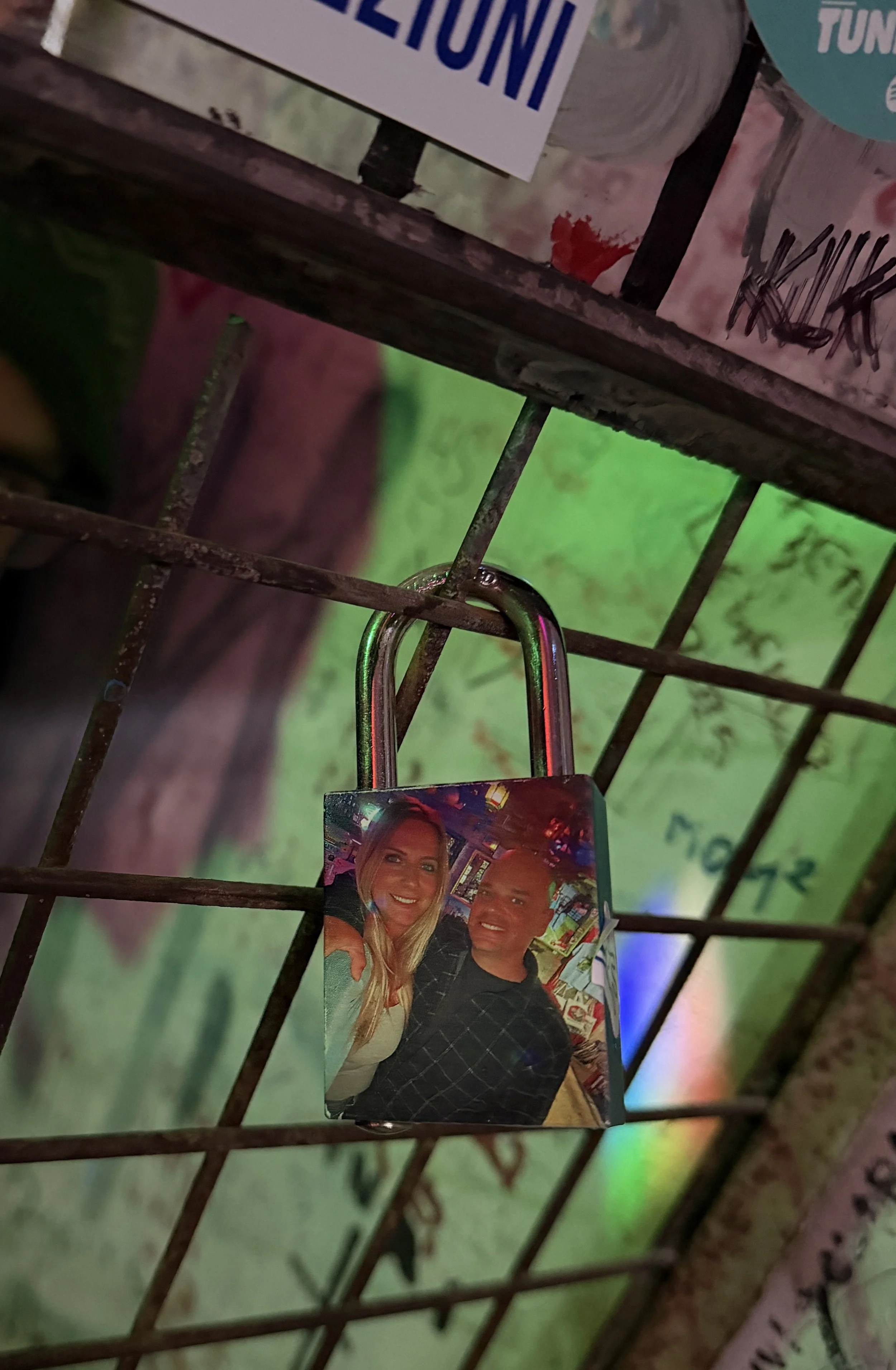
Small confession: my husband and I once left a lovelock somewhere in Szimpla's maze of walls, with our picture tucked in next to it. Years of layered graffiti, string lights, and thousands of other visitors' own additions later, it's probably buried in there somewhere among all that beautiful chaos.
So here's a fun mission if you're up for it: if you spot a lovelock with a photo behind it while you're wandering around, snap a picture and send it my way. Odds are slim, I know — but that's kind of the charm of Szimpla. Every corner has someone else's little piece of the story hiding in it, and now you're in on the hunt too.
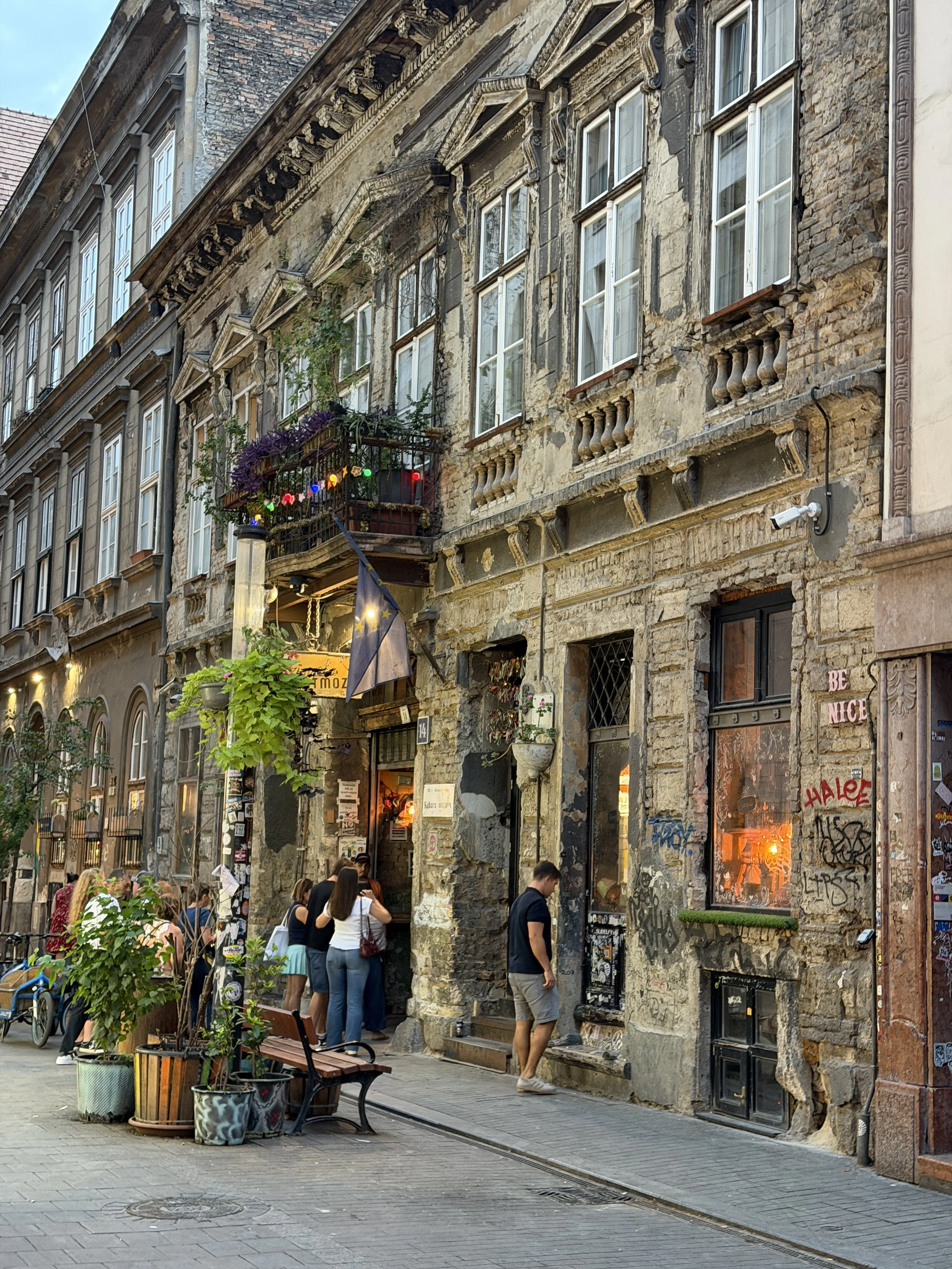
The Part Most Visitors Miss: The Sunday Farmers Market
Here's my actual insider tip, and the real reason I tell people to put Szimpla on their bucket list: come back on a Sunday morning.
Every Sunday, Szimpla Kert transforms into a farmers market — Szimpla Farmers' Market (Szimpla Piac) — running roughly from 9 AM to 2 PM. The same courtyards that are packed with drinkers at night fill up instead with local producers selling fresh bread, honey, cheese, cured meats, pastries, fruit, and prepared Hungarian foods like lángos and stuffed cabbage. There's usually live acoustic music, a much more relaxed pace, and a genuinely local crowd doing their weekly shopping alongside curious visitors.
It's a completely different atmosphere from the nighttime version, and honestly, it might be the better version of Szimpla. You get to see the space in daylight, appreciate the layered décor without a crowd blocking your view, grab a proper Hungarian breakfast, and support small producers directly. If your trip includes a Sunday, this is one of the best low-key mornings you can spend in the city.
So, Is It Worth Visiting?
Yes — with the right expectations, and a soft spot in your heart for beautiful chaos. Go for the history and the sheer visual wonder of the place, not for a quiet local hangout. See it at night once, to meet the ruin bar in its natural habitat, and if your schedule allows, come back on a Sunday morning for the farmers market — which I'd gently argue is the lovelier of the two. Just budget a little more than you might expect, and you'll walk away glad you saw the place that started it all.
FAQ
Is Szimpla Kert free to enter? Yes, there's no cover charge to enter and wander around — you only pay for what you eat or drink.
What are Szimpla Kert's opening hours? It's open daily, generally from midday into the early morning hours, with the Sunday farmers market running separately in the morning to early afternoon.
Is Szimpla Kert safe? Yes, it's a well-established, well-monitored venue and one of the safer nightlife spots in the city, though as with any crowded bar, keep an eye on your belongings.
Do I need to book ahead? No reservations needed to enter. On busy weekend nights, just expect a wait to get inside during peak hours.
Is Szimpla Kert worth it if I've already seen other ruin bars? If you only have time for one ruin bar in Budapest, make it this one — it's the original, and everything else followed its lead.
Curious about Budapest's Jewish Quarter beyond the ruin bars? On my private walking tours, I'll show you the real layers of this neighborhood's history — the synagogues, the courtyards, the stories behind the street art — and yes, we can swing by Szimpla too.
Enjoyed this one? A few more from the blog you'll probably want to read next:
Best Goulash in Budapest: Where Locals Actually Eat It
Entering Hungary as a Non-EU Citizen in 2026: What You Actually Need to Know
20 Unique Things to Buy in Hungary That Locals Actually Love (Not Fridge Magnets)
Silvanus Hotel Visegrád: A Relaxing Lunch Stop with Danube Views
