Budapest in January & February: Why the Quiet Season Is Secretly the Best
By Kata | katabudapest.com | Published Oct 6, 2026
When the Christmas lights come down and the last tourists fly home, something lovely happens in Budapest. The city slows down. The streets go quiet, the steam rises from the thermal pools, and the cafés fill up with locals reading newspapers over a slice of cake.
I've been a Budapest guide for more than a decade, and I'll let you in on a secret: January and February might be my favourite months here. They're not the most famous, and they're certainly not the warmest, but they're the most Budapest, soft and unhurried. And since I spend part of the year in sunny Arizona, I appreciate a proper winter more than ever.
If you're wondering whether Budapest is worth visiting in winter, here's my honest answer and my favourite ways to enjoy it.
Why Visit Budapest in January and February?
It's quiet. You can stand in front of Parliament or walk up to Fisherman's Bastion without a crowd. You'll finally get the photos you want.
It's affordable. This is the low season, so hotels are often much cheaper than in summer or over Christmas, and flights are easier to find.
It's cozy. Budapest is a city built for winter: warm cafés, hot baths, candlelit wine bars, and concerts in gilded halls.
It's real. Without the tourist crowds, you see how locals actually live. Tables in the best restaurants are easier to get, and people have more time to chat.
What's the weather like? Cold, I won't pretend otherwise. January is usually the coldest month, with temperatures around freezing, and some days are grey. But when snow falls on the Castle and the Danube, the city looks like a postcard. Dress warmly and you'll love it.

Soak in a Thermal Bath While the Snow Falls
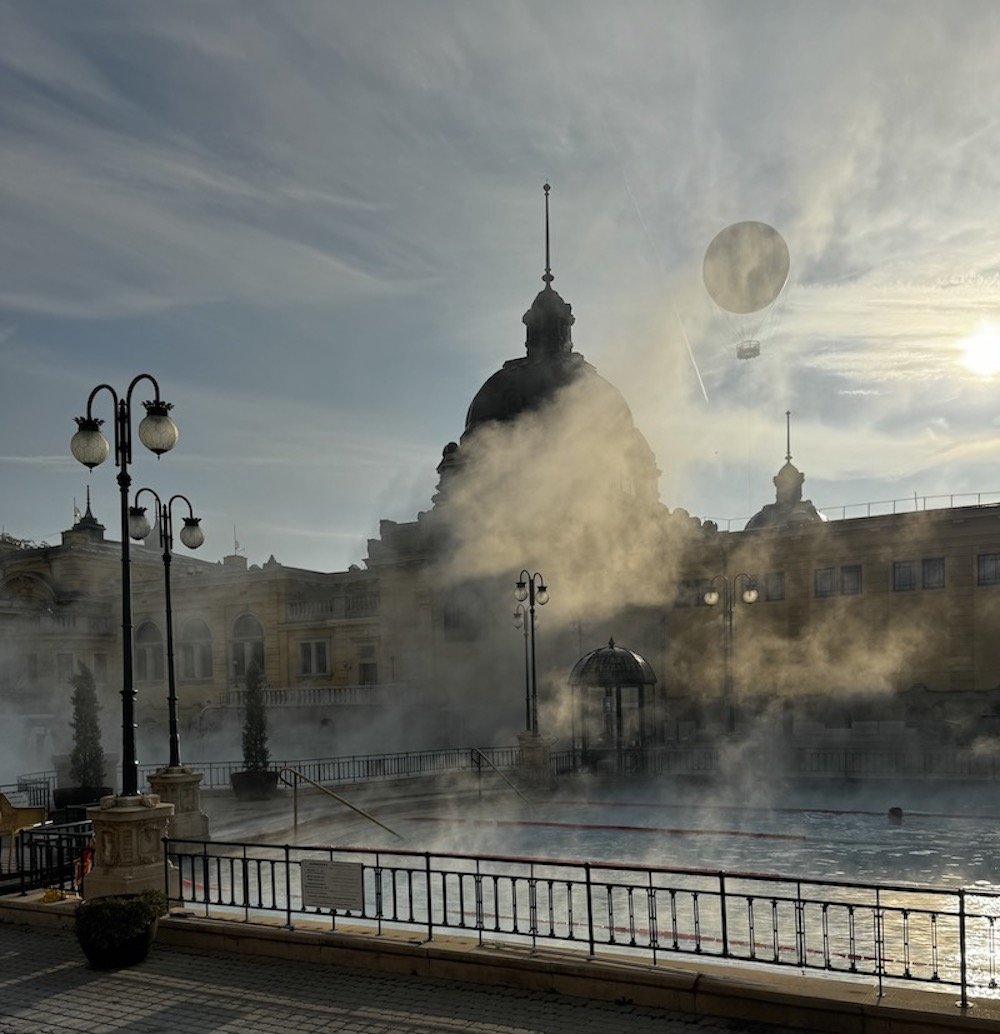
Warm water, cold nose: Budapest's thermal baths in winter
If you do only one thing in Budapest in winter, make it this.
Picture yourself in an outdoor pool at 38°C (100°F), steam rising around you, snow on the yellow walls of the bathhouse, and your nose cold while the rest of you is perfectly warm. It's pure happiness, and it's the most Budapest thing you can do.
Széchenyi Baths is the classic choice for winter. Its big outdoor pools stay warm all year, and the neo-baroque building looks magical in the snow. Go on a weekday morning, when it's calmer.
Rudas Baths has a rooftop pool with a view over the Danube, which is wonderful on a crisp, clear day, plus a beautiful 16th-century Turkish dome.
Lukács Baths is where the locals go. It's quieter, less touristy, and has a lovely old-fashioned atmosphere.
My tips: Bring flip-flops and a towel, and keep your hair covered when you walk between pools if it's freezing. Afterwards, go straight to a café for something warm. (Read my Budapest thermal baths guide.)
Swim in a Warm Lake in Winter: Lake Hévíz
If you love the baths, take them one step further. About two and a half hours from Budapest, near the western end of Lake Balaton, is Lake Hévíz, one of the largest natural thermal lakes in the world. Even in the middle of winter, the water stays around 22–24°C (72–75°F).
Picture swimming among steam and water lilies while the trees around the lake are white with frost. It's one of the most magical winter experiences in Hungary, and most visitors have never heard of it. Stay overnight in one of the spa hotels and make it a relaxing mini-break.
Explore Budapest's Quieter Museums
Winter is the best time for museums, because you'll often have the rooms almost to yourself.
Museum of Fine Arts. It's on Heroes' Square and holds a remarkable European collection. On a winter weekday, you can sit in front of an old master painting in near silence.
Hungarian National Gallery. It's in the Buda Castle Palace and is the best place to discover Hungarian painters most visitors have never heard of. The views from the terrace are a bonus.
House of Music Hungary. This building in City Park looks like it's covered in leaves and light. It's modern and interactive, and it's great for a cold afternoon.
Museum of Ethnography. Its striking new building in City Park tells the story of Hungarian folk life, including the embroidery and traditions my grandmother would recognise.
Smaller hidden gems. Try the Vasarely Museum in Óbuda for op art, or the Hospital in the Rock beneath Castle Hill for a fascinating and slightly spooky piece of history.
Discover the Caves Under Budapest
Budapest is built on hundreds of caves carved by thermal water, and they're a perfect winter activity. The temperature underground stays around 11–12°C (about 52°F) all year, so they feel almost warm on a freezing day.
Szemlőhegy Cave is easy to walk through and known for its beautiful mineral formations, often compared to cauliflower and grapes. Pálvölgy Cave is bigger and more dramatic, with narrow passages and ladders. For the adventurous, there are also caving tours where you crawl through the rock in overalls and a helmet. It's a story you'll tell for years!
Stroll the Peaceful Streets
Budapest in winter is made for slow walks. Some of my favourite routes when the city is quiet:
The Castle District in the morning. The cobblestone streets, pastel houses and gas lamps are almost empty in January. It feels like a small town frozen in time.
Along the Danube at dusk. Walk the Pest embankment as the lights come on across the river. When the Castle and the Chain Bridge light up against a winter sky, you'll understand why people fall in love with this city.
Andrássy Avenue. Walk from the Opera House towards Heroes' Square past elegant villas and embassies, then continue into City Park.
Óbuda's little squares. The old quarter north of the centre has small streets, local restaurants and a village feeling.
Margaret Island. The island in the middle of the Danube is peaceful in winter, especially after a light snowfall.
Ride the Children's Railway Through the Snowy Buda Hills
This is one of my favourite hidden gems. The Children's Railway (Gyermekvasút) is a narrow-gauge railway through the forests of the Buda Hills, and it's run by children aged 10 to 14 under adult supervision. They sell tickets, wave the signals and punch your ticket with great seriousness.
On a snowy day, the ride through the white forest is like a scene from a storybook. Combine it with a walk and sledding at Normafa and a hot chocolate at the end. Check the winter timetable before you go.
Watch the Sunset from the Hills
One advantage of short winter days is that sunset comes early, usually between about 4:15 and 5 pm in January. You don't have to stay up late to see Budapest's most beautiful light. Go up to Gellért Hill or Fisherman's Bastion in the late afternoon and watch the city turn pink, then gold, and finally sparkle as the lights come on. (See my Citadella guide.)
Warm Up in a Café with Coffee, Tea or Hot Chocolate, and Cake!
This is my favourite part!
Budapest has a real coffee house culture. In winter, there's nothing better than coming in from the cold, taking off your coat, and sitting down with a warm drink and a slice of cake while the windows fog up.
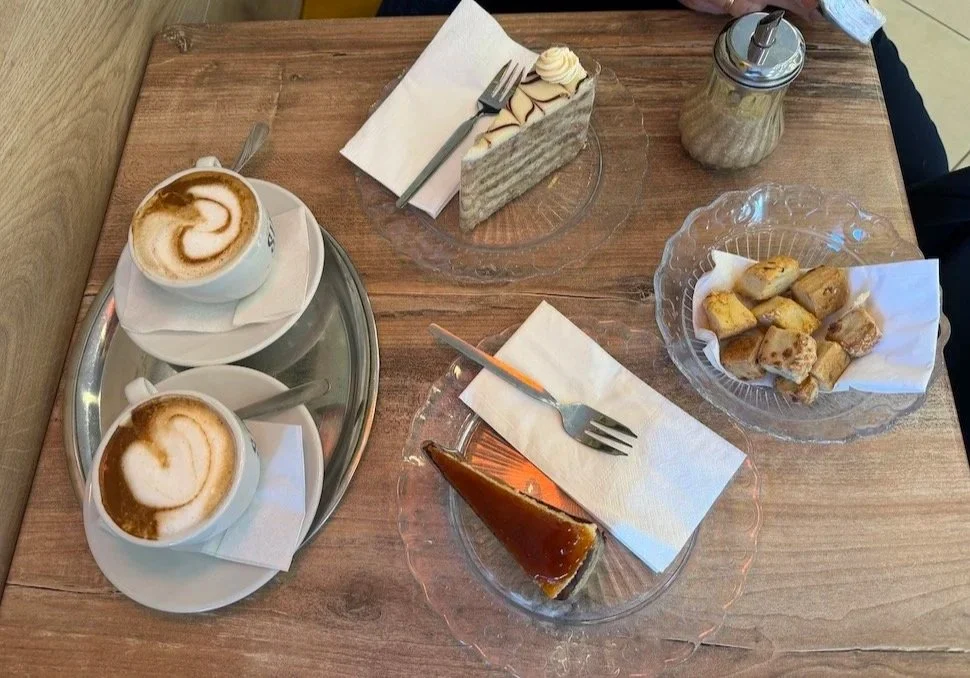
From the cold streets to a warm Budapest coffee house
What to drink:
A rich hot chocolate, often thick enough to eat with a spoon.
Tea, as cafés offer lovely herbal and fruit teas, perfect after a thermal bath.
A proper coffee in a beautiful old café, taken slowly.
Which cakes to try:
Dobos torte: layers of sponge and chocolate buttercream with a crackly caramel top. It's a true Budapest classic.
Esterházy torte: walnut layers with a creamy filling and its famous feathered white icing.
Krémes: vanilla custard between crisp layers of pastry. Simple and perfect.
Rigó Jancsi: a chocolate cube with a romantic love story behind the name.
Zserbó: walnut, apricot jam and chocolate. It's a Christmas favourite, but you can often find it in January.
Gesztenyepüré: sweetened chestnut purée with whipped cream. This is a real Hungarian winter treat, and I dream about it when I'm in Phoenix.
Flódni: a Jewish-Hungarian layered cake with apple, walnut, poppy seed and plum. It's one of the best cakes in the city, especially in the Jewish Quarter.
For the most beautiful places to enjoy them, from grand historic cafés to small neighbourhood pastry shops, see my historic cafés guide and my best Budapest bakeries guide.
Taste Hungarian Chocolate and Marzipan
For those of you with a sweet tooth, and I'm one of you: Budapest has wonderful chocolate and confectionery shops. Look for Hungarian bean-to-bar chocolate makers like Rózsavölgyi, whose beautiful bars also make lovely gifts. Traditional confectioners sell marzipan and hand-dipped bonbons.
If you visit Szentendre, don't miss its marzipan museum, where you'll find entire scenes, buildings and figures made of sugar and almond. Children love it, and so do grown-ups.
Warm Up with Hungarian Winter Food
Winter is the season of Hungarian comfort food, and for me it's the most delicious time of year. Order these on a cold day:
Jókai bableves: a rich, smoky bean soup with sausage. It's a meal in a bowl.
Gulyás: our famous goulash is actually a soup, full of beef, paprika and potatoes. (See my goulash restaurants guide.)
Halászlé: a fiery red fisherman's soup, loved all over Hungary.
Főzelék: a thick vegetable stew that's classic Hungarian home cooking, usually topped with a fried egg or meatballs.
Lángos from a market hall: crispy fried dough with sour cream and cheese, eaten standing up with a hot tea.
A local tradition: If you're here on New Year's Day, eat lentils. Hungarians believe they bring money in the new year, and many restaurants serve lentil soup or lentil stew on 1 January.
Go Wine Tasting (Winter Is the Perfect Season)
Hungarian wine is one of Europe's best-kept secrets, and winter evenings are perfect for discovering it.
Try a tasting in a cosy wine bar in the city centre, or go down into the historic cellars under Castle Hill. Look for these Hungarian wines:
Tokaji Aszú: Hungary's famous sweet wine, like liquid gold. It's wonderful with cake.
Egri Bikavér (Bull's Blood): a warming red blend from Eger.
Furmint: a crisp, elegant Hungarian white.
Kékfrankos and Kadarka: local reds that are perfect for a cold night.
I include wine tastings in some of my private tours, with the stories behind each glass.
Try a Pálinka Tasting
After wine, Hungary's other famous drink is pálinka, a strong fruit brandy made from apricot, plum, pear, cherry and more. Locals say a small glass warms you from the inside, and in winter I believe them! Many bars offer a tasting of several fruits, and it's a fun way to finish an evening. Sip it slowly: good pálinka smells like a whole orchard.
Day Trip to Kékes: Hungary's Highest Point
If you'd like to see real snow and get out of the city for a day, take a trip to Kékes, the highest point in Hungary, at 1,014 metres (3,327 feet).
Kékes is in the Mátra Mountains, about 1.5–2 hours northeast of Budapest. In winter, when there's snow, the forests look like a fairy tale, and you'll find:
Snowy forest walks on quiet trails through beech woods.
The lookout tower at Kékestető, with views across the Mátra hills. On a clear day, you can see a very long way.
Sledding and small ski slopes in the Mátra area when there's enough snow.
A warm meal in a mountain inn, such as bean soup, goulash or a hearty stew, followed by a hot tea with honey.
My tip: The Mátra foothills are also a wine region, so on the way back you can stop in the Gyöngyös area for a tasting. The historic town of Eger is also nearby and makes a great second stop. And a note from a local: snow in Hungary isn't guaranteed, so check the forecast. On a clear, frosty day, the views are beautiful even without it.
I organise private day trips to Kékes and the Mátra Mountains, with or without a wine stop.
Two Easy Winter Day Trips
Szentendre. This little artists' town on the Danube is quiet and charming in winter, with colourful houses, small galleries, cozy cafés and that marzipan museum. You can reach it in about 40 minutes by the H5 suburban railway (HÉV) from Batthyány tér.
Gödöllő Royal Palace. This was Empress Sisi's beloved home, and winter is perfect for exploring it because it's indoors, peaceful and full of stories. It's about an hour away by the H8 suburban railway (HÉV).
More Things to Do in Budapest in January & February
Ice skate in City Park. The City Park Ice Rink, in front of Vajdahunyad Castle, is one of the oldest and largest outdoor rinks in Europe. Skating under the castle towers in the evening is magical.
Enjoy a concert or the opera. Winter is the heart of the concert season. See a performance at the Hungarian State Opera or a concert at the Liszt Academy, one of the most beautiful concert halls in Europe.
Experience Farsang (Carnival season). January and February are carnival time in Hungary, with balls, parties, and fánk, our fluffy carnival doughnut with apricot jam. It's the season's sweetest treat!
Visit Busójárás in Mohács. At the end of carnival season, the town of Mohács chases away winter with masked "busós," an unforgettable UNESCO-listed folk festival. (Guide coming soon → [link when published])
Celebrate Valentine's Day in Budapest. Cozy wine bars, a Danube-side walk at night, and a romantic dinner. Budapest is made for couples in February.
Shop the winter sales. January is a good time for Hungarian design, fashion and ceramics at lower prices.
Take a food tour. Winter is the season of hearty Hungarian food: stuffed cabbage, bean soup, and warming paprikash. It's the best time to taste it.
Warm up in a ruin bar. Budapest's famous ruin bars, in old buildings in the Jewish Quarter, are even cozier in winter, with fairy lights, mismatched furniture and lots of warm corners.
Visit a market hall. The Great Market Hall is warm, colourful and full of paprika, salami and pickled vegetables. It's perfect for gifts.
Take a cooking or baking class. Learn to make Hungarian classics like goulash, lángos or strudel, then warm up by eating what you mad
Practical Tips for Budapest in Winter
Pack warm layers, a hat, gloves, and waterproof shoes. The cobblestones can be icy.
Plan around the short days. It gets dark early, so do outdoor sightseeing in the morning and save museums, cafés and baths for the afternoon.
The Christmas markets close around 31 December, so January is for quiet and cozy, not markets.
Use public transport, which is warm and easy. (See my public transport guide.)
Book the baths and concerts in advance on weekends.
Frequently Asked Questions
Is Budapest worth visiting in January or February? Yes! It's quieter, more affordable and very cozy. You can enjoy thermal baths, museums, cafés and concerts without the crowds.
How cold is Budapest in winter? January is usually the coldest month, with temperatures around freezing. Snow is possible, but not guaranteed. Dress in warm layers and you'll be comfortable.
Can you go to the thermal baths in winter? Absolutely, and it's the best time! The outdoor pools at Széchenyi and the rooftop pool at Rudas stay warm all year, and bathing in the steam on a cold day is unforgettable.
What is the highest point in Hungary? Kékes, in the Mátra Mountains, at 1,014 metres (3,327 feet). It's about 1.5–2 hours from Budapest and makes a lovely winter day trip.
Is January a cheap time to visit Budapest? Yes, January and February are low season, so hotels and flights are often much cheaper than at other times of year.
What cakes should I try in Budapest? Dobos torte, Esterházy torte, krémes, Rigó Jancsi and flódni are classics. In winter, look for gesztenyepüré (chestnut purée), and in carnival season, try farsangi fánk (carnival doughnuts).
What can I do in Budapest on a cold, rainy day? Visit a thermal bath, explore museums like the Museum of Fine Arts or the House of Music, go to a historic café, or book a wine tasting or a concert.
Can you swim outdoors in Hungary in winter? Yes! Budapest's thermal baths have outdoor pools that stay warm all year, and Lake Hévíz, a natural thermal lake, is around 22–24°C (72–75°F) even in winter.
What are the best day trips from Budapest in winter? Kékes and the Mátra Mountains for snow, Lake Hévíz for warm-water swimming, Szentendre for a charming small town, and Gödöllő Palace for Empress Sisi's story.
What time does it get dark in Budapest in January? The sun usually sets between about 4:15 and 5 pm in January, and a little later in February. Plan outdoor sightseeing for the morning and early afternoon.
Dreaming of a cozy winter escape to Budapest? I'd love to show you my city in its quietest, softest season: baths, cafés, cakes, wine and maybe a snowy walk on Kékes. Message me here, and let's plan your winter trip together.
Enjoyed this one? A few more from the blog you'll probably want to read next:
Where Budapest Really Shops: Inside the Klauzál Square Market Hall
Szimpla Kert: Is It Still Worth Seeing in Budapest?
Why You Should Visit the Citadella for Sunset in Budapest
Kaptafa Brunch: The Jewish Quarter Spot That Makes Breakfast Fun Again
