Budapest's Most Beautiful Historic Cafés (A Local Guide's Honest Picks)
By Kata | katabudapest.com | Published Sept 4, 2026
Long before "third-wave coffee" was a thing, Budapest ran on its kávéházak — the grand coffee houses where writers filed their newspaper columns, editors held court from corner booths, and you were expected to nurse a single coffee for three or four hours without anyone hurrying you along. At the turn of the 20th century, our city had over 600 of them. They were the social internet of their day: part café, part office, part living room, all under the same chandeliers.
Most are gone now. But a handful of the originals are still pouring, and walking into one is the closest thing we have to time travel — marble-topped tables, gilded mirrors, high frescoed ceilings, and waiters in waistcoats who have seen everything and are impressed by none of it.
Here are the oldest and loveliest still open, in order of age, with my honest local take on each — because not all of them are worth the queue — plus exactly which cake to order when you sit down.
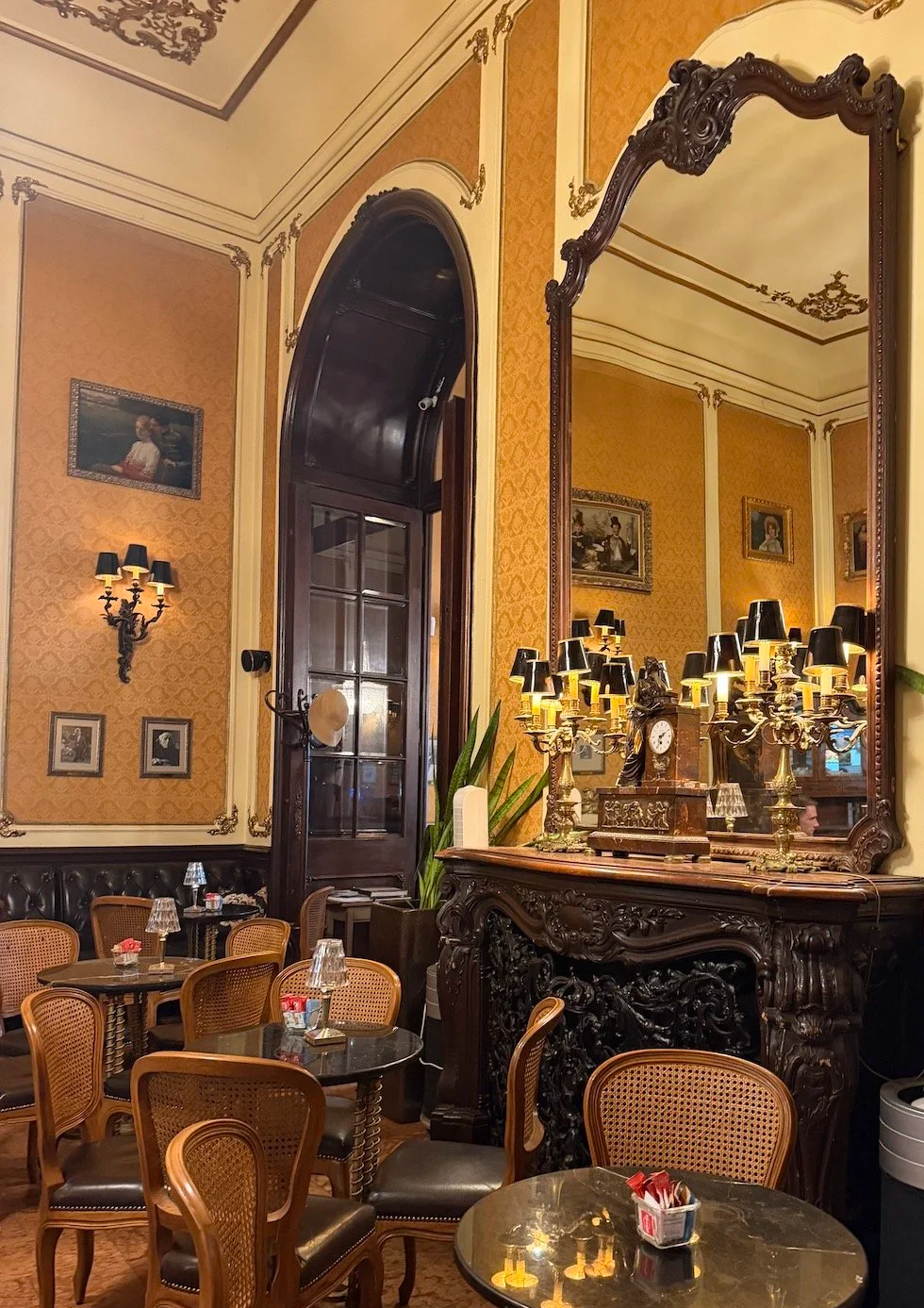
The originals, oldest to newest
Gerbeaud — since 1858
The elder statesman of this list. Henrik Kugler opened his confectionery on what's now Vörösmarty tér, and after his death the Swiss pastry chef Émile Gerbeaud took it over in 1884, expanding it into one of Europe's great cake houses and even opening his own chocolate factory to keep up with demand. This is where the cognac cherry bonbon and the chocolate "cat's tongue" were invented, and legend has it Empress Elisabeth ("Sisi") herself was a regular. Much of the interior — silk-lined walls, crystal chandeliers, French café tables shipped in from a Paris world's fair — dates back to the Gerbeaud era and has barely been touched since. Order: the Gerbeaud slice (Zserbó) — it was practically born here.
Auguszt Cukrászda since 1870
It is the second-oldest confectionery in the city after Gerbeaud, and still family-run five generations later. It survived nationalization during the Communist era and came back family-owned all the same. No tourist crowds here, just regulars and excellent old-school cakes. Try the flódni, a layered Jewish-Hungarian pastry with poppy seed, walnut, and apple.

If you want to visit the most historical coffee houses of Budapest, book your private tour now.
Let's explore Budapest →Centrál Kávéház — since 1887
One of Budapest's original literary "offices," where editors and writers didn't just visit but practically lived, submitting articles from their usual table. It's been carefully restored without losing its lived-in warmth, which is exactly why I like recommending it — it doesn't feel like a museum, and locals still stop in for breakfast. Order: a simple krémes with your coffee — it's the kind of place where the classics feel right.
New York Café — since 1894
Possibly the most photographed café in the country, and twice named one of the world's most beautiful. It opened its doors on October 23, 1894, in the former headquarters of the New York Life Insurance Company, and instantly became the meeting point for Hungary's literary elite — Dezső Kosztolányi, Sándor Márai, and Ferenc Molnár among them. The most famous legend: on opening night, an over-excited group of writers supposedly hurled the café's front door key into the Danube, so it could never close again. (Fun twist: historians point out Molnár was still a schoolboy at the time, so the story is almost certainly embellished — though management actually re-enacted the key-toss in 2014, just for the story.) Expect a queue and a premium price tag, but the gold-leaf ceiling still earns it. Order some strudels with a coffee — go mid-afternoon rather than breakfast or dinner to dodge the worst of the crowd.
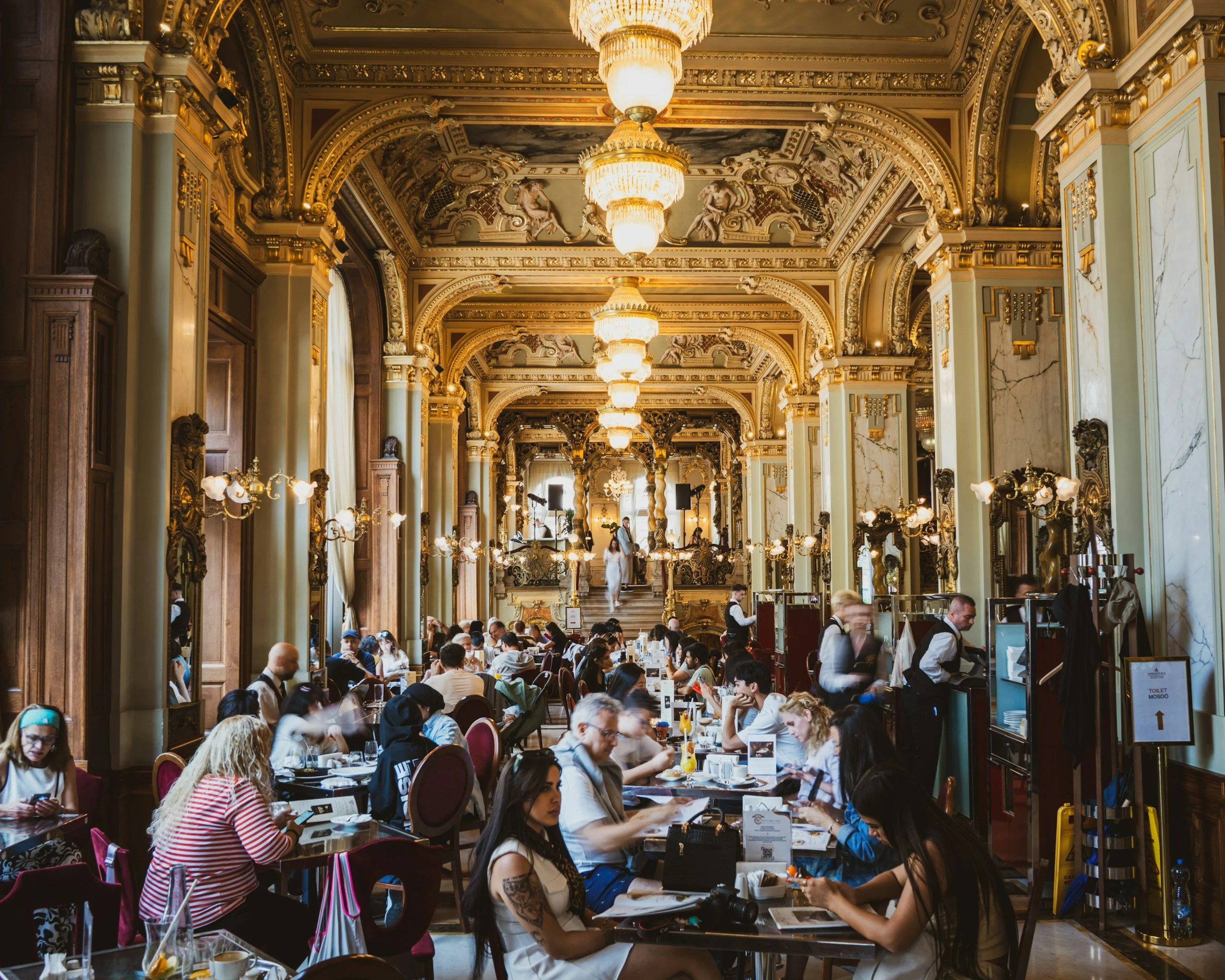
Inside New York Café, Budapest
Gundel — since 1894
Set in a palace beside City Park, Gundel started life as a restaurant in the same year New York Café opened, then was taken over in 1910 by Károly Gundel, who built it into the standard-bearer for elevated Hungarian cuisine — a reputation it still trades on with chef András Wolf's menu today. It's less about the coffeehouse ritual and more about a proper sit-down meal in surroundings that still feel imperial, especially if you can grab a table in the garden in summer. Order: the Gundel palacsinta (walnut crêpes flambéed in chocolate-rum sauce) — it was invented here and it's still the move.
Művész Kávézó — since 1898
Directly across from the Opera House on Andrássy út, inside a neo-Renaissance building from 1884. It opened as a confectionery in 1898, and after the Gerbeaud family took it over in 1933, locals nicknamed it "Kis-Gerbeaud" — Little Gerbeaud. The biedermeier interior is now a protected heritage space. I like sending opera-goers here before or after a show. Order: the Művész Dobos or the Eszterházy torte — both house specialties you won't find under those names anywhere else.
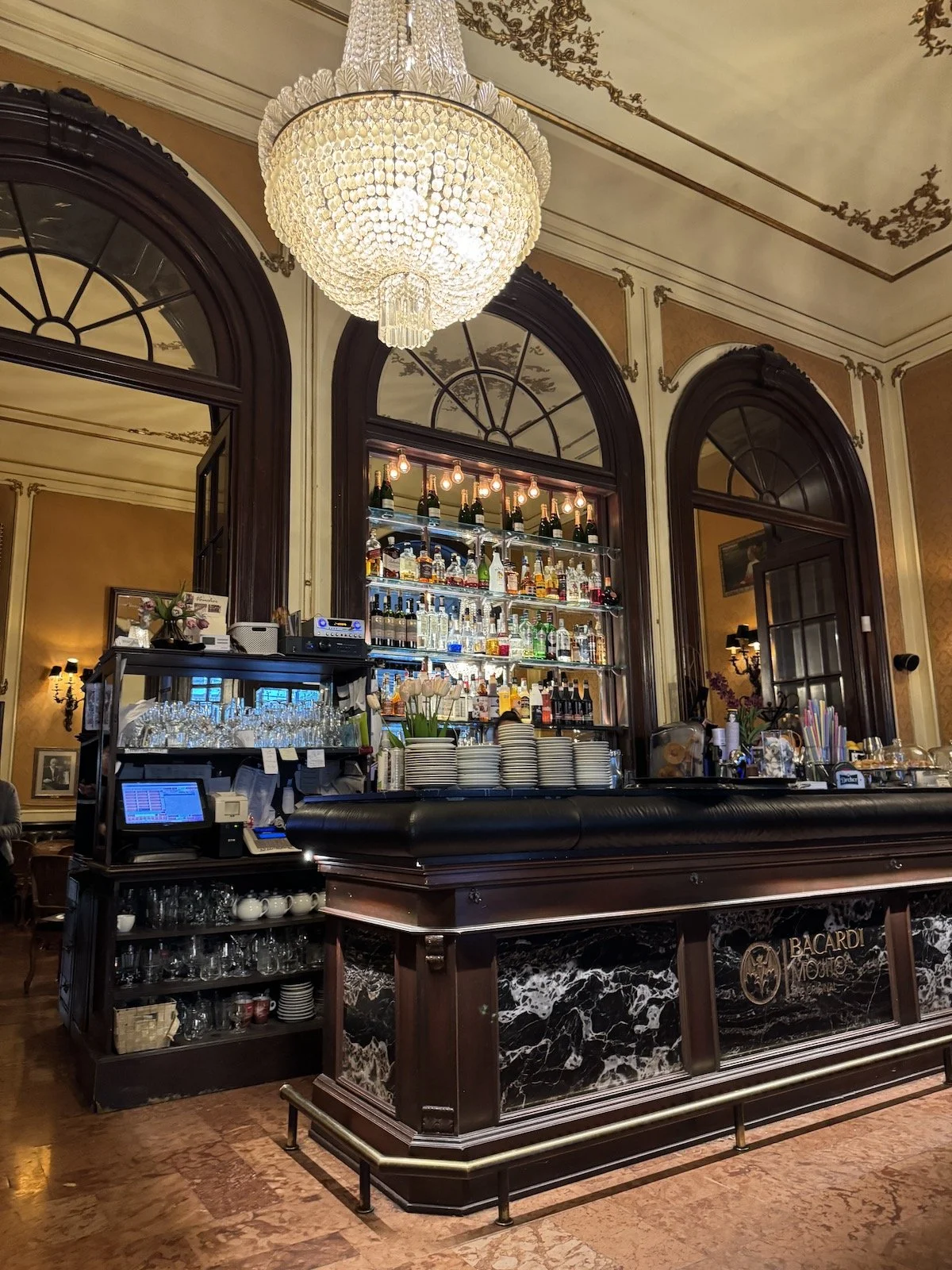
Művész Kávézó, Andrássy út 29, directly opposite the Budapest Opera House.
Hadik Kávéház — since 1911
Tucked onto Bartók Béla út on the Buda side, Hadik was the after-hours living room for writers Frigyes Karinthy and Dezső Kosztolányi in the 1920s, both of whom lived nearby — Karinthy reportedly wrote much of his best-known work at its tables. The original closed in the 1970s and sat dormant for decades before reopening in 2010 in a more contemporary style — bare brick and vintage leather instead of gilded walls — while keeping its literary, artsy soul. It now draws a younger, more local crowd than the downtown grand cafés, and parking is a lot easier here than in the center. Order: whatever the seasonal cake special is — the kitchen (once led by an alum of Gundel) changes things up more than the strictly traditional spots.
Café Astoria — since 1914
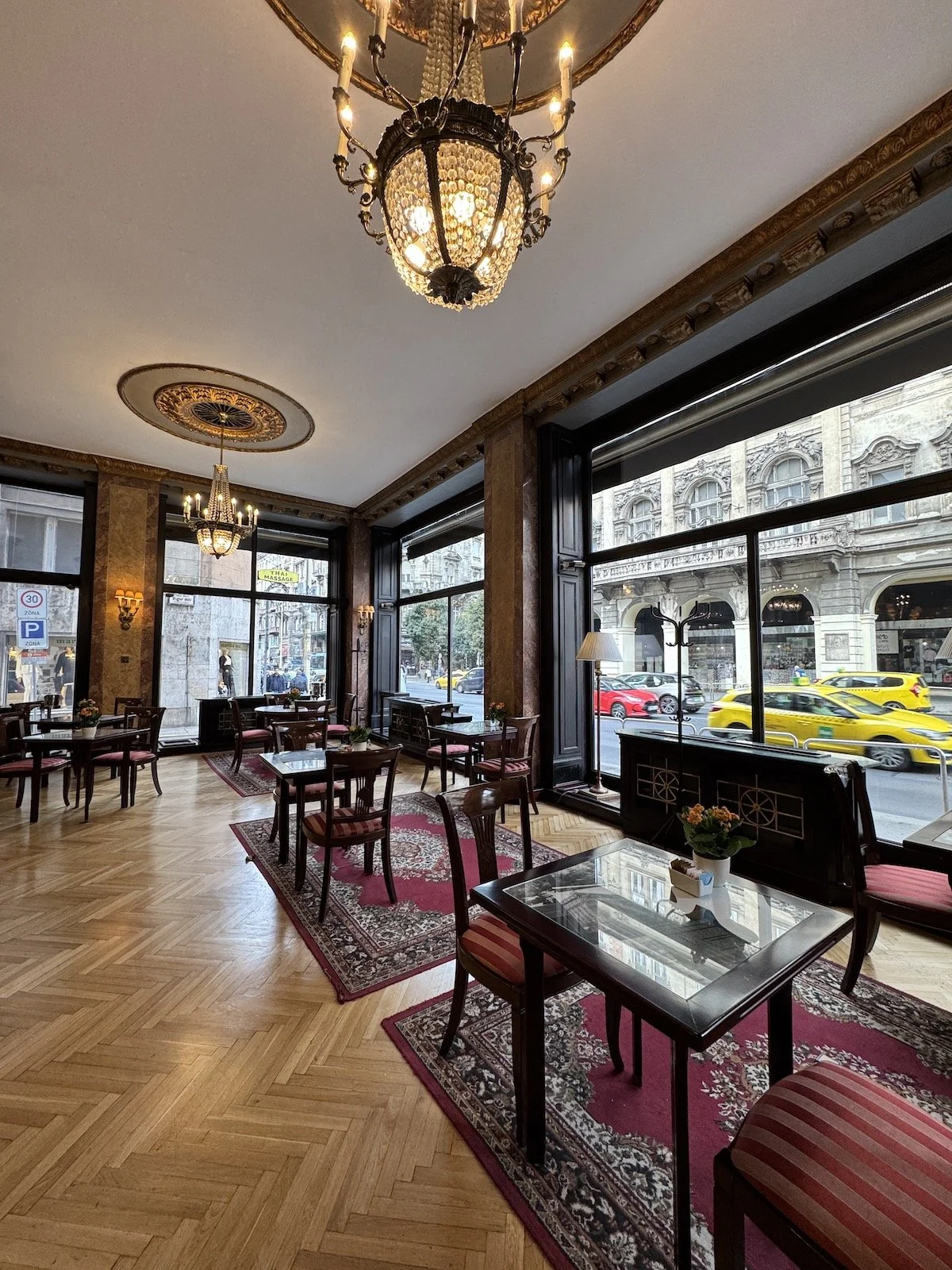
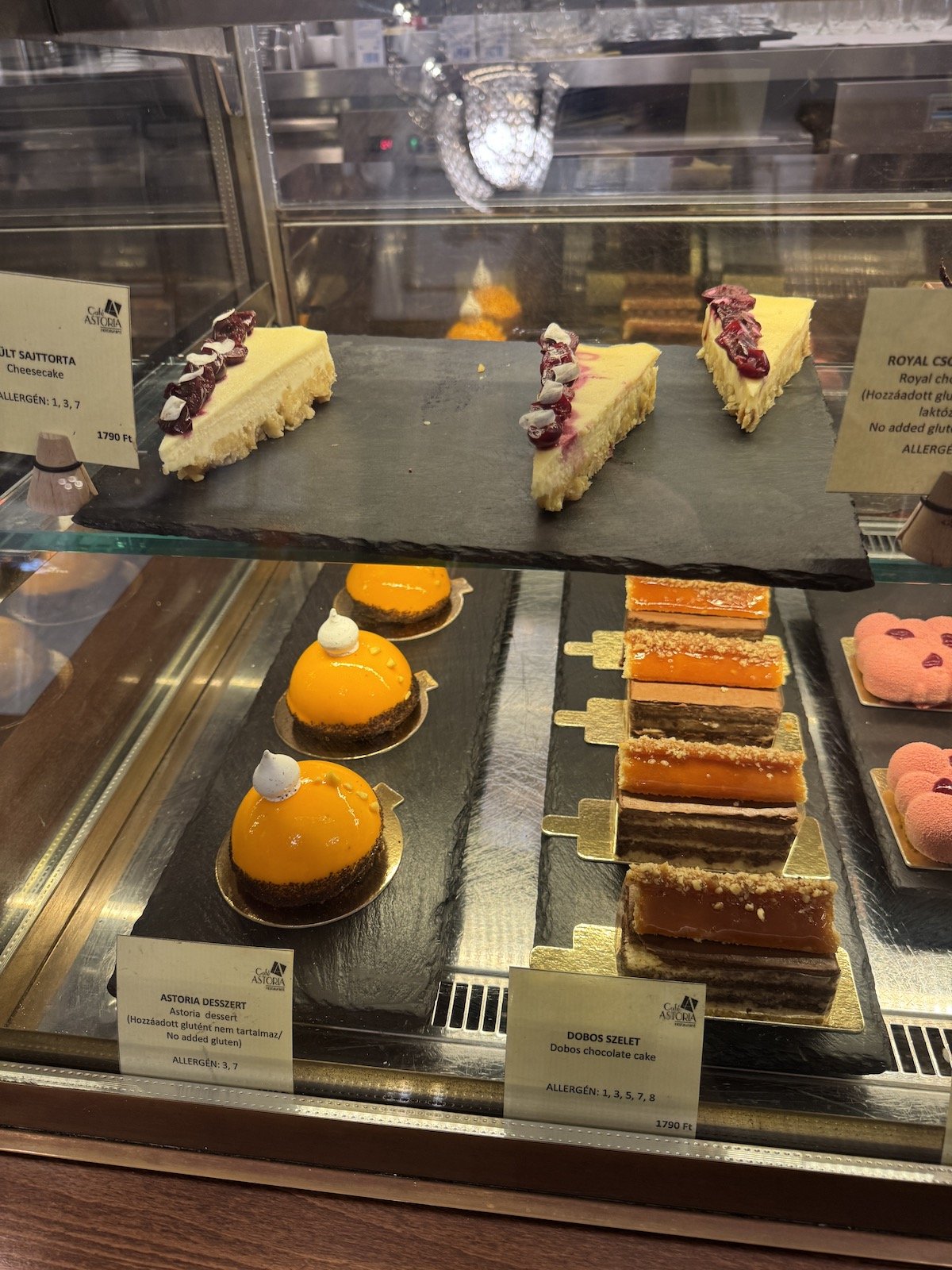
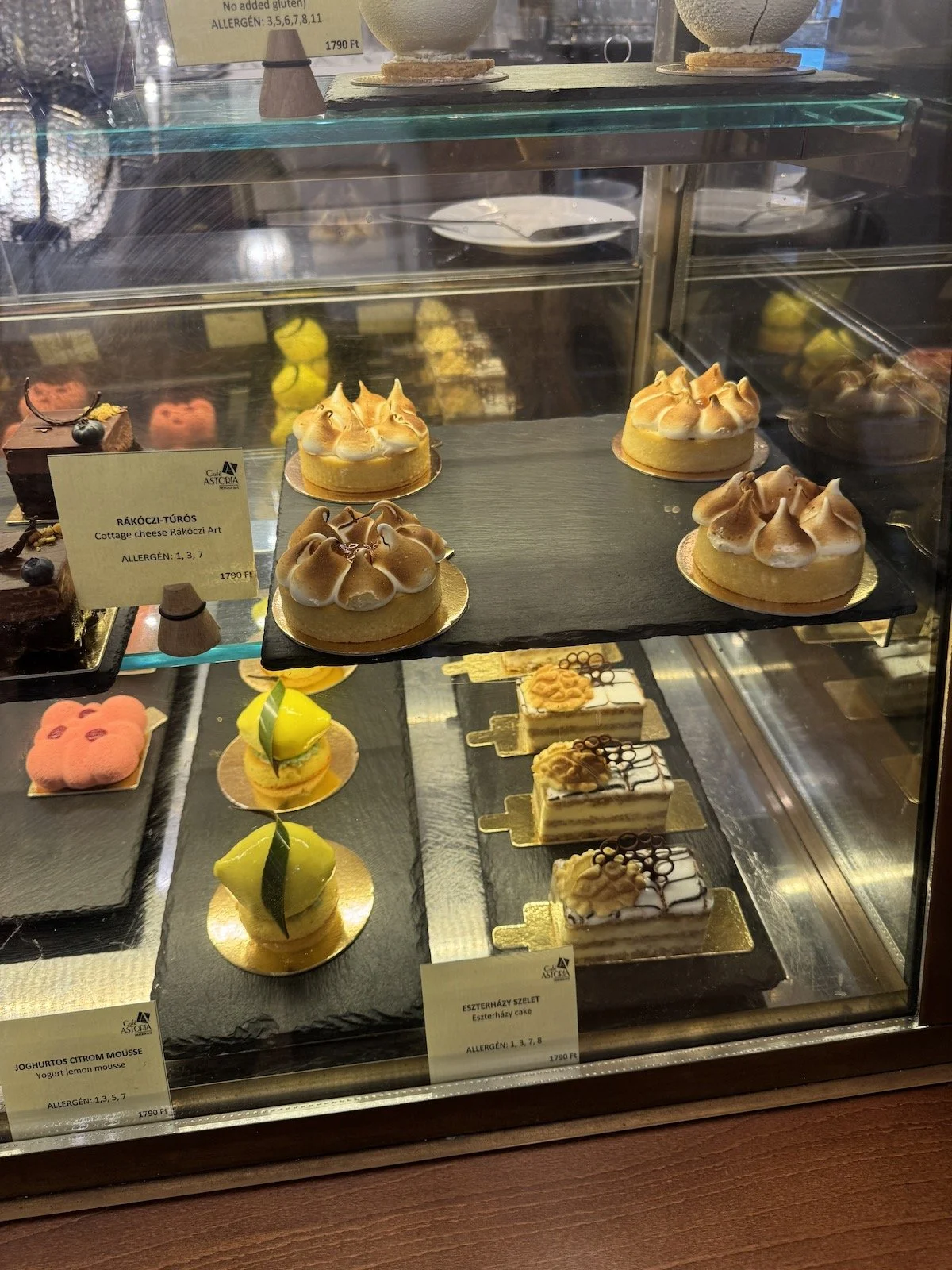
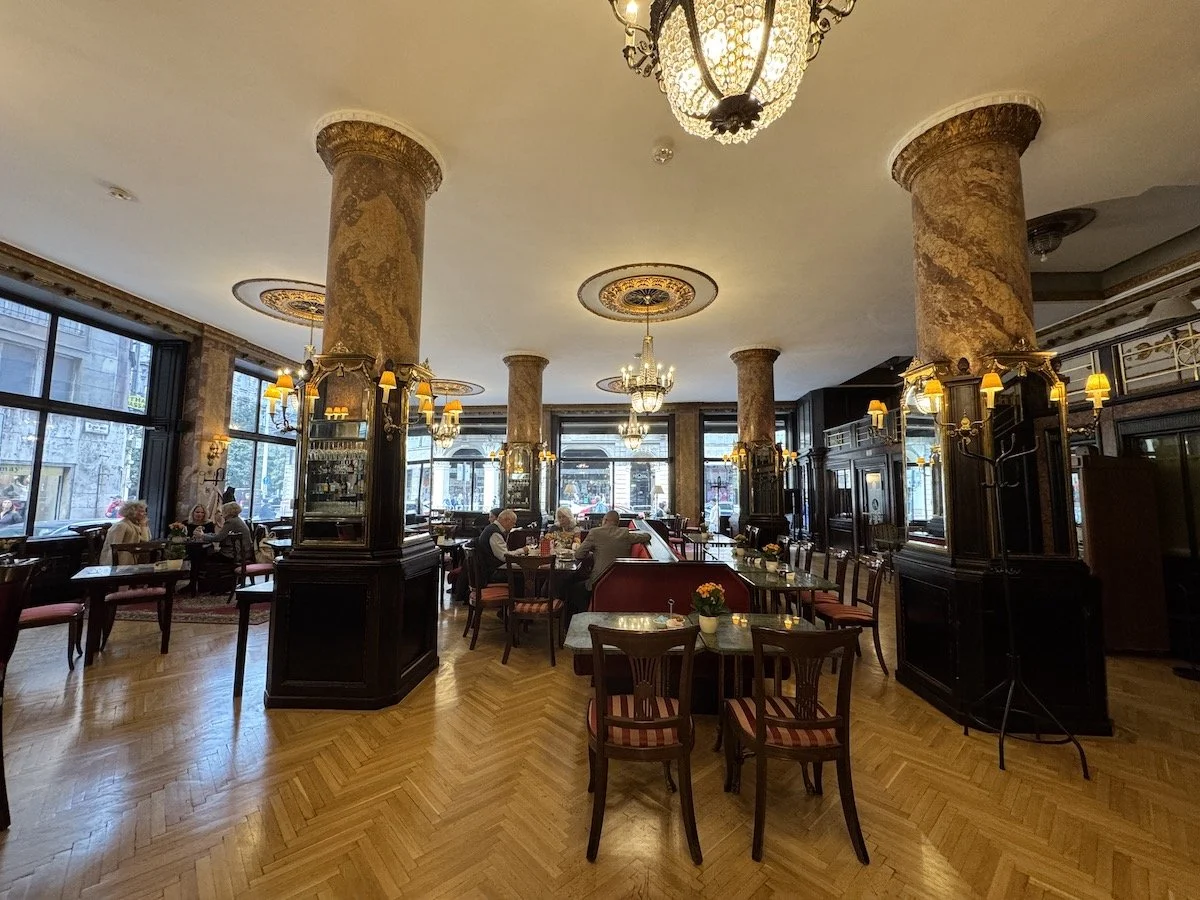
Set on the ground floor of the Danubius Hotel Astoria, right at the Astoria intersection, this room has quietly witnessed more history than almost any café on this list — the short-lived first Hungarian Republic was declared from its balcony in 1918, and the hotel later lived through Nazi occupation and the 1956 Revolution. The gilded, Baroque-mirrored interior hasn't been polished into a tourist set piece the way some others have, which is part of its charm — you'll still find long-time waiters with an unhurried, unbothered attitude rather than a rehearsed script. Order: a simple Viennese coffee and whatever cake's in the case that day — this isn't a place for showing off, it's a place for sitting still.
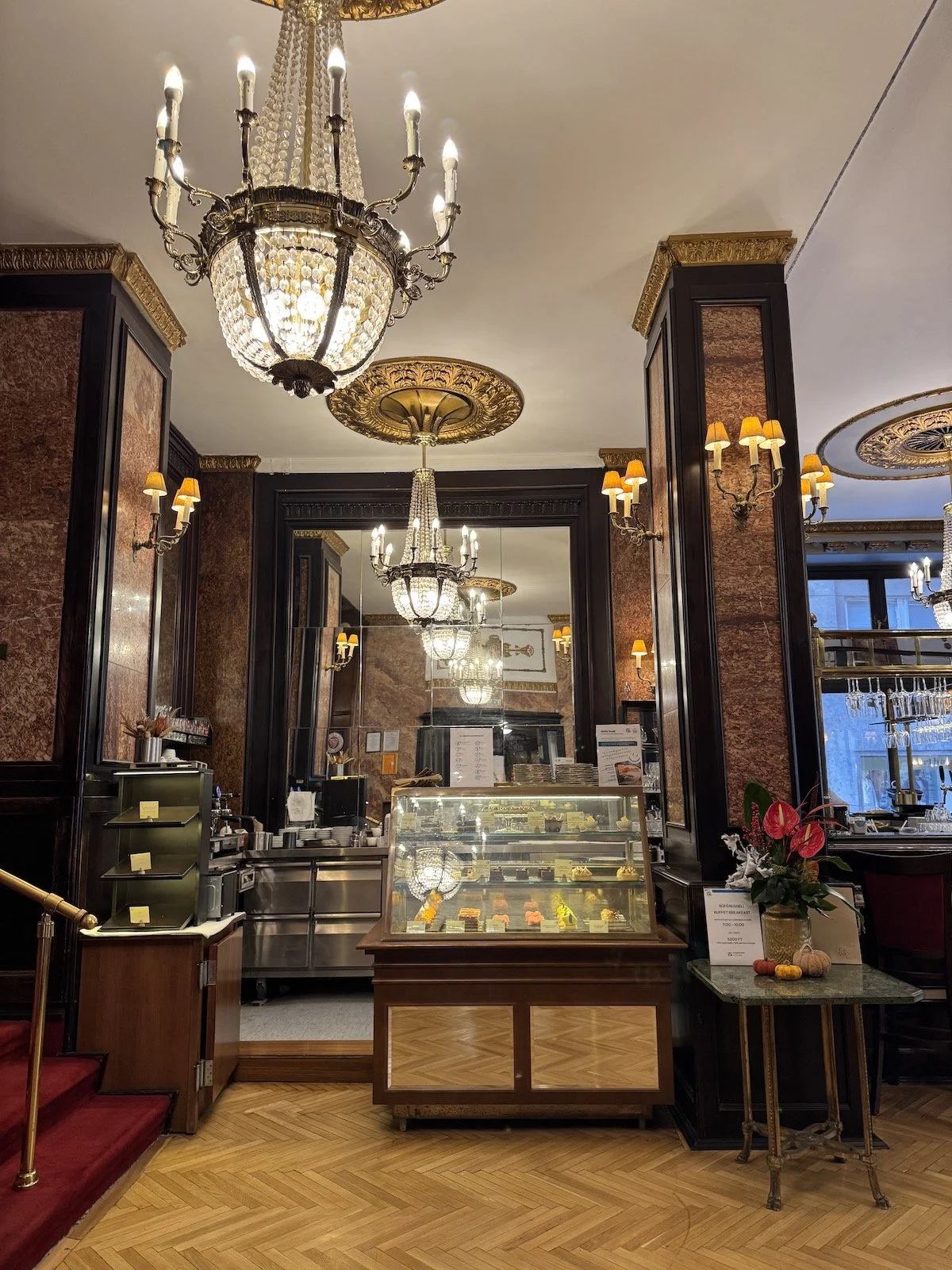
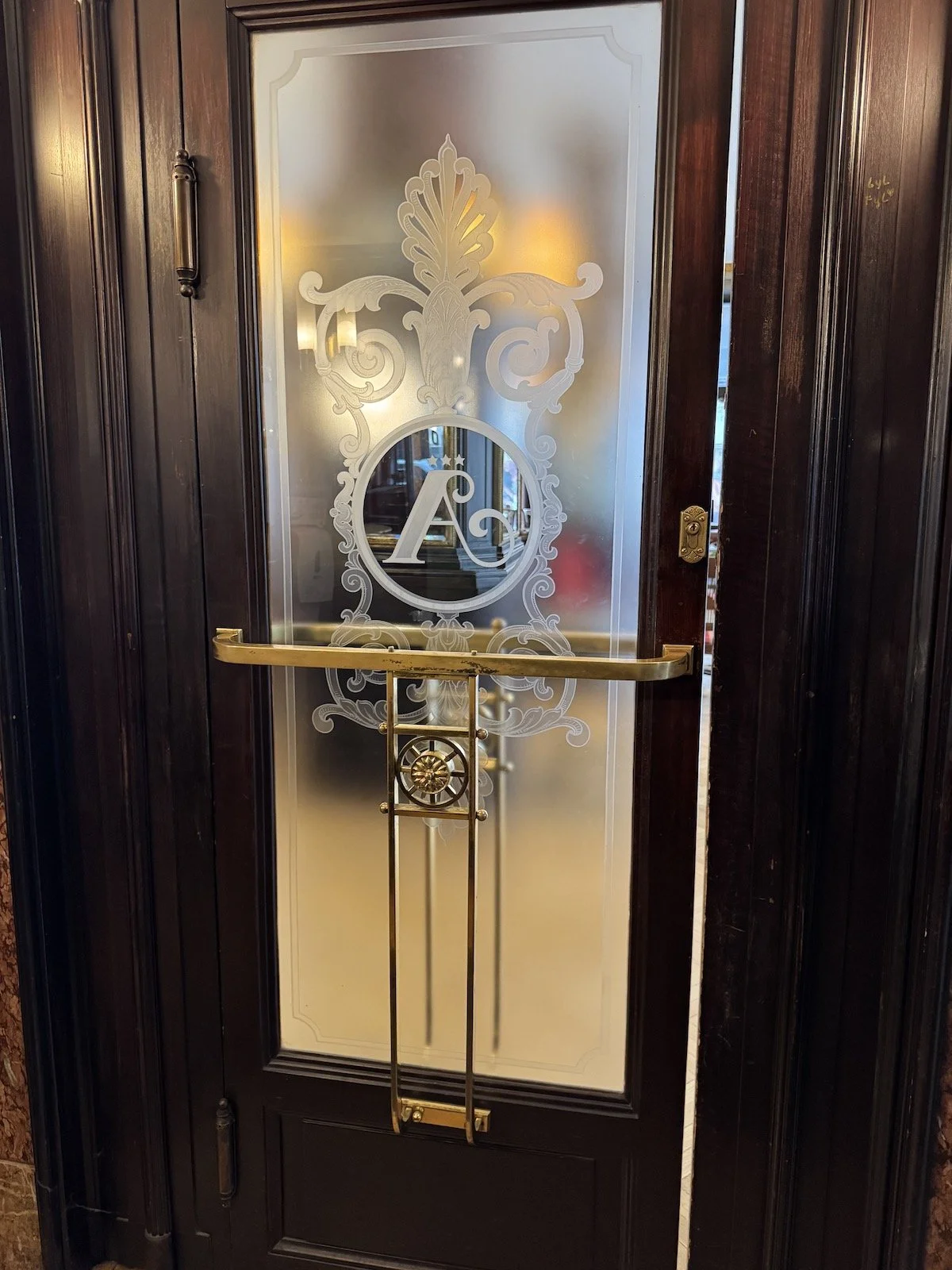
Newer spaces, historic buildings
A few cafés don't have centuries of their own café history, but they've moved into buildings — or building styles — with real stories behind them.
Klotild Patisserie — set inside the newly restored Klotild Palace on Ferenciek tere, occupying a former pharmacy space with its original 1940s interior kept intact. Try the millefeuille, especially the savory version.
Cova at Matild Palace — this Art Nouveau room, decorated with chestnut-leaf motifs, was once the Belvárosi Café and a favorite of writer Gyula Krúdy. It now houses Cova, a historic Milanese pastry house — don't miss the panettone.
Párisi Passage — set inside the beautifully restored arcade on Ferenciek tere, with carved wood and a striking domed ceiling. A slightly gentler-on-the-wallet alternative to New York Café, open from breakfast through evening cocktails.
Gerlóczy Kávéház — the building first operated as a café in the early 1900s, then sat dormant for about 90 years before reopening in 2004 as a Parisian-brasserie-style spot with a boutique hotel upstairs. Round leather banquettes, live piano, and a terrace facing the statue of Károly Kammermayer, Budapest's first mayor after the 1873 unification. Less about the historic cake case, more about a lingering breakfast or lunch.
Here's what to look for so you can order like a local:
Dobos torte — sponge layered with chocolate buttercream, finished with a hard caramel top that cracks under your fork. The classic.
Eszterházy torta — walnut-and-almond meringue layers with cognac buttercream, topped with that unmistakable white fondant and chocolate cobweb.
Zserbó (Gerbeaud slice) — layers of pastry with walnut and apricot jam under dark chocolate. A Christmas and Easter must in every Hungarian home.
Krémes — the cream slice: crisp puff pastry hugging a thick layer of vanilla custard. Simple and perfect (and Ruszwurm's lost masterpiece).
Somlói galuska — a gloriously messy trifle of sponge, chocolate sauce, rum, walnuts and whipped cream. Order it when you want to be hugged by a dessert.
Rigó Jancsi — a rich chocolate-cream cube named after a Roma violinist and his scandalous love affair. Pure decadence.
Practical tips for visiting Budapest's historic cafés:
Go mid-morning or mid-afternoon to dodge the worst queues, especially at New York Café and Gerbeaud.
Dine-in costs more than takeaway — a slice to go usually costs less, a great trick if you just want to taste the cake without the table.
Check the bill — the grand cafés often add a service charge (around 12–15%), so you don't need to tip again on top.
Dress is casual — no one will turn you away in trainers, but these are rooms made for lingering, so give yourself time.
I weave a stop at one of these historic cafés into several of my private walking tours of Budapest — it's one of my favorite ways to slow guests down for twenty minutes in the middle of a busy day of sightseeing. If you'd like to build a café stop into your own custom tour, get in touch and let's plan your visit.
Enjoyed this one? A few more from the blog you'll probably want to read next:
Budapest food tour: eat way through the city like a local
Is tap water safe to drink in Budapest
What Hungarians eat for lunch - the most important meal of the day
