By Kata, katabudapest.com, Published Aug 22, 2026
"Why are there so many baths here?" My guests ask me this all the time, and it's a good question. I don't know any other capital with so many old thermal baths that people still use every day. The reason is under our feet: Budapest sits on one of the richest hot water systems in Europe, and it has shaped life in the city for almost 2,000 years.
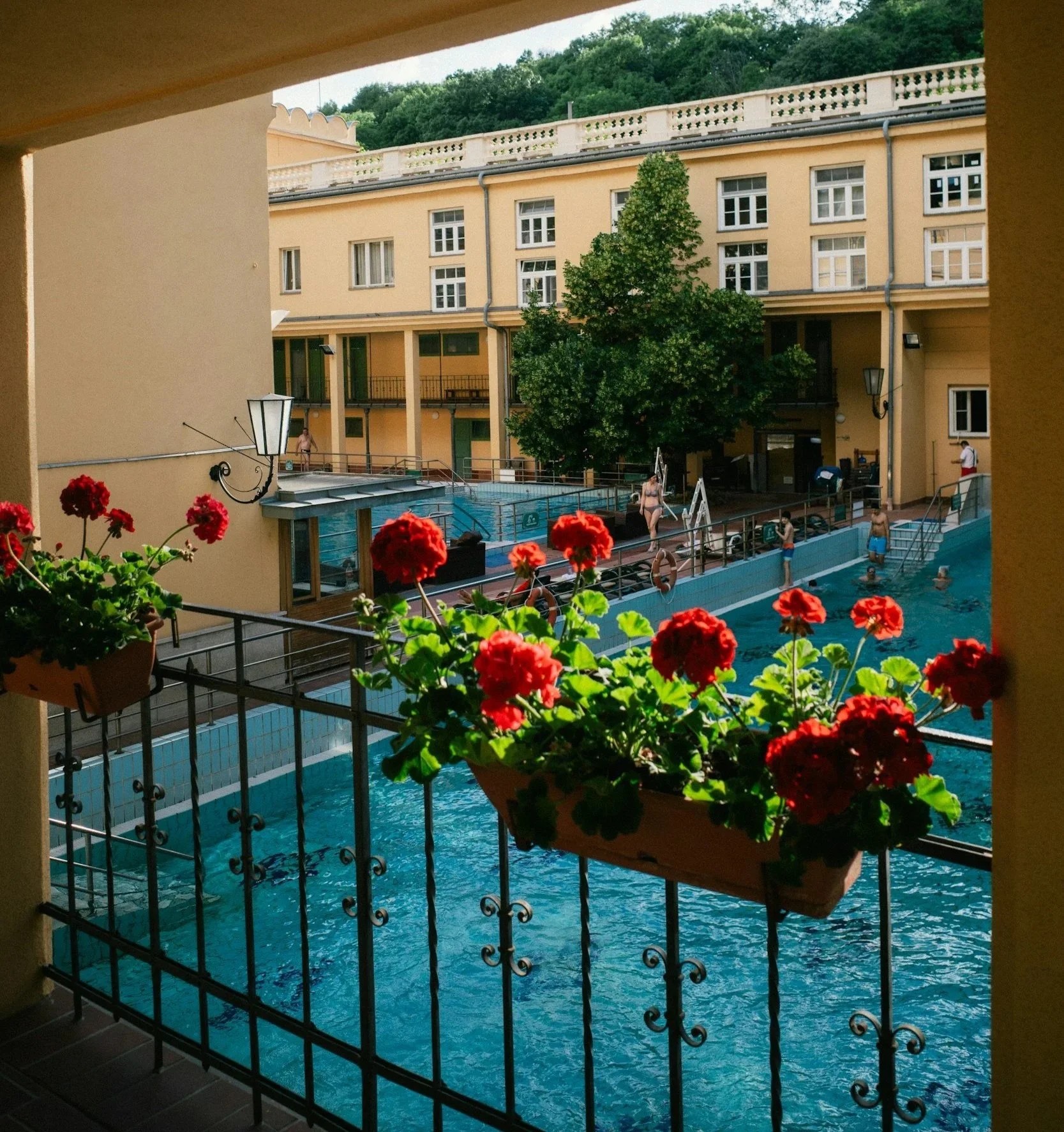
900 years of thermal waters, one favorite local spot: Lukács Baths
The Geology: What's Under the City
Budapest lies at the edge of the Pannonian Basin, a huge low area in the middle of Central Europe. Deep under the ground there are layers of porous sandstone and cracked limestone, which hold water like a sponge.
Rain soaks down into the rock, sometimes as deep as 1,000 metres. Down there the heat of the Earth warms it, and then it rises back up through cracks and fault lines.
The city sits exactly where the Buda Hills meet the Great Hungarian Plain. Along the Buda bank of the Danube there's a fault line that runs roughly north to south. That's why so many old baths, like Gellért, Rudas, Király and Lukács, are lined up along the Buda side.
Budapest has more than 100 natural hot springs, and Hungary as a whole has well over 1,000. The water comes up at anything from about 21°C to 77°C. Each spring has its own mix of minerals, like calcium, magnesium, sulphate and fluoride, so every bath has slightly different water. In 1934 Budapest was officially given the title "City of Spas".
The History: Almost 2,000 Years of Bathing
Before Budapest Existed
The Celtic Eravisci tribe lived here before the Romans. They called the place Ak Ink, which is said to mean "plenty of water".
The Romans Built the First Baths
The Romans built Aquincum, a provincial capital, in what is now Óbuda. They used the warm springs for public baths with hot and cold running water and heated floors. You can still see the ruins of the biggest one, the Thermae Maiores, in the underpass at Flórián tér. The Aquincum Museum nearby shows more of the Roman town.
If you'd like to see Roman Budapest and the baths with me, write to me and I'll plan a day around it.

If you want to visit the baths and the highlights of Budapest with a licensed guide, I'll plan a private tour around you.
Ask me about your tripThe Ottoman Era: The Golden Age of Bathing
The Ottomans ruled Buda from the middle of the 16th century until 1686, and they brought the Turkish bath, the hammam, with them. Their bath houses have an eight sided pool under a dome, with small glass windows in the roof that let light fall into the steam.
Rudas and Király, which is closed for renovation at the moment, are both from this time. It's rare to find Ottoman buildings in Europe that are still used for what they were built for, and I love taking guests into the old domed pool at Rudas.
The 19th and 20th Centuries: Baths as Palaces
When Budapest grew into a big modern city, the baths became grand buildings. Széchenyi opened in 1913 in City Park. It's a huge yellow neo Baroque palace and one of the biggest bath complexes in Europe. Gellért, which is closed for renovation at the moment, opened in 1918 with beautiful Art Nouveau tiles and mosaics.
For people in Budapest, the baths became a place to meet friends. Older men play chess standing in the warm water, and many families spend a whole Sunday there.
Why Buda and Not Pest?
The main fault line runs along the Buda bank of the Danube, so Gellért, Rudas, Király and Lukács get their water from natural springs close to the surface. On the Pest side the fault line doesn't come up the same way, so the baths there, like Széchenyi, get their hot water from very deep wells.
Is the Water Good for You?
The water is full of minerals like calcium, magnesium and sulphates. Many locals and visitors say it helps with sore muscles, stiff joints and stress. In Hungary thermal water is still used in treatment for joint problems. But I always tell my guests: think of the baths as a place to relax and feel better, not as a cure.
I often add a bath stop to my city tours and countryside trips. My favourite moment is telling the story of the springs while my guests are standing in the warm water.
FAQ
Why does Budapest have so many thermal baths? The city sits on the edge of the Pannonian Basin, where porous and cracked rock holds a lot of hot water. The water rises to the surface through fault lines, especially on the Buda side.
How many thermal springs are there in Budapest? More than 100 natural springs. They feed around a dozen big public baths.
What is the oldest bath in Budapest? Rudas and Király were both built by the Ottomans in the 16th century. The Romans had baths here even earlier, and you can see their ruins at Flórián tér.
Is the water in Budapest baths naturally hot? Yes. It's heated deep underground and comes up already warm. Depending on the spring, it's between about 21°C and 77°C.
Why are most old baths on the Buda side? The main fault line runs along the Buda bank, so the springs come up naturally there. On the Pest side, baths like Széchenyi use deep wells.
Is thermal water good for your health? Many people find it helps with sore muscles, stiff joints and stress, and it's used in treatment for joint problems. But it's best to see it as relaxation, not a cure.
Which Budapest bath should I visit? Széchenyi for the big outdoor pools and the grand building, Rudas for the old Ottoman dome and the rooftop pool, and Lukács if you want a quieter bath where mostly locals go.
I love working a bath stop into countryside and city tours alike, there's nothing quite like explaining 2,000 years of history while guests are standing in the exact water that made it all possible. If you'd like to build a thermal bath visit into your own custom Budapest tour, get in touch and let's plan your visit.
Enjoyed this one? A few more from the blog you'll probably want to read next:
48 Hours in Budapest: A Local Guide's Real-Vibe Itinerary
Budapest Airport to Your Hotel: Every Option, Honestly Compared (2026 Prices)
15 Fascinating Facts About the Hungarian Parliament Building
