15 Fascinating Facts About the Hungarian Parliament Building
By Kata | katabudapest.com | Published July 25, 2026
I've walked past the Hungarian Parliament thousands of times — on my way to meet tour groups, on quiet Sunday mornings, lit up gold against the Danube at night — and it still stops me in my tracks. It's the building everyone photographs, but almost nobody actually knows the story behind it. So here it is: the facts I share with my guests, the ones that make them stop snapping photos and start asking questions.
If you're planning a visit, this is the background that turns "wow, that's big" into "wait, seriously?"
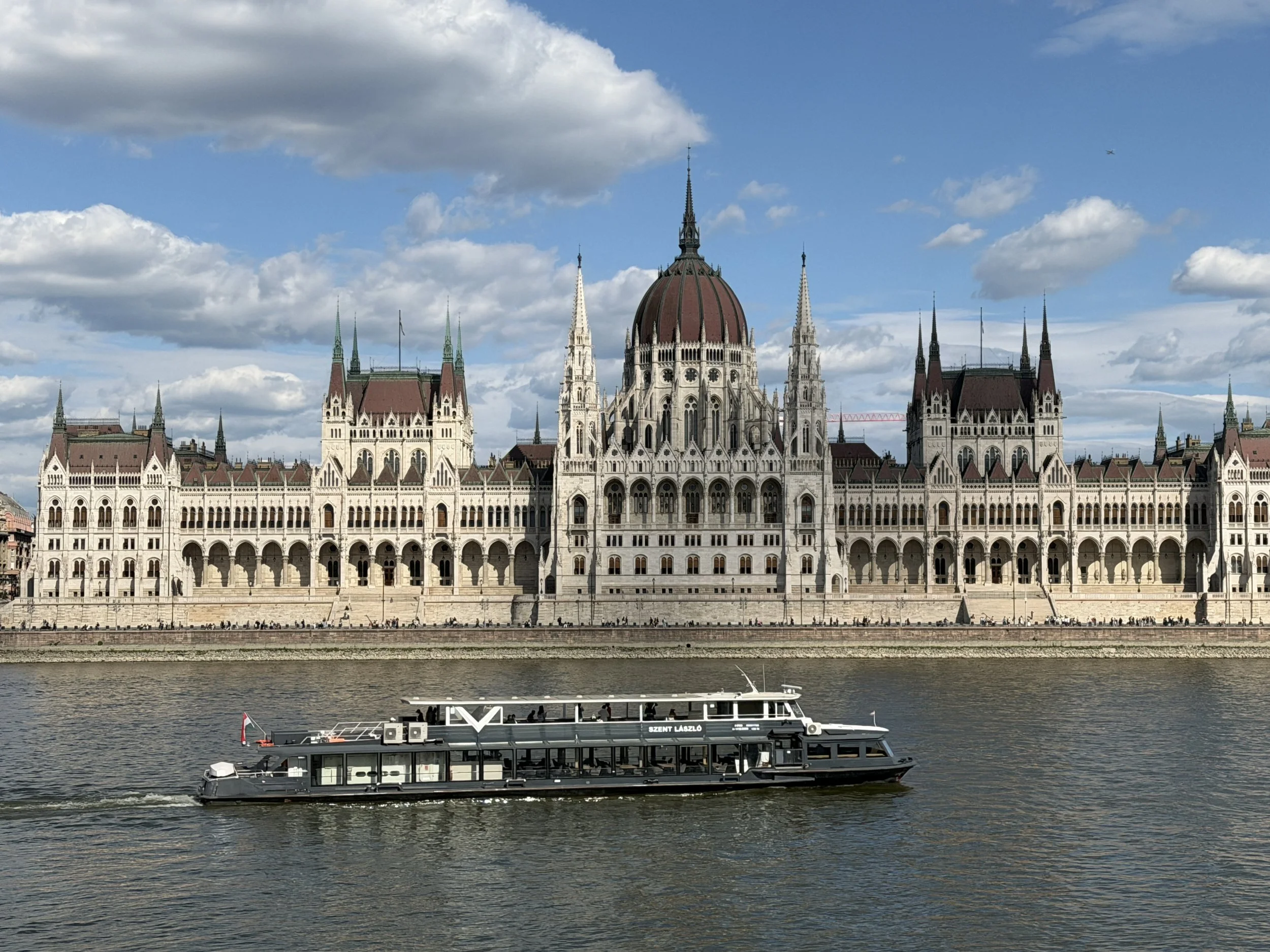
The full sweep of the facade — 268 metres of neo-Gothic stone along the Danube.
1. It Was Never Meant to Have Just One Winner
When Hungary announced an international competition in 1882 for a new parliament building, the judges couldn't pick just one design. They approved all three prize-winning plans — and had all three built. The winner became today's Parliament. The second and third place designs became the Ministry of Agriculture and the former Museum of Ethnography building, both still standing near Kossuth Square today. So next time you're in the area, know that you're actually looking at an entire architectural competition brought to life, not just one building.

2. Its Architect Never Saw It Finished
Imre Steindl won the competition and spent the better part of two decades on his masterpiece. Construction began in 1885, and although the building was inaugurated in 1896 for Hungary's millennium celebrations, it wasn't fully complete until 1904. Steindl went blind in his final years and died just weeks before the official opening — he never saw his finished building with his own eyes.
3. Nearly Everything Is a Symbol of the Number 96
Hungarians love a good number pattern, and Steindl built it right into the architecture. The dome rises exactly 96 metres, and there are 96 steps on the main staircase leading up to it. Why 96? It marks two milestones at once: the year 896, when the Magyar tribes settled the Carpathian Basin, and 1896, the year of Hungary's millennium celebrations. Even the number of towers is meaningful — there are 365 of them, one for each day of the year.
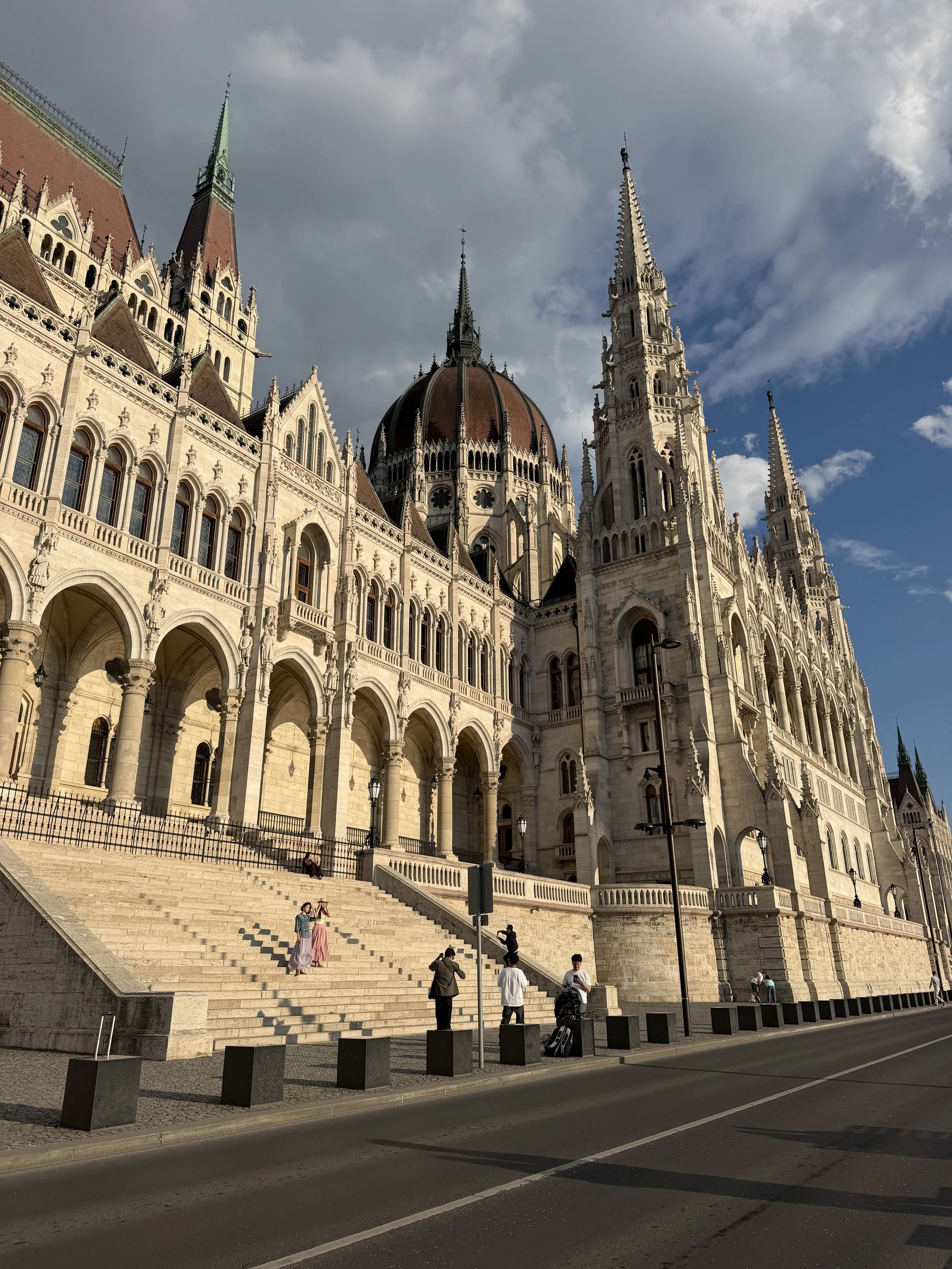
Under 96 metres of dome: the crown that's survived Fort Knox, a world war, and a millennium.
4. It's One of the Largest Parliament Buildings on Earth
At 691 rooms, 29 staircases, 13 lifts and 10 courtyards, the building is enormous — it's the third-largest parliament building in the world, after the ones in Bucharest and Buenos Aires. For decades it held the Guinness record as the largest in Europe. Even now, walking the full length of the Danube-facing façade takes a solid few minutes.
5. The Red Carpet Alone Is Nearly 3 Kilometres Long
The corridors are lined with almost three kilometres of red carpet, covering nearly 17,750 square metres across four floors. It's one of those details you don't notice until someone points it out — and then you can't stop noticing it.
6. It Had Central Heating and Air Conditioning in the 1890s
This one surprises people every time. Long before it was standard anywhere, the Parliament was built with both central heating and a form of air conditioning, making it one of the most technologically advanced public buildings of its era, right alongside its neo-Gothic spires and hand-carved stonework.
7. Only One Material Came From Outside Hungary
The building was designed as a monument to national pride, and that meant using Hungarian materials and Hungarian craftsmen wherever possible. There was exactly one exception: the marble columns on the main staircase, which were imported from Sweden. Everything else — the stone, the brick, the gold leaf — was sourced and worked locally.
8. It Took 40 Million Bricks and Half a Million Precious Stones
The sheer scale of materials is staggering: roughly 40 million bricks, half a million decorative gemstones, and about 40 kilograms of 22- and 23-carat gold leaf used throughout the interior. Nearly a thousand people worked on the building at the height of construction — an enormous workforce for the technology of the 1890s.
9. The Holy Crown Wasn't Always Kept There
Today, the Holy Crown of Saint Stephen — Hungary's most important national treasure, along with the royal orb, sceptre, and sword — sits beneath the central dome, guarded around the clock. But it hasn't always lived in the Parliament. It spent decades abroad for safekeeping after WWII (including a long stay at Fort Knox in the United States) before being returned to Hungary in 1978, and only moved into the Parliament building itself in 2000.
10. The Crown Jewels Were Hidden There During WWII
Speaking of treasures: during the chaos of the Second World War, the Parliament building was used to secretly safeguard Hungary's crown jewels, protecting them from looting and destruction during the war years. It's a small but powerful reminder that this building has spent more than a century as a guardian of Hungarian identity, not just its government.
11. Two Shots Were Fired Inside — and the Bullet Holes Are Still There
In 1912, opposition MP Gyula Kovács fired three shots at pro-government Speaker of the House István Tisza during a heated parliamentary session, then reportedly turned the gun on himself. Remarkably, no one was killed, and the bullet marks from that day are still visible in the building today — a rather dramatic footnote most guidebooks skip entirely.
12. The Guards Change Position Every Five Minutes
If you visit the Dome Hall where the crown is displayed, you'll see two ceremonial guards standing watch. Every five minutes, they perform a small, precise change of sword position — a tradition worth timing your visit around if you want to catch it (and worth not standing too close to, since the swords do move).
13. It's a UNESCO World Heritage Site
The Parliament is part of the "Banks of the Danube" UNESCO World Heritage listing, protected since 2011, alongside Buda Castle and Andrássy Avenue. It's also often ranked among the most beautiful parliament buildings in the world by international press.
14. It Wasn't Always Called "Kossuth Square"
The square the Parliament sits on was essentially an abandoned, undeveloped patch of land until the mid-1800s, originally known as Tömő Square. It only became the grand, purpose-built plaza we see today once construction of the Parliament began — proof that even Budapest's most iconic square had humble beginnings.
15. It's No Longer Budapest's Tallest Building — But It Was for Over a Century
For more than a hundred years, a Budapest building code kept structures no taller than St. Stephen's Basilica and the Parliament (both 96 metres), out of respect for their symbolism. That unofficial ceiling has only recently been surpassed by newer developments like the MOL Campus — but the Parliament remains, without question, the emotional skyline of the city.
+1. Freddie Mercury Once "Tried" to Buy It
This one's more legend than fact, but it's too good not to share. The story goes that Freddie Mercury, seeing the Parliament from a boat on the Danube during a Queen visit to Budapest, was so taken with it that he jokingly asked if he could buy it. He was gently informed that Hungary was, understandably, quite fond of its own Parliament. It's almost certainly been embellished over the decades of retelling, but it's become one of Budapest's favorite local legends — and honestly, once you see the building lit up at night, it's easy to understand the impulse.
Frequently Asked Questions
How long does it take to visit the Hungarian Parliament? A guided interior tour typically runs 45–50 minutes, but I usually recommend building in extra time to admire the exterior from Kossuth Square and the Danube promenade — the building looks completely different depending on where you stand and what time of day it is.
Do you need a guide to visit the Parliament? You can visit independently with an audio guide, but a local guide can get you through security faster, explain details you'd otherwise walk right past, and combine the visit with the surrounding Kossuth Square monuments as part of a fuller morning in the city.
Is the Hungarian Parliament open to tourists every day? Yes, though hours and ticket availability shift seasonally and access can close without notice for state events. I always recommend booking ahead rather than counting on same-day tickets, especially in high season.
What's the best time of day to photograph the Parliament? Golden hour and just after sunset, when the building is fully illuminated and reflected in the Danube — it's a completely different, almost fairy-tale version of the building compared to midday.
Curious about the stories behind Budapest's landmarks? I'd love to walk you through the Parliament, Kossuth Square, and the rest of the city's history in person. Get in touch to plan your private Budapest tour, and I'll make sure you leave knowing a lot more than just where the bullet holes are.
Enjoyed this one? A few more from the blog you'll probably want to read next:
Where Budapest Really Shops: Inside the Klauzál Square Market Hall
Szimpla Kert: Is It Still Worth Seeing in Budapest?
Why You Should Visit the Citadella for Sunset in Budapest
Kaptafa Brunch: The Jewish Quarter Spot That Makes Breakfast Fun Again
