Why Budapest Has So Many Thermal Baths
By Kata | katabudapest.com | Published Aug 22, 2026
Guests ask me this almost every time we pass a bathhouse on tour: "Why are there so many of these here?" It's a fair question — no other capital city in the world has anything close to Budapest's concentration of historic, still-functioning thermal baths. The short answer is that Budapest is sitting on top of one of Europe's richest geothermal systems, and it has been quietly shaping the city's culture for nearly 2,000 years. Here's the full story, geology and history both, in plain language.
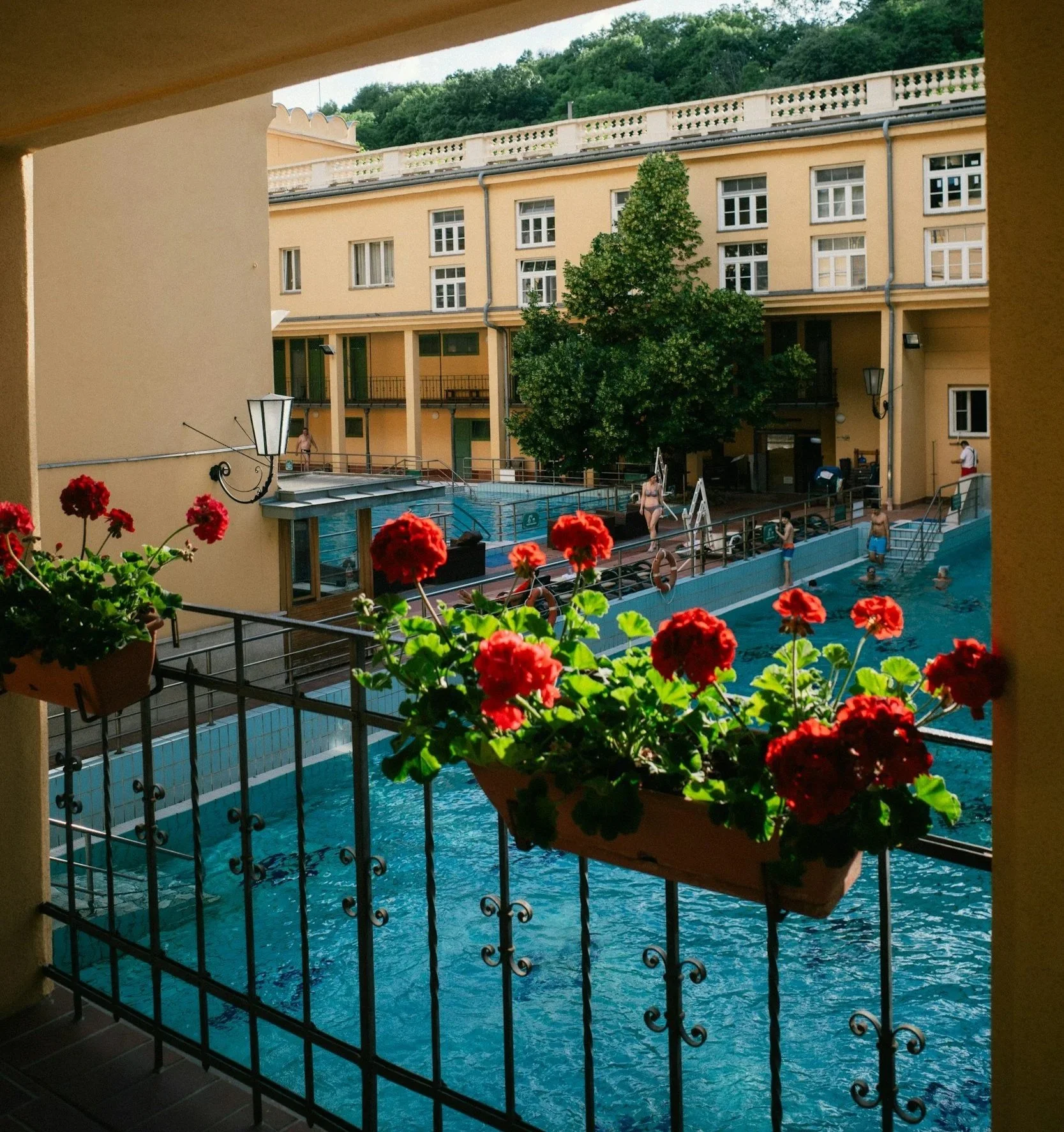
900 years of thermal waters, one favorite local spot: Lukács Baths
The geology: what's actually under the city
Budapest sits directly above the Pannonian Basin, a vast geological depression formed millions of years ago, layered with porous sandstone and fractured limestone (karst) formations that act like a giant underground reservoir. Rainwater seeps down through these porous rock layers over long periods, gets heated naturally by the Earth's crust, and pushes back up to the surface through cracks and fault lines — some from as deep as 1,000 meters below the city.
Specifically, Budapest sits right where the Buda Hills meet the edge of the Great Hungarian Plain, along a geological fault line running roughly north-south on the Buda side of the Danube. That fault line is exactly why almost all of the city's most famous thermal baths — Gellért, Rudas, Király, and Lukács — are clustered on the Buda bank rather than spread evenly across the city.
The numbers are genuinely striking: Budapest sits above more than 100 natural thermal springs, part of a network across Hungary of well over 1,000. Water surfaces at temperatures ranging from around 21°C to 77°C depending on the spring, with different mineral compositions in different parts of the city — which is exactly why each bath has its own distinct water chemistry, color, and reputed therapeutic benefits, from calcium and magnesium to sulphate and fluoride.
The history: nearly 2,000 years of bathing culture
Long before Budapest existed
Before Budapest was Budapest, the area was home to a Celtic tribe called the Eravisci, who reportedly named the land Ak-ink — 'Abundant Water.' The name says it all.
The Romans built the first baths
When the Romans arrived and established their provincial capital of Aquincum, in what's now the Óbuda district, they moved quickly to build proper public baths fed by the local thermal springs — complete with piped hot and cold water and underfloor heating systems that would feel surprisingly modern today. The ruins of the Thermae Maiores near Flórián tér are still visible, and you can walk through them at the Aquincum Museum.

If you want to visit the highlights of Budapest with a licensed tour guide, book your private tour now.
Let's explore Budapest →The Ottoman era: Budapest's bathing golden age
The real turning point came with the Ottoman Turks, who occupied Hungary from the mid-16th century into the late 17th century. The Ottomans brought their own deeply rooted hammam bathing tradition and built elegant bathhouses over the existing springs — recognizable by their octagonal pools, domed ceilings, and the small glass openings that let shafts of light filter down into the steam. Several of these Ottoman-era structures are still standing and still in use today, most famously Rudas and Király, making them genuinely rare surviving examples of Ottoman architecture anywhere in Europe, not just in Hungary.
The 19th and 20th centuries: baths as grand architecture
As Budapest modernized in the 1800s and early 1900s, its bath culture evolved from purely functional bathing into architectural showpieces. This is the era that gave the city Gellért Baths (opened in 1918, in Art Nouveau style with elaborate tilework) and eventually Széchenyi Baths, the enormous neo-Baroque complex that remains one of the largest thermal bath complexes in Europe. Bathing shifted from a purely practical necessity into a social ritual — a place to see and be seen, play chess in the water, or simply spend a Sunday.
Why it's specifically Buda, not Pest
If you've noticed that most of Budapest's most famous historic baths sit on the Buda side, that's not a coincidence — it's geology. The main thermal fault line runs along the western (Buda) bank of the Danube, which is why Gellért, Rudas, Király, and Lukács all cluster there, drawing directly from shallow natural springs. Pest's baths, including the famous Széchenyi, are fed differently — from deep drilled wells rather than surface springs — since the natural fault doesn't run through that side of the river in the same way.
Is the water actually good for you?
The thermal waters are rich in minerals like calcium, magnesium, and sulphates, and many visitors and locals alike find real relief for sore muscles, joint stiffness, and general stress after a soak. It's worth being clear-eyed about this, though: the baths offer genuine relaxation and temporary relief, not a medical cure, whatever the more enthusiastic spa brochures might imply.
FAQ: Budapest's thermal baths
Why does Budapest have so many thermal baths? Because the city sits directly above the Pannonian Basin, a geological formation with porous, fractured rock layers that create a natural underground reservoir of geothermally heated water, some of it surfacing through fault lines right in the city center.
How many thermal baths are there in Budapest? Budapest has more than 100 natural thermal springs feeding around a dozen major public bath complexes, making it one of the most geothermally active capital cities in the world.
Which Budapest thermal bath is the oldest? Rudas and Király both date back to the Ottoman period in the 16th century, making them among the oldest continuously operating baths in the city.
Is Budapest's thermal water natural or heated artificially? It's naturally heated. The water is warmed underground by geothermal energy as it circulates through the earth's crust, and rises to the surface already hot — no artificial heating is used at the source.
Which side of Budapest has the most historic baths? The Buda side, since it sits along the main geological fault line where most of the natural surface springs emerge. Pest's baths, like Széchenyi, rely on deep wells instead.
I love working a bath stop into countryside and city tours alike — there's nothing quite like explaining 2,000 years of history while guests are standing in the exact water that made it all possible. If you'd like to build a thermal bath visit into your own custom Budapest tour, get in touch and let's plan your visit.
Enjoyed this one? A few more from the blog you'll probably want to read next:
48 Hours in Budapest: A Local Guide's Real-Vibe Itinerary
Budapest Airport to Your Hotel: Every Option, Honestly Compared (2026 Prices)
15 Fascinating Facts About the Hungarian Parliament Building
