Margaret Island Budapest — A Local Guide's Complete Guide to Margitsziget (2026)
By Kata | katabudapest.com | Updated Aug 10, 2026
If you ask a Budapest local where they go to actually relax — not sightsee, just breathe — most of us will say the same thing: Margaret Island. No cars in the center, no traffic noise, just runners, families, and locals sprawled out on the grass with a beer or a book. Honestly, it's Budapest's answer to Central Park — a green island of calm that locals treat as a backyard, not a tourist stop. Running here is practically a local tradition; on any given morning you'll see half the city out on the track, rain or shine. I've spent more lazy Sunday afternoons here than I can count, and it's one of the first places I bring visitors who tell me they need a break from the museum-and-monument circuit.
Here's everything you need to know to spend a perfect few hours — or a full day — on Margaret Island.
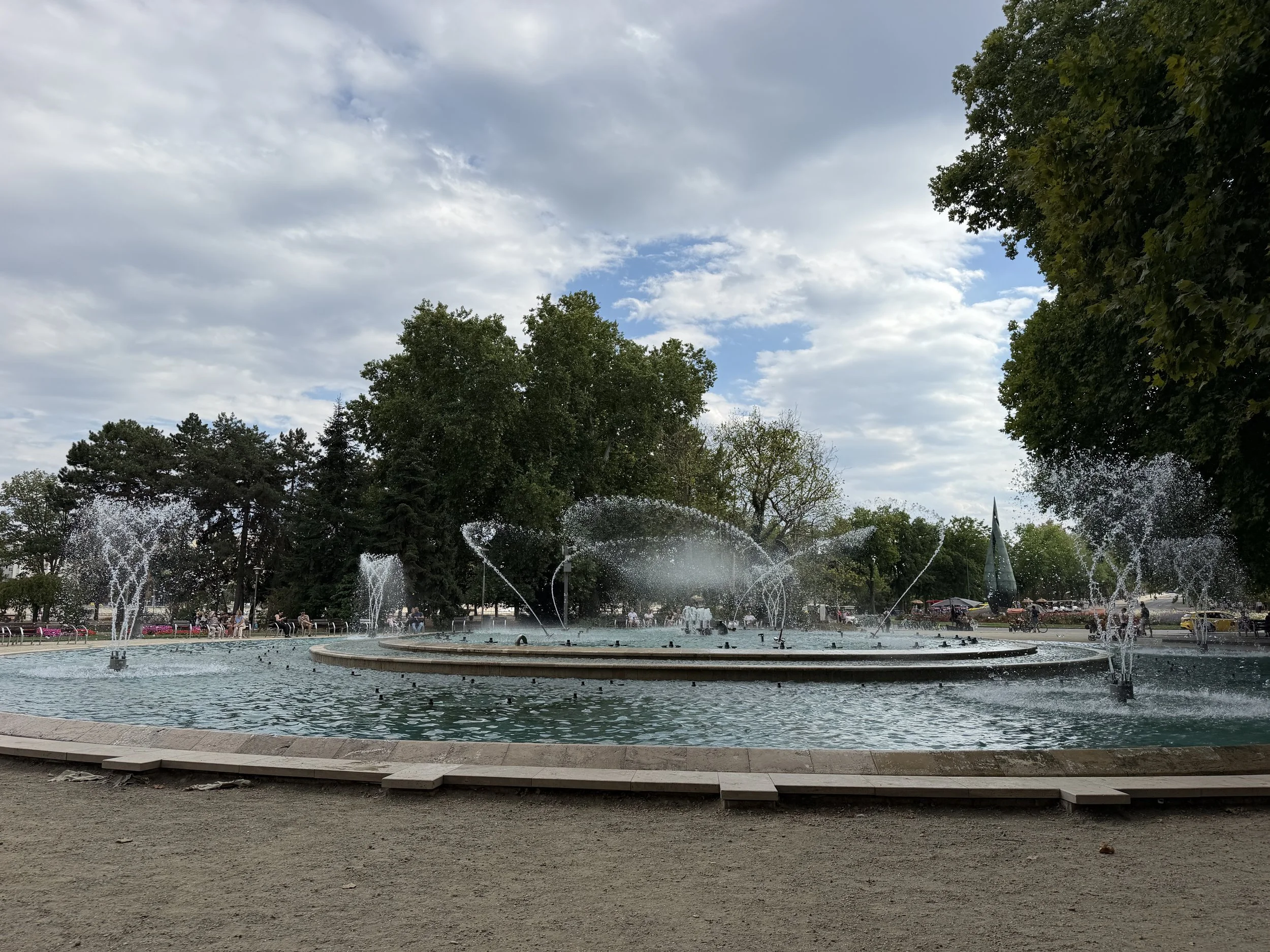
All eyes on the fountain — showtime on Margaret Island
A Quick Orientation
Margitsziget, as we call it, is a 2.5-kilometre island in the Danube, connected to both banks by Margaret Bridge to the south and Árpád Bridge to the north. It's about 96 hectares in total, and almost entirely car-free — which, again, is a huge part of the charm. The island's history goes back further than most visitors realize. The Romans were here before anyone else. Later it became a royal hunting ground, and at one point it held three separate religious orders at the same time. Its name comes from Saint Margaret of Hungary — Boldog Margit — daughter of King Béla IV. Legend has it that during the Mongol invasion of 1241, Béla vowed that if Hungary survived, he would give his daughter to the church. Hungary survived. Margaret was brought to the island's Dominican convent at just ten years old, lived out her life here, and died at twenty-eight. She was later canonized, and her tomb is still on the island — still visited today. The island only became a public park in the 19th century, opened to ordinary Budapest residents in 1869. It's been the city's green lung ever since.

If you want to discover Margaret Island with a licensed toue guide, book your private tour now.
Let's explore Budapest →Getting to Margaret Island
The island sits in the middle of the Danube, connected to both Buda and Pest by Margaret Bridge. The easiest way in is Tram 4 or 6 to the Margit híd, budai hídfő stop, right in the middle of the bridge, with stairs leading down onto the island. If you'd rather ride straight through, Bus 26 is the only line that actually drives the length of the island, which is handy if you're heading to the far end (the Alfréd Hajós pool or the mini zoo) and don't want to walk the whole way. Once you're on the island, forget cars — the center is pedestrian and bike-only, which is exactly what makes it feel like a different city. Renting bikes is one of the easiest ways to get around, with rental points scattered near both entrances — a much better option than walking if you want to see the whole island in one visit. And the lawns aren't just for sunbathing: on any warm evening you'll find couples having a romantic picnic, groups playing badminton, and — especially in the mornings — free-form yoga classes happening under the old trees that line the main paths. Some of these trees are well over a century old, and they're a huge part of what gives the island its quiet, established feel compared to Budapest's newer parks.
The Musical Fountain
This is the island's showpiece, and honestly, it never gets old. The fountain runs daily from May 1 through October 31, with hourly shows from 10:00 to 22:00, and it's completely free. What I love is that the music program changes throughout the day, so there's genuinely something for everyone: 11:00 and 16:00 — children's music blocks, full of familiar cartoon tunes, perfect if you've got little ones with you 12:00 — a classical hour, with pieces like Bizet's Carmen Habanera, Brahms' Hungarian Dances, and Mozart's Eine Kleine Nachtmusik Evening shows tend to lean into bigger, more dramatic pieces, and after sunset the fountain lights up in color, which is when it's genuinely magical My tip: go for one of the later evening shows if you can. The daytime shows are lovely, but the lit-up night version is the one people remember. And if you're visiting in peak summer, arrive a few minutes before the hour — it fills up fast right at showtime, especially the 21:00 slot.
Renting a Bringóhintó (Pedal Cart)
This is one of my favorite "insider" recommendations, and something most guides skip entirely. A bringóhintó is a four-wheeled pedal cart — think a tiny go-kart the whole family pedals together — and it's genuinely one of the best ways to see the island with kids. Rental stations are near both the northern and southern entrances, and prices typically start around 3,500–4,500 HUF per hour. It sounds a little silly until you're actually doing it, and then it becomes the highlight of the trip for most kids (and honestly, a lot of adults too).
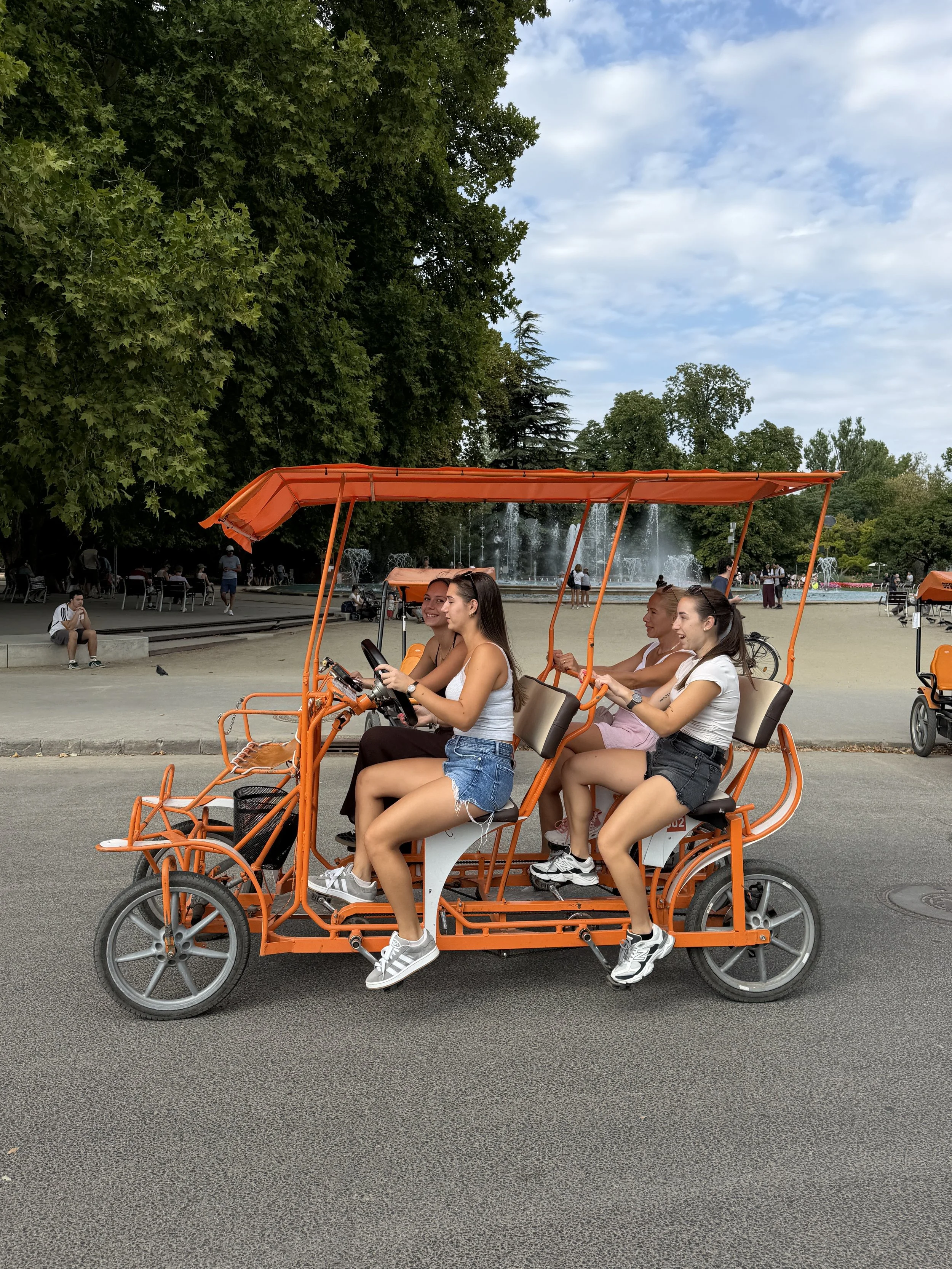
The most fun way to see the island (yes, even for adults)
Palatinus Beach & Thermal Baths
Margaret Island sits on thermal springs, and the Palatinus Strand (locals often just call it "Palatinus beach") takes full advantage of that. It has both indoor and outdoor thermal pools, and unlike a lot of "seasonal" attractions, the indoor thermal side stays open year-round. It's especially popular with families thanks to the large wave pool and general wellness setup — if you're visiting in winter and think the island shuts down, this is proof it doesn't. The outdoor slides and open-air pools are seasonal (roughly May through September), so plan accordingly if that's the main draw for your family. If you'd rather stay right on the island, the Ensana Thermal Hotel sits at the northern end and gives guests direct access to its own thermal and wellness facilities — a nice option if you want the spa experience without the day-tripper crowds. For something a little different, the Holdudvar area (its name literally means "moon courtyard") is a relaxed spot near the island's cultural center, popular for outdoor events, casual drinks, and live music in the warmer months — worth checking what's on if you're around in the evening.
The Japanese Garden and the Mini Zoo
These two are easy to miss, which is exactly why I like sending people there. The Japanese Garden is a quiet, landscaped pocket of the island with little bridges and koi ponds — free to visit, and a nice contrast to the open lawns everywhere else. Further along, there's a small mini zoo that's a low-key, free-to-wander stop if you're traveling with young kids who need a break from walking. Neither will take more than 20–30 minutes, but they're the kind of spots that make a repeat visit feel new.
Playgrounds and the Rose Garden
Families will find several well-kept playgrounds scattered along the main paths, spaced out enough that you're rarely far from one if you've got young kids in tow needing a break from walking or the bringóhintó. They range from small, shaded corners to bigger play areas with proper climbing structures. Near the center of the island, don't skip the Rose Garden — a peaceful, fragrant stretch that's easy to miss if you're rushing between the fountain and Palatinus, but it's one of the prettiest, quietest corners of the island, especially in late spring and early summer when everything's in bloom.
The Running Track and Open-Air Theatre
If you're the type who runs while traveling (or just wants to see how locals actually use the island), there's a 5.3 km loop track that circles the whole island — flat, shaded, and popular enough that you'll never feel alone out there even early in the morning. Near the southern end, the Margitsziget Open-Air Summer Stage hosts concerts and performances throughout the warmer months. Worth checking the schedule if you're visiting between May and September and want an evening out that isn't a tourist trap. Right next to it stands the island's Water Tower, built in 1911 in the Art Nouveau style — one of the most recognizable structures on the island. You can climb it for a panoramic view over the treetops and the Danube on both sides. It's not a long climb, and I always tell people it's worth doing once, especially if you want a photo that actually shows the shape of the island.
Winter: Lumina Park
Don't assume the island shuts down once summer ends. Between roughly October and March, the northern section transforms after dark for Lumina Park, a large outdoor light installation that turns the trees and paths into something genuinely magical at night. It's one of my favorite "locals know, tourists don't" recommendations for anyone visiting in the colder months — the island quiets down, but this is when it puts on its own kind of show.
A Bit of History
The island wasn't always this peaceful. It takes its name from Princess Margaret, a 13th-century Hungarian princess who lived in a convent here — and you can still walk through the church ruins scattered near the center of the island, remnants of that monastic past. Over the centuries it passed through the hands of Benedictine monks, Franciscan nuns, and various aristocratic families, until the 19th century, when it was landscaped into the public park it is today. It took damage during the Second World War but was restored not long after, and it's been Budapest's favorite green escape ever since.
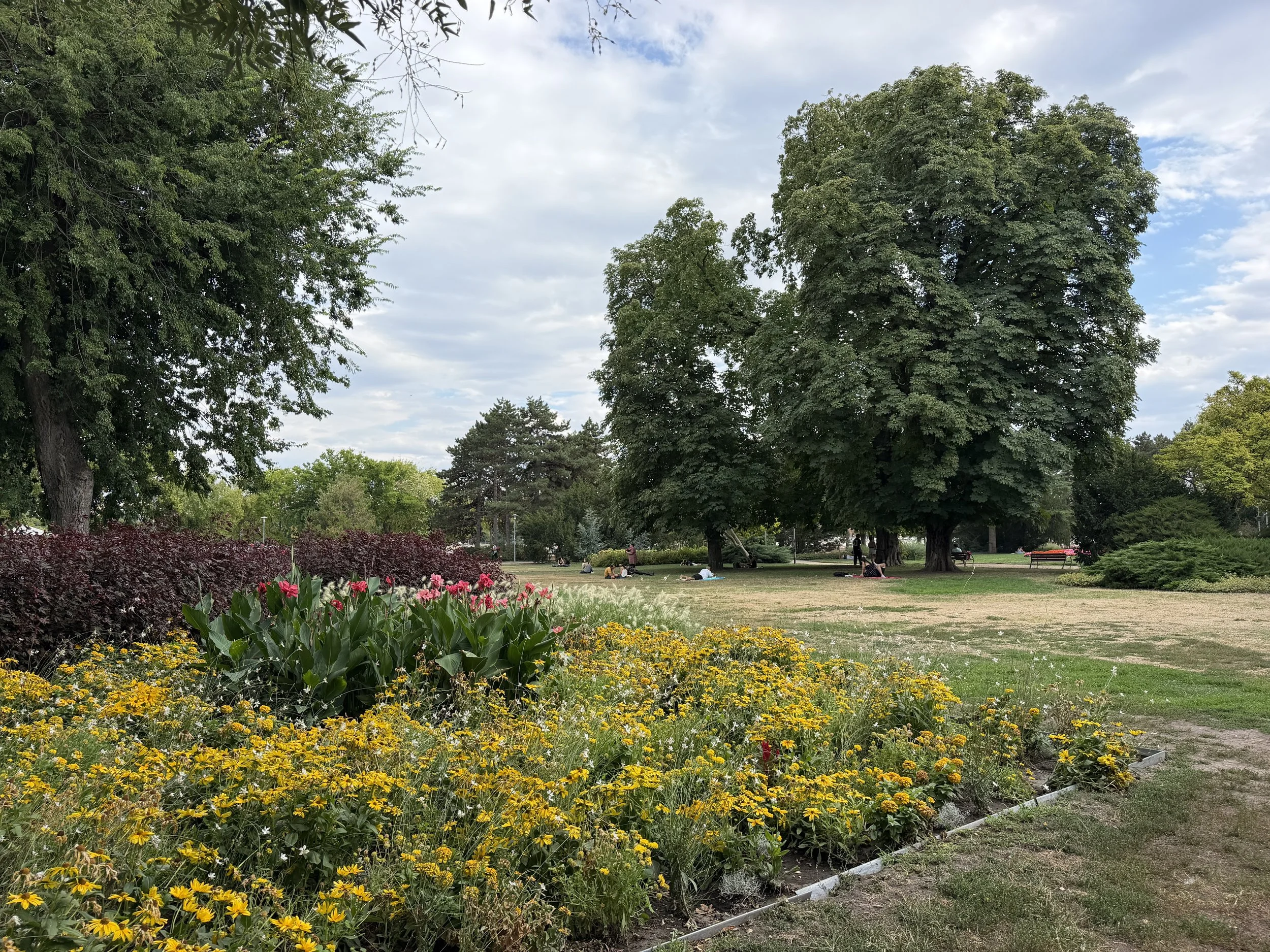
Some of the island's oldest stones, still standing after 800 years
Where to Eat (Or Better: What to Bring)
I'll be honest with you — the food options directly on the island are fine, but nothing special, mostly aimed at day-trippers. My real recommendation, and what most locals actually do, is to bring a picnic. Pick up bread, cheese, and cold cuts from the Great Market Hall or a neighborhood csemege before you come, grab something from the small vendors near the entrance if you forgot, and find a bench with a river view. That's the correct way to spend a summer afternoon here. If you want a proper sit-down meal instead, the restaurants along the Buda embankment just across Margaret Bridge are a noticeably better choice than anything on the island itself.
What Most Visitors Miss
A few things I always point out to guests who want to see the island the way locals actually experience it:
Come at dawn. Especially in summer, first light on Margaret Island is something else — mist off the Danube, rowers out on the water, and for an hour or so the island belongs entirely to the people who come here every single day.
Walk all the way to the Árpád Bridge end. Almost everyone enters from the south and turns back before reaching the northern tip. That's a shame, because the northern end — near the athletics track and the Japanese Garden — is where the island feels most like itself, with open water on every side and almost no tourists.
Hunt for the Kolodko statues. The island has a few of the tiny bronze Kolodko sculptures hidden in plain sight, the same series you'll find scattered around Budapest. Finding them is a small, satisfying game.
It's dog-friendly. You'll share the paths with an enormous number of Budapest dogs on leads — consider it part of the island's character, not an inconvenience. If you're cycling, keep in mind the bike path and walking path are separate — stay on the right side of the marked lanes. Locals notice, and they will say something.
FAQ
Is Margaret Island free to visit? Yes — the island itself is a public park with no entry fee. Specific attractions like the Palatinus Strand, the Japanese Garden, and the mini zoo may have separate admission.
How long do you need on Margaret Island? A couple of hours is enough to walk the main sights and catch a fountain show. If you want to add the thermal baths or a bringóhintó ride, plan for half a day.
Is Margaret Island good for kids? Very much so — between the musical fountain, the pedal carts, the mini zoo, and the wave pool at Palatinus, it's one of the most family-friendly spots in the city.
What time does the musical fountain play? Shows run hourly from 10:00 to 22:00, daily, from May 1 through October 31.
Can you swim on Margaret Island? Yes, at the Palatinus Strand, which has both thermal pools open year-round and seasonal outdoor pools and slides open roughly May through September.
How big is Margaret Island? It's about 2.5 kilometres long and roughly 96 hectares in total — big enough for a full loop of the running track to take a while, but easily walkable in a few hours.
Want to see Margaret Island properly, with the history explained and the hidden corners found? I include it in several of my private walking tours — get in touch and let's build a day around it, or take a look at my Budapest tours.
Enjoyed this one? A few more from the blog you'll probably want to read next:
Budapest food tour: eat way through the city like a local
The Kazinczy street synagogue: Budapest’s hidden orthodox jewel
