Is Tap Water Safe to Drink in Budapest?
By Kata | katabudapest.com | Published July 30, 2026
Short answer: yes. Every time a first-time visitor asks me this on tour, I tell them the same thing — go ahead and drink the tap water in Budapest. It's safe, it's tested constantly, and you don't need to budget for bottled water the whole trip.
Why Budapest tap water is safe
Budapest's water supply is drawn largely from bank-filtered groundwater along the Danube, treated and monitored to European Union drinking water standards. It's tested regularly, and recent quality checks have confirmed it comes in well within EU limits even for newer categories of contaminants that get tested for, like PFAS. This isn't a "probably fine" situation — it's genuinely well-regulated water, and most locals drink it straight from the tap without a second thought.
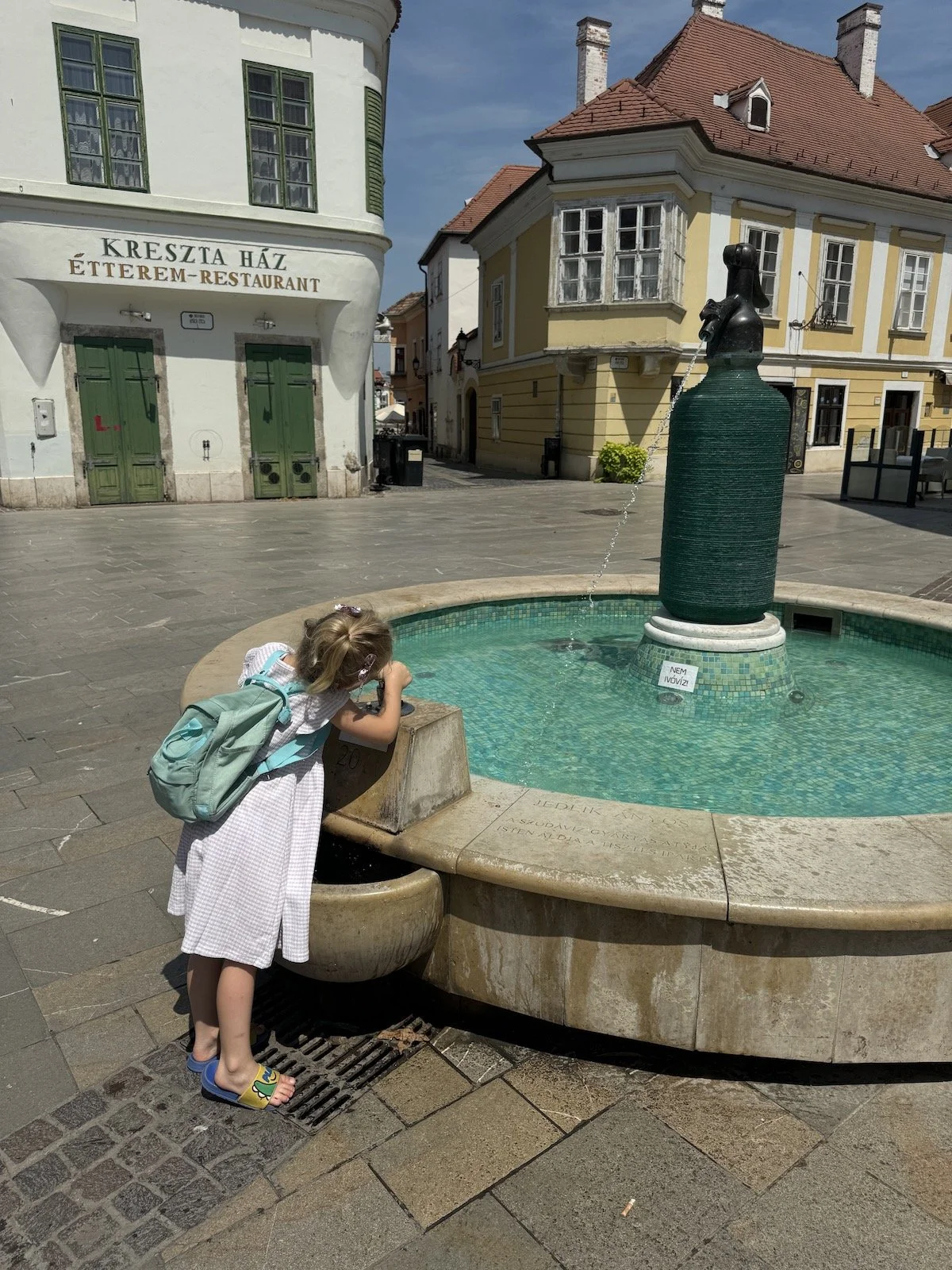
Budapest's best-kept non-secret: the tap water's this good.
What it actually tastes like
One honest note: Budapest treats its water with a bit more chlorine than some travelers are used to, so you might notice a faint chlorine smell or taste straight out of the tap, especially the first pour. It fades quickly, and it's actually a sign the water's been properly treated, not a red flag. If you're sensitive to it, letting a glass sit for a few minutes or keeping a jug in the fridge takes care of it.
Where you should NOT drink from
This is the part that trips people up, because "water in Budapest" isn't all the same thing:
The Danube itself — obviously not for drinking, it's a working river.
Ornamental fountains — the decorative ones you'll see near squares and parks are not drinking water unless there's a clear sign.
Dedicated drinking fountains and taps — look for a sign reading "Ivóvíz" (drinking water). You'll find these scattered through city parks, along Andrássy Avenue, and near playgrounds — they're genuinely safe and a great way to refill a reusable bottle for free while you're out sightseeing.

Tap water's just one of the practical things worth knowing before you land. Book a private tour and I'll walk you through the rest, in person. 🙂
Let's explore Budapest →What about restaurants and hotels?
Tap water at restaurants, cafés, and hotels across Budapest is safe to drink. One thing worth knowing if you're coming from the US, though: free tap water with your meal isn't the automatic, unlimited thing it is back home. Many Budapest restaurants have moved toward filtering their tap water in-house and serving it as "filtered water" on the menu for a charge, rather than bringing a free glass or pitcher the way American restaurants typically do. It's the same safe municipal water, just run through an in-house filter and sold as a menu item — so don't be surprised if asking for "tap water" gets you a polite redirect to a priced "filtered water" option instead of a free glass. If a truly free glass of tap water matters to you, it doesn't hurt to ask directly, but expect it to be the exception rather than the norm at most sit-down restaurants.
What minerals are actually in it?
Budapest's tap water is classified as medium-hard, meaning it carries a moderate level of dissolved calcium and magnesium — the two minerals responsible for water "hardness." Measurements have put the average hardness in the Budapest area at around 148 mg/l (measured as CaO), which puts it on the harder side compared with softer water regions in the southeast of the country, but nowhere near the mineral concentration of a bottled mineral water. Calcium and magnesium aren't just harmless, either — they're both minerals your body needs daily, for bone health and cardiovascular and nervous system function respectively.
Practically, this is why Budapest tap water can leave faint limescale in a kettle over time (a sign of hardness, not a safety issue), and why the water carries a bit more mineral "weight" in taste than very soft water does. Fővárosi Vízművek (Budapest Waterworks) tests the supply thousands of times a year across a wide range of parameters — far more rigorously than most bottled water goes through — so the mineral levels, along with everything else in the water, are well within safe, documented ranges.
If you want water with a noticeably higher mineral content than tap water offers, that's exactly the gap Hungary's bottled mineral waters are built to fill, which brings us to the next question people ask me.
A hidden gem behind your tap water: the Gellért Hill reservoir
Here's a fun one most visitors never hear about: the drinking water flowing to South Buda and parts of Pest is stored inside Gellért Hill itself, in a huge underground reservoir called the Gruber József víztároló, built into the hillside between 1972 and 1980. It's made up of two enormous pools, each holding around 40,000 cubic meters of water, held up by rows of concrete pillars — it genuinely looks like something out of a sci-fi film set, not a piece of city infrastructure.
The catch, and the thing that makes it so special: it's only open to the public a handful of days a year, usually around World Water Day (March 22) and sometimes again in spring, when Fővárosi Vízművek (Budapest Waterworks) runs free guided tours during a maintenance window. Spots fill up almost immediately once registration opens on their website, so if you happen to be visiting Budapest during one of those open days, it's a genuinely unique thing to see — most Budapest locals themselves have never been inside.
Another fun one: the Rudas medicinal water "bar"
While we're on unusual Budapest water spots — the Rudas Baths, right at the Buda foot of Elizabeth Bridge, has its own drinking hall (ivócsarnok) where you can buy actual medicinal spring water, separate from the thermal bathing pools. Three different mineral springs are on tap here — Hungária, Attila, and Juventus — each traditionally associated with a different use: Hungária for digestive complaints, Attila for respiratory issues, and Juventus for blood pressure, according to the bathhouse's own health guidance (worth taking as folk-medicine tradition rather than a substitute for medical advice).
It's open just a couple of hours on Tuesdays and Thursdays, and it genuinely feels like a local secret — mostly older regulars showing up with their own bottles and jugs rather than tourists. If you're curious and don't mind a slightly mineral, sulphurous taste, it's a strange and memorable few minutes, and about as far from a bottle of Szentkirályi as Budapest's water culture gets.
A fun Hungarian invention: the szódás szifon
Here's a fun fact about Hungarian water culture that ties in nicely: the szódás szifon — the pressurized soda siphon bottle that turns plain water into fizzy water at the push of a lever — is a Hungarian invention, credited to the 19th-century scientist and Benedictine monk Ányos Jedlik. He developed his method of producing carbonated water in Hungary in the 1820s, and it's such a genuine point of national pride that szikvíz (Hungarian for soda water) was officially declared a "hungarikum" — a nationally protected cultural treasure — in 2013.
If you want to try it the way locals do, ask for one at a traditional Hungarian restaurant, or better yet, order a fröccs — a classic Hungarian wine spritzer made with wine and szóda rather than plain sparkling water. It's a genuinely refreshing summer drink and a real slice of local culture, not just a fizzy water order.
One small language note that trips up English speakers: in Hungarian, szóda doesn't mean soda pop the way it does in English — it specifically means soda water (the fizzy, unflavored kind). If you want a Coke or a Fanta, you'll need to ask for that by name; asking for "szóda" will just get you a glass of fizzy water.
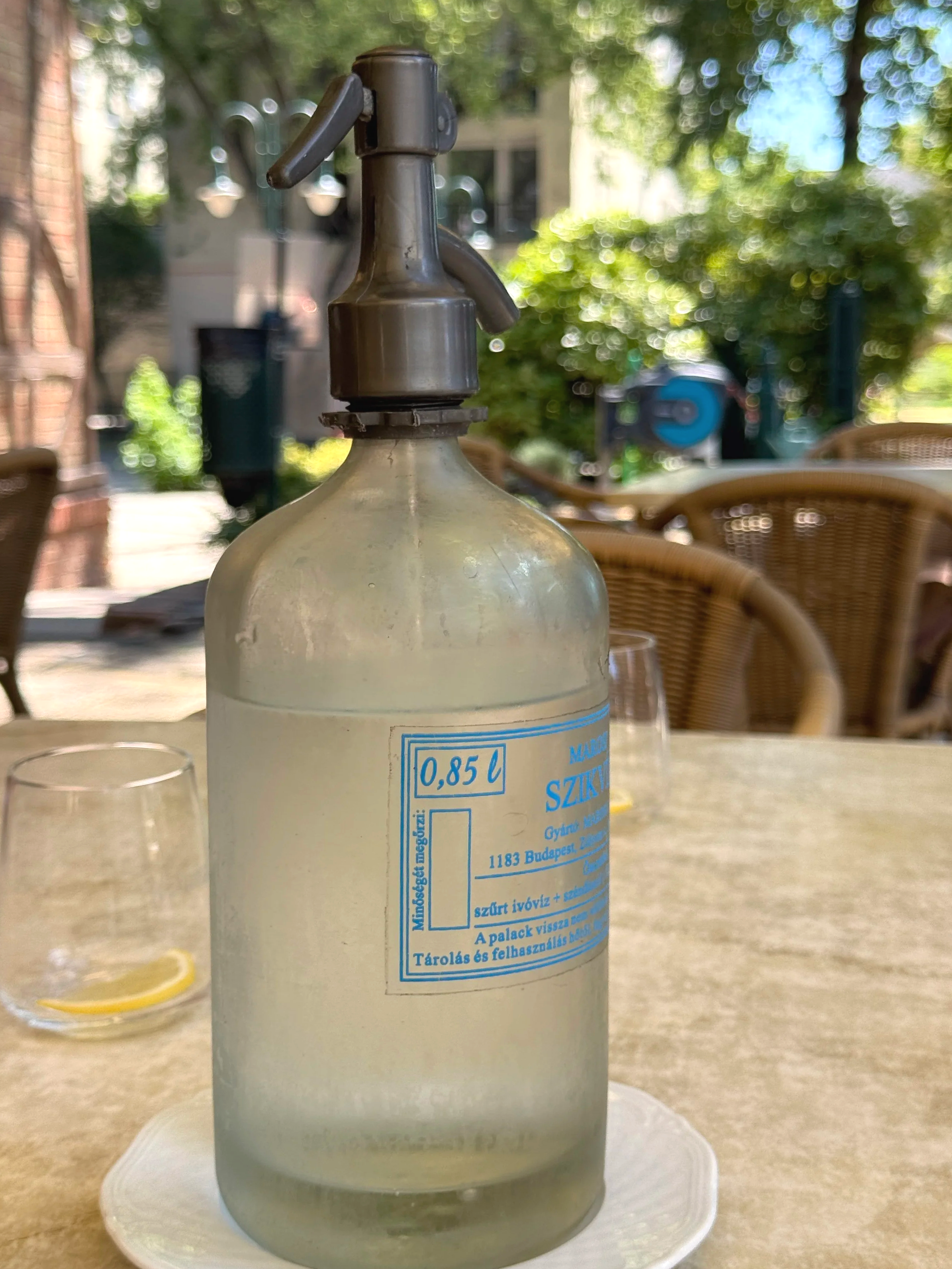
Carbonated water that comes in a unique bottle
If you'd rather drink bottled mineral water
Even though tap water is completely safe here, Hungary has a genuinely rich mineral water culture, and plenty of locals — myself included — reach for a bottle now and then simply because they like the taste and mineral profile. If you want to try what's considered a genuine Hungarian specialty rather than just any bottled water, a few names are worth knowing:
Szentkirályi is the one I'd point you to first — it's Hungary's best-known mineral water brand, drawn from a deep natural spring, and it was named the world's best still mineral water at the 2004 Aqua-Eauscar awards in Paris. You'll see it in nearly every supermarket and restaurant in Budapest.
It comes in a few versions: still (labeled in pink), a milder still option (green), and a carbonated version (blue) — if you like your water with a strong fizz, ask for the "szénsavas" or "buborékos" version, which is the bubbly, extra-carbonated one Hungarians tend to actually prefer over still water.
Frequently Asked Questions
Can I drink tap water in Budapest hotels? Yes, tap water in hotels, Airbnbs, and restaurants across Budapest is safe to drink.
Will restaurants in Budapest give me free tap water like in the US? Not always. Many restaurants now filter their tap water in-house and sell it as "filtered water" for a small charge, rather than offering it free the way American restaurants typically do. It's still the same safe municipal water — you can always ask directly for tap water, but don't expect it to be automatically free.
Are public drinking fountains in Budapest safe? Yes, as long as they're marked with an "Ivóvíz" sign. Decorative fountains without that sign aren't meant for drinking.
Why does Budapest tap water smell like chlorine? Budapest uses a bit more chlorine in its treatment process than some travelers are used to. It's a sign of thorough treatment, not a safety concern, and the smell fades quickly.
Should I bring a reusable water bottle to Budapest? Yes — it's an easy way to save money and cut down on plastic, since safe tap water and public drinking taps are widely available across the city.
What's a good Hungarian mineral water to try if I want something other than tap water? Szentkirályi is Hungary's best-known brand and an award-winning one — look for the carbonated ("buborékos") version if you like fizzy water, or the still version if you don't.
Can I visit the water reservoir inside Gellért Hill? Yes, but only on the rare open days Fővárosi Vízművek schedules each year, typically around World Water Day in late March. Registration is free but fills up fast, so check their website ahead of your trip if the timing lines up.
Curious about Budapest beyond the tap water? Shall I show you around?
After 10+ years showing visitors around my home city, I know the first hour off the plane sets the tone for the whole trip. If you'd like a reliable private transfer with a trusted local driver — or you're already thinking about a private tour of Budapest once you've dropped your bags — I'm happy to help arrange it so you can simply walk out of arrivals and start your holiday.
Get in touch through katabudapest.com !
