Etyek's Best-Kept Secret Isn't the Wine, It's the Ham
By Kata | katabudapest.com | Published July 11, 2026
If you ask most visitors what's outside Budapest, they'll say Lake Balaton or the Danube Bend. Almost nobody says Etyek — and the reason I keep bringing guests here isn't even the wine. It's a cellar full of ham.
Sonkamester ("Ham Master") is a family-run curing cellar and restaurant tucked into the Újhegy hillside in Etyek, about 30–40 minutes southwest of Budapest. Of everything I show guests in this region, it's consistently the stop people bring up weeks later — not the vineyards, not the sparkling wine, the ham cellar.
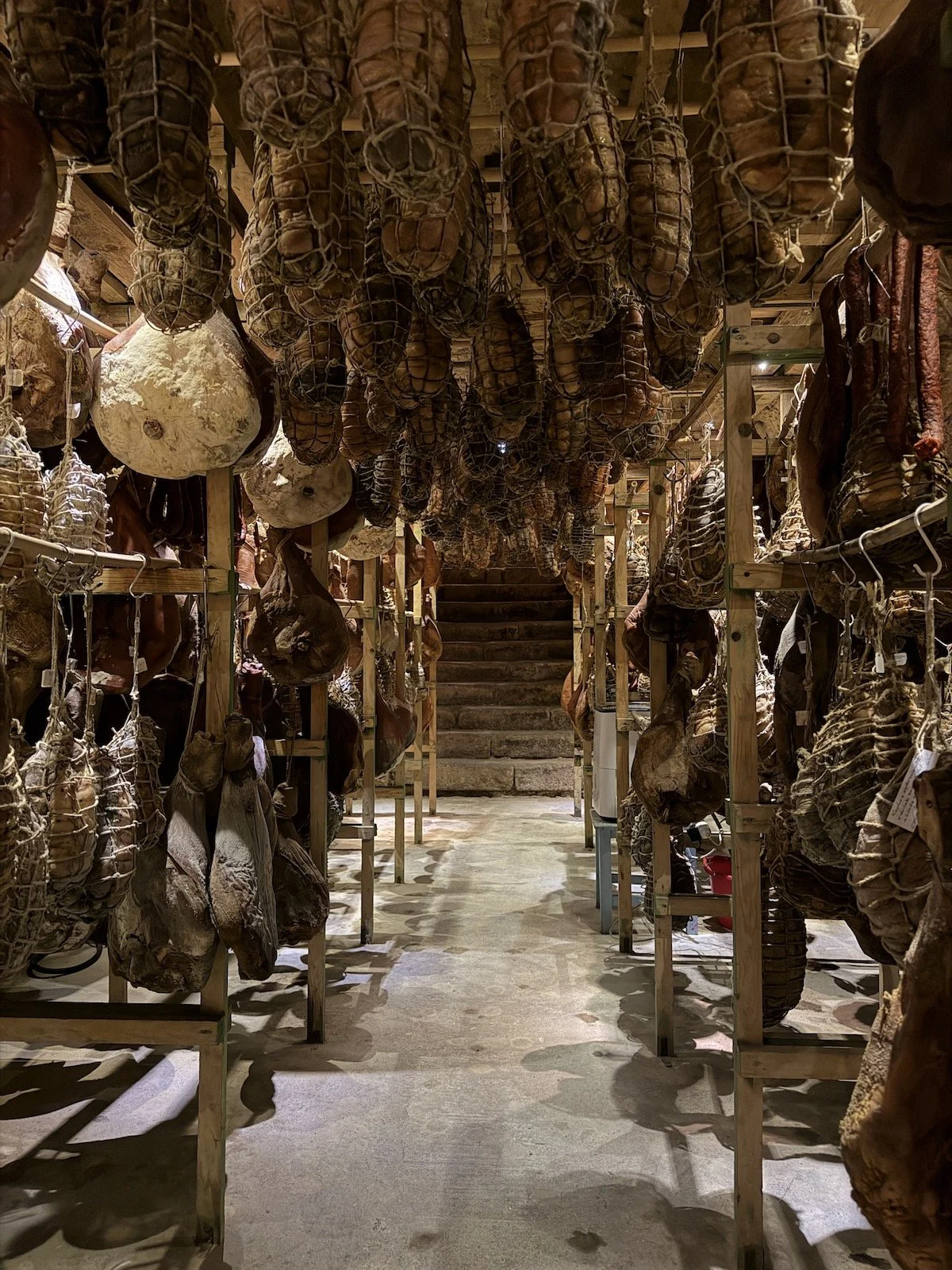
Sonkamester: the ham cellar you didn't expect to fall in love with
Walking into the cellar
Nothing quite prepares you for it. You step off a sunny vineyard path, through an unassuming door, and down into a cool, stone-lined cellar carved straight into the hillside — the kind of natural cave-like space that keeps a steady temperature all year round without any machinery. And then you see them: rows and rows of hams, hanging or resting on shelves, some just starting their cure, some aged for years. The air changes completely down there — cooler, quieter, faintly smoky. It's one of those places where photos genuinely don't do it justice; you have to feel the temperature drop and see the sheer scale of it to understand why people call it a "serious collection."
This isn't a museum display, either — it's a working cellar. The hams you see aging on one visit might be the ones sliced onto your plate a year or two later.
The man behind the ham: László Árpás
The cellar has a story worth knowing before you visit, because it makes the whole experience land differently.
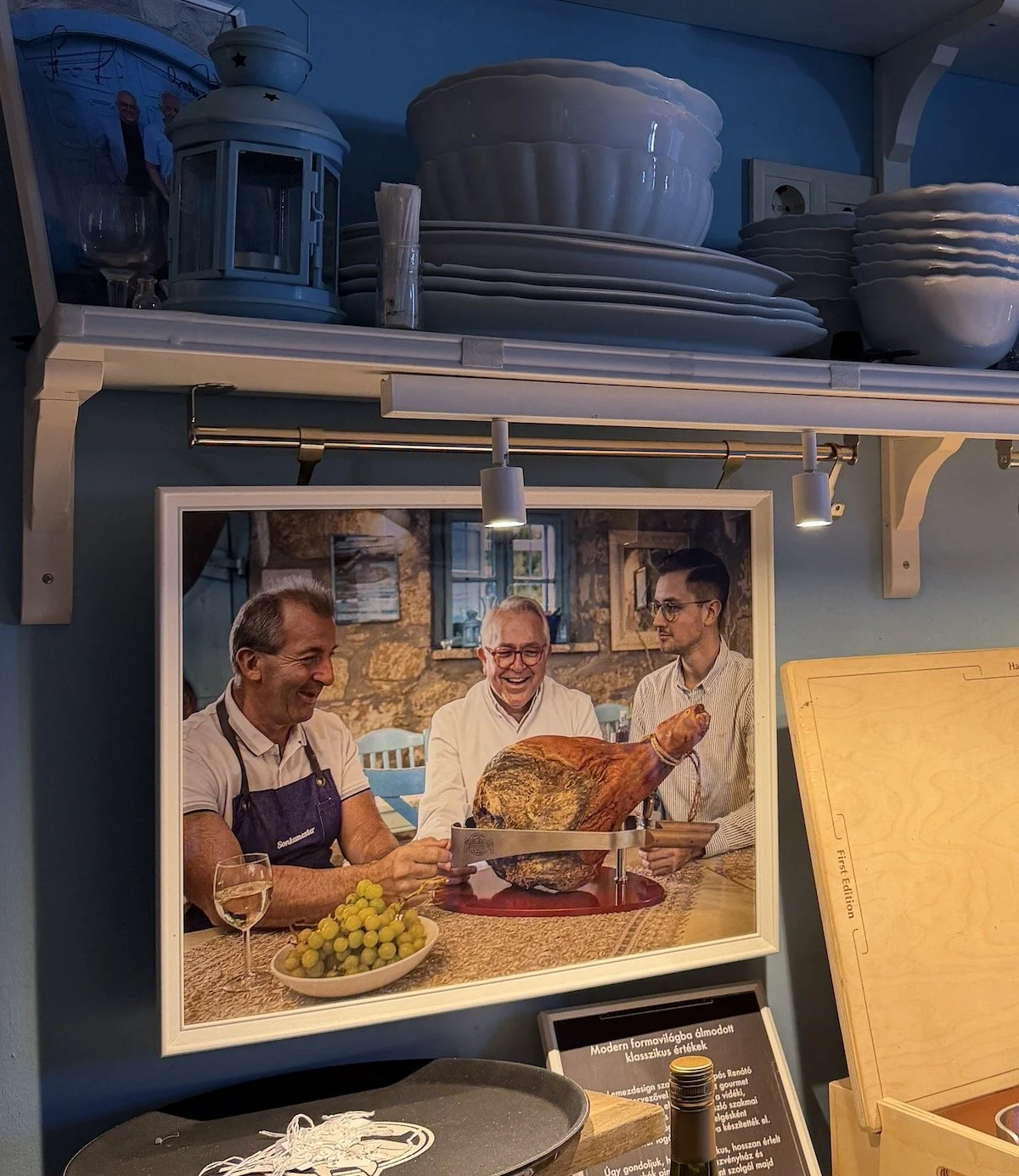
Right in the middle, László Árpás, The Ham Master Himself
Árpás László, the "Sonkamester" himself, isn't originally from Etyek at all — he was born in Subotica, Serbia, in Vojvodina, the region with a large ethnic Hungarian population, where pig slaughters and home ham-curing are part of everyday village life. He's talked about watching his grandfather work the meat by hand as a small child, and that early fascination never really left him. When he eventually settled in Hungary, ham-curing started as a family hobby — a way of holding onto where he came from — using an old recipe passed down at home.
Word got around. What began as curing for the family table slowly grew into a small production, then a proper business. He even ran a restaurant in Budapest for a while before deciding city life wasn't the right fit for what he does, and moved the whole operation out to Etyek's Újhegy hillside, where the cellar is now.
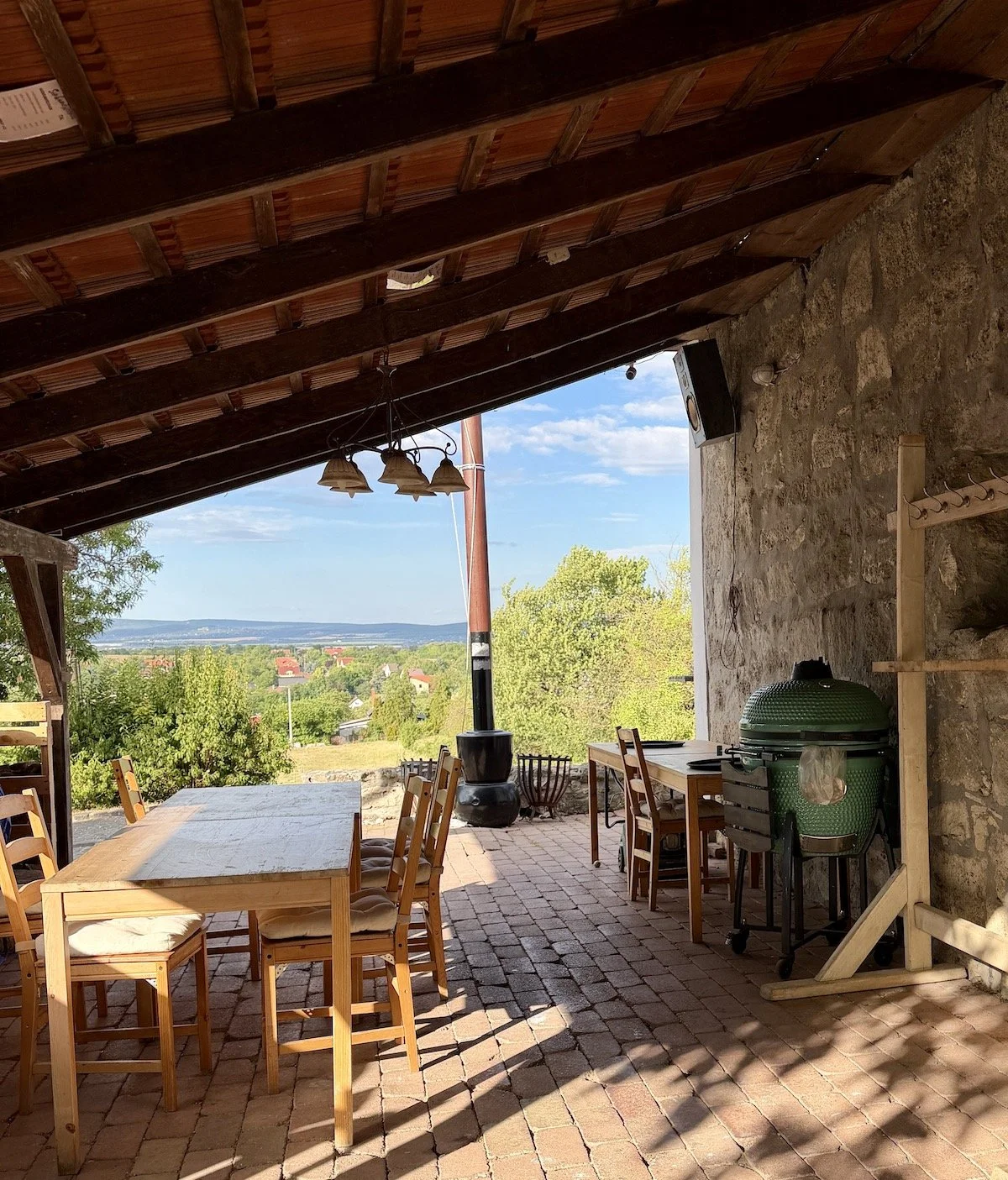
Cozy and Quiet here
A few details make his hams genuinely distinctive. He uses only sea salt from the island of Pag in Croatia, and — in a nod to his Vojvodina roots — he presses his hams, a traditional step common in the Balkans but less so in Hungarian ham-making. No extra spices, just salt, smoke, pressing, and time. What started as a few hundred hams a year has grown steadily; the operation is now expanding into a much larger aging cellar to keep up with demand, though the process itself hasn't changed — it's still slow, hands-on, and built around patience.
What really makes the visit, though, is that when things are quiet, László still comes down into the cellar himself and walks guests through it — explaining the aging process, pointing out which hams have been curing the longest, and generally treating strangers like they've just wandered into his own kitchen. It's a genuinely rare thing to experience that kind of direct, personal hospitality from someone who's become a well-known name in Hungarian gastronomy, and it's a big part of why I make sure to build time for this stop into the day rather than rushing through it.
What we ate
We started with the ham platter — thin-sliced, deeply savory, with a real depth of flavor that made it obvious this wasn't anything close to what you'd find at a supermarket deli counter. It came generously sized, easily enough for a few people to share, alongside fresh bread and a selection of local cheese. If you're there for a proper meal rather than just a tasting, the kitchen also does excellent roasted duck leg and mangalica pork — hearty, unfussy food that's built to go with wine.
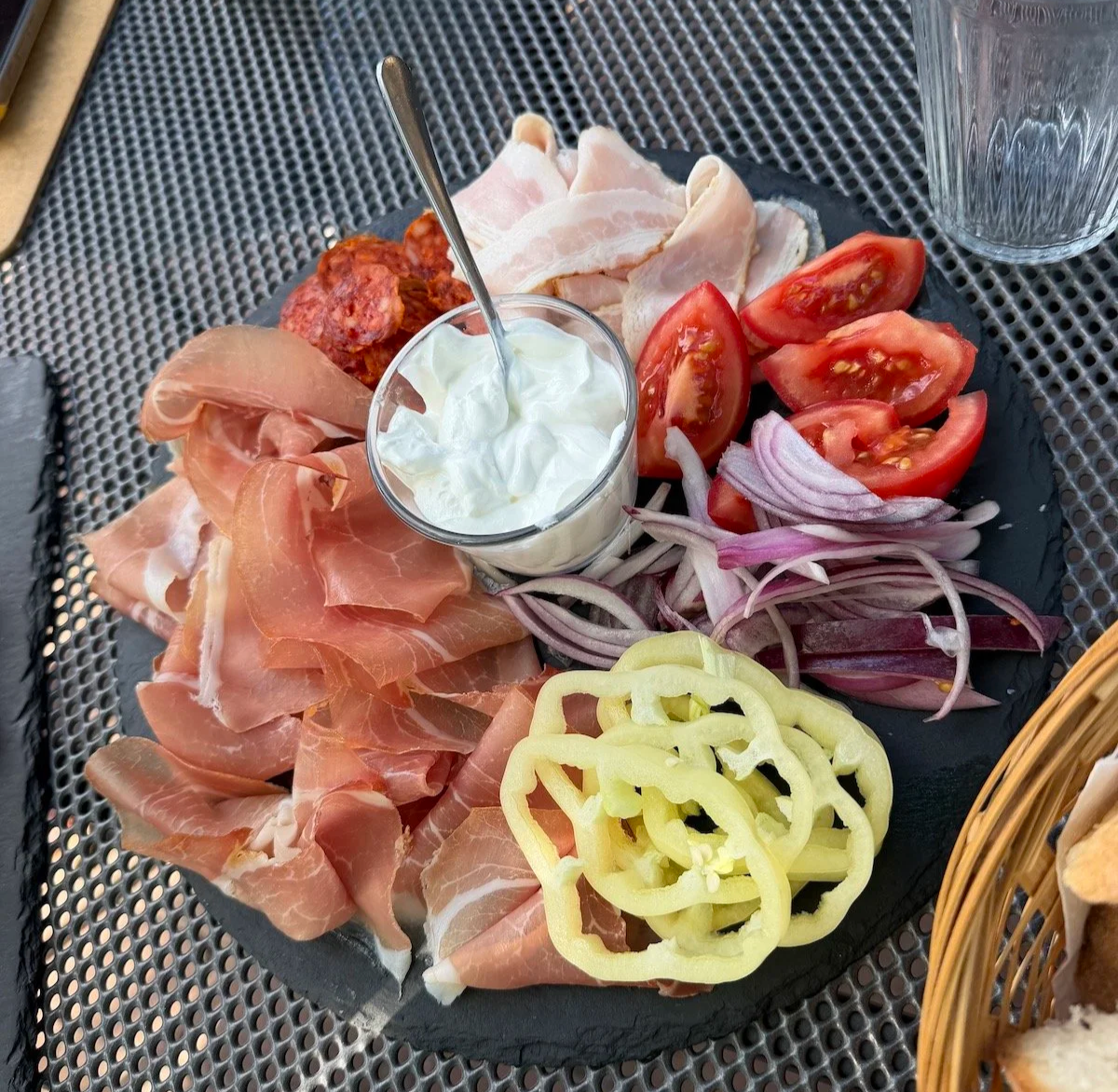
The Sonkamester Ham Platter
For our main, we went with the Balkan platter — juicy pljeskavica and ćevapčići, a nod to László's own Vojvodina roots and honestly some of the best grilled meat we've had in the region.
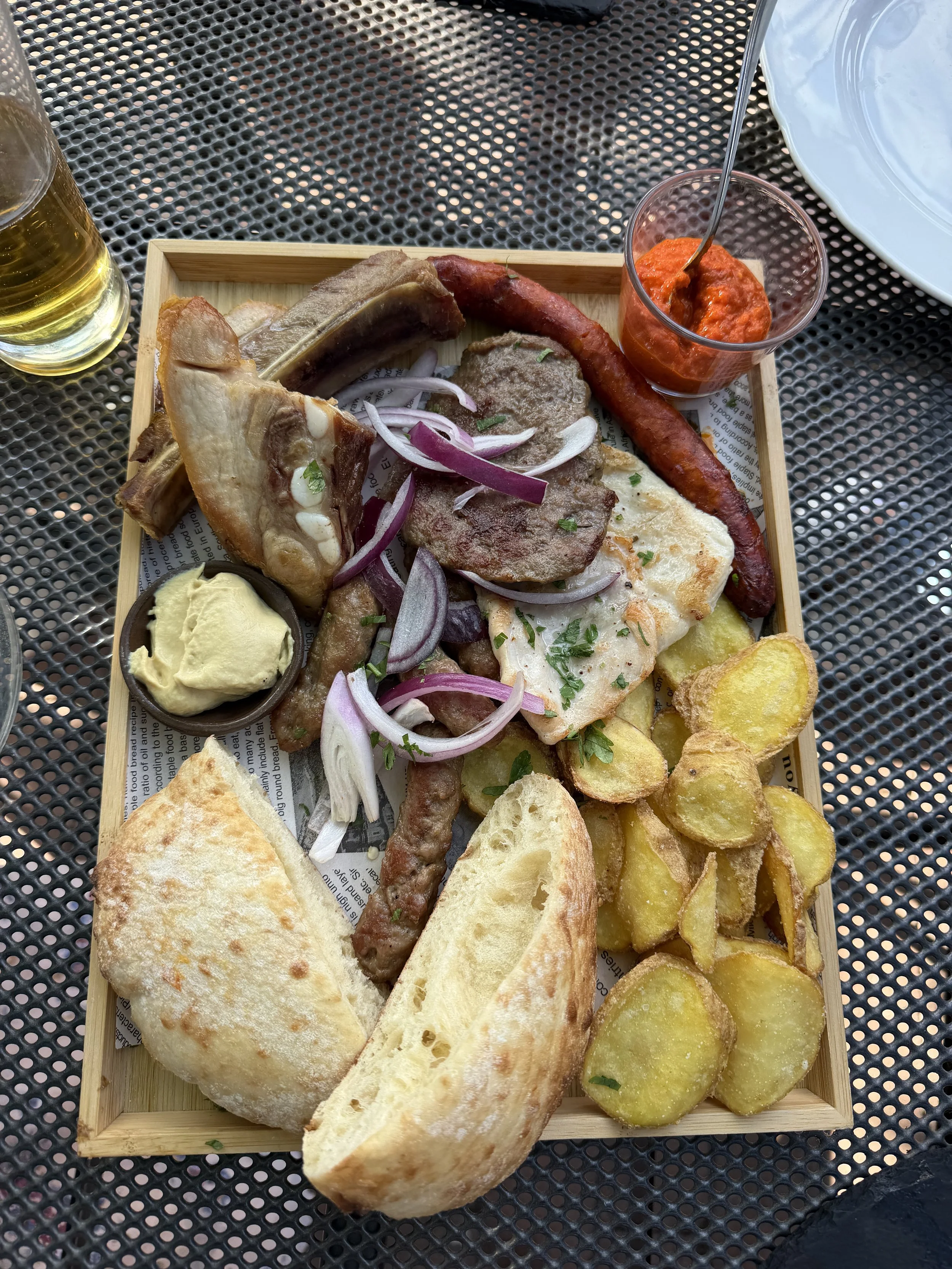
A Taste of Serbia in Etyek
For dessert: madártej, "bird's milk," a classic Hungarian dish of soft poached meringue clouds floating in cold vanilla custard. It's light and a little nostalgic — the kind of dessert most Hungarians grew up eating at their grandmother's table — and it's the perfect cool, sweet finish after a plate of rich cured meats and a glass of Etyek white.
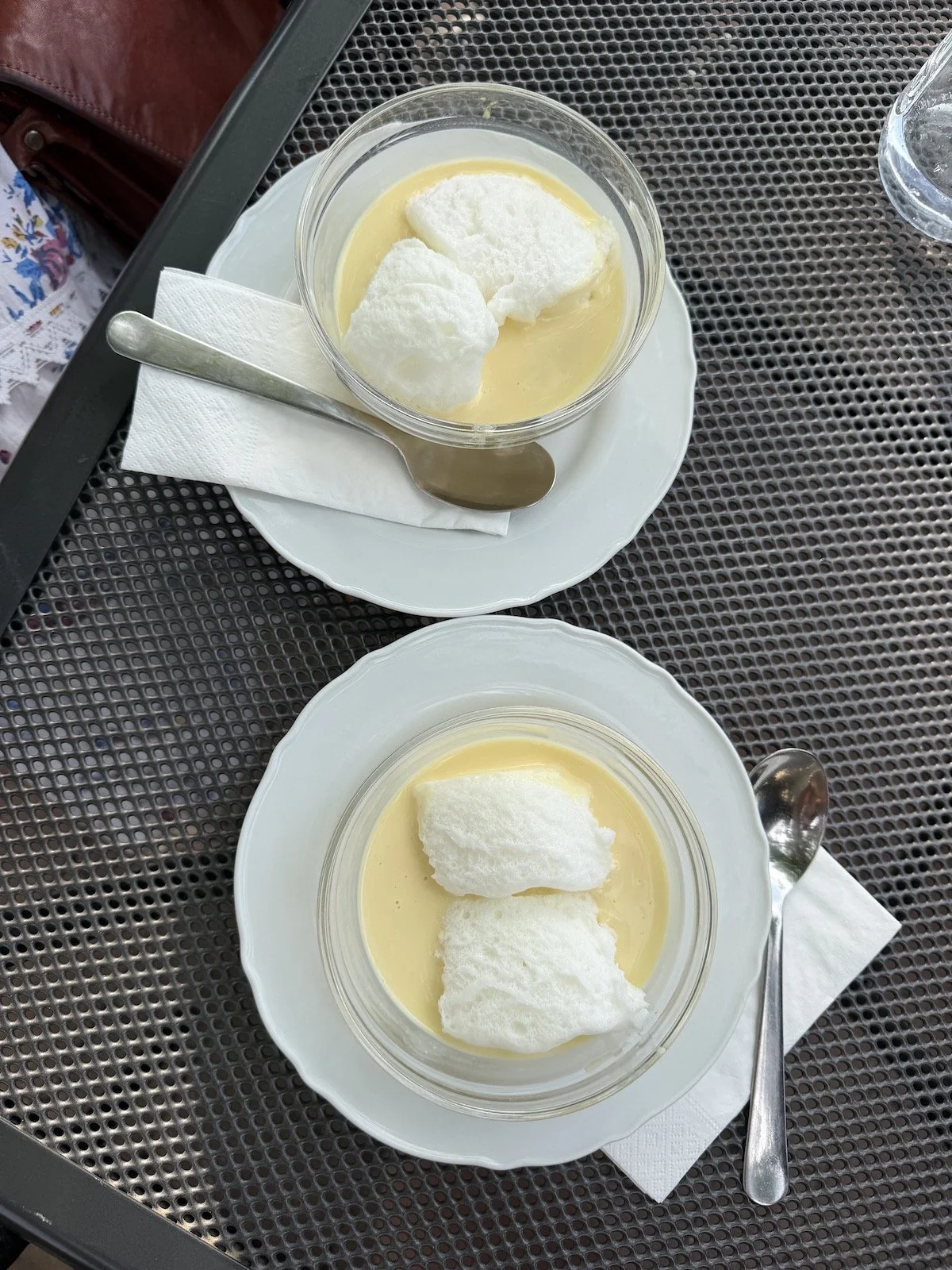
A Sweet Reason to Save Room
The wine region around it
Etyek sits on limestone and clay soils with a cool, breezy microclimate that's often compared to Champagne, France. That comparison isn't just marketing — it's the reason the region is known for crisp, high-acid white wines and excellent traditional-method sparkling wines. Chardonnay, Sauvignon Blanc, Pinot Noir, and Riesling all do well here, and the sparkling wines in particular have a real elegance to them.
What makes it special for a day trip is scale. You're not driving hours into the countryside — you're 30 minutes from Budapest and suddenly standing in a vineyard with nobody around, tasting wine straight from a family who's been making it for generations. The village itself is small and walkable, centered around the same Gastro Promenade where Sonkamester sits, with several wineries, cellars, and restaurants all within easy walking distance of each other.
What a day in Etyek actually looks like
A typical visit for my guests includes:
A stop at Sonkamester for the ham cellar and a proper Hungarian lunch
A walk through the vineyards and a look at the traditional limestone cellars carved into the hillsides
Tastings at one or two family-run wineries — usually a mix of still whites and a sparkling wine
Time to just wander the quiet village streets, which still feel more rural Hungary than tourist stop
It's a relaxed pace. This isn't a region you rush through — it rewards slowing down.
Good to know before you go
Distance: About 30 km southwest of Budapest, roughly 30–45 minutes by car depending on traffic.
Best time to visit: May through October for full winery hours and pleasant weather; September–October adds harvest season, which I personally think is the prettiest time to be there.
Getting there: Doable by public bus, but a private driver or guide makes the day far easier, especially once wine tasting is involved.
What to wear: Comfortable shoes — you'll be walking on gravel and uneven cellar floors.
Pace yourself: Most wineries pour several tastings each, and local pálinka often makes an appearance too, so plan lunch accordingly (Sonkamester takes care of that part nicely).
Book ahead: Sonkamester gets busy on weekends, especially in season, so it's worth reserving a table in advance at sonkamester.hu before you head out.
FAQ
What is Sonkamester in Etyek? Sonkamester is a family-run ham cellar and restaurant on Etyek's Újhegy hillside, run by Árpás László, known locally as the "Sonkamester" (Ham Master). Visitors can walk through the cellar where the hams age and follow it with a meal featuring ham platters, roasted duck, and traditional Hungarian desserts like madártej.
Is Etyek worth a day trip from Budapest? Yes, especially if you want a countryside experience without a long drive. It's an easy half-day or full-day trip that pairs wine, food, and a genuinely local atmosphere.
Can I visit Etyek without a car? There's a public bus from Budapest, but between winery hopping, tastings, and getting back safely, most guests prefer arranging a driver or private guide for the day.
What food is Etyek known for besides wine? Cured meats and ham, especially around the Gastro Promenade, along with handcrafted cheese, fresh bread, and traditional Hungarian dishes like roasted duck. Sonkamester's ham cellar is the standout for this.
Is Etyek good for people who don't drink wine? Absolutely. The ham cellar, the village itself, the food, and the scenery are worth the trip on their own.
I organize private day trips to Etyek for great hams, good food, local pálinka, local wine, and handcrafted cheese — a full countryside food-and-wine experience without the hassle of figuring out logistics yourself. If a quiet day in Hungarian wine country (and a cellar full of ham) sounds like your kind of trip, get in touch and I'll help you plan it.
Enjoyed this one? A few more from the blog you'll probably want to read next:
Where Budapest Really Shops: Inside the Klauzál Square Market Hall
Szimpla Kert: Is It Still Worth Seeing in Budapest?
Why You Should Visit the Citadella for Sunset in Budapest
Kaptafa Brunch: The Jewish Quarter Spot That Makes Breakfast Fun Again
