Forint, Not Euro: The Hungary Money Mistake That Costs Tourists Every Trip
By Kata | katabudapest.com | Published Aug 28, 2026
Here’s a scene I've watched play out more times than I can count: a visitor lands in Budapest fresh off a trip through Vienna or Bratislava, hands over a euro note at a café, and looks genuinely confused when the barista either refuses it or hands back change that makes no sense. It's not the café's fault — it's a currency mix-up that trips up a huge number of visitors every single year, and it costs them real money.
So let's clear this up properly, because it comes up constantly.
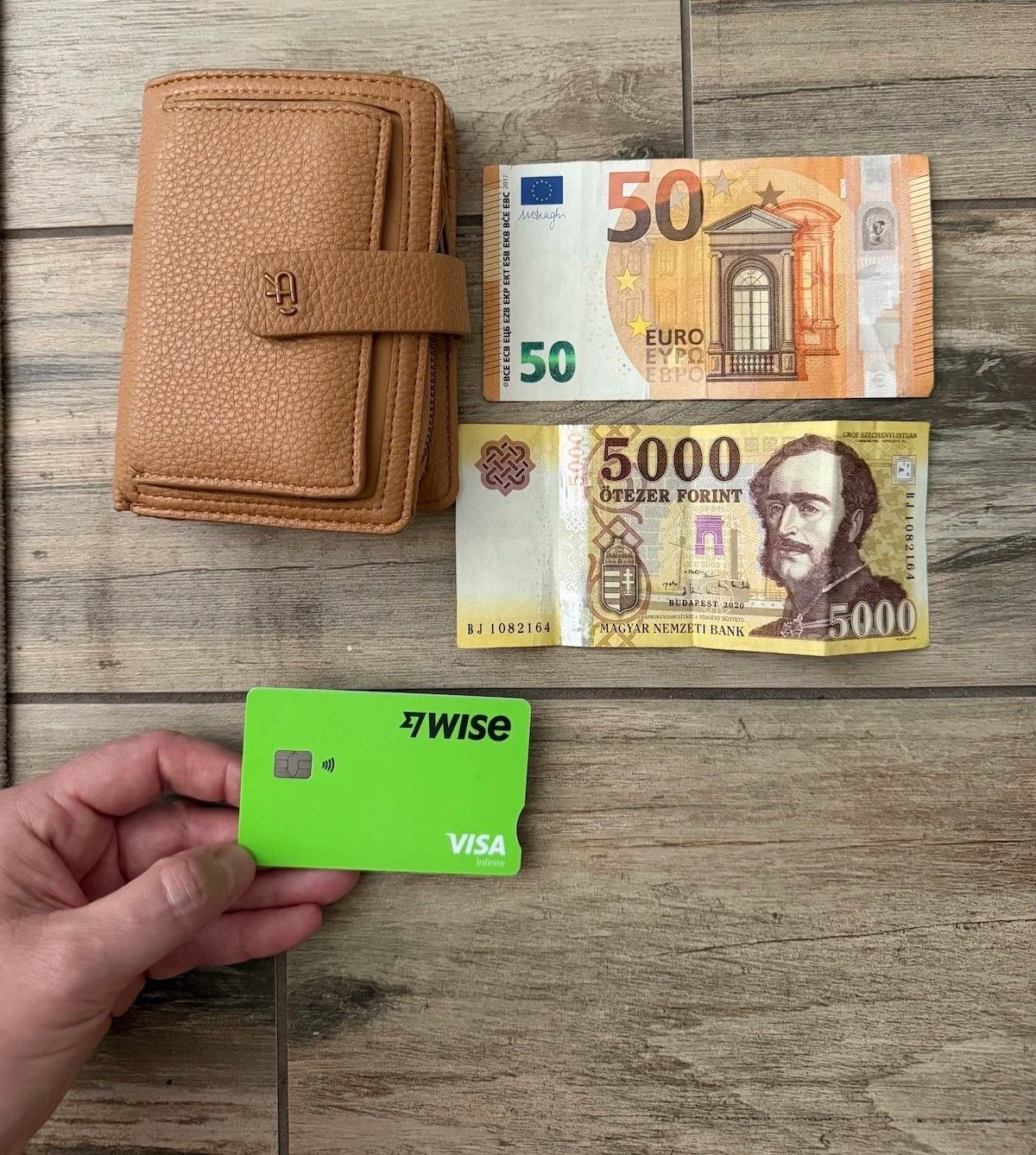
The simplest money rule for Hungary: card first, cash as backup
Yes, Hungary Is in the EU
Hungary has been a member of the European Union since 2004. That means EU citizens can enter freely with just an ID card, and non-EU visitors (Americans, Canadians, Brits, Australians, etc.) go through the same Schengen rules as the rest of the EU — no separate visa needed for short stays if you're from a visa-exempt country.
No, Hungary Is NOT in the Eurozone
This is the part that surprises people. Despite being in the EU, Hungary still uses its own currency: the forint (HUF). Not the euro. This isn't a technicality — it actually matters for your trip.
A few countries around Hungary (Austria, Slovakia, Slovenia) do use the euro, so if you're doing a multi-country trip through Central Europe, you'll actually be switching currencies as you cross into Hungary. Don't assume your leftover euros from Vienna will work here — some very touristy spots near the border or in central Budapest might accept euros, but you'll get a bad exchange rate and often can't get change back in euros. Always pay in forint when you have the choice.

Money sorted — want a local to help plan the rest of your trip too? Get in touch or check out my Budapest tours.
Let's explore Budapest →Hungary vs. Its Neighbors — Quick Reference
| Country | In the EU? | Uses Euro? | Currency |
|---|---|---|---|
| Hungary | Yes | No | Forint (HUF) |
| Austria | Yes | Yes | Euro |
| Slovakia | Yes | Yes | Euro |
| Slovenia | Yes | Yes | Euro |
| Croatia | Yes | Yes | Euro |
| Serbia | No | No | Serbian Dinar |
| Romania | Yes | No | Romanian Leu |
If you're island-hopping through Central Europe — Vienna, Bratislava, Budapest is a classic route — Hungary is actually the odd one out on this leg. Worth budgeting a few minutes at the border (or the airport) to mentally reset your currency math.
Why Doesn't Hungary Use the Euro Yet?
This one's a fair question, and the short answer is: EU membership doesn't automatically mean euro adoption. Countries have to meet specific economic criteria (inflation targets, budget deficit limits, exchange rate stability) before switching, and Hungary — like Poland, Czechia, and Romania — hasn't adopted a fixed target date. For travelers, that mostly just means: don't expect this to change any time soon. Budget for forint.
So What Should You Actually Do About Money?
Here's my honest, practical advice after years of watching visitors get this wrong.
Get a Wise card before you arrive. This is genuinely the easiest way to handle currency in Hungary. You load it in your home currency, and it converts to forint at the real exchange rate when you pay or withdraw — none of the inflated "tourist" rates you'll get at exchange booths near Váci utca or the airport.
I use it myself when I travel, and if you sign up through my link, you'll get a free transfer of up to about $460 USD.
Keep some cash on hand — but not much. Hungary is increasingly card-friendly, but you'll still hit situations where cash is the only option: public toilets, small street food vendors, tip jars, some smaller family-run restaurants. I'd recommend keeping around 5,000 HUF on you at all times, and lean toward smaller notes and coins rather than large bills — a 20,000 HUF note is genuinely hard to break for a 300 HUF toilet fee, and you'll just get frustrated looks.
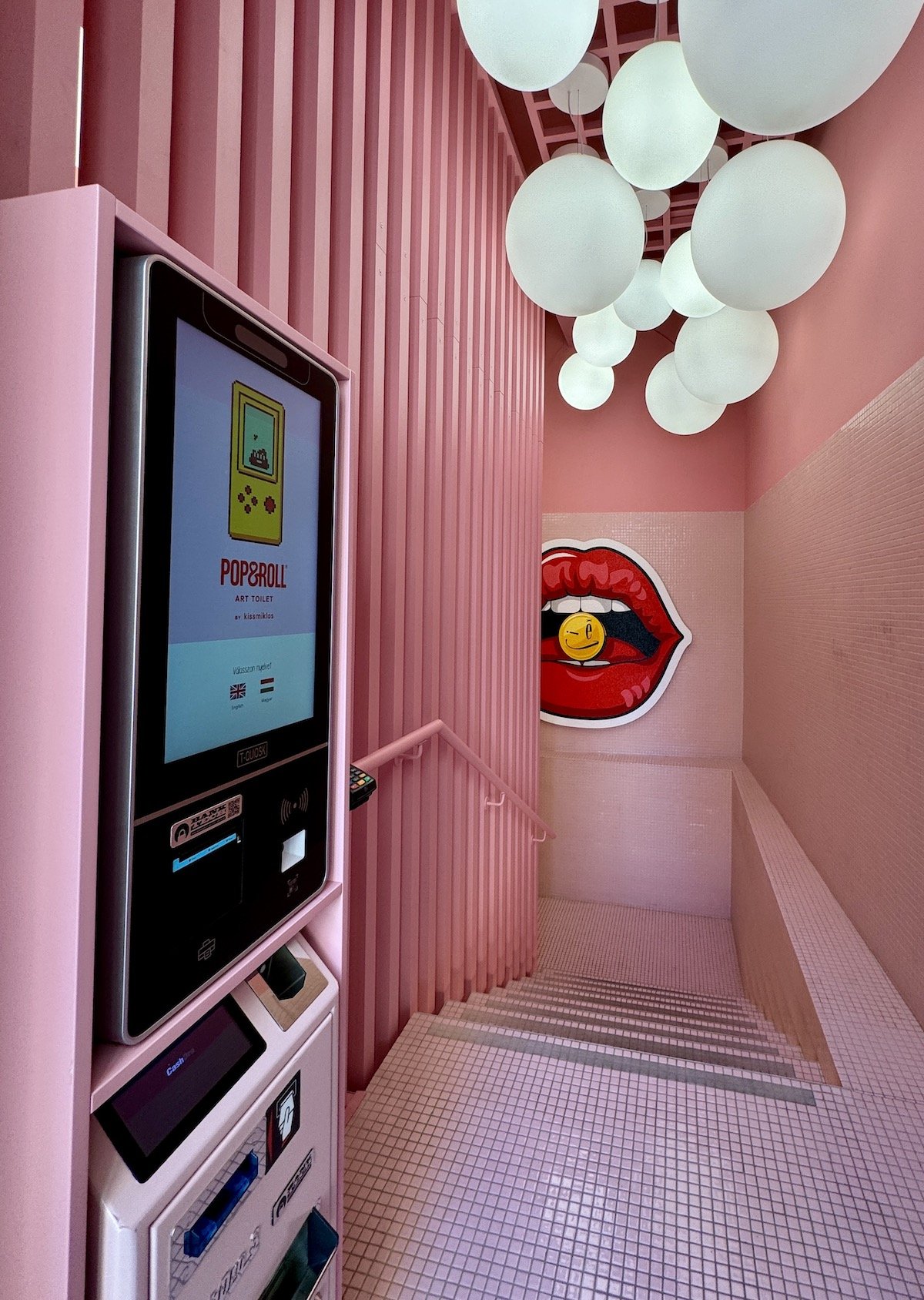
Card-only, design-forward, and yes, it's a toilet
Avoid airport and street currency exchange booths. These consistently offer the worst rates in the city. If you do need to exchange cash, use a proper bank or a reputable exchange office in the city center — never the ones directly outside tourist attractions.
Watch for dynamic currency conversion (DCC). When you pay by card in Hungary, some card machines will ask "pay in HUF or USD/EUR?" — always choose HUF. If you choose your home currency, the merchant's bank sets its own exchange rate, and it's almost always worse than what your card issuer would give you. This single choice, made wrong a dozen times over a week-long trip, can quietly cost you real money.
ATMs vs. exchange booths. If you do need cash, withdrawing from an ATM (ideally one attached to a real bank, not a standalone tourist-area machine) using a fee-free card is usually cheaper than any exchange booth. Just like with card payments, when the ATM asks if you want to accept its conversion rate — decline it, and let your own bank or card handle the conversion.
Frequently Asked Questions
Is Hungary in the EU? Yes, since 2004.
Does Hungary use the euro? No. Hungary uses its own currency, the forint (HUF), and is not part of the Eurozone.
Can I pay in euros in Budapest? Some tourist-heavy places accept euros, but you'll get a poor exchange rate and may not get change in euros. Pay in forint whenever you can.
How much cash should I carry in Budapest? Around 5,000 HUF is a good baseline for small purchases — public toilets, street vendors, tips — with the rest of your spending on card.
What's the best way to pay for things in Hungary as a tourist? A card that converts at the real exchange rate, like Wise, for most purchases, plus a small amount of forint cash for situations where card isn't accepted.
Will Hungary ever switch to the euro? Not on any confirmed timeline. Hungary hasn't set a target adoption date, so for now and the foreseeable future, forint is what you need.
Is it better to exchange money before I leave home or in Hungary? Generally neither — a card like Wise that converts at the real exchange rate beats both airport exchange counters at home and exchange booths in Budapest.
Do restaurants in Budapest accept card? Yes, the vast majority do. Just make sure to select HUF, not your home currency, when the machine asks.
Want a local's help navigating more than just the money side of your trip?
Get in touch or check out my Budapest tours.
Enjoyed this one? A few more from the blog you'll probably want to read next:
Best Goulash in Budapest: Where Locals Actually Eat It
Is tap water safe to drink in Budapest
Budapest Airport to Your Hotel: Every Option, Honestly Compared (2026 Prices)
