Hungarian Wine: The Complete Guide to One of Europe's Best Kept Secrets (2026)
By Kata | katabudapest.com | Updated Oct 8, 2026
Hungary has been making extraordinary wine for over a thousand years — and most of it never leaves the country. Here's everything you need to know, from Tokaji to Bull's Blood, from Budapest wine bars to countryside vineyards.
For centuries, Hungarian wine was celebrated across Europe. Tokaji was the favourite wine of Russian tsars, French kings, and Austro-Hungarian emperors. The cellars of Eger and Villány produced reds that could stand alongside anything from Burgundy or Tuscany. Hungarian winemakers knew things about their soil and their grapes that took the rest of Europe centuries to learn.
Then came decades of communist-era mass production that flattened everything — quality sacrificed for quantity, individual character replaced by industrial uniformity. The reputation built over centuries collapsed in a generation.
But that was then.
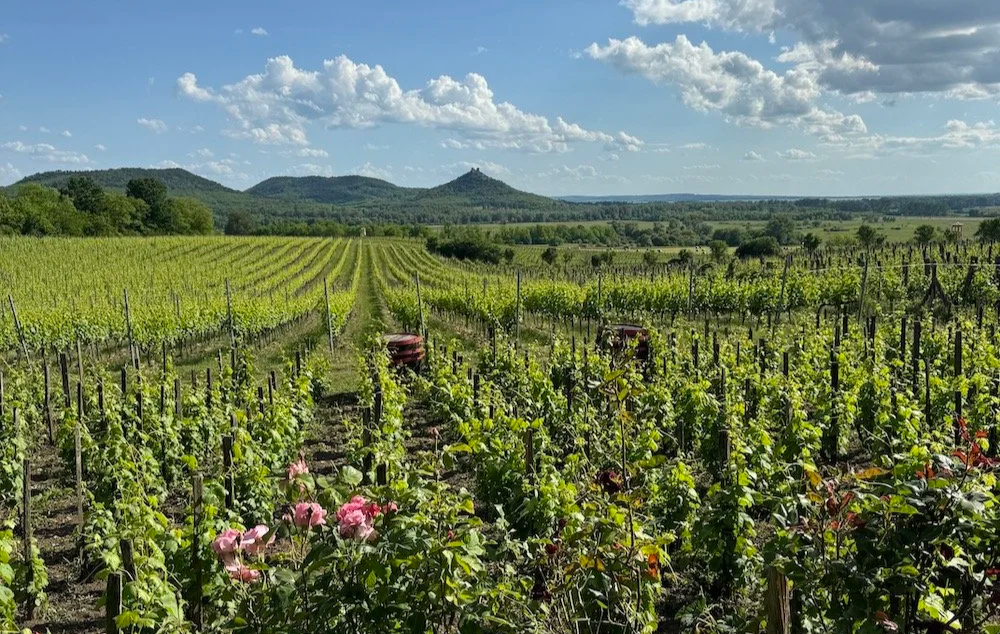
Badacsony produces white wines from volcanic basalt soils that give them a distinctive mineral, almost saline quality.
Today Hungarian wine is experiencing one of the most exciting revivals in the wine world. A new generation of winemakers — many trained in France, Austria and Italy — has returned to their roots, farming indigenous grape varieties that don't exist anywhere else on earth, making wines that are genuinely unlike anything you'll find in a supermarket anywhere in the world.
I take guests on wine tastings through the Hungarian countryside regularly and watch the same thing happen every time — one sip of a well-made Furmint or a proper Egri Bikavér and the expression changes completely. The question that always follows: why have I never heard of this before?
Here's everything you need to know.
The wine regions
Hungary has 22 officially recognised wine regions. You don't need to know all of them. You need to know these five:
Tokaj The most famous Hungarian wine region and one of the most historically significant in the world. Located in northeastern Hungary where the Bodrog and Tisza rivers meet, Tokaj produces wines from the Furmint grape — a variety found almost nowhere else — in conditions that create a unique form of noble rot called aszú.
Tokaji Aszú is the legendary sweet wine that made the region famous — golden, intensely complex, with flavours of apricot, honey, orange peel and spice that develop over decades in the bottle. But Tokaj also produces exceptional dry Furmint that wine lovers are only now beginning to discover — crisp, mineral, with a smoky finish that is completely distinctive.
Worth knowing: Tokaj was the first wine region in the world to establish an official classification system — began in 1730 and a 1737 decree made Tokaj a closed wine region, still more than a century before Bordeaux.
Eger Home of Egri Bikavér — Bull's Blood — one of the most dramatically named wines on earth. The legend says Hungarian soldiers defending Eger Castle from the Ottomans in 1552 drank so much red wine that their beards turned red, convincing the enemy they were drinking bull's blood for strength.
The wine is a blend of indigenous Hungarian varieties — Kékfrankos, Kadarka, and others — earthy, spicy, full-bodied, and at its best from small producers who still care about the old methods. Eger also produces excellent white wines from Leányka and Olaszrizling.
The town itself is one of the most beautiful in Hungary — baroque architecture, a hilltop castle, thermal baths, and a famous street called the Valley of the Beautiful Women (Szépasszonyvölgy) lined entirely with wine cellars. A perfect day trip from Budapest.
Villány Hungary's southernmost wine region and its most internationally recognised for red wine. The climate here is warmer than anywhere else in Hungary — almost Mediterranean — and the Cabernet Franc, Merlot and Portugieser grapes that grow here produce wines with a richness and depth that surprises people expecting something lighter.
Villány winemakers were the first in Hungary to focus seriously on international quality standards after communism, and the results show. This is where you come if you want to understand what Hungarian red wine can really be.
Badacsony On the northern shore of Lake Balaton — Central Europe's largest lake — Badacsony produces white wines from volcanic basalt soils that give them a distinctive mineral, almost saline quality. Olaszrizling and Szürkebarát (Pinot Gris) are the signature varieties.
The setting is extraordinary — vineyards rising steeply from the lakeside, views across the water, small family wineries producing wines that are almost impossible to find outside Hungary. One of the most beautiful places in the country to spend an afternoon.
Sopron Near the Austrian border in western Hungary, Sopron produces some of the country's best Kékfrankos — a grape known as Blaufränkisch in Austria — with an elegance and freshness that reflects the cooler climate. Less visited than other regions but increasingly respected among wine lovers who know Hungary well.

The grapes you need to know
Furmint Hungary's most important white grape and one of the most distinctive varieties in the world. In sweet form it makes Tokaji Aszú. In dry form it makes a wine with high acidity, mineral depth, and a smoky, almost volcanic quality that is unlike any other white wine on earth. If you drink one Hungarian wine, make it a dry Furmint.
Kékfrankos The most widely planted red grape in Hungary — juicy, spicy, with bright acidity and flavours of dark cherry and pepper. At its best from Sopron and Eger, where cooler temperatures preserve its natural freshness.
Kadarka An ancient Hungarian variety that nearly disappeared during the communist era and is now being carefully revived. Light-bodied, aromatic, with flavours of rose, spice and wild strawberry. Hungary's answer to Pinot Noir in some ways — delicate but complex.
Hárslevelű Tokaj's second grape after Furmint — softer, more floral, with honey and lime blossom notes. Often blended with Furmint in both sweet and dry wines.
Juhfark The name means "sheep's tail" — a reference to the grape's distinctive bunch shape. Found almost exclusively in the Somló region, Juhfark produces intensely mineral, high-acid whites that age extraordinarily well. One of Hungary's most interesting and least known varieties.
Egri Csillag — my personal favourite The name means "Star of Eger" — and it earns it. A white wine blend unique to the Eger region, made from at least four indigenous Hungarian grape varieties including Leányka, Olaszrizling, Hárslevelű and Királyleányka. The result is aromatic, fresh and elegant — floral notes, bright acidity, and a long mineral finish that makes it dangerously easy to drink.
Egri Csillag is relatively young as a wine category — officially established in 2011 — but it has quickly become one of the most exciting and distinctive white wines Hungary produces. It's the bottle I open when I want to show someone what Hungarian wine can really be. Find it, try it, thank me later.
Where to drink Hungarian wine in Budapest
You don't have to leave the city to start exploring Hungarian wine. Budapest has an excellent and growing wine bar scene:
Doblo Wine Bar In the heart of the Jewish Quarter — one of the best wine bars in Budapest, with an exceptional selection of Hungarian wines by the glass and knowledgeable staff who love talking about what they're pouring. The cheese and charcuterie plates are excellent. Intimate, atmospheric, and genuinely special.
DiVino On St. Stephen's Square, with a terrace facing the basilica — a beautiful setting and a serious Hungarian wine list. More polished than Doblo, slightly more expensive, but worth it for the location and the view alone. Perfect for a warm evening.
Bortársaság (Wine Society) Budapest's most serious wine shop also functions as a tasting room — the staff know everything and are happy to guide you through a tasting. The best place in the city to buy wines to take home. If you fall in love with a particular bottle during your trip, come here and stock up.
Kadarka Wine Bar A small, quietly excellent wine bar on Király Street in the Jewish Quarter — named after the indigenous Hungarian grape variety and entirely dedicated to small-producer Hungarian wines. The list changes regularly and the staff are passionate without being pretentious. One of the most genuinely local wine experiences in the city.
Drop Shop A natural wine bar and shop in the 7th district that has built a cult following among Budapest's wine-obsessed locals. Focused on organic and biodynamic Hungarian producers, with a rotating selection of bottles that reward curiosity. Relaxed, unpretentious, and full of people who really know their wine.
Wine tasting in the countryside
Budapest is perfectly positioned for day trips to wine country. Eger is 1.5 hours by train. Tokaj is 2.5 hours. Badacsony on Lake Balaton is about 2 hours by car. And Etyek — Budapest's closest wine region — is just 30 minutes from the city centre.
Etyek deserves special mention for anyone short on time. Known as Budapest's wine garden, this small region just west of the capital produces excellent sparkling wines and crisp whites — particularly Chardonnay and Sauvignon Blanc — from chalky limestone soils. The landscape is gentle and beautiful, the wineries are family-run and welcoming, and the proximity to Budapest makes it the easiest wine country escape you'll find anywhere near a European capital.
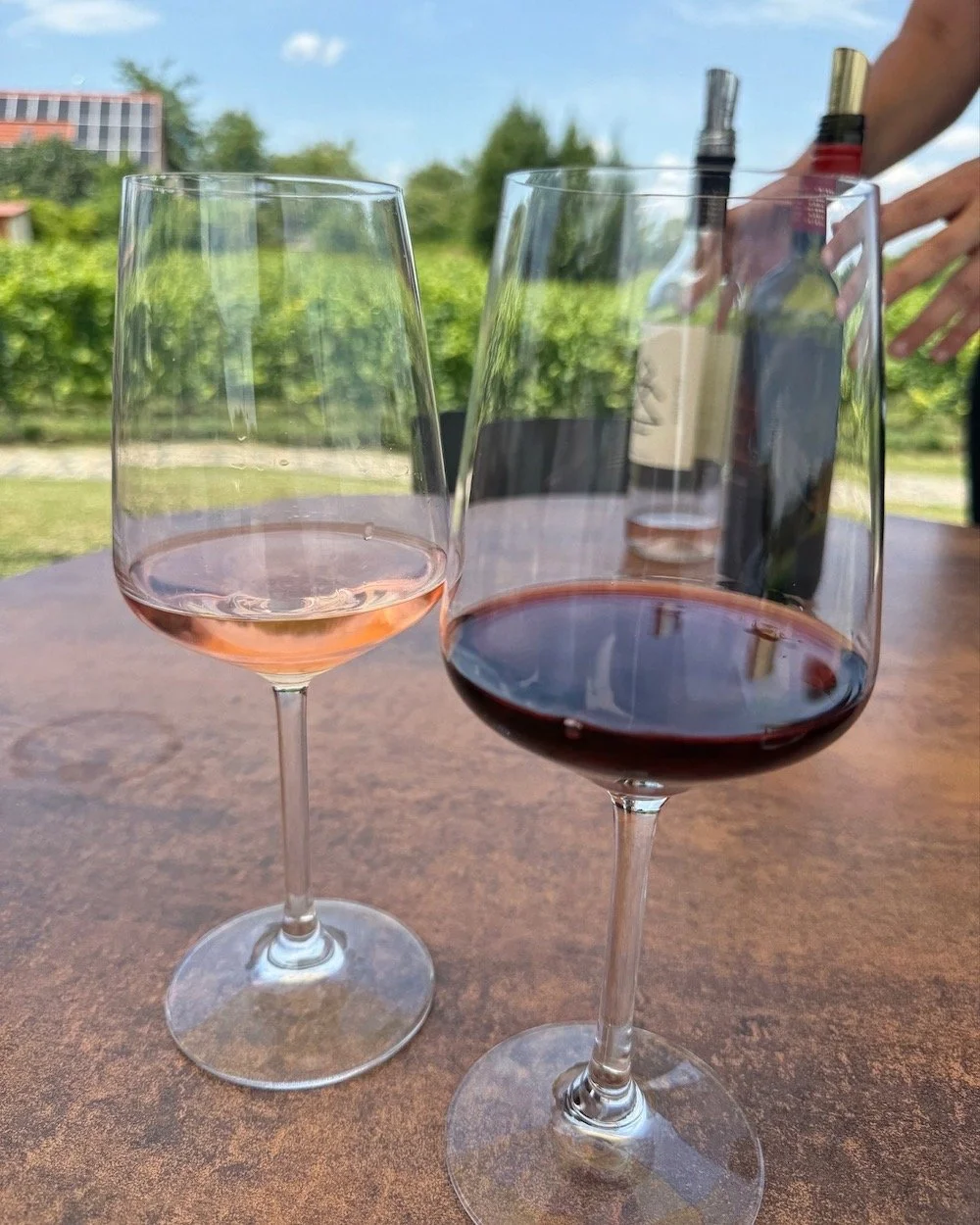
On a warm afternoon, a visit to Etyek feels like the best decision you've made all trip — vineyards, local cheese, a glass of something cold and well-made, and the knowledge that you're back in Budapest in time for dinner.
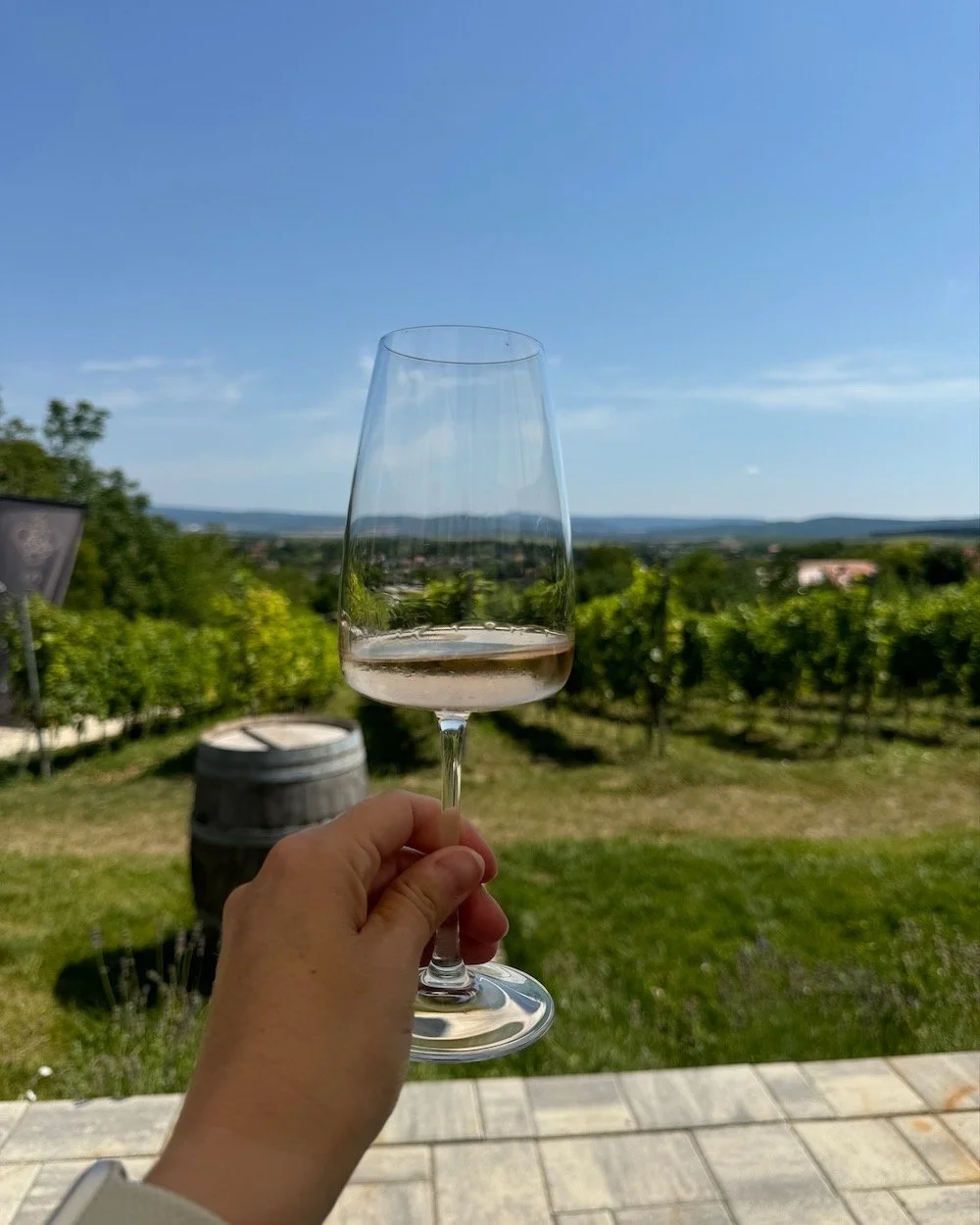
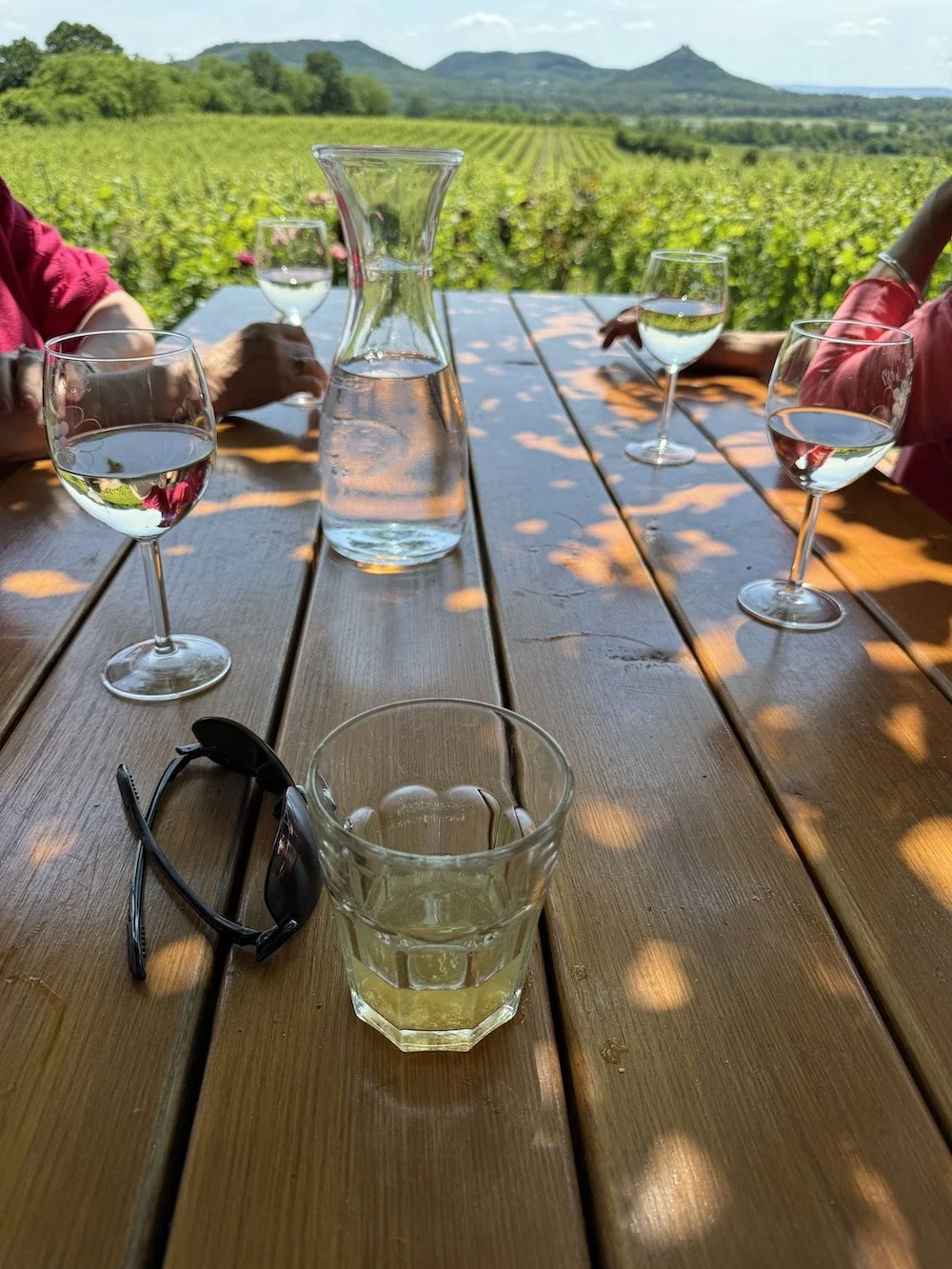
I organise private wine tasting day trips from Budapest — visiting two or three family-run wineries, meeting the winemakers, tasting wines you won't find anywhere else, and eating lunch in the kind of setting that makes you want to cancel your flight home.
If you want to experience Hungarian wine properly — not just a glass in a tourist restaurant but the real thing, in the right place, with the right people — my private wine tasting tour is exactly that.
Contact me to plan your private wine tasting, and tell me your dates and how many of you are coming.
Frequently Asked Questions
Is Hungarian wine good? Yes, and it’s one of Europe’s most underrated wine countries. Hungary has 22 wine regions and grape varieties that grow almost nowhere else. Very little is exported, which is why most visitors only discover it once they’re here.
What is the most famous Hungarian wine? Tokaji Aszú, the golden sweet wine from the Tokaj region, is the most famous. Egri Bikavér (Bull’s Blood), a red blend from Eger, is a close second.
Is Tokaji always sweet? No. Tokaj also makes excellent dry wines, especially dry Furmint, which is crisp and mineral. If the label says “száraz,” the wine is dry.
What does “puttonyos” mean on a Tokaji bottle? It’s the traditional measure of sweetness in Tokaji Aszú. The higher the number, the sweeter and richer the wine. Today Aszú is made at 5 or 6 puttonyos.
How do I read a Hungarian wine label?
Száraz: dry
Félszáraz: semi-dry
Félédes: semi-sweet
Édes: sweet
Fehér, vörös, rozé: white, red, rosé
Pezsgő: sparkling wine
What is a fröccs? Fröccs is wine mixed with soda water, and it’s what Hungarians drink all summer. A kisfröccs is half wine and half soda, a nagyfröccs is two parts wine to one part soda, and a hosszúlépés is one part wine to two parts soda. Order it with white or rosé.
Which wine region is closest to Budapest? Etyek, about 30 minutes west of the city. It’s the easiest half-day wine trip from Budapest, known for sparkling wines and crisp whites.
When is the best time to visit Hungary for wine? September and October, during harvest. Wineries welcome visitors year-round.
Do I need to book wine tastings in advance? For Budapest wine bars, a reservation helps on weekends. For countryside wineries, yes: most are small family cellars that open by appointment. This is the part I arrange for my guests.
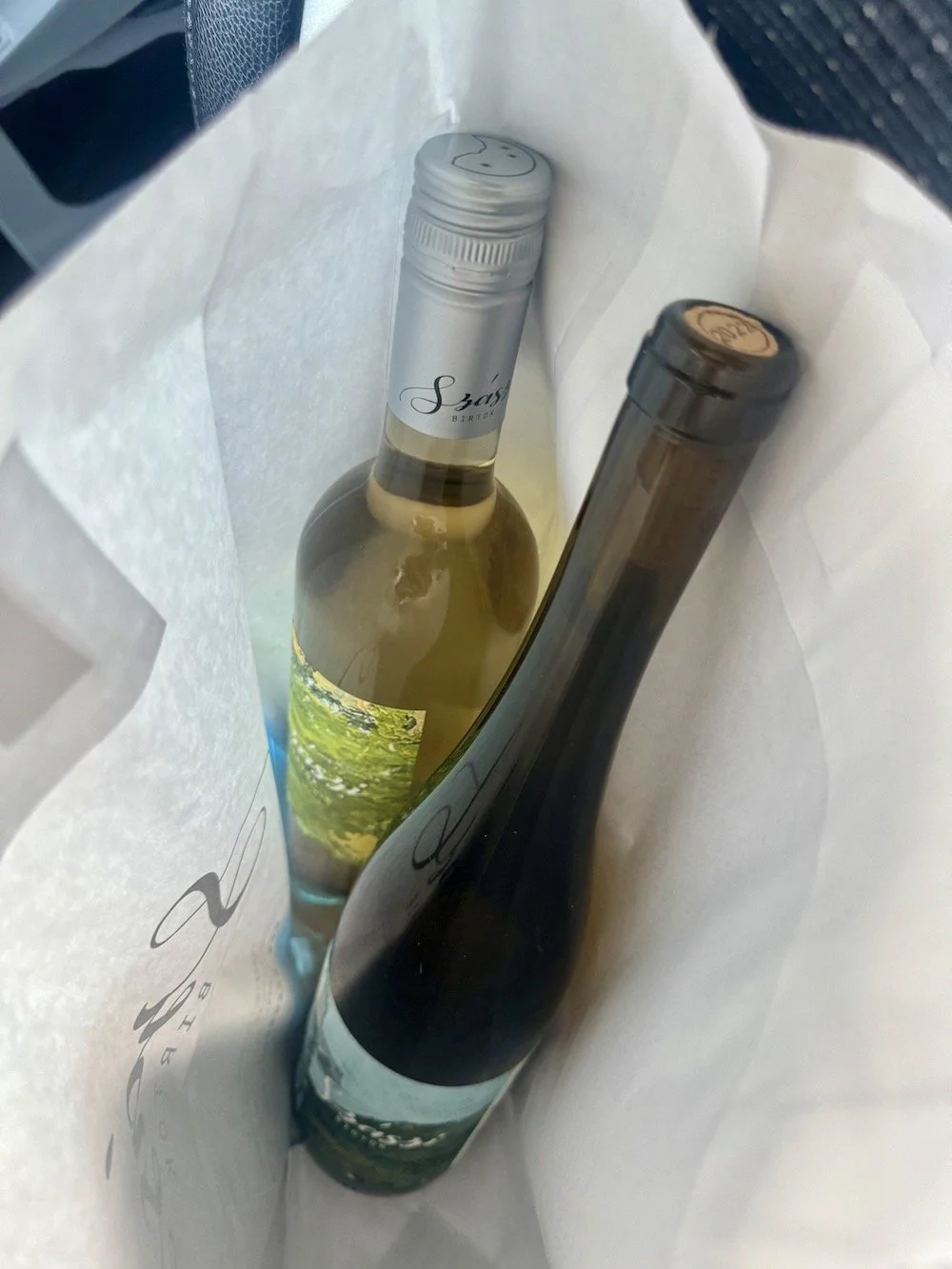
Can I bring Hungarian wine home? Yes. Pack bottles in checked luggage, well wrapped. For the US, the duty-free allowance is one litre per adult, but you can bring more if you declare it, and the duty is usually small. Check your own country’s current rules before you fly.
A final word
Hungarian wine doesn't need to be discovered — it needs to be remembered. The knowledge was always here. The quality was always here. It just got buried for a few decades under history and politics and industrial production.
The winemakers who are bringing it back are doing something genuinely important. And the wines they're making are worth your attention.
Start with a dry Furmint. See what happens next.
You Might Also Enjoy:
Private Guide vs Group Tour in Budapest: Why Going Private Changes Everything
Etyek's Best-Kept Secret Isn't the Wine, It's the Ham
Hungarian Grand Prix 2026: A Local's Guide to the 40th Anniversary Race
