Hungarian Grand Prix 2026: A Local's Guide to the 40th Anniversary Race
By Kata | katabudapest.com | Published July 13, 2026
I know exactly when race weekend is coming before I check a calendar. Hotel prices in my neighborhood quietly creep up in June, my WhatsApp fills with "is Budapest crazy in July?" messages from clients, and by the third week of the month you can hear the cars from parts of the city if the wind's right. Every year, this is one of the periods I get the most booking requests for — and for good reason, because the streets of Budapest turn genuinely chaotic. Traffic backs up around the airport road, taxis get harder to find, and the whole city runs on a different rhythm for about a week.
This year is a bigger deal than most: 2026 marks 40 years since the first Hungarian Grand Prix, and the Hungaroring is unveiling the biggest renovation in its history to mark the occasion. Here's the honest, local version of what to expect — not the press-release version.
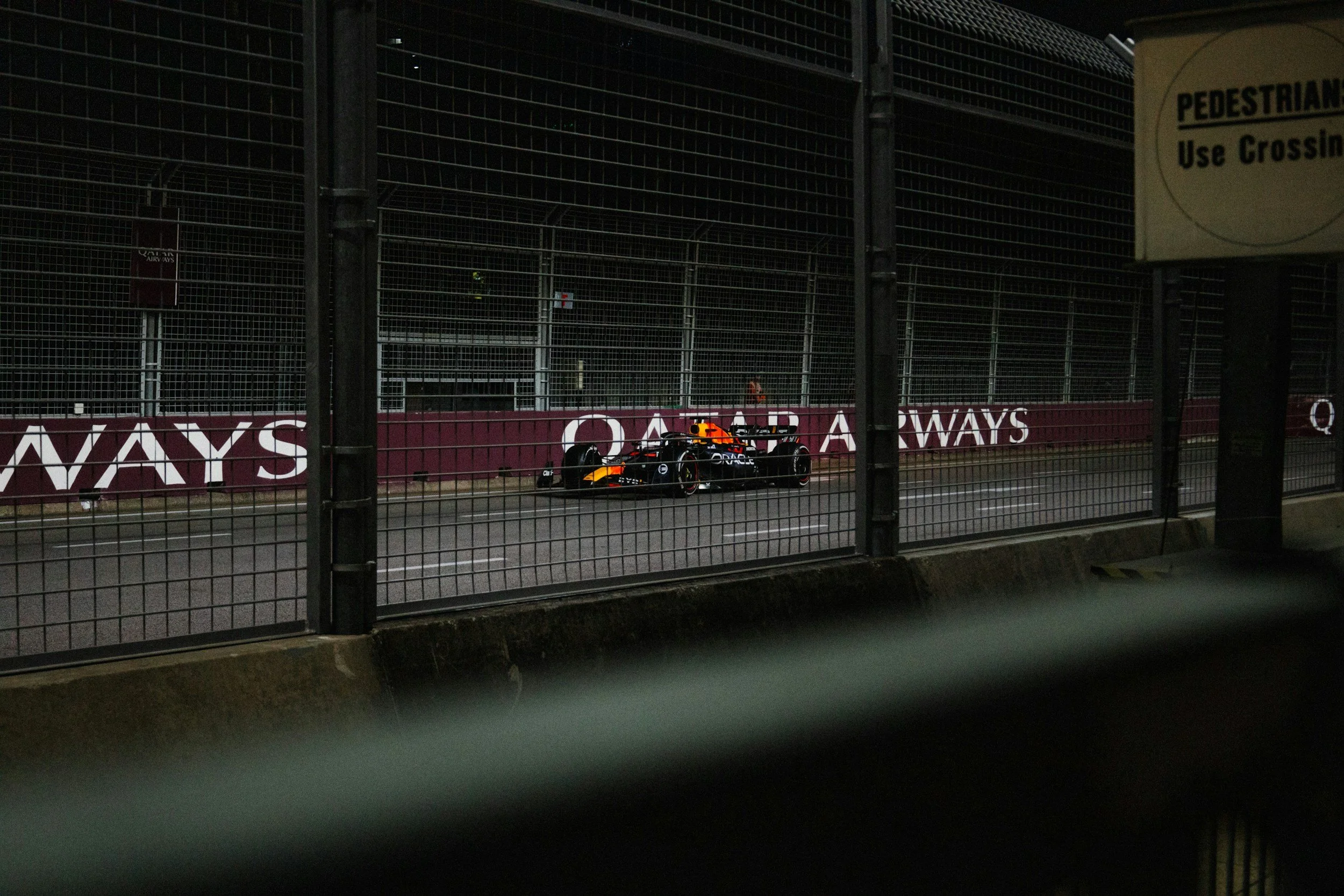
Monaco of the East: Hungaroring Turns 40
When Is the 2026 Hungarian Grand Prix?
July 24–26, 2026, at the Hungaroring in Mogyoród, about 20 km northeast of central Budapest. It lands right in the middle of Budapest's peak summer season, which is exactly why I'd tell you to book everything — hotel, transfers, tickets — earlier than feels necessary.
The History Most Fans Don't Know
Everyone assumes Formula 1 in Hungary started at the Hungaroring. It didn't. The first Hungarian Grand Prix ran in 1936, on a 5km circuit through Népliget, a park still sitting quietly in the middle of Budapest today — you can walk through it and never guess it once hosted Mercedes-Benz and Alfa Romeo works teams. War ended that chapter for decades.
Why a Communist Country Got a Formula 1 Race
Here's the part most fans never hear: bringing F1 behind the Iron Curtain wasn't Hungary's idea — it was F1's. In the early 1980s, the sport's leadership wanted a race in the Eastern Bloc, and Moscow was the original front-runner. Bernie Ecclestone visited Hungary around this time, and thanks to two well-connected Hungarians, Tamás Rohonyi and Tamás Frank, Budapest ended up on the shortlist instead — helped along by the city's central location and a Hungarian government more open to the idea than its neighbors. For a country still years from the fall of communism, hosting a glamorous, Western, capitalist sporting event was a genuinely unusual proposition — and part of what made the eventual race such a big deal.
Organizers first considered building the track inside the city, in Városliget or Népliget. They settled instead on open land near the village of Mogyoród, in a valley locals call Hétforrás — "Seven Springs" — which turned out to be uncomfortably literal once construction crews discovered seven actual underground springs complicating the build. Despite that, the entire circuit went up in a record 8 months, with the three-story main building alone completed in just 3 months. Half a million cubic meters of earth were moved to shape the track.
The First Race Behind the Iron Curtain
The Hungaroring hosted its first Grand Prix on August 10, 1986, becoming the first Formula 1 race ever held in an Eastern Bloc country. Crowd estimates from that weekend vary depending on the source, but Hungarian motorsport press has put attendance as high as 300,000 — an extraordinary number for a country where most people had never seen this kind of event. It was brutally hot, only 10 of the 26 cars that started actually finished, and Nelson Piquet won it, muscling past Ayrton Senna around the outside of Turn 1. I still hear older Hungarians talk about that race like it happened last year — for a lot of them, it genuinely was a small window onto the outside world.
Corners With Nicknames
The Hungaroring's turns don't have official names like Monaco's or Silverstone's, but two picked up nicknames from the people who work the track every year. Turn 4 is known as "Mansell corner," after Nigel Mansell's infamous 1987 wheel-nut failure there. Turn 11 carries Jean Alesi's name, after a spectacular qualifying crash in his Ferrari there in 1995.
40 Years, Unbroken — and a Brand-New Track for the Anniversary
Since that first race in 1986, the Hungaroring has held its place on the F1 calendar every single year without a gap — a streak matched by only one other circuit still racing today, Monza in Italy. That kind of continuity is rare in a sport where venues rotate in and out constantly, and it's a big part of why Hungary is sometimes called "the Monaco of the East" among F1 regulars — tight, technical, and stubbornly permanent on the calendar.
To mark the 40th anniversary, the Hungaroring has been going through the largest renovation in its history, running from 2024 into 2026. It's a genuinely major rebuild: a new main building, paddock, and main grandstand, plus modernized infrastructure throughout the venue — with over 1,000 workers on site during peak construction. The goal isn't just a facelift for one big anniversary race; it's turning the Hungaroring into a venue that can host concerts, exhibitions, and events year-round, not just one F1 weekend in July. There's also a real sustainability push behind the renovation, with the track adding solar power and energy-efficient systems as part of F1's broader move toward carbon neutrality.
One small, very Hungarian detail: the 2026 race trophies are being produced by Herend, the country's famous porcelain manufacturer — a nice touch of local craftsmanship on what's already shaping up to be one of the more historically significant editions of this race.
The Hungaroring's Hollywood Moment
If any of this track sounds familiar even to non-F1 fans, there's a reason: the Hungaroring is one of the real circuits featured in "F1", the 2025 Brad Pitt racing film directed by Joseph Kosinski (the same director behind "Top Gun: Maverick"). The production filmed genuine racing and testing footage at the Hungaroring during an actual Hungarian Grand Prix weekend, alongside stops at Silverstone, Spa, Monza, and Abu Dhabi. Lewis Hamilton served as a producer on the film and pushed for real racing authenticity over Hollywood movie-car tricks — so the shots of Pitt's fictional APXGP car threading through the Hungaroring's tight corners are closer to the real thing than most racing movies ever manage. If you've seen the film, seeing those same corners in person hits differently.
Where Brad Pitt's F1 Met the Real Hungarian Grand Prix
Why the Track Is "Monaco Without the Walls"
At 4.381 km, tight, twisty, and with basically one real straight, the Hungaroring punishes cars built for speed and rewards ones built for grip. Overtaking is brutally hard here, which is exactly why the race so often comes down to strategy rather than raw pace. Michael Schumacher's 1998 win — a bold three-stop gamble that clawed back 25 seconds in 19 laps — is still the strategy masterclass people bring up at the track bars afterward.
The track sits in a natural bowl, so most grandstands give you a view of several corners at once, not just the one directly in front of you.
Records Worth Knowing Before You Go
Lewis Hamilton — 8 wins at the Hungaroring, more than double anyone else's tally
Ayrton Senna — the only three-time winner
McLaren — 11 constructor wins, the most of any team
First career F1 wins happened here for Damon Hill (1993), Fernando Alonso (2003), Jenson Button (2006, the first wet Hungarian GP), Heikki Kovalainen (2008), and Esteban Ocon (2021)
Alonso's 2003 win made him F1's youngest-ever race winner at the time, at just 22 — he's stayed fond of Budapest ever since, and has celebrated birthdays here on more than one occasion
A distinctly Hungarian footnote: the country's only-ever F1 points scorer, Zsolt Baumgartner, got his shot at the Hungaroring in 2003 — called up as a last-minute substitute after his Minardi teammate crashed heavily in practice. He'd go on to score Hungary's first and, to date, only World Championship point the following season, finishing 8th at the 2004 United States Grand Prix.
What Race Weekend Actually Costs (Real Numbers)
This is the part most guides skip. Budget roughly €800–900 per person for a typical race weekend — a 3-day grandstand ticket, three nights in a Budapest hotel, and reasonable daily spending. That makes Hungary one of the more affordable stops on the calendar, but "affordable for F1" and "cheap" are different things, and prices climb the longer you wait to book.
A few things I tell clients every year:
Book accommodation early. Hotel prices in central Budapest roughly double for race weekend, and the good options sell out first.
General admission is genuinely worth considering here — it's spacious, offers good views, and costs a fraction of grandstand seats.
Getting away from the circuit after the race is the actual challenge, not getting there. Taxi and shuttle queues get long fast; I usually tell people to sit in the fan zone for 30–45 minutes and let the first wave clear.
Bring earplugs if you're bringing kids. Trackside noise is no joke and nobody warns you loudly enough.
Where to Stay
Skip hotels immediately around the circuit — Mogyoród is quiet the other 361 days of the year and has little to do outside race weekend. Base yourself in central Budapest instead (District V, VI, or VII), and treat the Hungaroring as a day trip. You get a real city to come back to each evening instead of a car park with a bed attached.
Just know that central Budapest itself gets busy race week — this is genuinely one of the periods I field the most inquiries for, because visitors quickly realize normal city logistics (taxis, restaurant tables, even walking pace on Váci utca) get thrown off by the extra crowds. It's not overwhelming, but it's not a normal Tuesday either.
Make It More Than a Race Weekend
Most fans are only trackside a few hours a day, which leaves real time to see Budapest properly — something I'd argue you shouldn't skip just because you flew in for a race. I build custom itineraries for race-weekend visitors that mix Hungaroring days with private city touring, so you're not choosing between the race and the city. Given how many requests I get for exactly this window, I'd genuinely recommend locking in dates early rather than trying to arrange something last-minute once you land. If that's useful for your trip, get in touch and I'll help you plan it properly.
FAQ
When is the Hungarian Grand Prix 2026? July 24–26, 2026, at the Hungaroring in Mogyoród, roughly 20 km from central Budapest.
Is 2026 a special anniversary for the Hungarian Grand Prix? Yes — 2026 marks 40 years since the first Hungarian Grand Prix in 1986, and the Hungaroring is completing its biggest-ever renovation in time for the occasion.
How much does a Hungarian Grand Prix trip actually cost? Plan on roughly €800–900 per person for a 3-day grandstand ticket, three nights' accommodation, and daily spending — though costs rise the closer you book to race weekend.
Should I stay near the Hungaroring or in central Budapest? Central Budapest, without question. Mogyoród has almost nothing outside race weekend, while central districts put you close to food, nightlife, and everything else worth seeing, with the circuit an easy day trip away.
Was the Hungaroring used in the Brad Pitt F1 movie? Yes — "F1," the 2025 film starring Brad Pitt and directed by Joseph Kosinski, filmed real racing and testing footage at the Hungaroring during an actual Grand Prix weekend, alongside circuits like Silverstone, Spa, and Monza.
Is Budapest busy during race weekend? Yes, noticeably. This is one of the periods I get the most tour requests for every year, and the extra traffic and crowds are real — plan transfers and restaurant bookings with a bit more buffer than usual.
Is the Hungaroring the oldest Hungarian Grand Prix venue? No — the first Hungarian Grand Prix ran in 1936 in Budapest's Népliget park. The Hungaroring has hosted the race every year since 1986, one of only two circuits on the current calendar with an unbroken streak that long.
Do I need to like F1 to enjoy race weekend in Budapest? Not even a little. The atmosphere the race brings to the city is worth experiencing on its own, and it pairs easily with a couple of days of regular Budapest sightseeing.
Planning a trip around race weekend? This is one of the busiest periods I guide, so I'd love to help you lock in the details early — get in touch and let's build an itinerary that combines Hungaroring race days with private city touring.
