12 Traditional Hungarian Dishes You Must Try in 2026 | Local Budapest Guide
By Kata | katabudapest.com | Updated Aug 20, 2026
Hungary's food scene is one of Europe's most underrated — rich, comforting, and full of stories. Here's what to eat, where to find it, and why it matters. Budapest has a food problem — and the problem is that most visitors never get past goulash. Don't get me wrong. Goulash is wonderful. But Hungarian cuisine is so much deeper, so much more layered and surprising, that stopping at goulash is like visiting Budapest and only seeing the Chain Bridge. You've seen something beautiful — but you've missed almost everything. I've been leading food tours through Budapest for over a decade. These are the dishes I recommend to every single guest — the ones that make people stop mid-bite and ask "why have I never heard of this before?"
Here are the 12 traditional Hungarian dishes you absolutely must try.
1. Gulyás (Goulash)
Let's start here because yes, it deserves its reputation — just not the version most tourists encounter.
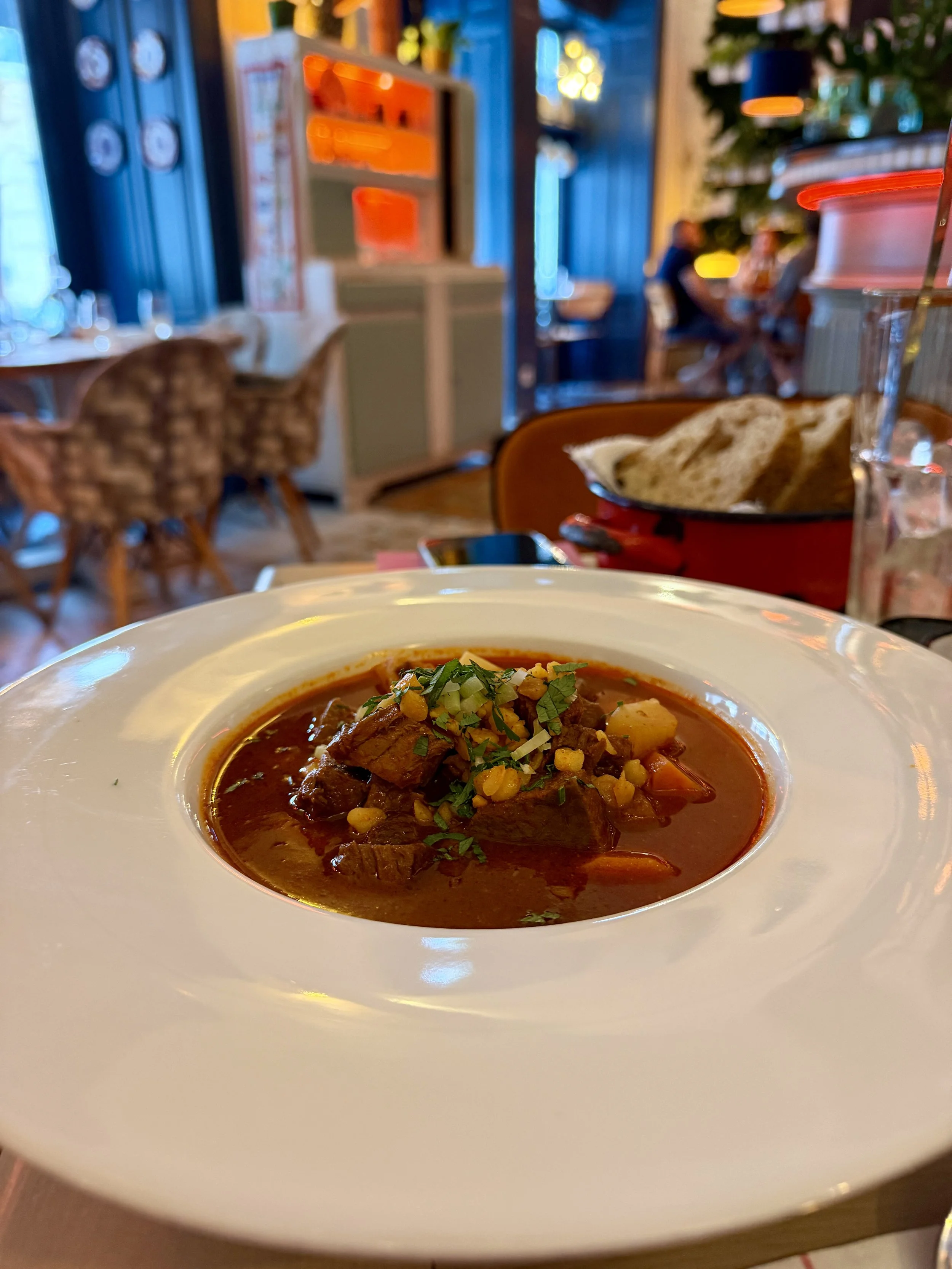
Real Hungarian gulyás is a hearty beef and vegetable soup, slow-cooked with sweet paprika, onions, and caraway seeds. It's not the thick stew you'll find in tourist restaurants near the Parliament. The authentic version is brothy, deeply flavoured, and usually eaten as a first course rather than a main.
Ask any local and they'll point you to a place far from the main tourist drag. On my food tours I always take guests to a spot where the gulyás has been made the same way for decades.

2. Hortobágyi Palacsinta (Savoury Crepes)
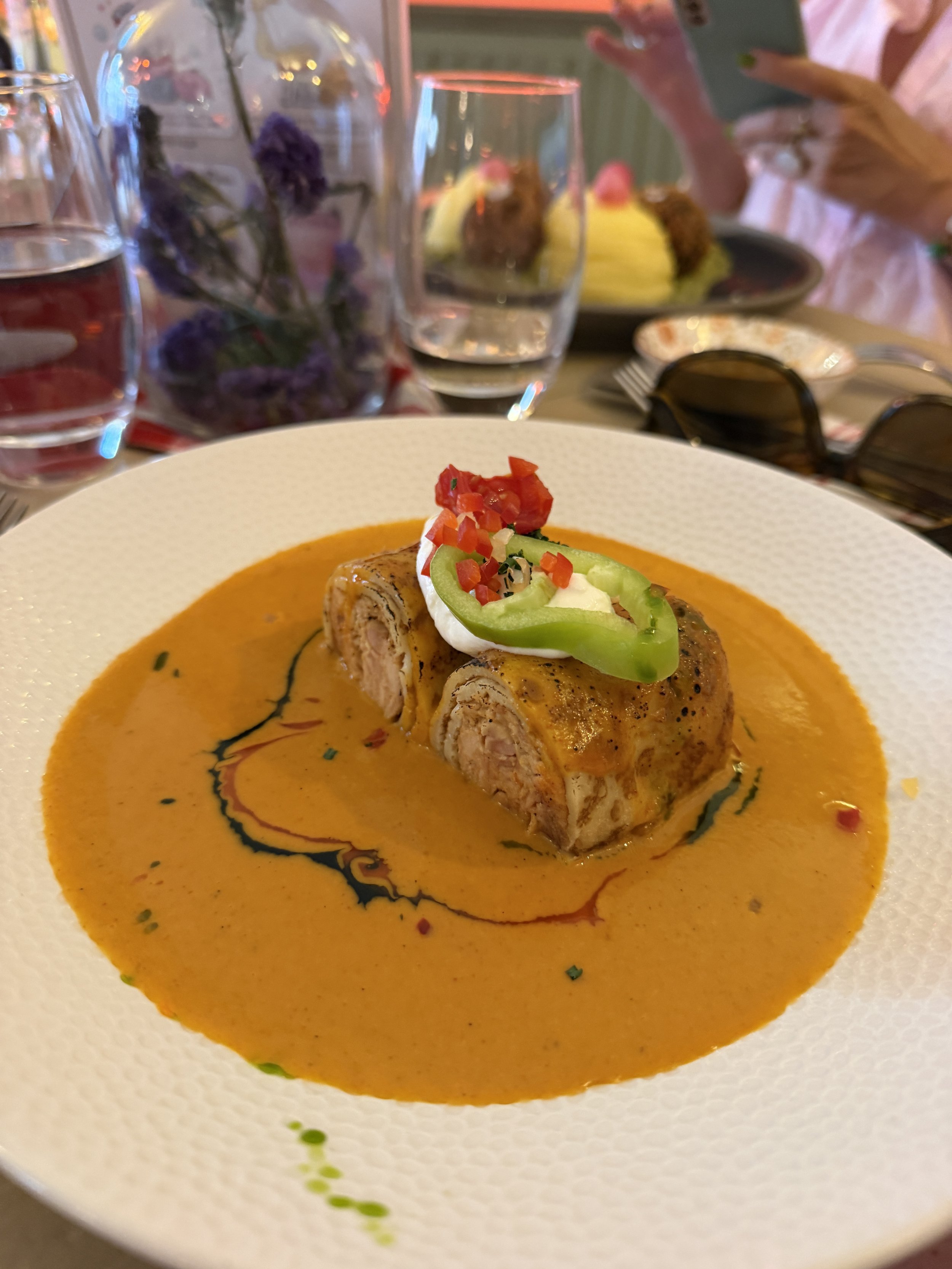
Hungary takes its palacsinta (crepes) very seriously — both sweet and savoury. Hortobágyi palacsinta is the savoury version: thin delicate crepes filled with minced veal or pork cooked in paprika sauce, folded into neat parcels, and baked in a rich sour cream and paprika gravy.
Named after the Hortobágy — Hungary's famous Great Plain — this dish surprises almost every visitor who tries it. Savoury crepes sound unusual until the first bite, at which point they make complete and total sense. One of the most elegant dishes in the Hungarian repertoire.
3. Csirkepaprikás (Chicken Paprikash)
If Hungary had a single dish to introduce someone to its cuisine, this might be it.
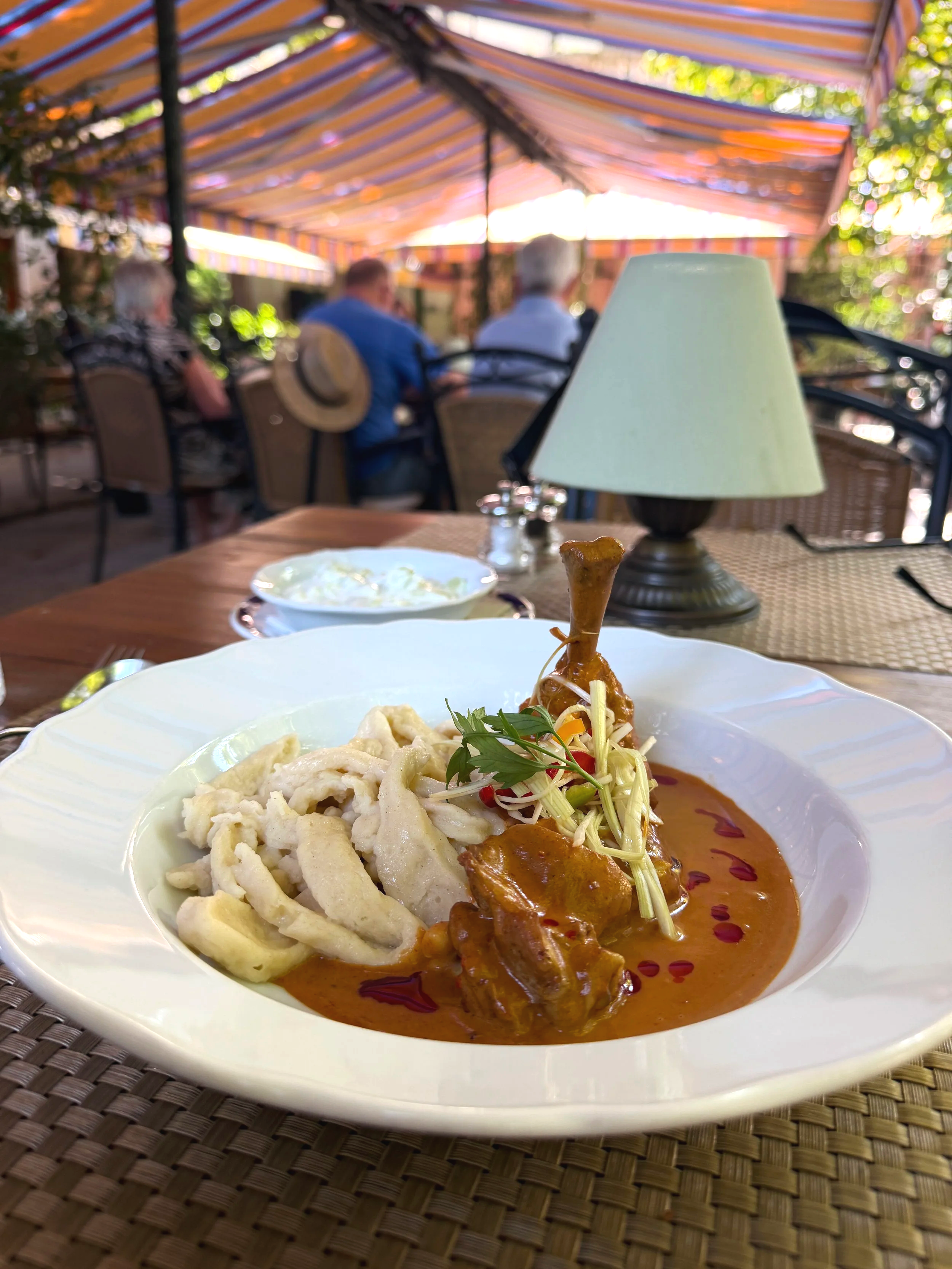
Csirkepaprikás is chicken braised low and slow in a sauce built from sweet paprika, onions, and sour cream, until the meat is fall-apart tender and the sauce turns a deep, rich red-orange. It's simpler than gulyás, gentler than pörkölt, and utterly beloved — the dish most Hungarians would call true comfort food.
It's almost always served with nokedli (soft egg dumplings) to soak up every bit of the sauce. You'll find versions of it on nearly every traditional menu in Budapest, but the best is still the one made at home — creamier, more generous with the paprika, and never rushed.
4. Töltött Káposzta (Stuffed Cabbage)
This is the dish every Hungarian grandmother makes differently and every Hungarian will insist their grandmother's version is the best.
Cabbage leaves stuffed with minced pork and rice, slow-cooked in a tomato and paprika sauce, often served with a generous dollop of sour cream. It's the kind of food that tastes like it took all day to make — because it did. Deeply comforting, deeply Hungarian.
5. Rakott Krumpli (Layered Potato Casserole)
This is the dish Hungarians make when they want something deeply satisfying and completely unfussy. Layers of thinly sliced boiled potatoes, hard-boiled eggs, sour cream, and sliced sausage, baked in the oven until golden and bubbling. It's humble, hearty, and utterly delicious.
Rakott krumpli is proper Hungarian home cooking — the kind of thing you'll rarely find on a restaurant menu but will encounter at every family table. If you ever get invited to a Hungarian home for dinner and this appears, consider yourself lucky.
6. Pörkölt
Often confused with goulash by visitors, pörkölt is actually what most people picture when they think of Hungarian stew. Tender chunks of beef or pork, slow-braised in a rich paprika and onion sauce until the meat practically falls apart. Served with nokedli (tiny egg dumplings) or csipetke (pinched pasta).
This is the ultimate Hungarian comfort food — the kind of dish that warms you from the inside out on a cold Budapest evening.
7. Kürtőskalács (Chimney Cake)
A spiral of sweet dough wrapped around a wooden cylinder, roasted over charcoal, rolled in cinnamon sugar and eaten warm. The outside caramelises into a thin, crackling crust. The inside stays soft and doughy.
Kürtőskalács originally comes from Transylvania but has been adopted as a Budapest street food staple. You'll find it at markets and festivals throughout the city. The technique is beautiful and the result is extraordinary — one of those foods that's just as fun to watch being made as it is to eat.
8. Lecsó
Hungary's answer to ratatouille — and in my opinion, better.
Lecsó is a summer vegetable stew made with Hungarian wax peppers, tomatoes, and onions, cooked low and slow in lard or sunflower oil until everything collapses into a thick, sweet, deeply savoury sauce. It's eaten as a side dish, as a sauce for eggs, or simply on its own with bread.
Every Hungarian family has their own lecsó recipe. Every Hungarian family is correct.
9. Dobos Torta
Now we're in dessert territory — and Hungarian pastry is a world unto itself.
The Dobos Torta is the queen of Hungarian cakes: six thin sponge layers filled with chocolate buttercream, topped with a crown of hard caramel that shatters when you tap it with a fork. It was created in 1885 by József Dobos and was so revolutionary it was presented to Emperor Franz Joseph I.
You'll find it in every good Budapest cukrászda (cake shop). Order it with a strong black coffee and take your time with it.
10. Túró Gombóc (Sweet Curd Cheese Dumplings)
This is the dessert Hungarians grow up on, and it rarely makes it onto a menu translated for tourists.
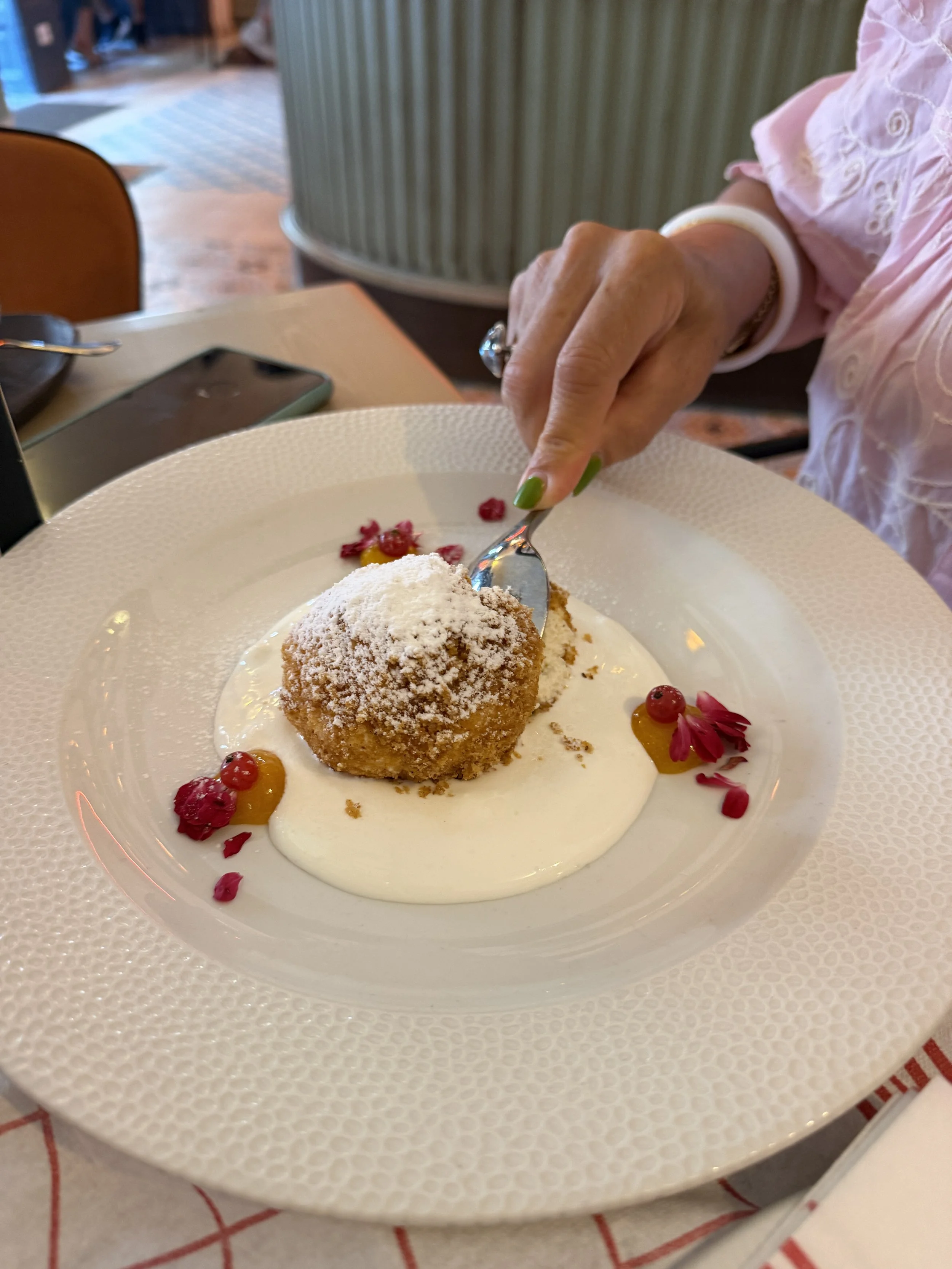
Túró gombóc are soft dumplings made from fresh túró (curd cheese), semolina, and egg, gently boiled until they hold their shape, then rolled in golden breadcrumbs toasted in butter. They're served warm, dusted with sugar, and topped with a generous spoonful of sour cream — sometimes with a fruit compote or a spoon of jam alongside.
They sound plain. They are not. The texture is soft and slightly tangy, the breadcrumb coating adds crunch and warmth, and the sour cream ties it all together. It's the kind of dish a Hungarian grandmother makes without measuring anything, and somehow it always turns out perfect.
11. Pogácsa
The humble pogácsa is everywhere in Hungary — at bakeries, at markets, at family gatherings, on trains, at office desks — and yet somehow most tourists never encounter it.
These small, savoury scones are made with lard and sour cream and can be flavoured with cheese, bacon, paprika, or caraway seeds. They're flaky, buttery, deeply satisfying, and absolutely impossible to eat just one of.
12. Somlói Galuska (Sponge Cake Trifle)
No list of Hungarian food is complete without this — the dessert that was invented in Budapest in the 1950s and has never gone out of fashion.
Somlói galuska is a glorious mess of layered sponge cake soaked in rum syrup, scattered with walnuts and raisins, drenched in warm chocolate sauce, and finished with a mountain of whipped cream. It looks chaotic. It tastes magnificent. Every Budapest cukrászda has its own version and every version is worth trying.
Order it at the end of a long meal, share it with someone, and thank Hungary quietly for its contribution to humanity.
A final word
Hungarian cuisine is generous, honest, and rooted in seasons, family, and tradition. It's not trying to impress you — it's trying to feed you well. And once you understand that, every meal in Budapest becomes something more than just lunch.
If you want to experience these dishes the right way — in the right places, with the stories behind them — that's exactly what my Budapest signature food tour is for.
Enjoyed this one? A few more from the blog you'll probably want to read next:
Where Budapest Really Shops: Inside the Klauzál Square Market Hall
Szimpla Kert: Is It Still Worth Seeing in Budapest?
Why You Should Visit the Citadella for Sunset in Budapest
Kaptafa Brunch: The Jewish Quarter Spot That Makes Breakfast Fun Again
