Budapest Christmas Markets 2026: A Local Guide's Honest Guide
By Kata | katabudapest.com | Published Oct 2, 2026
Every November, something happens to Budapest. The first frost arrives, the smell of cinnamon and mulled wine drifts down Váci utca, and suddenly the whole of downtown Budapest glows. I have guided visitors through these markets for over a decade, and I still get goosebumps when the lights come on at the Basilica.
This guide gives you what most websites don't: honest advice from a licensed Budapest guide. You'll learn which market is better for what, what to actually eat, what Hungarians do at Christmas, and how to enjoy it all without being squeezed in a crowd.
Budapest Christmas Markets 2026 at a glance
Expected dates: Friday, November 13, 2026 to December 31, 2026 (Vörösmarty tér) and to January 1, 2027 (Basilica). The organisers usually confirm the exact dates in October, and I update this post as soon as they do.
The two main markets: Vörösmarty tér (Vörösmarty Square) and Szent István tér in front of St. Stephen's Basilica, a 10-minute walk apart.
Entry: free.
Opening hours: roughly 11:00 to 21:00 or 22:00 daily, later on weekends, with short hours on December 24.
Must-try: kürtőskalács (chimney cake), forralt bor (mulled wine), lángos and bejgli.
Best time to visit: weekday afternoons, from opening until about 16:00.
When do the Budapest Christmas markets open in 2026?
The two big markets are expected to open on Friday, November 13, 2026. In 2025 both opened on Friday, November 14, and in 2024 on Friday, November 15, so a Friday in mid-November is the pattern. Vörösmarty tér usually closes on December 31. The Basilica market stays open until New Year's Day.
Vörösmarty tér (Vörösmarty Classic Xmas): November 13 – December 31, 2026. Listed by several sources, not yet final.
Advent Bazilika (St. Stephen's Basilica): November 18 2026 – January 1, 2027.
Buda Castle (Szentháromság tér): late November – December 24, 2026. Not announced yet.
Advent in Óbuda (Fő tér): late November - the first Sunday of Advent. Expected.
Official sites to double-check: adventbazilika.hu, Advent Óbudán and Vörösmarty Classic Xmas.

If you want to see Christmas markets with me, book your private tour now.
Let's explore the festive city together! →Vörösmarty tér vs. the Basilica market: which one is better?
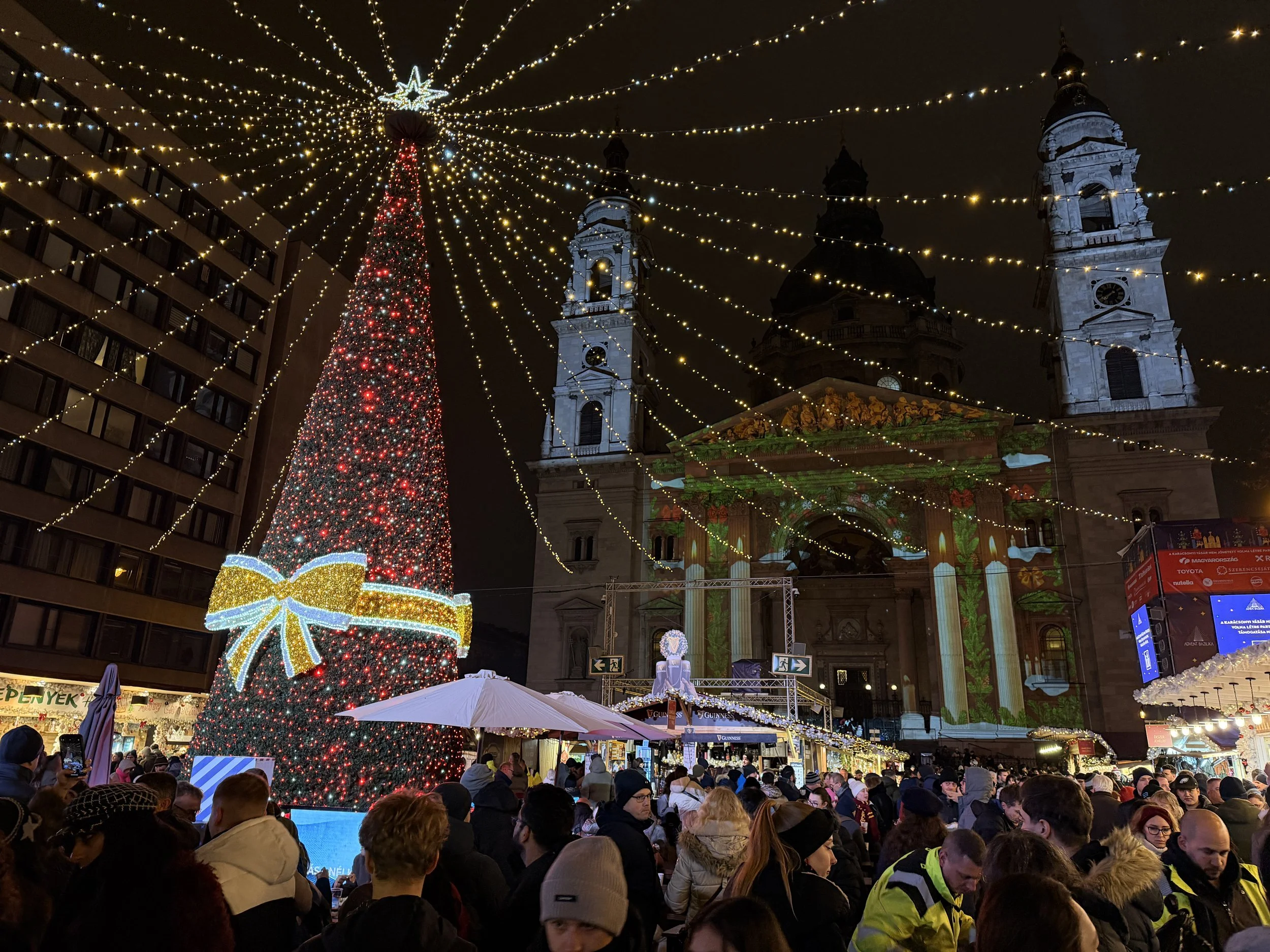
My personal favourite? The Basilica market. Standing in the square as the light show starts, with a cup of mulled wine in my hands, still feels magical to me after all these years. But if you want something more authentic, take the short HÉV ride to the Óbuda market on Fő tér. Óbuda means "Old Buda", and its cosy Advent market is where locals meet friends, with far fewer tourists and a real neighbourhood feel.
Vörösmarty tér vs. the Basilica market: which one is better?
Vörösmary tér: the original
This is where it all began in 1998, which makes it the oldest Christmas market in Budapest. The square is named after Mihály Vörösmarty, the 19th-century poet who wrote the Szózat, our second national anthem. In 2025 his white marble statue disappeared inside a giant snow globe with its own light show, and it quickly became one of the most photographed spots in the city.
Come here for handmade gifts: hand-painted ceramics, felt slippers, carved wood, leather goods and embroidery. My tip: warm up afterwards at Gerbeaud, the grand café on the corner of the square since 1858.
Advent Bazilika: Europe's favourite
The market in front of St. Stephen's Basilica has been voted Europe's best Christmas market four times! No other market has done that.
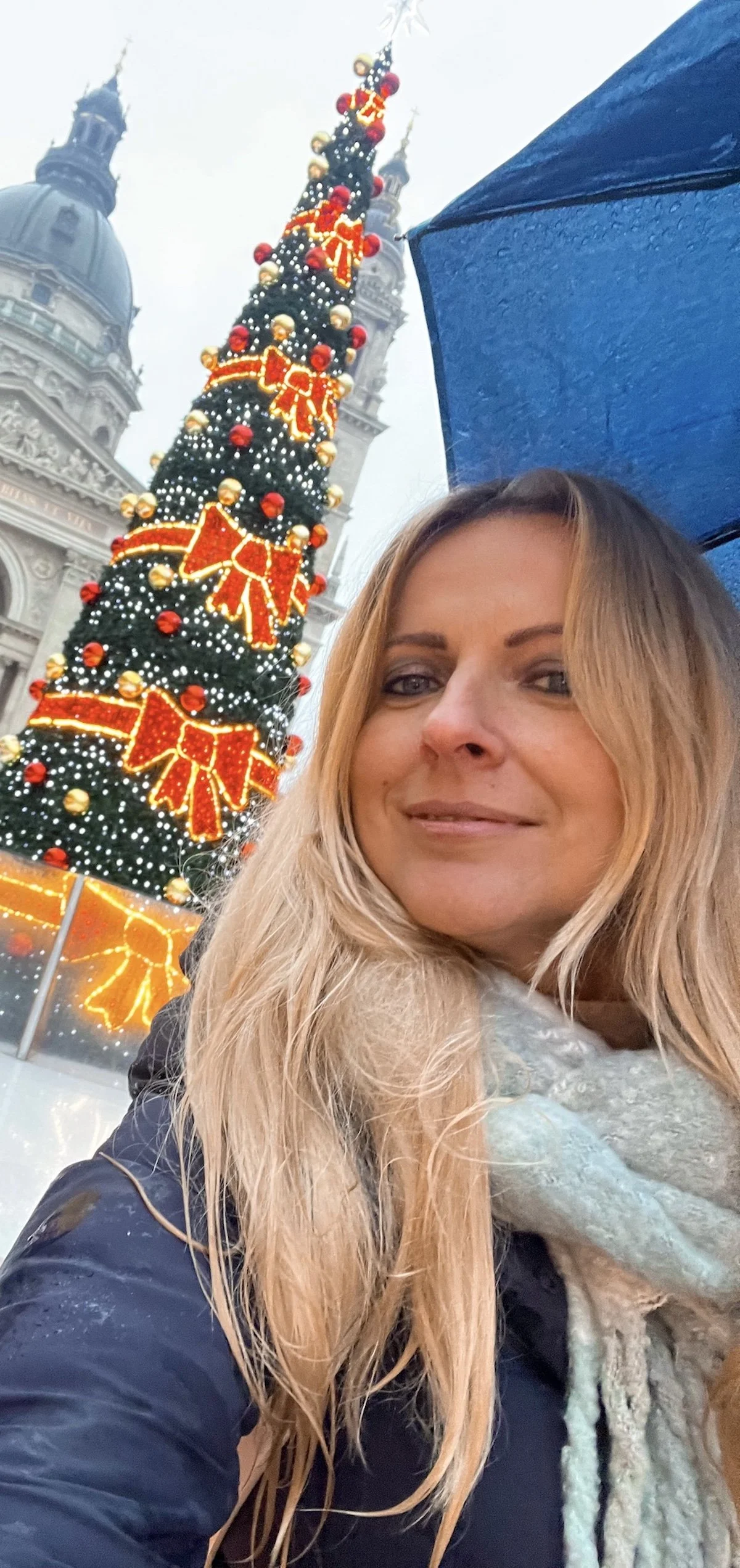
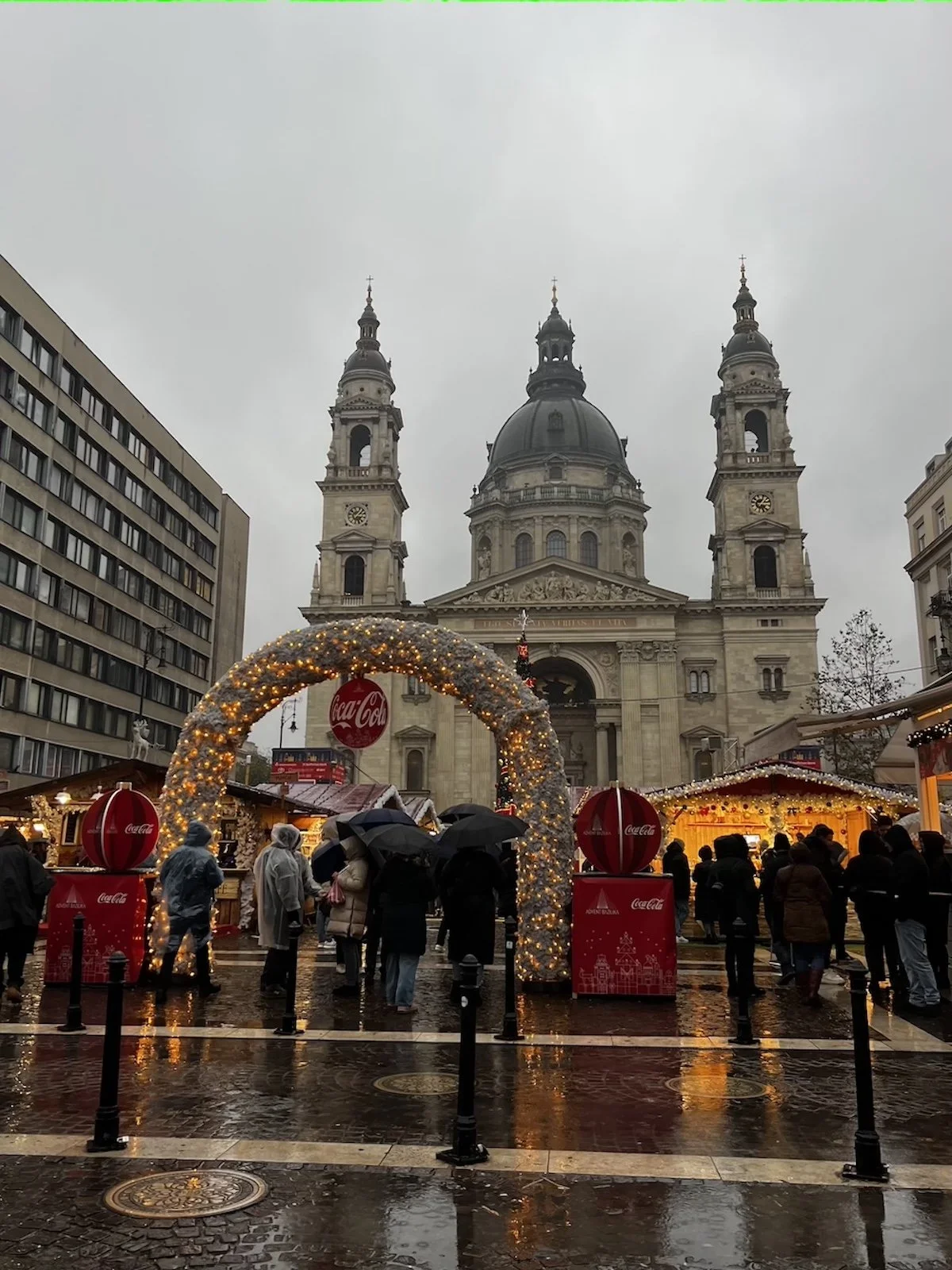
The secret is the setting. Every evening from 17:30, a light show is projected onto the Basilica's façade every half hour, and the square glows under a canopy of lights around a tall Christmas tree. It is free, and it is magical.
Fun fact for your tour: the Basilica is 96 metres tall, exactly the same height as the Parliament. The number refers to 896, the year the Hungarian tribes settled in the Carpathian Basin. Inside the church rests the Holy Right, the mummified right hand of our first king, St. Stephen.
Advent Óbudán: my pick for an authentic Budapest Christmas
If you'd like to see how Budapest locals celebrate Advent, take the short trip north to Óbuda. The name means "Old Buda", and it's the oldest part of the city. Long before Budapest existed, the Romans built their town of Aquincum here. Today the heart of the district is Fő tér, a pretty baroque square with low, colourful houses and cobblestones. Each December it turns into one of the cosiest Christmas markets in the city.
The market is organised by the local district, not a commercial company, and you can feel the difference. It's a real neighbourhood celebration where families meet after work, children skate on the ice rink in the middle of the square, and free concerts fill the evenings. You'll hear far more Hungarian than English, and the prices are friendlier than downtown.
What to expect at Advent Óbudán:
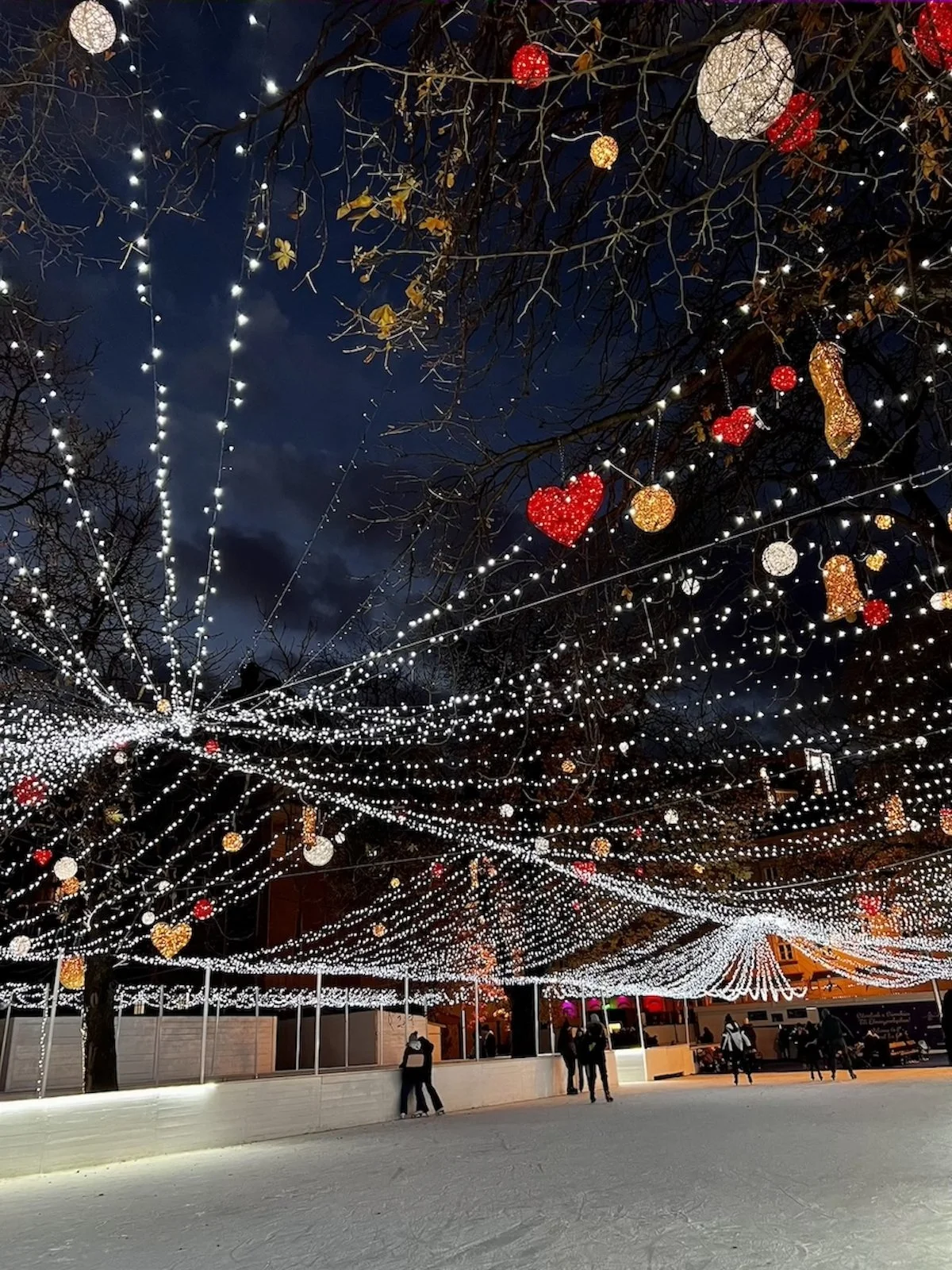
An ice rink on Fő tér: skating under the Christmas lights, with surprise programmes for children and adults.
Free concerts and family programmes: from Christmas music to children's shows and craft workshops where you can make your own gifts.
A charity focus: each year the market collects donations for local families in need, including a charity raffle.
Local food and mulled wine: the same Hungarian classics as downtown, in a calmer setting.
How to get there: take the HÉV suburban train H5 from Batthyány tér to Szentlélek tér. From the station, Fő tér is a few minutes' walk. On the Advent weekends the district changes the traffic around Fő tér, so public transport is easier than a taxi.
Smaller markets worth seeing too
Fisherman's Bastion and Buda Castle (Szentháromság tér): Christmas market of the Castle District, known as Magical Advent in Buda. The stalls stretch across Szentháromság tér, between Matthias Church and Fisherman's Bastion, all the way to the Dominican ruins behind the Hilton hotel. You'll find chimney cake, lángos, stuffed cabbage, sausages and roasted chestnuts, plus crafts and Christmas decorations. My tip: come at dusk, warm your hands on a mulled wine, and watch the Parliament light up across the Danube from the Bastion's terraces.
Deák Ferenc tér and Városháza Park: the city's own official Christmas market, called the Budapest Christmas Fair and Winter Experience Park. It's organised by the city's market hall company and spreads across Deák tér and Városháza Park, the garden of the old City Hall. Expect mulled wine, chimney cake, classic Hungarian Christmas dishes, sweets and handmade crafts, plus an ice rink.
What to eat and drink at the Budapest Christmas markets
As a home baker, this is my favourite part. Here is what I tell my guests to try, with the 2025 market prices so you can plan. One euro was roughly 380–400 forints, so 1,500 Ft is about €4.
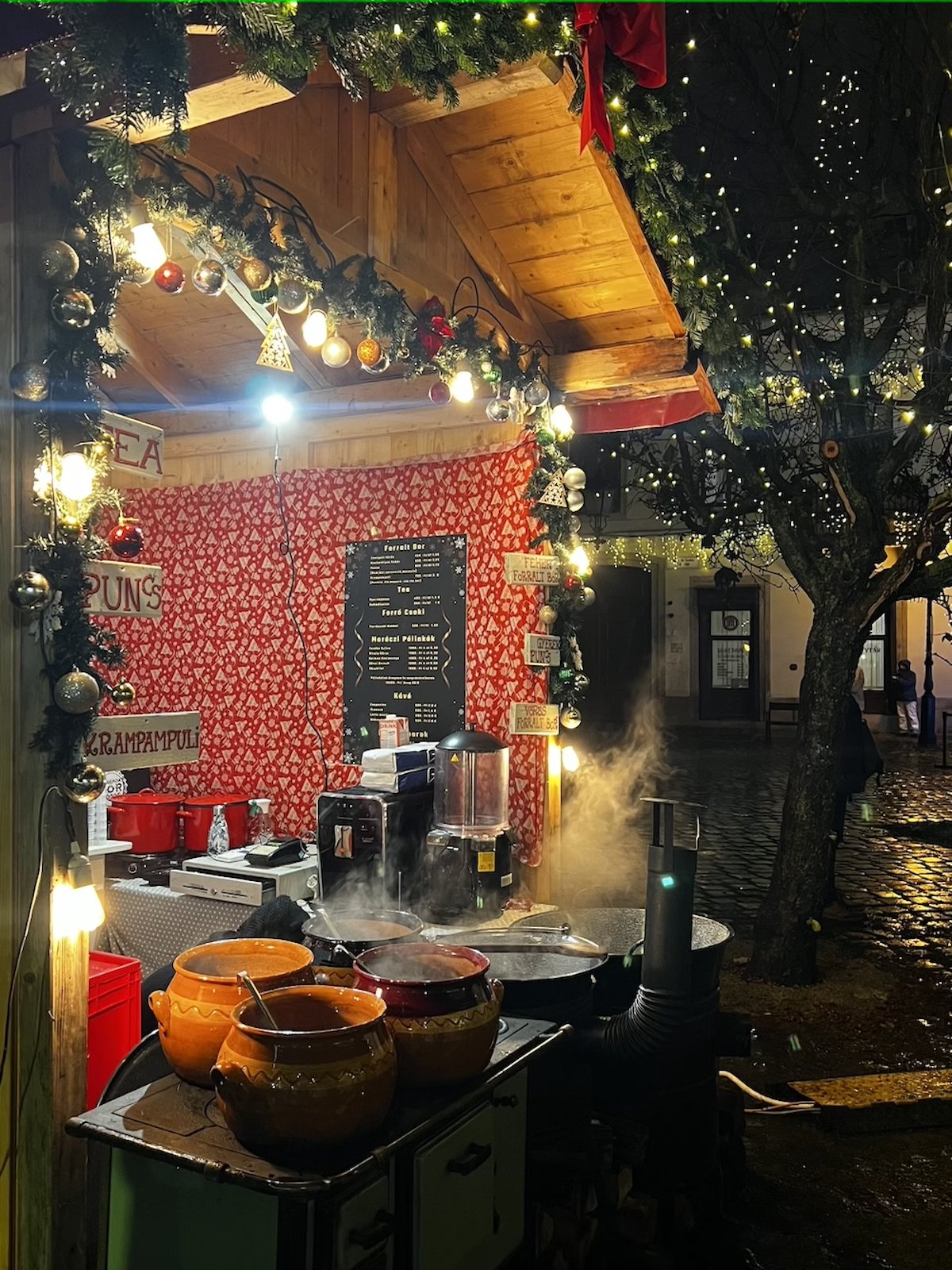
Forralt bor: hot mulled wine with cinnamon, cloves and orange. 1,500 Ft.
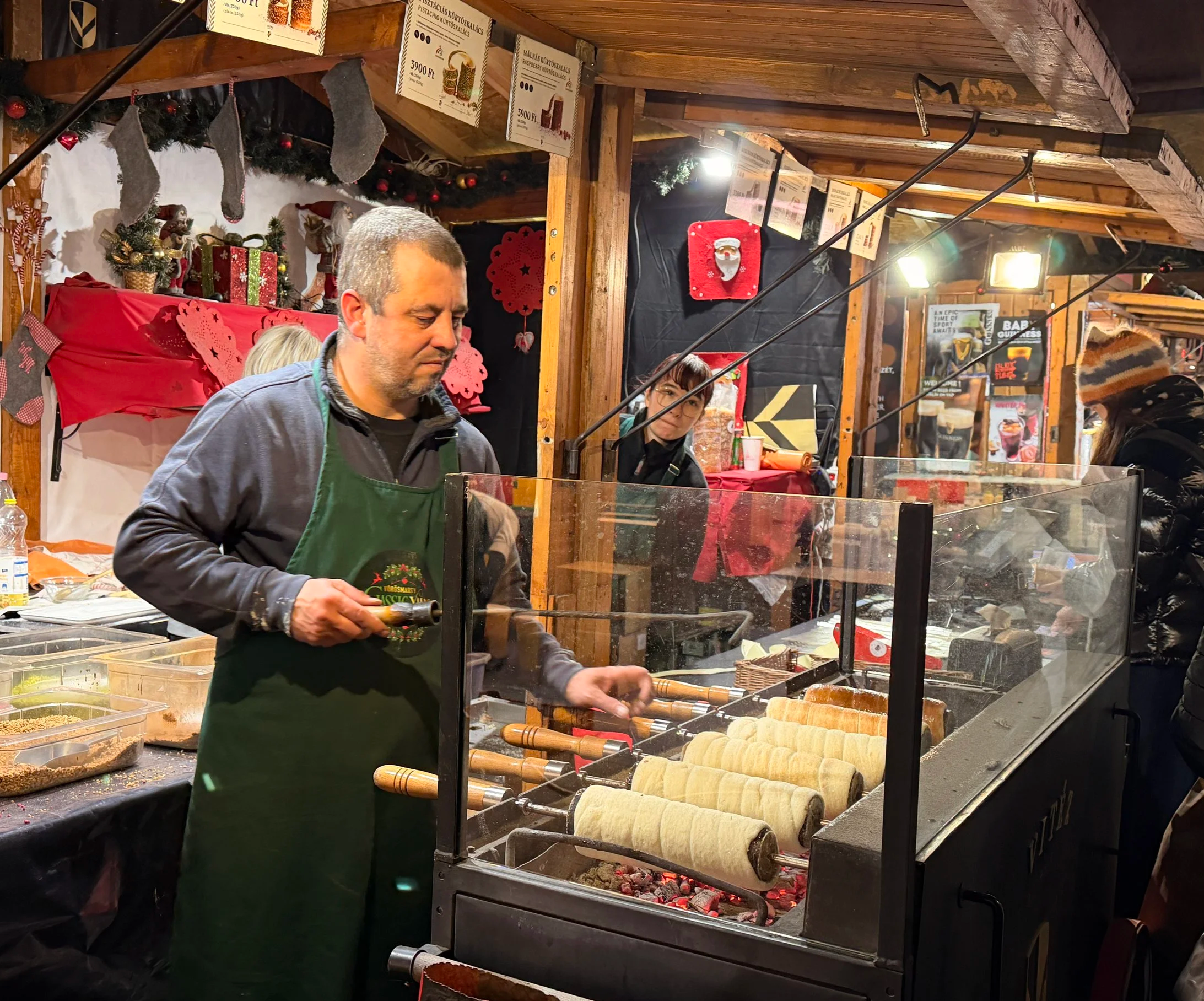
Kürtőskalács: chimney cake, baked on a spit over coals. From 2,800 Ft.
Lángos: deep-fried dough with sour cream and cheese. From 2,400 Ft.
Bejgli: poppy seed or walnut roll, the Christmas cake. 6,700 Ft for 500 g.
Rétes: strudel with sour cherry, poppy seed or cottage cheese. 1,900 Ft.
Flódni: Jewish layer cake with apple, walnut, poppy seed and plum jam. 2,300 Ft.
Töltött káposzta: stuffed cabbage, the Hungarian Christmas classic. About 5,700 Ft.
Kürtőskalács: the smell of a Hungarian Christmas
You will smell it before you see it. The dough is wrapped around a wooden spit, rolled in sugar and turned slowly over glowing coals until the sugar caramelises into a crackly crust. Then it's rolled in cinnamon, walnut or cocoa. It comes from Transylvania, where Hungarians have baked it for centuries.
My tip: The classic cinnamon or walnut one is the real thing. Pull it apart in a spiral while it's still steaming.
Bejgli: the cake every Hungarian family argues about
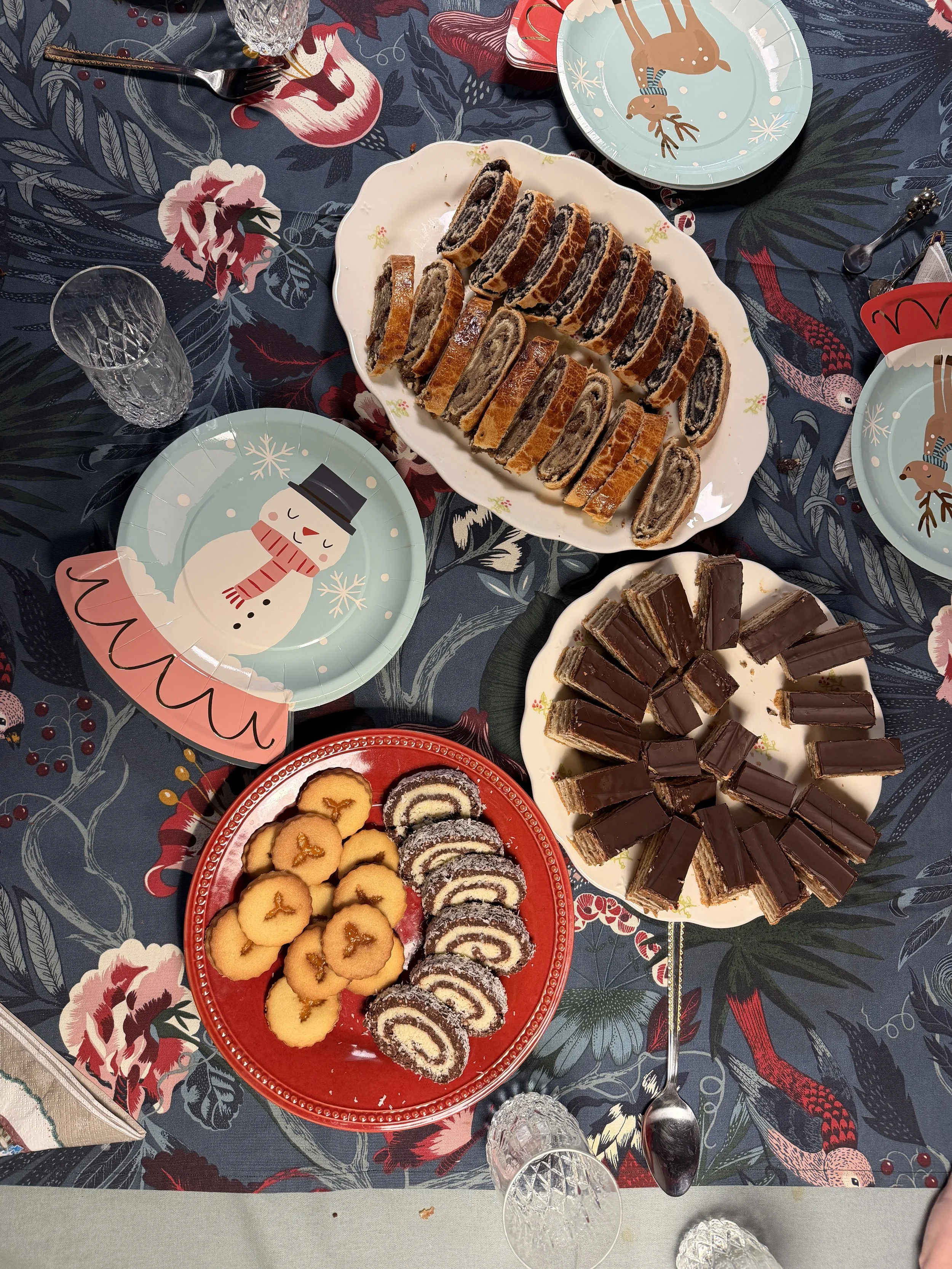
No Hungarian Christmas table is complete without bejgli, a rolled pastry filled with poppy seeds or walnuts. Tradition says poppy seed brings wealth and walnut protects the house from evil, so most families bake both. The perfect bejgli has a marbled, cracked top and a filling that doesn't separate from the dough. Every grandmother has a secret for that.
Töltött káposzta: the Christmas Day classic
If one dish tastes like a Hungarian Christmas, it's stuffed cabbage. Pickled cabbage leaves are rolled around minced pork, rice and paprika, then slowly cooked on a bed of sauerkraut with smoked meat. It's served with a big spoonful of sour cream and fresh bread.
Every Hungarian will tell you it tastes better on the second day, and even better on the third. That's why families cook a huge pot before Christmas and eat it throughout the holidays. At the markets it's a filling lunch for about 5,700 Ft.
Mákos rétes: poppy seed strudel
Hungarian strudel dough is pulled by hand over a floured tablecloth until it's so thin you could read a newspaper through it. Then it's filled, rolled and baked until the layers shatter when you bite in. At Christmas, the poppy seed filling is the one to try, sweet and nutty with a little lemon zest. Poppy seed is a symbol of wealth and abundance, so it belongs on the holiday table.
Other fillings to look for: meggyes (sour cherry), túrós (sweet cottage cheese) and almás (apple). At about 1,900 Ft a slice.
Kacsacomb: roast duck leg
A crispy roast duck leg (or goose leg, libacomb) is Hungarian comfort food for cold days. It's traditionally served with braised red cabbage and potatoes mashed with fried onions. The skin should crackle, and the meat should fall off the bone.
Goose and duck season starts on November 11, St. Martin's Day, when Hungarians traditionally eat goose and taste the new wine. That's why you'll find duck and goose dishes at the markets from the very first day.
Flódni: the cake from Budapest's Jewish heritage
Flódni is a rich layer cake with four fillings stacked between thin sheets of pastry: apple, walnut, poppy seed and plum jam. It comes from Hungarian Jewish tradition, where it's baked for Hanukkah and Purim, and it's become a favourite of the whole city. After tasting it at the market, try the real thing at a bakery in the Jewish Quarter. Look for one that has been baking it by family recipe for generations.
More winter and Christmas foods to try
Sült gesztenye (roasted chestnuts): sold hot in paper cones. The smell of chestnuts roasting on street corners means winter has arrived in Budapest.
Mézeskalács (gingerbread): honey cakes decorated with white icing, often shaped as red hearts with a tiny mirror in the middle. They make a lovely gift to take home.
Kolbász and hurka: grilled paprika sausage, and hurka, a rice sausage made with liver or blood. Winter is pig slaughter season in the countryside, so these are traditional December food. Eat them with mustard, pickles and bread.
Halászlé: a spicy, bright red paprika fish soup, often eaten at home on Christmas Eve. The markets sometimes hold fish weekends where you can try it.
Tócsni: a crispy potato pancake with garlic, sometimes topped with sour cream and cheese. It's a cheap and warming snack.
Mákos guba: a Christmas Eve dessert of bread soaked in sweet milk and covered with poppy seeds and sugar. You won't find it often at the markets, but ask about it in traditional restaurants.
Zserbó: a layered cake with walnuts and apricot jam, topped with chocolate. Hungarian families bake it for Christmas, and you'll find it in every good bakery in December.
Szaloncukor: the wrapped fondant candies Hungarians hang on the Christmas tree. Buy a bag in a flavour like marzipan, jelly or coconut.
Warm drinks to keep you going
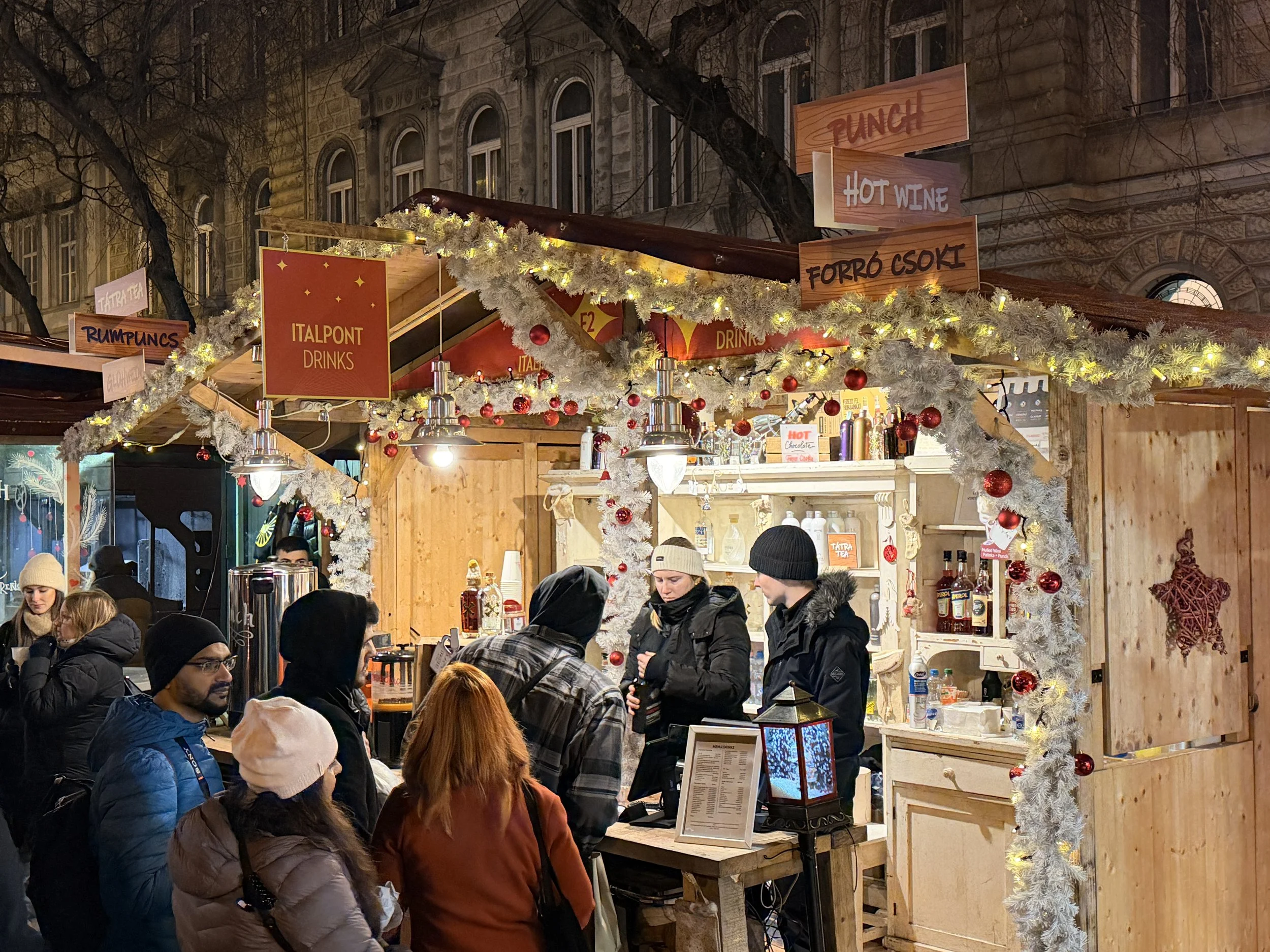
Forralt bor: red or white mulled wine with cinnamon, cloves and orange.
Puncs: a sweet, hot fruit punch, sometimes with rum.
Pálinka: Hungarian fruit brandy, most often plum, apricot or pear. A small shot warms you up faster than anything else.
Forró csoki: thick hot chocolate, with whipped cream or a shot of liqueur.
Hot cinnamon apple juice: the best alcohol-free option, and great for kids.
Mulled wine and the souvenir mug
In 2025 the two big markets set one price for a cup of mulled wine: 1,500 Ft. At Vörösmarty tér it comes in a ceramic mug. You can usually hand it back or keep it as a souvenir. Many of my guests collect them year after year.
Not drinking alcohol? Try the hot cinnamon apple juice or a hot chocolate.
A budget tip
In recent years, the big food stalls have each offered a fixed-price dish, and themed weekends with dishes at 2,000–2,500 Ft. Look for the menu boards that say "fix ár". Main dishes like goulash or sausage at the markets cost more than in a regular restaurant. For a proper sit-down meal, I send guests to a restaurant two streets away. See my [goulash restaurants guide].
Hungarian Christmas traditions
Knowing these little stories turns a market visit into a real cultural experience. They're also my guests' favourite part of my December tours.
December 6: Mikulás comes first. Hungarian children don't wait until the 25th. On the evening of December 5 they polish their boots and put them in the window. Overnight Mikulás (St. Nicholas) fills them with chocolate, tangerines and nuts. Naughty children also find a golden twig, the virgács, as a gentle warning. You'll see virgács and chocolate Mikulás figures at every market stall.
December 13: Luca Day. Tradition says a man started carving a Luca chair on this day, adding a little each day without nails. If he stood on it at midnight Mass on Christmas Eve, he could see the witches of the village. Families also sow wheat in a small dish on Luca Day. If it grows green and thick by Christmas, next year will be a good one.
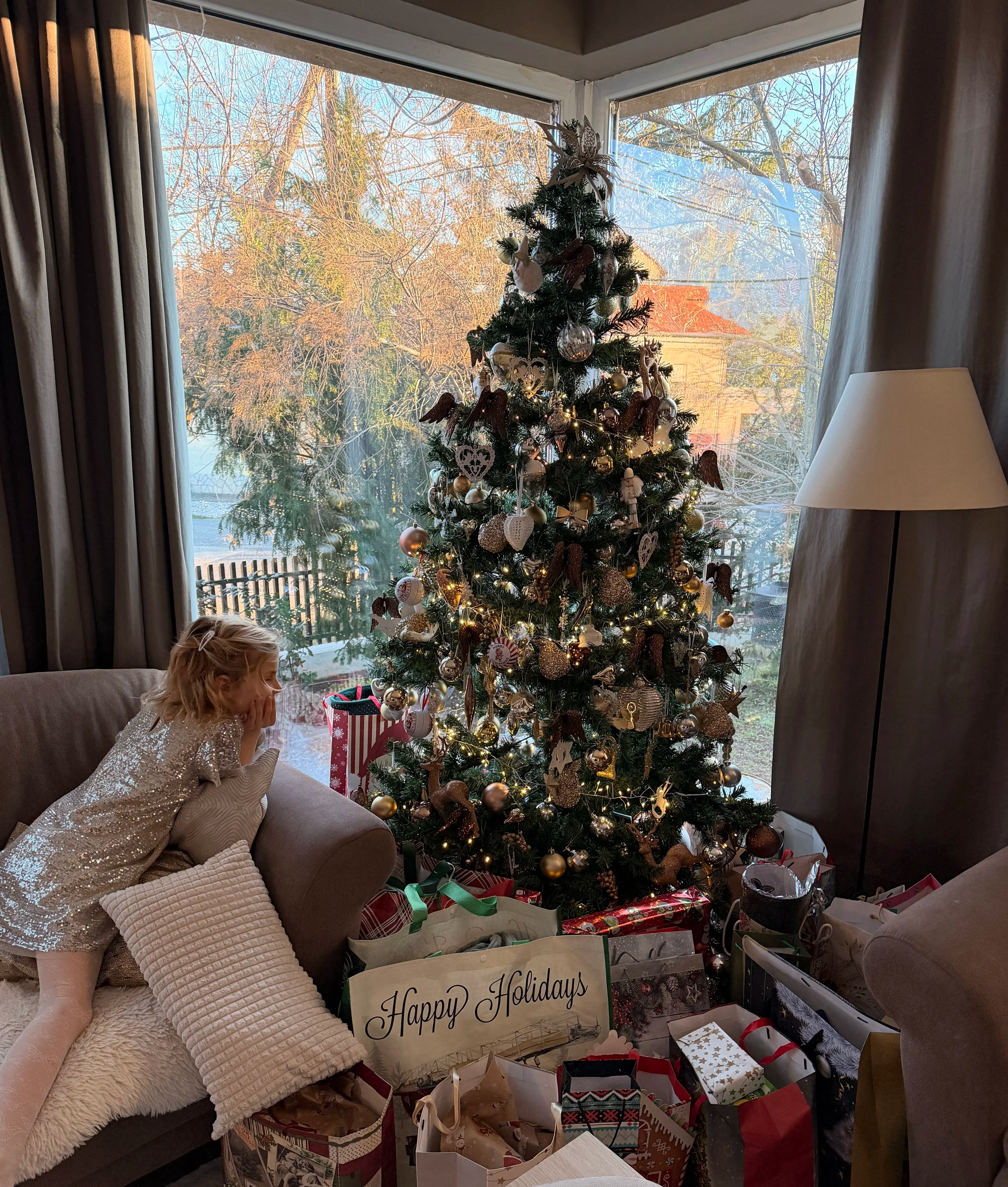
December 24: Szenteste, the Holy Evening. This is our main celebration, not the 25th. Traditionally the children are sent out of the room while the Christmas tree is decorated. Then a little bell rings, and the tree appears in full glory with the presents underneath. In Hungary, the presents are brought by Jézuska, the baby Jesus, or by the angels. Santa doesn't come on Christmas Eve.
Szaloncukor: the candy on the tree. Look for the colourful wrapped sweets at the markets. Hungarians hang these fondant candies on the Christmas tree, and children secretly eat them, leaving the empty wrappers hanging so nobody notices. Every family knows this trick.
The Christmas Eve dinner. Many families eat fish on Christmas Eve, especially halászlé, a spicy paprika fish soup. Stuffed cabbage and bejgli follow on the next days.
New Year's luck. On December 31, Hungarians avoid eating chicken or other poultry, because a bird scratches the luck away. Instead, we eat lentil soup, since the lentils look like coins and bring money. The Basilica market has even held a special lentil day on January 1.
What to buy: locally made souvenirs from the Budapest Christmas markets
The best thing about the two big markets is that most sellers are Hungarian craftspeople. The Basilica market alone hosts around a hundred Hungarian makers. Here is what I recommend to my guests, and how to make sure you're taking home something real.
Hand-embroidered textiles: look for Kalocsa embroidery, with its bright paprika-red and colourful flowers, and Matyó embroidery from Mezőkövesd, which is on the UNESCO list of intangible cultural heritage. A small embroidered napkin or bookmark is easy to pack.
Kékfestő (blue-dyed cloth): indigo cotton printed with white patterns, a craft also recognised by UNESCO. Tablecloths, aprons and bags make practical gifts.
Hand-painted ceramics: mugs, plates and Christmas ornaments painted with folk motifs. The Vörösmarty mulled wine mug counts too.
Felt and wool: felted slippers, hats, gloves and toys, perfect for a cold December.
Wooden crafts: carved kitchen spoons, cutting boards, toys and puzzles, often made by the craftsman standing behind the stall.
Mézeskalács (gingerbread hearts): the classic red hearts decorated with icing, and sometimes a tiny mirror so your loved one sees themselves. A traditional Hungarian love token.
Hungarian paprika: buy it in a cloth bag or tin, and choose between sweet (édes) and hot (csípős). It tastes nothing like the supermarket paprika at home.
Honey and handmade marzipan: acacia honey is a Hungarian speciality, and several stalls sell honey-based spirits and flavoured honeys.
Pálinka and Tokaji wine: a small bottle of fruit brandy or sweet Tokaji aszú is a gift every Hungarian approves of. Check your airline's liquid rules for hand luggage.
Szaloncukor: a box of Hungarian Christmas tree candies is a sweet and cheap gift for friends back home.
Handmade leather goods and jewellery: wallets, belts and silver jewellery from small Hungarian workshops.
How to avoid the crowds at the Budapest Christmas markets
The markets get very busy, especially on weekend evenings in December. These are the tricks I use with my own guests.
Go on a weekday, right at opening. Between 11:00 and 15:00 on a Monday to Thursday, you'll have space to browse the stalls and talk to the craftspeople.
Avoid Friday and Saturday evenings. This is when locals come after work and tour groups arrive. It's fun, but you'll move shoulder to shoulder.
Come early in the season. The last two weeks of November and the first week of December are calmer than the week before Christmas.
Watch a later light show. The first shows at the Basilica draw the biggest crowds. Stay for one after 19:00, or watch from the back of the square near Zrínyi utca, where you see the whole façade.
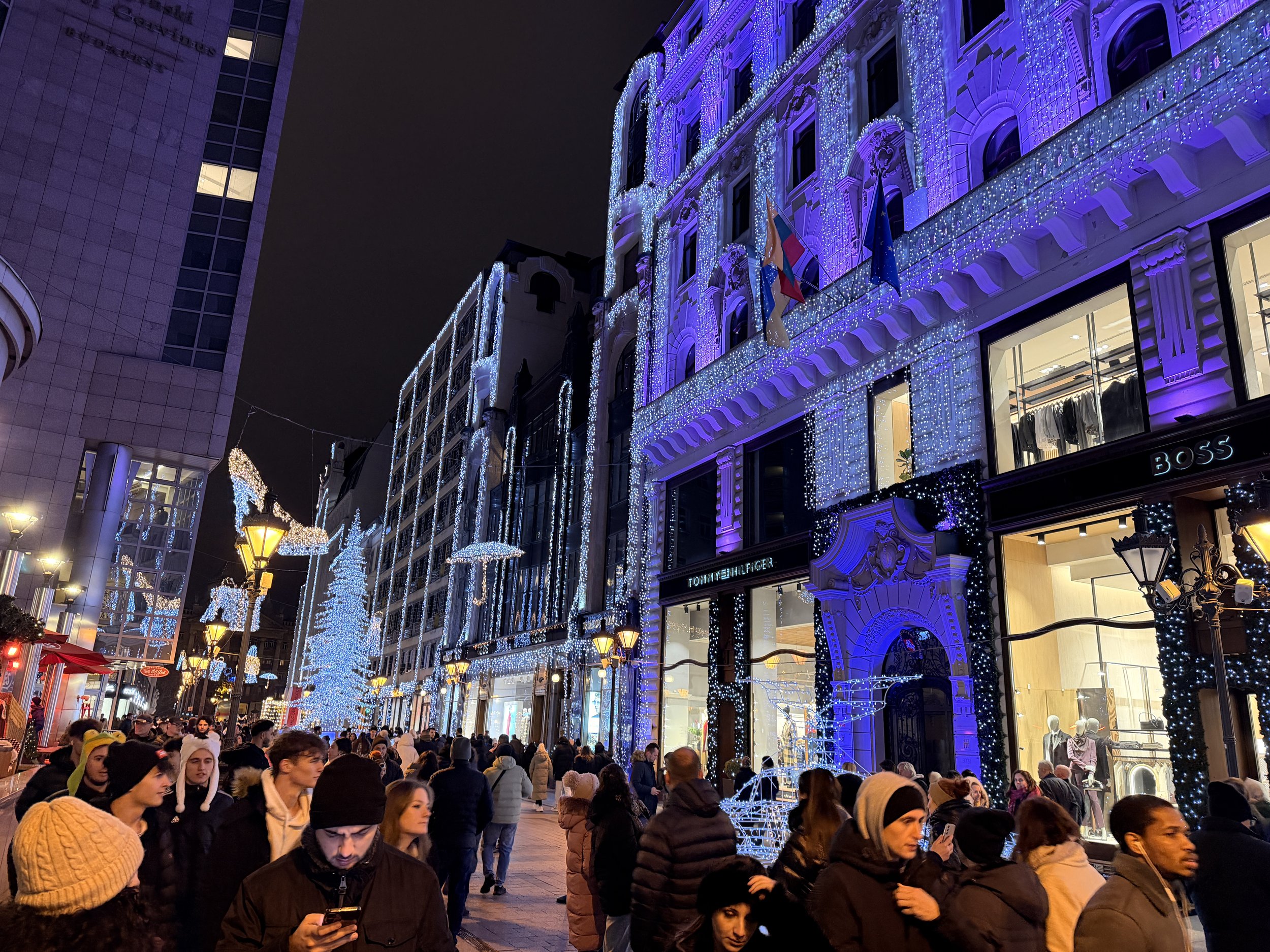
Walk the route in the right order. Start at Vörösmarty tér in daylight, walk up Deák Ferenc utca, past the Ferris wheel at Erzsébet tér, and arrive at the Basilica as it gets dark. It gets dark around 16:00 in December.
Watch your pockets. Pickpockets love a crowd. Keep your phone and wallet in a front pocket or a zipped bag.
Dress for the cold. December evenings are often around freezing. Wear warm shoes, since you'll stand on cold cobblestones for hours.
Most stalls take cards, but carry a little forint cash for small stalls.
Getting between the markets
Vörösmarty tér and the Basilica are only a 10-minute walk apart, so walk between them. For the markets further away, here's how to get around.
Public transport. Budapest's metro, trams and buses are cheap, frequent and easy to use. Download the BudapestGO app for routes and tickets.
Vörösmarty tér: M1 metro to Vörösmarty tér, or any metro line to Deák Ferenc tér.
Basilica: M1, M2 or M3 to Deák Ferenc tér, or M3 to Arany János utca.
Buda Castle market: bus 16 from Deák Ferenc tér to Szentháromság tér.
Óbuda market (Fő tér): HÉV suburban train H5 from Batthyány tér to Szentlélek tér.
The Christmas tram: in December, a tram covered in fairy lights runs on some of the most scenic routes, including tram 2 along the Danube. It's a free photo opportunity, even if you don't ride it.
Free travel for seniors. People travel free on Budapest public transport from age 65. Carry your passport or ID card to show the ticket inspectors. The funicular up to Buda Castle is not included.
Bolt and Uber. Both apps work in Budapest. Never get into an unmarked car or accept a ride from someone who approaches you on the street.
See the markets with a local
The markets are wonderful on your own, but they come alive with the stories behind them. On my private Christmas walks, I take you to both main markets and the best bakery for a proper slice of bejgli. You'll taste the classics, learn the traditions, and find the stalls with real handmade crafts, not imported souvenirs.
Private December dates fill up quickly. Contact me to plan your Christmas in Budapest.
Budapest Christmas Markets FAQ
When do the Budapest Christmas markets open in 2026? The main markets are expected to open on Friday, November 13, 2026. The organisers usually confirm the official dates in October.
When do the Budapest Christmas markets close? Vörösmarty tér usually closes on December 31. The Basilica market stays open until January 1. After that, only a few stalls remain.
Which Budapest Christmas market is the best? The Basilica market has been voted Europe's best Christmas market four times.
Is it free to visit the Budapest Christmas markets? Yes, entry to all the markets and the Basilica light show is free.
What time is the light show at the Basilica? In 2025 the light show ran every half hour from 17:30 every evening.
How much is mulled wine at the Budapest Christmas market? In 2025 a cup of mulled wine cost 1,500 Ft (about €4) at both main markets.
Does it snow in Budapest at Christmas? Sometimes, but a white Christmas is not guaranteed. Expect temperatures around 0 °C, with cold, damp evenings.
Can I pay by card at the Christmas markets? Most stalls accept cards, but I recommend some forint cash for small craft stalls.
Is Budapest worth visiting at Christmas? Absolutely. The markets are compact, the prices are lower than in Vienna, and you can end a cold day in a hot thermal bath.
Is public transport free for seniors in Budapest? Yes, if you're aged 65 or over. Carry your passport or ID card.
Can I use Uber or Bolt in Budapest? Yes, both apps work in Budapest.
What souvenirs should I buy at the Budapest Christmas markets? Look for locally made crafts: Kalocsa or Matyó embroidery, hand-painted ceramics, felt slippers, wooden toys, gingerbread hearts, Hungarian paprika, honey and a bottle of pálinka.
Enjoyed this one? A few more from the blog you'll probably want to read next:
Where Budapest Really Shops: Inside the Klauzál Square Market Hall
Szimpla Kert: Is It Still Worth Seeing in Budapest?
Why You Should Visit the Citadella for Sunset in Budapest
Kaptafa Brunch: The Jewish Quarter Spot That Makes Breakfast Fun Again
