Where Locals Actually Eat in Budapest — An Honest Guide (2026)
By Kata | katabudapest.com | Published Apr 6, 2026
There's a version of Budapest's food scene that exists purely for tourists. It lives on Váci Street, charges triple the price, serves goulash that came from a jar, and has photos of every dish laminated on the menu. Avoid all of it. Then there's the food scene that locals actually use — neighbourhood markets, communist-era lunch spots that have outlasted every trend, family-run restaurants with handwritten chalkboard menus, and bakeries with no sign outside because they've never needed one. I've been guiding visitors through Budapest's food scene for over a decade. This is where I actually eat, and where I take guests who want the real thing.
First — How Locals Actually Eat in Budapest
Before the restaurants, understand the rhythm. Hungarians eat differently to most Western Europeans.
Lunch is the main meal. Not dinner. The napi menü — daily lunch menu — is one of the best inventions in Hungarian food culture. Most proper restaurants offer a two or three-course set lunch for 2,500–4,500 HUF (roughly €6–11). Soup, main course, sometimes dessert. This is how locals eat well without spending much. Go for lunch, not dinner, if you want authentic food at honest prices.
Étkezde/Kifőzde — remember these words. Think of a basic, no-frills lunch canteen, usually cash only, always cheap, always packed with locals. These are the places with steam tables, shared tables, no English menu, and portions large enough to require a nap afterwards. They are some of the best eating experiences in Budapest.
Tip culture is different. Tipping 10-12% is standard and appreciated. Some restaurants add a service charge (‘felszolgálási díj’) automatically — check the bill before you tip.
The Markets — Start Here
Central Market Hall — Fővám tér
Every visitor goes here, but most go wrong. They buy overpriced paprika from the souvenir stalls upstairs and leave. Go downstairs instead — that's where locals shop. Fresh vegetables, cured meats, Hungarian cheeses, pickled everything. Buy a pogácsa (savoury scone) from the bakery section and eat it standing up. Go early, before 10am, when it's still genuinely alive with local shoppers rather than tour groups.
For breakfast upstairs, the lángos stalls are worth it — fried dough topped with sour cream, garlic oil and cheese, starting from about 3000 HUF. This is one of the most Hungarian things you can eat and it costs almost nothing.
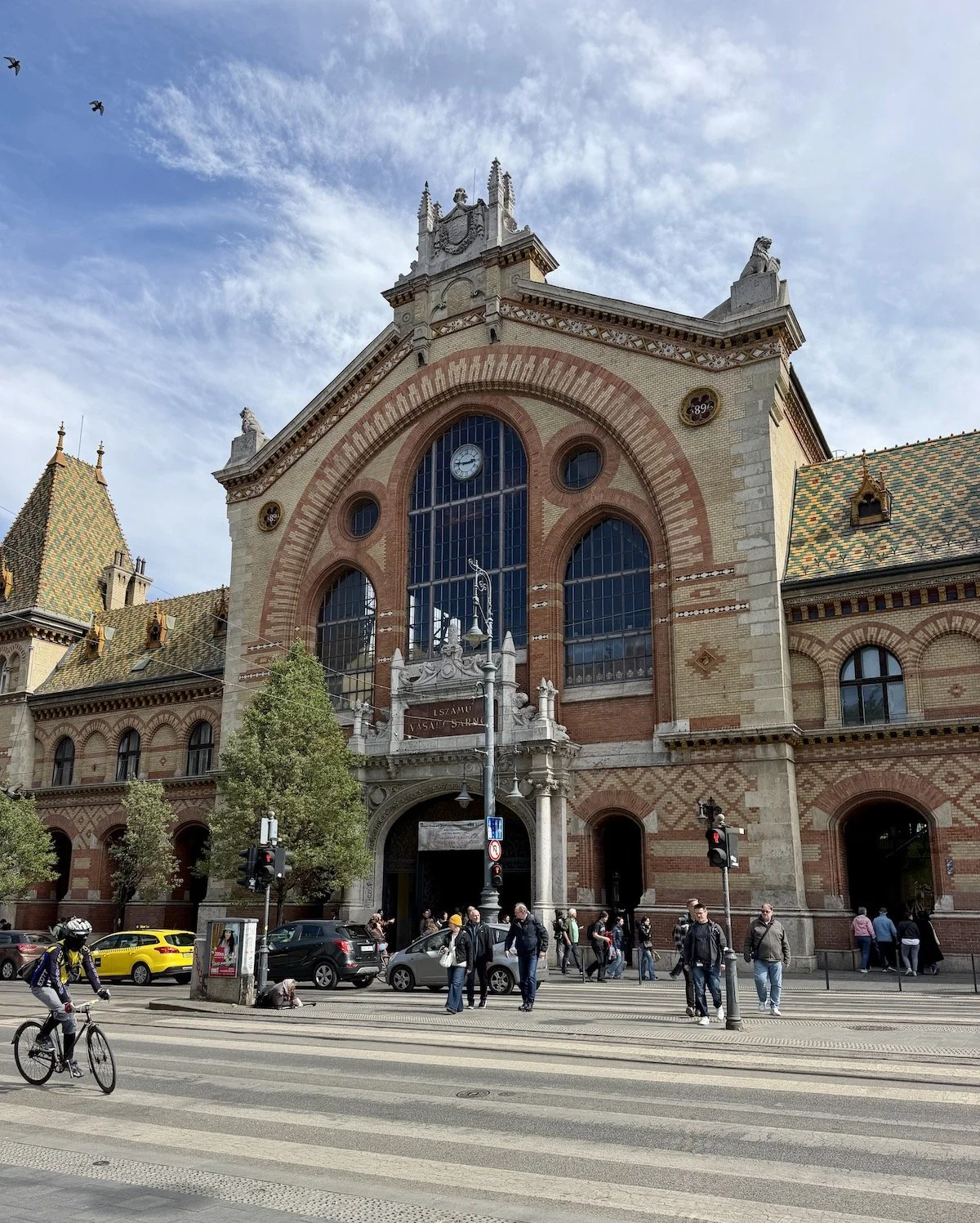
Budapest's beating heart of flavor: the Great Market Hall
Hunyadi tér Market — District VI
This is where I send guests who want to see a real neighbourhood market with zero tourist presence. Locals from District VI have been shopping here for generations — fruit, vegetables, flowers, fresh bread, eggs from the countryside. No souvenir stalls, no chimney cakes, no English. Go on a Saturday morning, buy something, eat it on the bench outside. This is Budapest daily life, completely unfiltered.
Szimpla Kert Sunday Farmers' Market
Yes, the famous ruin bar. But on Sunday mornings from 9am to 2pm it transforms into one of Budapest's best farmers' markets — local producers selling honey, cheese, pickles, homemade pálinka, fresh vegetables, and artisan breads. Completely free to enter, completely local, and one of the most pleasant ways to spend a Sunday morning in the city.

And if you'd rather have a local walk you through where to find all of this in person — plus everything else Budapest has to offer — get in touch about a private tour and I'll build a day around what you actually want to see and taste.
Let's explore Budapest →Where Locals Actually Eat — By Meal
Breakfast & Coffee
Párisi Passage — Ferenciek tere 10, District V
One of the most beautiful interiors in Budapest, and most people walk straight past it. The building dates to 1817, modelled on a Parisian arcade — hence the name. What you walk into today was rebuilt between 1909 and 1913 in a dizzying mix of Venetian Gothic, Art Nouveau and Moorish styles, with a breathtaking hexagonal glass dome by stained glass master Miksa Róth pouring soft light down into the passage. It spent decades as a Soviet-era travel office, then a beloved ice cream café, then sat closed for years before reopening in 2019 as a luxury hotel with the café restored at its heart. Go on a weekday morning before the city wakes up, order a coffee and something from the cake counter, sit under the dome and look up. Less crowded than the New York Café, more beautiful than most people expect.
Fekete — Múzeum körút 5, District VIII
One of Budapest's best-kept coffee secrets. Fekete is tucked into the inner courtyard of a historic apartment building near the Hungarian National Museum — you'll walk straight past the entrance if you don't know what you're looking for. That's exactly the point. A tiny, serene space with a beautiful courtyard, serious espresso, and a simple brunch menu made with fresh local ingredients. Almost entirely locals. One of those places where the quality is completely out of proportion to how little fuss is made about it.
Művész Kávéház — Andrássy út 29, District VI
Open since 1898, directly opposite the Opera House on Andrássy Avenue. Novelist Iván Mándy had his own reserved table here — a copper nameplate, a newspaper, a coffee, two hours of writing, no interruptions. That atmosphere hasn't gone anywhere. High ceilings, marble tables, late Biedermeier furniture protected as a national artwork since 1973, and some of the best cakes in the city — the chestnut-cherry boat and the Esterházy slice are both extraordinary. Go before or after the Opera. Note: 15% service charge added automatically.
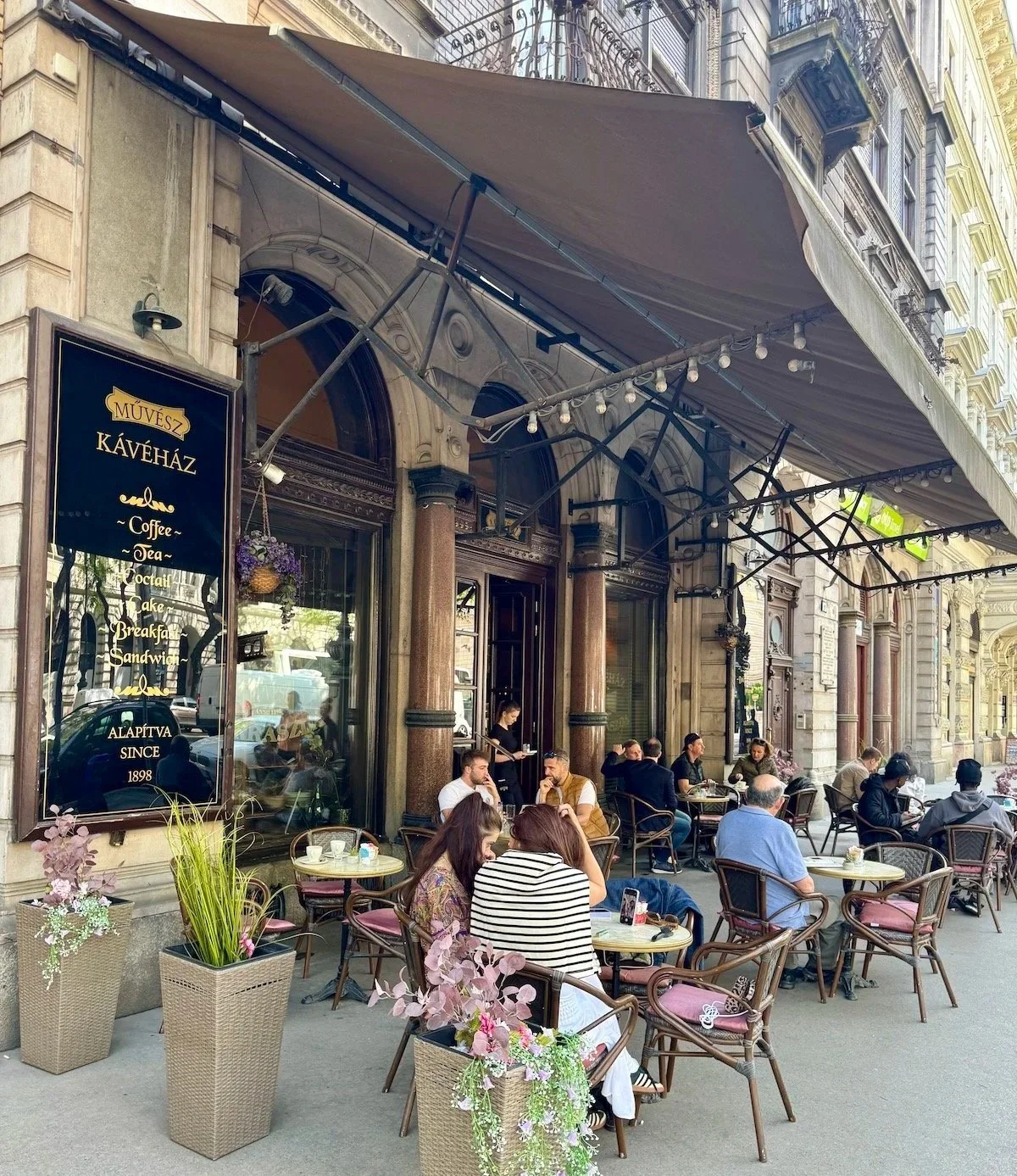
Coffee, Elegance, and Andrássy Avenue
Lunch — The Most Important Meal
Kádár Étkezde — Klauzál tér, District VII
Kádár is a legend. Originally opened in the communist era, it closed for four years and locals genuinely mourned it. It's back — checked tablecloths and all — and everything that made it an institution is intact. Shared tables, cash only, enormous portions, honest Hungarian food at prices that feel impossible in 2026. The goulash soup, the stuffed cabbage (töltött káposzta), the hortobágyi palacsinta (savoury meat pancakes). Go for lunch on a weekday, arrive early, don't expect menus in English. This is the real thing.
Menza — Liszt Ferenc tér, District VI
One of Budapest's most reliably excellent restaurants, open since the early 2000s and still consistently excellent. Traditional Hungarian dishes with a level of consistency that most restaurants in the city can't match. Start with the meat broth soup (húsleves), follow with the pork schnitzel or veal paprikash with egg dumplings. The desserts are famous — mákos guba (poppy seed bread pudding) and somlói galuska are both extraordinary. Mains around €12–18. Book ahead.
Stand25 — District XIII
Where Budapest's food-obsessed locals go for elevated Hungarian food without pretension. The goulash soup arrives with beautifully crusted beef and a sharpness from celery root and lemon peel that lifts the whole dish. The túrógombóc — fresh curd cheese dumplings with sour cream and cherry preserves — is one of the best things I've eaten in this city. Always full of well-off locals, always worth it.
Rosenstein — District VIII
Run by the same dedicated family for decades, Rosenstein is Jewish and Hungarian cuisine at its finest. Bare brick walls, white tablecloths, waiters who are always rushing — all the right signs. On Fridays and Saturdays, order the cholent — the traditional Jewish sabbath dish of slow-cooked beans and pearl barley with brisket. The stuffed cabbage on Wednesdays is legendary. Book ahead. Mains around €12–30.
Pozsonyi Kisvendéglő — District XIII
One of the most traditional, unpretentious Hungarian restaurants in the city. This is the étkezde experience at its most authentic — lunch only, daily changing menu, packed with regulars from the neighbourhood. Nobody in the tourist industry talks about this place because it's not in the tourist zone. Which is exactly why you should go.
Dinner
Szaletly — near City Park, District XIV
Worth the tram ride out. Chef Dániel Bernát has created something rare here — a restaurant that celebrates traditional Hungarian food the way it deserves to be celebrated, not as a museum piece but as a living cuisine. The halászlé (fisherman's soup), the rakott krumpli (layered potatoes with Mangalica pork), the fogas (pike-perch) — all treated with genuine respect and skill. Leave room for the mákos guba or the somlói galuska. Mains around €15–25.
Mazel Tov — District VII, Jewish Quarter
Not traditional Hungarian food — this is Mediterranean and Middle Eastern, with modern Israeli flavours. But Mazel Tov has earned its place in the Budapest local dining scene because the food is excellent, the atmosphere is unlike anything else in the city, and it genuinely feels like a local spot even when it's full of visitors. An open courtyard under string lights, live music from 8pm, warm and buzzing energy. Book ahead, especially on weekends.
Kiosk — District V, on the Danube
One of the best views in Budapest combined with one of the most consistent kitchens — updated Hungarian dishes, solid execution, not unreasonable prices for the location. Kiosk has been popular for over a decade for good reason. Book ahead.
What to Order — The Dishes Worth Knowing
Gulyás — the real version is a soup, not a stew. Rich beef broth with paprika, onions, and tender cubes of beef. Order it everywhere and you'll quickly learn which kitchens care and which don't.
Halászlé — fisherman's soup. Intensely paprika-forward, made from carp or catfish. One of the most polarising dishes in Hungarian food — locals love it, visitors are often surprised by its intensity. Try it at least once.
Töltött káposzta — stuffed cabbage with pork and rice in a tomato-paprika sauce. The Hungarian version of comfort food. At Kádár on a Wednesday.
Lángos — fried dough topped with sour cream and cheese. Street food, market food, breakfast food. Always eaten immediately, always better than it looks.
Pogácsa — savoury scone, usually with cheese or crackling. The thing you buy at a market and eat immediately. Never disappoints.
Főzelék — vegetable stew, thickened with flour and sour cream. Spinach, peas, lentils, or beans. The Hungarian equivalent of a side dish that somehow became a main. Find it at any étkezde.
Túrós csusza — pasta with cottage cheese, sour cream, and crispy bacon. Sounds simple. Tastes extraordinary. One of the most underrated dishes in Hungarian cuisine.
Somlói galuska — sponge cake with rum, chocolate sauce, walnuts, and cream. The Hungarian dessert. Order it anywhere that makes it well. Kádár and Menza both do excellent versions.
The Drinks — What to Order
Most visitors drink beer in Budapest. Locals drink wine — and Hungary has extraordinary wine that almost nobody outside the country knows about.
Tokaji Furmint — dry white wine from the Tokaj region. Mineral, complex, unlike anything you've had before. Order it by the glass anywhere that lists it.
Egri Bikavér — Bull's Blood, from Eger. A full-bodied red blend with a name that sounds alarming and tastes remarkable. The most famous Hungarian red.
Pálinka — fruit brandy, usually plum or apricot. Consumed as a shot before or after a meal. Never during. Don't nurse it — that's considered odd. One shot, done.
Fröccs — wine spritzer. Wine mixed with sparkling water in various ratios. The most common summer drink in Budapest. Order a nagyfröccs (large) and sit outside anywhere.
What to Avoid
Váci Street restaurants — without exception. The food is poor, the prices are high, and nothing about the experience will feel Hungarian.
Any restaurant with photos on the menu and a man outside trying to flag you in — these exist entirely for tourists who don't know where to go. Now you do.
Chimney cake from the street huts — the chimney cakes (kürtőskalács) sold by the dozen on tourist streets are almost always stale and overpriced. If you want a genuinely fresh one, find a small dedicated shop where one person makes them to order. The difference is extraordinary.
The Honest Truth About Eating in Budapest
The best meal I've ever seen a guest have in Budapest wasn't at a famous restaurant. It was at a table in a neighbourhood étkezde, shoulder to shoulder with a retired postman and a group of construction workers, eating stuffed cabbage and drinking spritzer at noon on a Tuesday. That's the food scene worth finding. The places with no sign outside, no English menu, and no idea they're a hidden gem because they've never thought of themselves as anything other than lunch.
That's what I show people on my food tours — not just what to eat, but how to find it, how to order it, and what it means. Because Hungarian food has a story behind every dish, and the story is always better than the menu description.
My Budapest Food Tour takes you through markets, hidden bakeries, and family kitchens that most visitors never find — with tastings, stories, and a full stomach guaranteed. Book the Budapest Food Tour!
You Might Also Enjoy:
Etyek's Best-Kept Secret Isn't the Wine, It's the Ham
Hungarian Grand Prix 2026: A Local's Guide to the 40th Anniversary Race
