Strauss Dinner Show Vienna: The Magical Night Every Budapest Visitor Should Add to Their Trip
By Kata | katabudapest.com | Published July 16, 2026
I get asked about Vienna almost every week — usually by guests who are already planning to see both Budapest and Vienna and want to know how to make the most of the Vienna leg. And more than once, the follow-up question has been specifically about the Strauss Dinner Show: dinner, a live orchestra playing Johann Strauss waltzes, ballet, a soprano, all in one evening. It's something I now genuinely recommend to guests doing both cities, and it makes for a memorable way to spend one of your Vienna evenings!
I finally went myself recently, so this isn't just research — it's a firsthand account. Let's talk about what the evening actually involves, and why I think it's worth building into a Budapest-and-Vienna itinerary.
Who Was Johann Strauss, Anyway?
If the name is only vaguely familiar, a little context makes the evening land better. Johann Strauss II — often just called Johann Strauss, to distinguish him from his equally musical father — was born in Vienna in 1825 and became the era's biggest musical celebrity, earning the nickname "the Waltz King." He's the composer behind the Blue Danube Waltz and the Radetzky March, both still instantly recognizable today, and he didn't stop at waltzes: his operettas, including "Die Fledermaus," shaped Vienna's musical identity for generations after his death in 1899.
That's really the whole premise of the evening — it's built as a tribute to his life and music, performed in the city where he wrote it.
What the Strauss Dinner Show Vienna Actually Involves
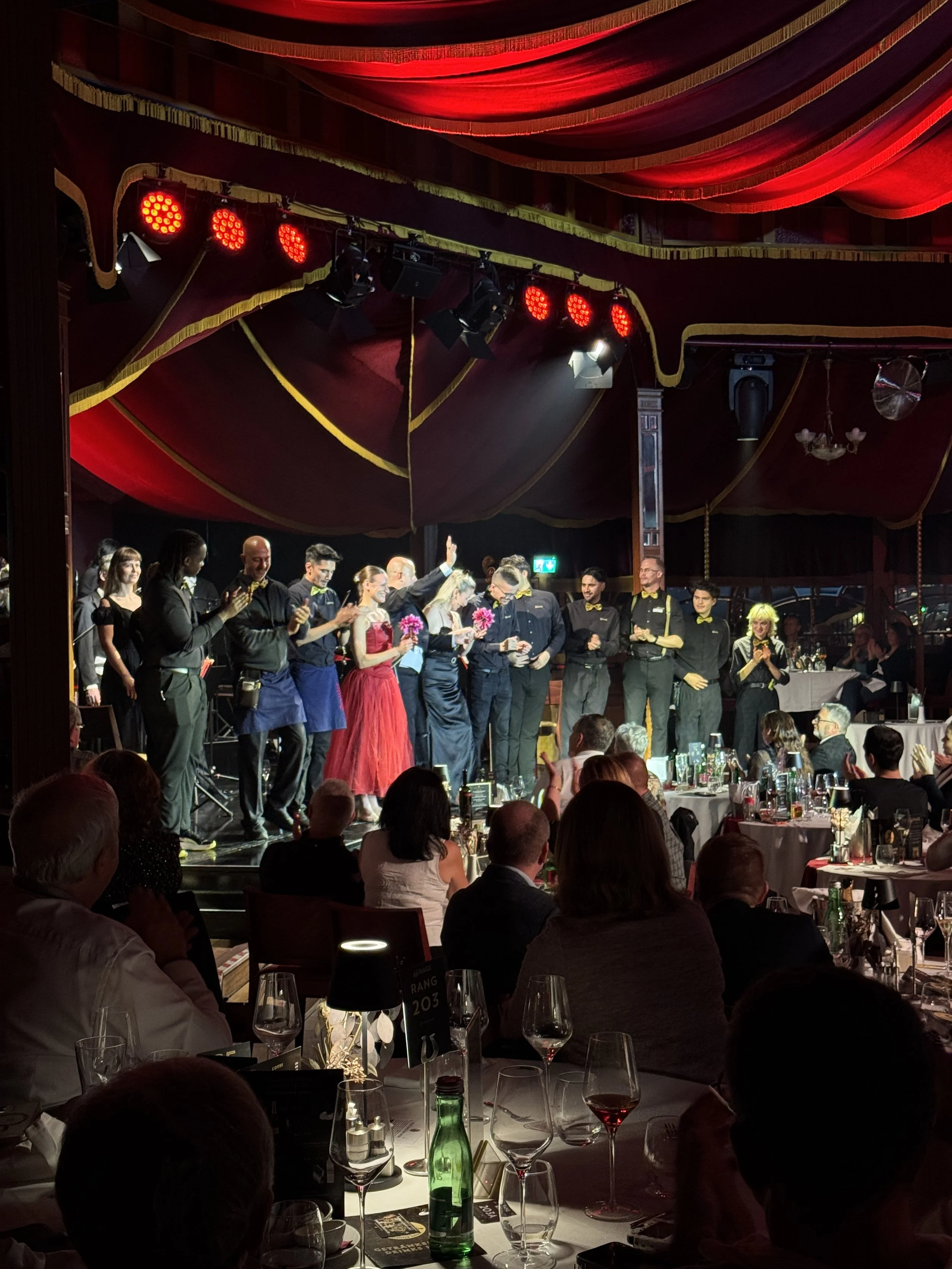
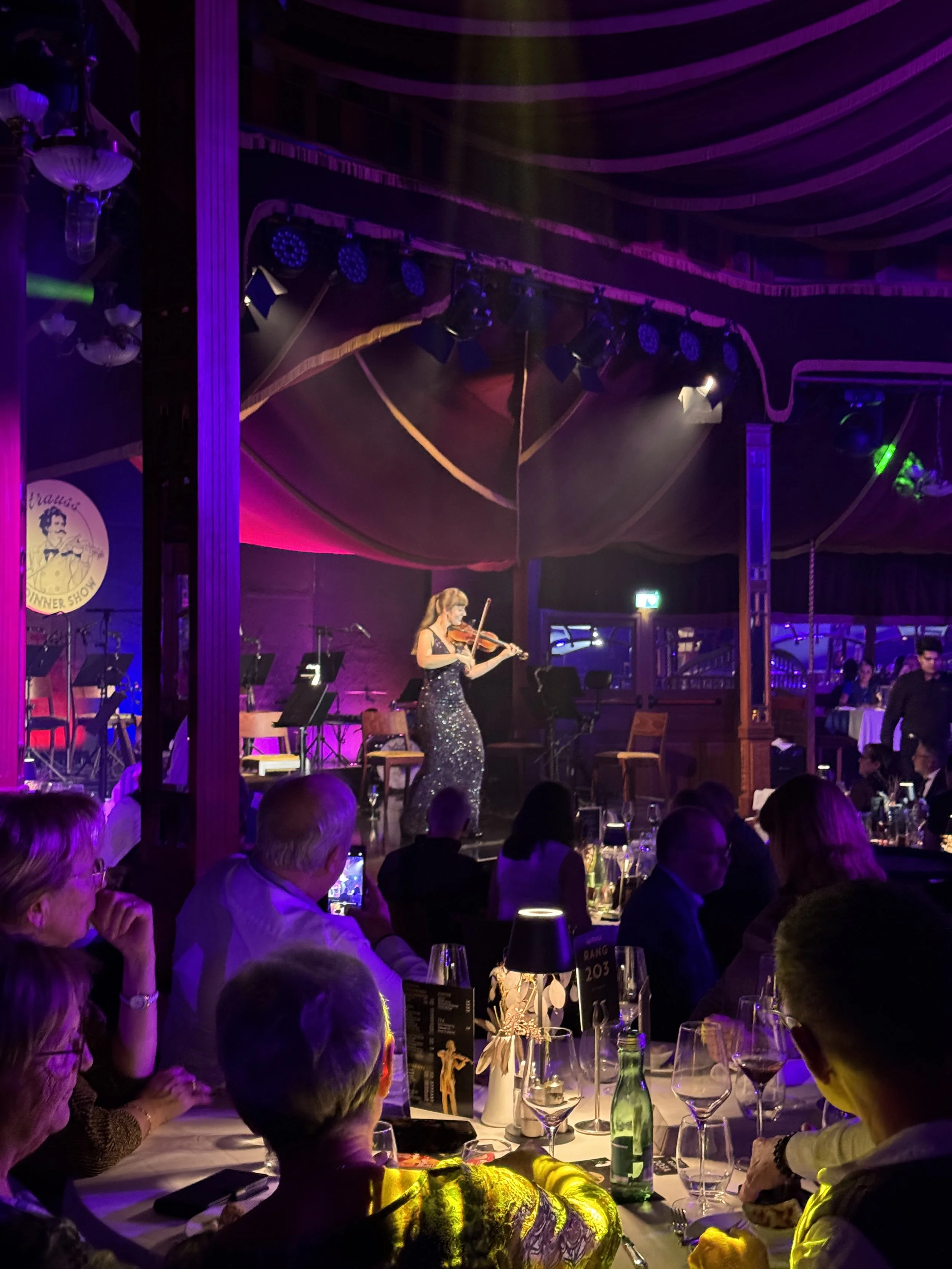
The show is staged at The Mirage, an intimate event venue in Vienna's Prater park that holds around 300 guests. It's built around the Strauss Philharmonic, a 20-piece resident orchestra performing Johann Strauss's best-known waltzes, polkas, and marches — think the Blue Danube Waltz and the Radetzky March — alongside soprano soloists, ballet dancers, and a violin soloist for the finale.
It's structured as three acts woven around a four-course Austrian dinner, with a conductor who hosts the evening and pulls the audience into a few interactive moments rather than just performing at them. The show runs Tuesdays, Thursdays, and Saturdays, so it's worth checking the calendar before you build the rest of your day around it. Doors typically open around 18:30, with the show running from about 19:30 to 22:00. Tickets start from around €99 including the 4-course menu, with higher categories available for guests who want to be closer to the stage or add extras like a welcome drink.
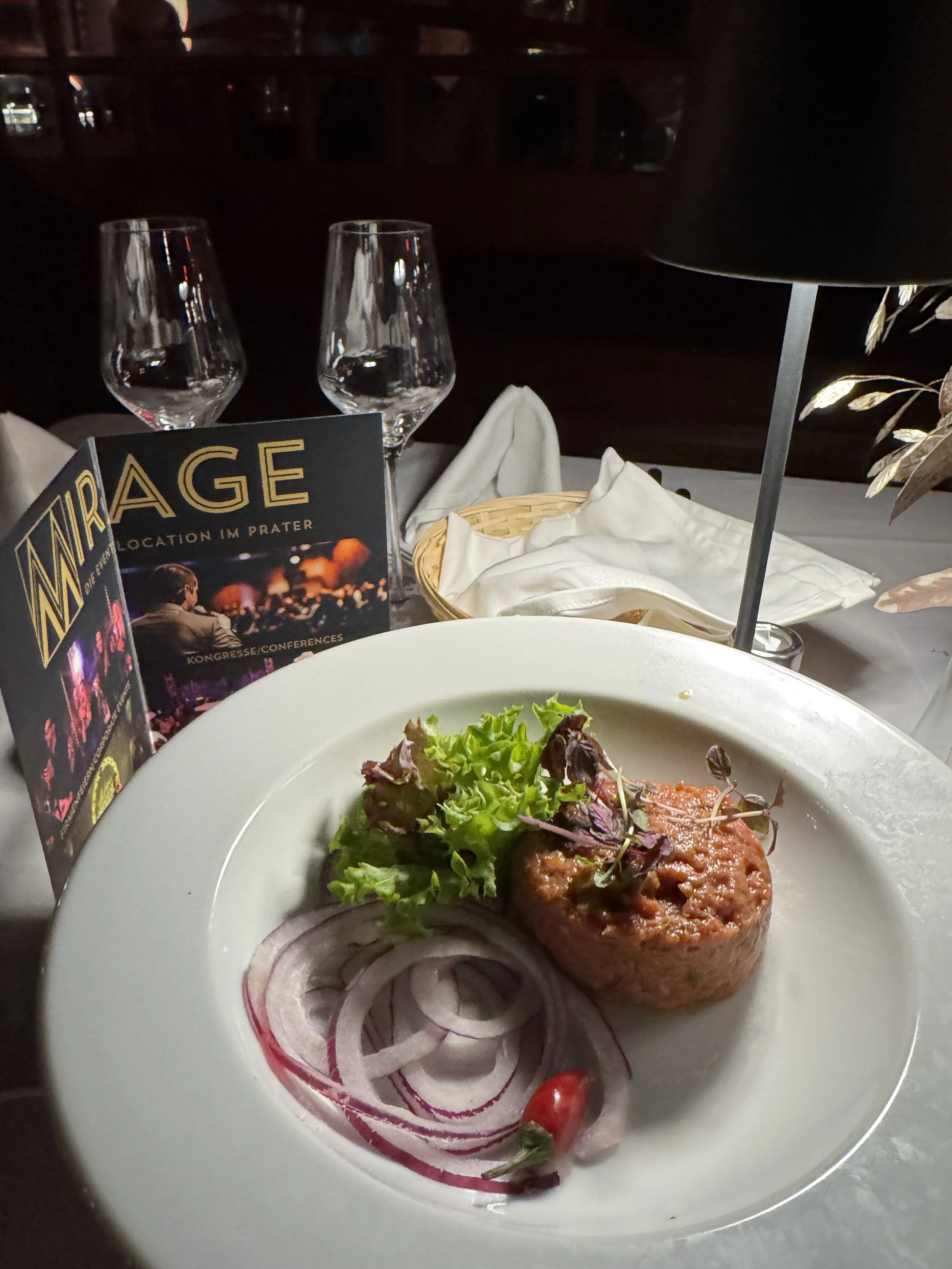
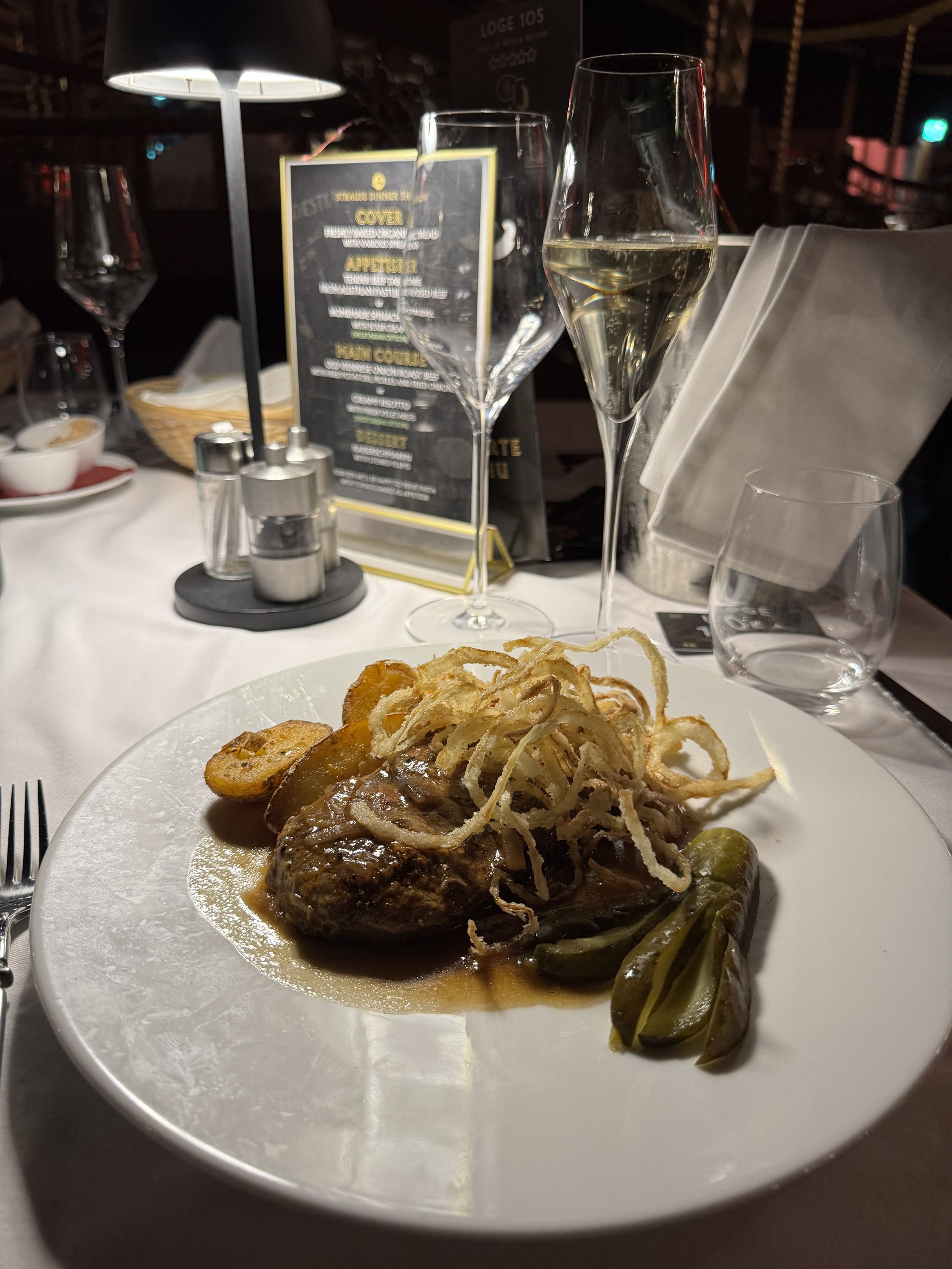
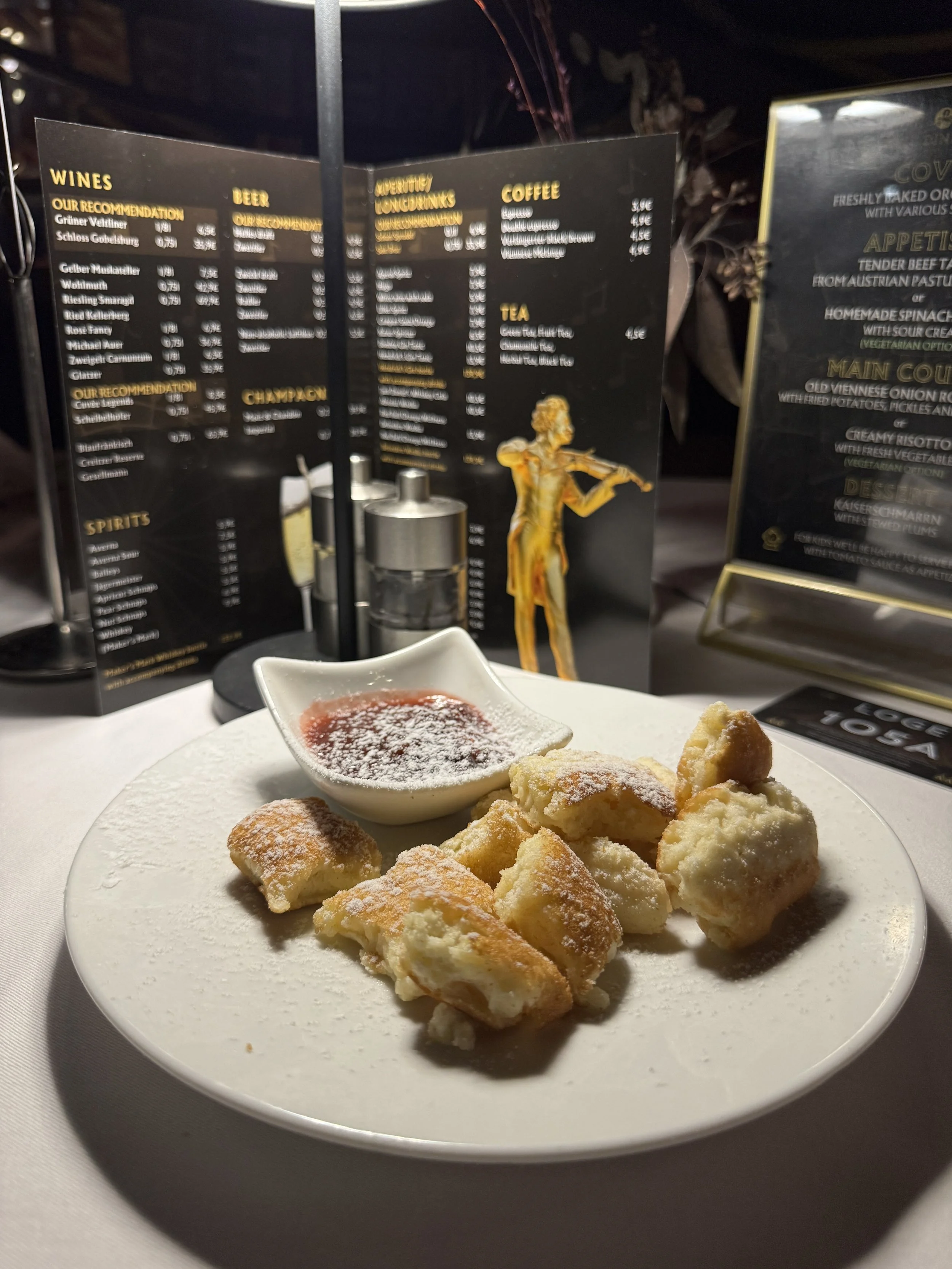
The menu: dinner arrives in courses between the acts rather than all at once — fresh bread with spreads to start, a beef tartare appetizer, a classic old Viennese onion roast beef with fried potatoes and pickles as the main, and Kaiserschmarrn with stewed plums to close — proper Viennese comfort food for dessert. The vegetarian menu swaps in spinach strudel and creamy risotto, and it's genuinely good, proper Austrian cooking rather than a rushed banquet-hall version of it.
The finale: this is the moment that stayed with me. As the evening builds toward its close, the solo violinist steps forward for the Radetzky March, and the whole room — orchestra, dancers, audience — comes together for one big, joyful final number. It's the kind of ending that gets people out of their seats a little, clapping along. A genuinely warm way to close out an evening in Vienna.
The Strauss Dinner Show Orchestra, Ballet & Soprano
The Strauss Philharmonic draws its musicians from some of Vienna's best orchestras and ensembles, and it shows — the waltzes and polkas are played with real warmth rather than going through the motions. Alongside them, coloratura soprano singers take on some genuinely demanding pieces, including the "Frühlingsstimmenwalzer" (Voices of Spring) and the playful "Schwipslied" (a tipsy little drinking song that always gets a laugh).
The dance is handled by the Vienna Royal Ballet, with choreography created specifically for this show by Annkathrin Dehn — which is probably why it feels so tightly woven into the music rather than bolted on as a separate act. Between the singing, the dancing, and a charming, humorous host guiding the evening, it moves at a genuinely lively pace.
My honest take, having been: I went in expecting a fairly traditional concert and was pleasantly surprised — it's much more theatrical than that! The ballet woven between the orchestral pieces caught me off guard in the best way; I wasn't expecting dance to be such a central part of the evening, and it genuinely elevated the music rather than distracting from it. If you're after a strict, reverent classical recital, this isn't the Musikverein — it's a livelier, more theatrical evening that happens to be soundtracked by Strauss. Go in expecting spectacle alongside the music, not a solemn concert, and I think you'll be won over the way I was. I truly enjoyed the night — it's the kind of evening that becomes a memory for a lifetime, and one I still think back on!
What actually surprised me:
The dance. I went for the orchestra and didn't expect ballet to play such a big role — it turned the evening into something closer to a mini-production than a straightforward concert.
How the dinner and the show interlock. Courses arrive between musical acts rather than all at once, so you're never just sitting through a meal waiting for the music to resume — the pacing is genuinely well thought out.
The interactive moments. The conductor pulls the audience in a few times during the evening — nothing embarrassing or forced, just enough to make it feel alive rather than a passive sit-and-watch experience.
I loved the evening enough that I've since started collaborating with the team behind the show, and I'm genuinely happy to say I can pass along a discounted price to my blog readers and guests. If you'd like the details, just reach out to me and I'll help you get it sorted alongside the rest of your Vienna day.
How I Recommend Fitting It Into a Budapest-and-Vienna Trip
If you're already splitting your time between Budapest and Vienna, this slots in beautifully as one of your Vienna evenings — no need to treat it as a separate outing. The easiest way I've found to connect the two cities is with a private transfer. No timetables, no station transfers, no watching the clock during dinner in case you miss a train. I organize private door-to-door transfers between Budapest and Vienna for guests, so you arrive and depart whenever suits your itinerary — just reach out and I'll arrange it.
That flexibility matters more than it sounds. With your own driver, you can linger a little longer over that final applause, skip the stress of a last connection, and just enjoy the ride between the two cities at your own pace.
How I'd Plan a Vienna Evening Around It
Getting there: Whether you're arriving in Vienna for the first time on this trip or you're already based there for a few days, a private transfer means you can build the show around whatever else is on your Vienna itinerary that day.
Beforehand: With a few hours before the show, I'd keep it simple: the Ringstrasse, St. Stephen's Cathedral, a walk through the Innere Stadt, and a proper Viennese coffee house stop (Café Central or Café Sacher, if you don't mind the tourist crowd). Skip anything requiring long museum visits — you'll want to be relaxed, not rushed, before dinner.
Evening: Head to The Mirage in the Prater for the 18:30 doors — your driver can drop you right at the venue.
After the show: Whether you're heading back to Budapest that night or you've got more Vienna days ahead, there's no last-train scramble — your driver works around the evening, not the other way around.
Strauss Dinner Show Seating Categories & Prices
The venue is arranged in tiers, and it's worth picking deliberately rather than defaulting to the cheapest option:
Manege: tables right next to the stage, up to 7 seats — the most immersive view, right in the middle of the action.
Ring: raised tables just behind the Manege, seating 8 — close to the stage with an excellent, unobstructed view.
Loges (boxes): comfortable boxes in the outer circle for up to 6, a bit more distance but a nice panoramic feel.
Rank: elevated stage-side boxes for up to 6 — intimate, though the angle can mean a slightly restricted view of parts of the stage.
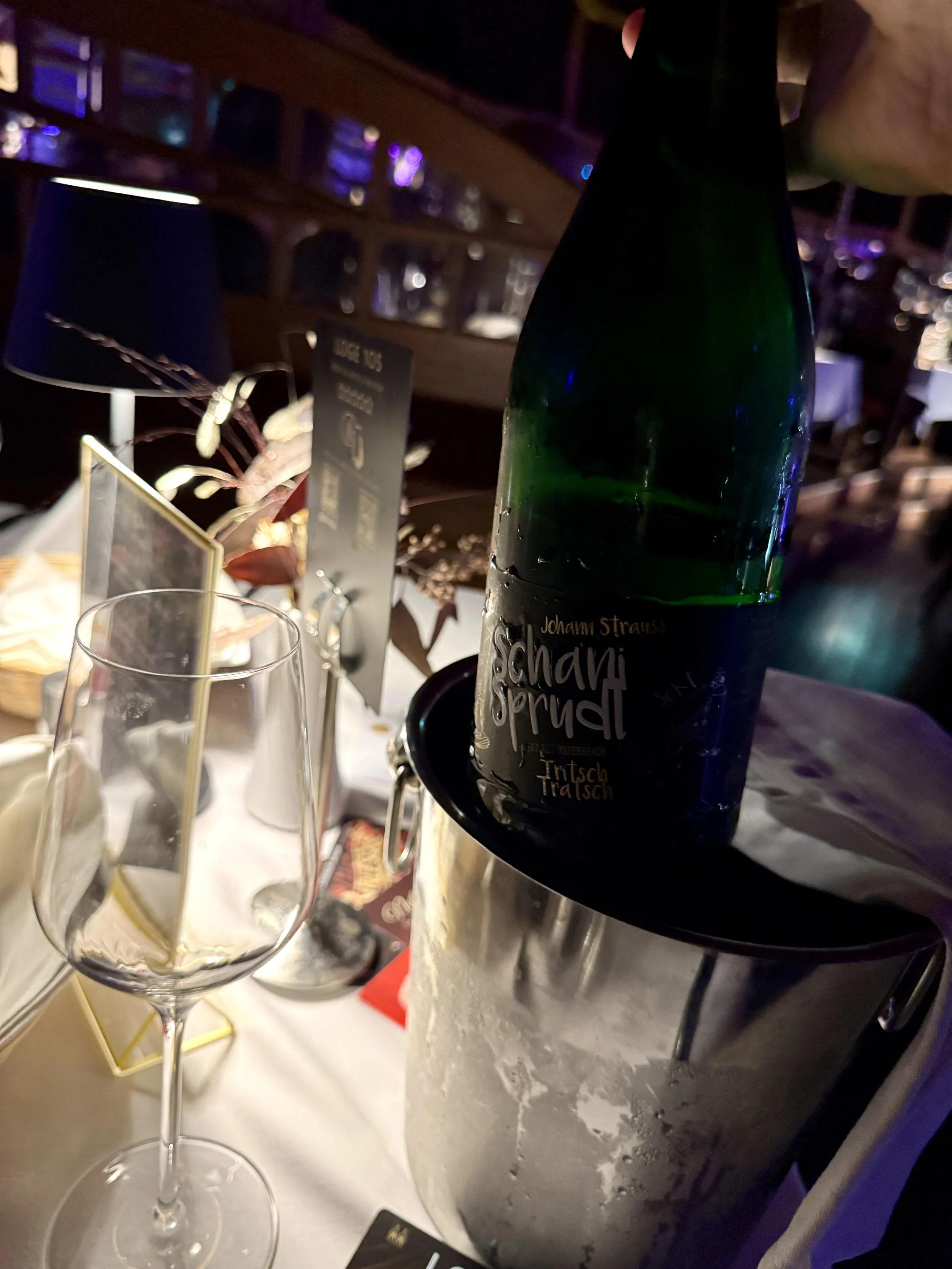
VIP: a private table regardless of party size, with a chilled glass of sparkling wine included — the category to pick for anniversaries or a genuinely special night.
Balcony: the recommended category for wheelchair users, as it's fully accessible.
Show Only: a no-dinner option around €49 if you just want the music and performance with à la carte drinks — good for a lighter evening or a tighter budget.
Booking together with your group guarantees you're seated at the same table, and larger tables may be shared with other guests unless you've booked VIP or one of the guaranteed-exclusive tiers.
A Few Practical Notes
Book the show early. Dates sell out, especially weekends and around holidays — I'd secure your evening before locking in the rest of the day.
Check the calendar first. The show only runs Tuesdays, Thursdays, and Saturdays, so it's worth confirming a date before you plan the rest of your trip around it.
Arrive with time to spare. Doors are from 18:30, but you're encouraged to be seated before 19:00 so you're settled in for the appetizer without rushing.
There's an intermission. The break comes after the first half, and that's when the main course is served — so the pacing naturally works with the show rather than against it.
Dress code: smart-casual to elegant is the norm — this isn't black tie, but jeans and sneakers will feel out of place.
Dietary needs: vegetarian and children's menus are available, and the kitchen is genuinely flexible — you can even swap individual courses (like trading the vegetarian starter for the classic one) if you flag it when booking. Vegan, gluten-free, and allergy requests can usually be accommodated with enough notice.
Coat check: there's a proper cloakroom for coats and bags, so you're not stuck holding a jacket all evening.
Seating tier: if it's a special occasion, the higher categories get you closer to the stage and include a welcome drink — worth it for the atmosphere alone.
Cancellations: reservations can typically be cancelled free of charge up to 24 hours before the show; later cancellations and no-shows aren't refundable.
Strauss Dinner Show Vienna: FAQ
Is the Strauss Dinner Show suitable for a first-time visitor to Vienna? Yes — it doesn't require any background in classical music, and the format is designed to be approachable and entertaining rather than formal.
How much does the Strauss Dinner Show cost? Full dinner packages start from around €99, with higher categories like Ring, Loges, and VIP costing more depending on proximity to the stage and extras like a welcome drink. There's also a "Show Only" ticket, without dinner, for around €49 if you just want the performance.
Do I need to speak German? No — the conductor typically hosts the evening in English, which is aimed at Vienna's large international audience.
Do I need a full extra day in Vienna to fit this in? Not necessarily — since it's one evening, it slots easily into a Vienna stay of any length. With a private transfer connecting Budapest and Vienna, you're not tied to a train or bus timetable either, so it fits around whatever itinerary you've already planned.
Thinking About Vienna and Budapest Together?
If you're weighing up how to split your time between the two cities — or want a Budapest day that leaves you refreshed rather than exhausted before an evening like this — that's exactly the kind of trip planning I help guests with all the time. Feel free to get in touch and I'll help you build an itinerary that actually fits the time you have.
