Is Budapest Safe to Visit? An Honest Answer from a Licensed Local Guide (2026)
By Kata | www.katabudapest.com | Updated Oct 10, 2026
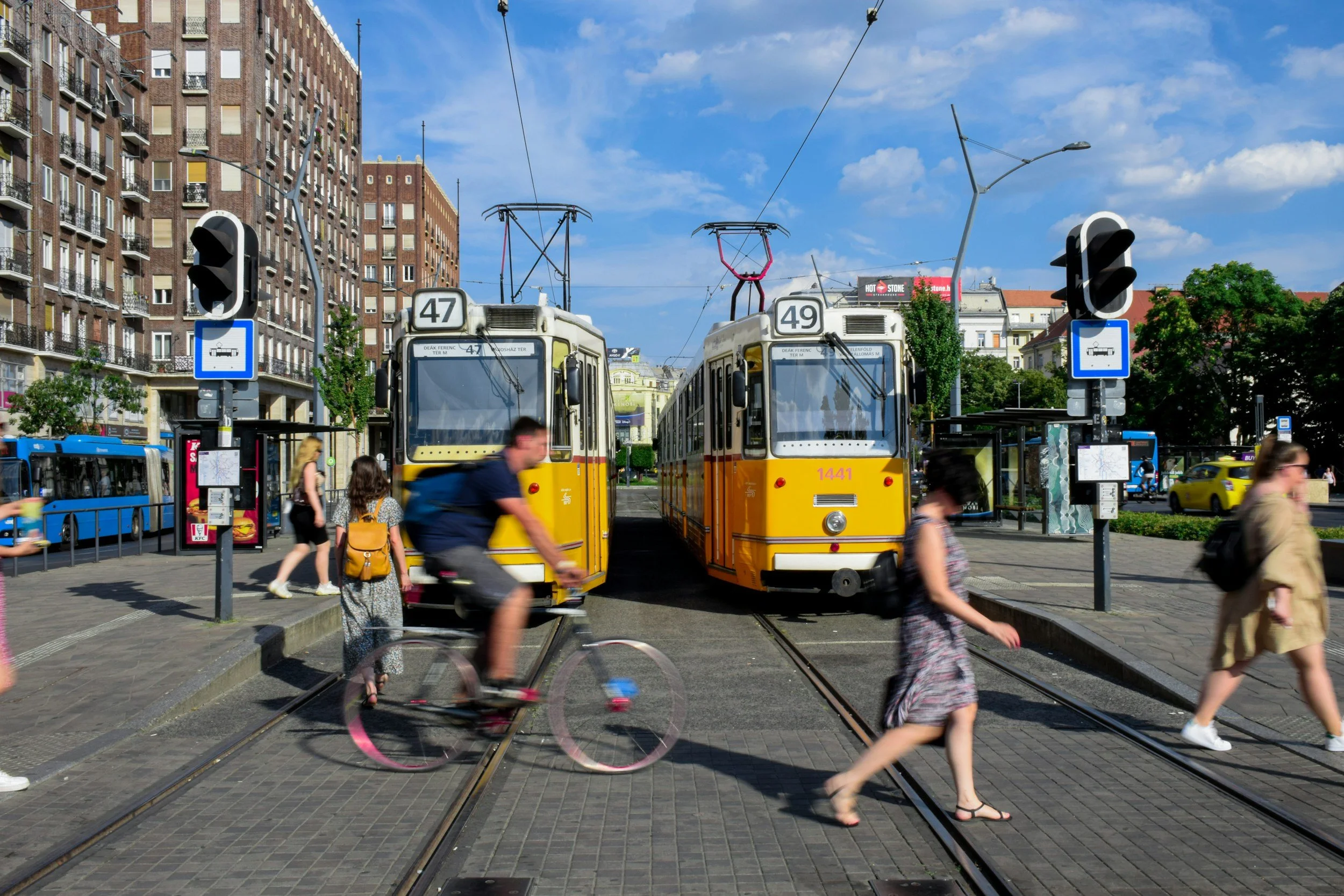
People crossing at Deák Ferenc Square
Every single week, before someone books a tour with me, I get some version of the same message: "We're so excited to come — but is Budapest actually safe?"
Yes. Budapest is a safe city to visit. It's one of the safer capitals in Europe, violent crime against tourists is rare, and in nearly a decade of guiding visitors here I have never had a guest come to harm. People walk the city at night. Solo travelers come here constantly. Families bring small children. It works, and it works well.
But "safe" doesn't mean "switch your brain off," and you didn't come here for a brochure. So here's the honest version — the real risks (mostly to your wallet, not to you), the handful of scams worth knowing, and exactly how to sidestep all of it.
Is Budapest safe at night?
Yes — and this surprises a lot of first-time visitors. The central districts where you'll spend almost all your time — the V. (the inner city), VI. (around the Opera and Andrássy), and VII. (the Jewish Quarter) — are well-lit, busy late into the evening, and patrolled. Public transport runs reliably, and night buses cover the city once the metro closes.
I regularly finish evening tours after dark and send guests walking back to their hotels without a second thought. Walking along the Danube at night is, in fact, one of the most beautiful things you can do here.
The usual common sense applies: stick to lit, populated streets, keep an eye on your belongings outside the ruin bars late at night, and don't wander off alone into empty areas at 3am — the same advice you'd give for any city on earth.
Is Budapest safe for solo female travelers?
Yes, and it's a popular destination for exactly this reason. The city is walkable, public transport is easy to navigate, and the central areas are lively enough that you rarely feel isolated. Plenty of women travel here alone and have a wonderful time.
Trust your instincts the way you would anywhere, especially around nightlife late at night, and you'll be absolutely fine.

If you'd rather see the city with a licensed, experienced local guide by your side, reach out about a tour below.
Let's explore Budapest →What about pickpockets?
This is the one real, everyday thing to be aware of — not because Budapest is bad, but because every tourist city has opportunistic pickpockets, and Budapest is no exception.
They work where the crowds are: packed trams and metro cars, the Great Market Hall, busy festivals, and tightly-packed tourist crowds.
Be especially careful on trams 4 and 6. These are the busiest tram lines in the entire city — they run constantly, they're almost always packed, and that crowding makes them the number-one hunting ground for pickpockets in Budapest. If you're riding them at a busy hour, keep your valuables zipped away and your hand near your bag, or simply wait for a less crowded tram. The 100E airport bus is the same story: full of tourists with luggage and distracted attention, so stay alert with your belongings.
The fix is simple:
Keep your phone and wallet in a front pocket or a zipped, closed bag — not a back pocket, not an open tote.
Be extra aware in the exact moment a tram or metro is crowded and people are pressed together. That's when it happens.
Don't leave your phone sitting on a restaurant table on a busy terrace.
Do that and you've eliminated 95% of the actual risk to a tourist in Budapest.
The drink and "bar" scam — the one I really want you to know
If there's a single thing I want every visitor to remember, it's this one, because it's the scam that actually costs people real money.
It usually starts with a friendly local — often an attractive person — who strikes up a conversation on the street and suggests a "great little bar" they know. You go, you have a few drinks, and at the end you're presented with a bill for an absurd amount of money, with intimidating staff making sure you pay it.
The rule that keeps you completely safe: choose where you drink yourself. Don't follow a stranger you just met on the street to a bar of their choosing. If you pick the place, you're fine. This scam relies entirely on them steering you somewhere — so don't be steered.
Taxis and getting around without getting ripped off
Budapest's public transport is excellent, cheap, and the easiest way to get around — I recommend it over taxis for almost everything.
When you do need a car, the rule is simple: use the Bolt or UBER app. Fares are fixed and transparent, payment is cashless, and there's no negotiating or meter games. It's what locals use.
If you prefer a traditional taxi, only use licensed companies (Főtaxi, City Taxi) and make sure the meter is running. Never get into an unmarked taxi that approaches you at the airport or a train station — that's the classic overcharging setup.
Money, ATMs, and currency traps
A few quick things that save tourists from losing money:
Hungary uses the forint (HUF), not the euro. Anyone insisting on euros is usually giving you a terrible rate.
Skip the currency-exchange booths with flashy "0% commission" signs near the tourist areas — the rates are poor. Use a normal bank ATM instead.
At the ATM, always choose to be charged in forint, not your home currency. When the machine offers to "convert for you," that's a built-in bad exchange rate. Decline it.
Avoid the standalone "Euronet" ATMs (the blue and yellow ones) — they tend to carry high fees.
A note on demonstrations and protests
You may occasionally see a demonstration in central Budapest, particularly around national holidays (March 15 and October 23) or during political events. This is normal in any European capital, and the vast majority are peaceful and well-organized.
They're not something to be afraid of, but they can temporarily close roads or reroute transport. If you happen to be in the city during one, the simple advice is to avoid large gatherings and check local transport updates — then carry on with your day as normal.
Practical safety basics
A few reassuring facts to round it out:
Tap water is clean and safe to drink. Refill your bottle freely — there are public drinking fountains around the city in summer.
The emergency number is 112 (the EU-wide line, with English-speaking operators).
English is widely spoken in tourist areas, restaurants, and among younger Hungarians, so getting help is rarely a problem.
Pharmacies (look for the green cross, Gyógyszertár) are everywhere and well-stocked.
The honest bottom line
Budapest is a safe, welcoming, functioning European capital that millions of people visit happily every year. The genuine risks to a tourist are almost entirely financial — a pickpocket on a crowded tram, a dodgy taxi, an overpriced drink — and every one of them is easy to avoid once you know about it.
Keep your wits about you the way you would in any major city, choose your own bars, use Bolt, watch your bag in crowds, and you'll have nothing to worry about. What you'll remember is the river at dusk, the thermal baths, the food, and how genuinely beautiful this city is.
Want a local by your side? There's a particular kind of confidence that comes from exploring a new city with someone who actually lives there — who knows which streets to wander, which places are worth your time, and who handles all the small logistics so you can simply enjoy yourself. That's exactly what I do. Every tour is private, tailored entirely to you, and led by a licensed local who's been showing visitors the real Budapest for nearly a decade. Contact me now!
Enjoyed this one? A few more from the blog you'll probably want to read next:
Where Budapest Really Shops: Inside the Klauzál Square Market Hall
Szimpla Kert: Is It Still Worth Seeing in Budapest?
Why You Should Visit the Citadella for Sunset in Budapest
Kaptafa Brunch: The Jewish Quarter Spot That Makes Breakfast Fun Again
