10 Hidden Gems in Budapest That Most Travelers Walk Right Past (A Local's Honest List)
By Kata | Licensed Budapest Tour Guide | Updated Oct 7, 2026
Here's something I've noticed after more than a decade of guiding through Budapest.
The people who leave this city absolutely obsessed — the ones who message me months later saying it was the best trip of their lives — are almost never the ones who stuck to the Parliament, the Chain Bridge, and Széchenyi.
They're the ones who turned a corner they weren't supposed to turn. Who said yes when I suggested somewhere weird. Who followed me into a courtyard that looked like a dead end and found themselves standing in one of the most beautiful spaces in the city, completely alone, while a tour group of 40 people filed past the entrance outside without glancing in.
Budapest rewards curiosity more than almost any city I know.
The famous stuff is worth seeing — don't let anyone tell you otherwise. But the city has a whole second layer underneath it. Hidden courtyards. Ottoman shrines on quiet hills. A Roman city buried beneath a modern neighborhood. A museum where every single exhibit is playable. Viewpoints that make Fisherman's Bastion look crowded by comparison.
These are my ten. They're not random internet picks — they're the places I've watched people fall in love with over and over again, year after year, on tour after tour. The places that make someone stop mid-sentence and just look.
The 10 hidden gems at a glance:
Palace District courtyards: grand 19th-century stairwells and courtyards behind unlocked gates.
Gül Baba's Tomb: a 16th-century Ottoman shrine and rose garden on a Buda hillside.
Károlyi Garden: a walled garden minutes from the busiest streets in Pest.
Aquincum: the ruins of a Roman city in Óbuda.
Philosopher's Garden: a quiet viewpoint on Gellért Hill, with statues of great thinkers.
Kopaszi Dam: a willow-lined peninsula on the Danube where locals unwind.
Budapest Pinball Museum: more than 130 machines, and you can play every one.
Füvészkert Botanical Garden: a university garden growing since 1771, with tropical greenhouses.
Normafa: forest trails and city views in the Buda Hills.
The Danube embankment at dusk: free, and the best light in the city.
1. The Palace District Courtyards — Budapest's Most Beautiful Secret Is Hiding in Plain Sight
Here's a thing most tourists do: they walk the main streets of Pest, look at the façades of grand 19th-century buildings, and assume those are the whole story. They're not even half of it. The neighborhood around the Hungarian National Museum — the VIII. district, known as the Palace District or Palotanegyed — is home to some of the most spectacular architecture in the city. Not the outsides. The insides. Behind heavy wooden gates and iron-grilled doors, these buildings hide extraordinary stairwells, tiled courtyards, ornate balconies stacked four stories high, and interior gardens that feel like stumbling into a dream.
Most of the gates are unlocked during the day. You just have to be willing to push them open.
I take guests into this neighborhood on almost every tour, and the reaction is always the same: genuine disbelief that they walked past this for two days without looking in. The architecture isn't on any main tourist map. There are no signs pointing you to it. It just exists, quietly extraordinary, waiting for whoever is paying attention.

2. Gül Baba's Tomb — An Ottoman Shrine in the Middle of Buda's Residential Streets
Most visitors to Budapest know, in the abstract, that the Ottomans were here. They occupied Hungary for 150 years, from 1541 to 1686. They built the bathhouses that still stand today. They left their mark in the language, the architecture, the city's very bones.
What most visitors don't know is that you can stand at an Ottoman shrine on a quiet Buda hillside, surrounded by roses, with a view over the Danube below, and feel — genuinely feel — that weight of history in a way that no museum exhibit can replicate.
Gül Baba was a Bektashi dervish — a Sufi holy man — who came to Budapest with the Ottoman forces and died here in 1541, reportedly during the thanksgiving service after the conquest of Buda. He was buried on this hill, which the Ottomans named Rózsadomb: Rose Hill. His name, Gül Baba, literally means "Father of Roses" in Turkish.
The tomb that stands today — a small, octagonal domed structure surrounded by a rose garden — is one of the northernmost Islamic pilgrimage sites in the world. It was recently beautifully restored with Turkish funding, and the surrounding area is immaculate and serene.
What makes it extraordinary is the contrast. You walk through a completely normal residential neighborhood — apartment buildings, a bakery, someone walking their dog — and then you climb a small hill and find yourself at a 16th-century Ottoman sanctuary. The roses are blooming. It's completely quiet. Almost nobody is there.
Practical note: Free to enter. Open most of the year. Combine it with a walk through the Rózsadomb neighborhood for a full Buda hill afternoon.
3. Károlyi Garden — The Secret Garden in the Heart of Pest Nobody Talks About
There is a walled garden in the center of Budapest that most tourists walk past every day without knowing it exists.
Károlyi Garden sits just off Károlyi utca in the V. district — the inner city, minutes from the main tourist drag — enclosed behind iron railings and the walls of the former Károlyi palace. Inside: old chestnut trees, gravel paths, benches, the sound of birds, and a particular stillness that feels almost impossible given how close you are to everything else.
I've brought guests here who immediately sat down and didn't want to leave. Which is, I think, the highest compliment a hidden spot can receive.
How to find it: Look for the entrance on Károlyi utca. The gate is usually open during the day. Walk in. Breathe.
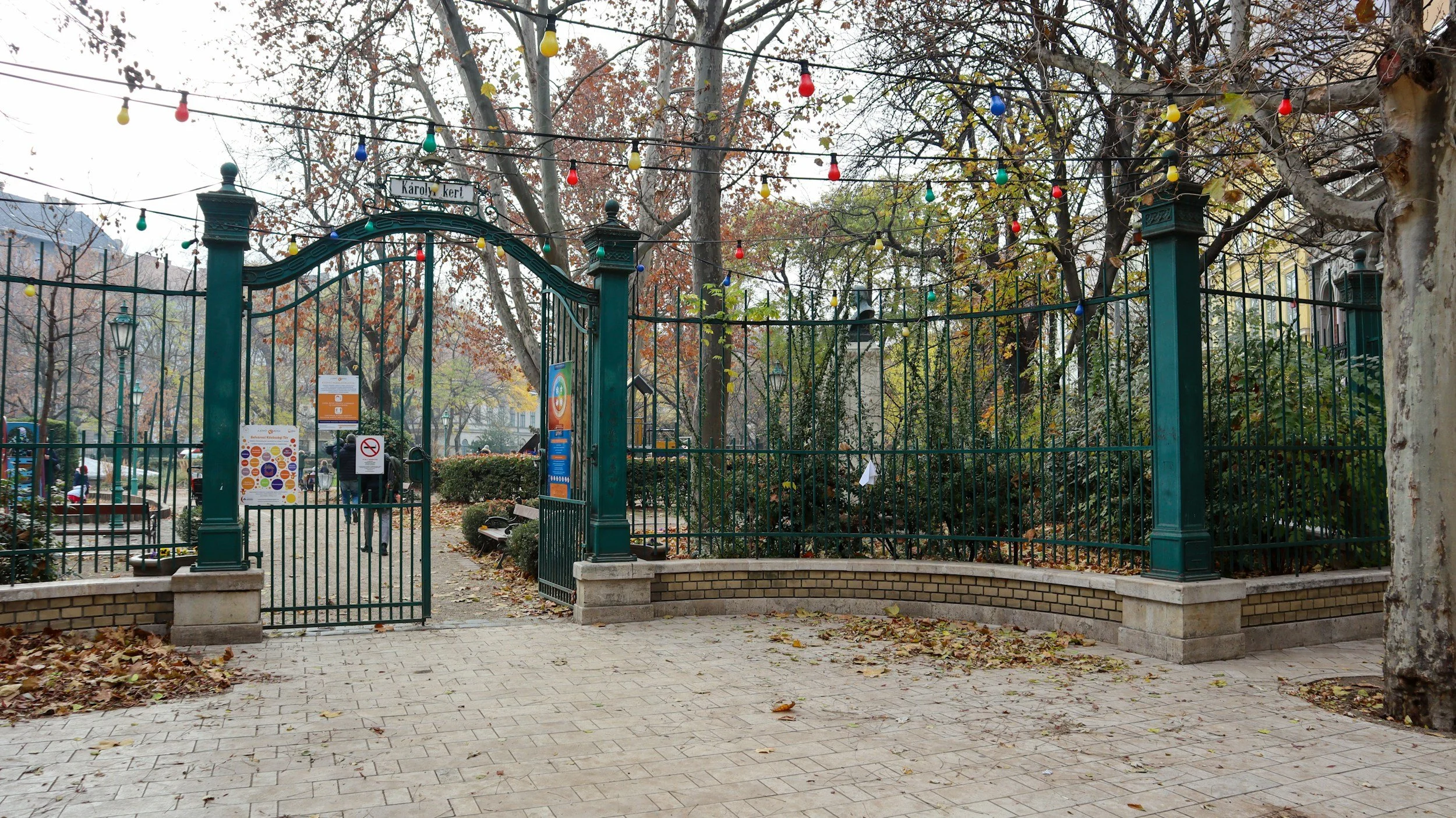
This is where locals bring their lunch. Where students come to read.
4. Aquincum — A Whole Roman City, Just Sitting There
Budapest was a Roman city for nearly 400 years.
Let that sink in for a second. From the 1st to the 5th century AD, this place was called Aquincum, and it was the capital of the Roman province of Pannonia. A significant city — populated, built up, with bathhouses and temples and civilian streets and a civilian amphitheater and a military amphitheater (two separate amphitheaters, because the Romans were thorough) and an organ in the governor's palace.
All of that is still here. Buried beneath the modern III. district, and partially excavated and open to visitors, is an actual Roman city — streets, foundations, mosaic floors, the remnants of everyday life from 1,800 years ago. There's a museum on site that houses some remarkable finds, including a reconstructed Roman water organ that is one of the best-preserved examples in existence.
The site is large and relatively uncrowded. You can walk through Roman streets at your own pace, read the interpretive panels, and have the genuine experience of standing in a place that has been inhabited and significant since before most of Europe's famous cities existed.
And yet — somehow — barely any tourists come here. I still don't fully understand why.
Practical note: Take the HÉV suburban railway from Batthyány tér to the Aquincum stop. The site and museum are right there. Give it at least two hours.
5. Philosopher's Garden — The Viewpoint That Puts Fisherman's Bastion to Shame
Fisherman's Bastion is magnificent. I'm not here to argue against it. But if you've been there at 10am on a summer morning and found yourself in a crowd of several hundred people all trying to photograph the same angle of the Parliament, you'll understand why I'm about to tell you about an alternative.
Philosopher's Garden sits on Gellért Hill — the dramatic rocky outcrop on the Buda side that rises above the Danube and is crowned by the Liberty Statue at the top. Most visitors take the path straight up to the citadel. Most miss the garden entirely.
It's a sculptural installation and viewpoint featuring bronze statues of great philosophical and religious thinkers: Abraham, Jesus, Buddha, Lao-tse, Akhenaten — figures from across human history and belief, gathered together on this hillside overlooking the city in a way that is thought-provoking. The artist conceived it as a place of dialogue across traditions.
The view from here — across the river to the Parliament, the bridges, the city stretching back into the hills — is one of the best in Budapest. And unlike Fisherman's Bastion, there's almost never a crowd.
How to find it: Head up Gellért Hill from the Buda side. Follow the signs toward the citadel, but look for the branching path toward the garden before you reach the top. It's signed, but easy to miss if you're just heading straight up.
6. Kopaszi Dam — Where Budapest Goes to Exhale
Ask a Budapest local where they go to escape the city without actually leaving it, and a significant number of them will say Kopaszi-gát.
This narrow peninsula juts out into the Danube in the XI. district, lined with willow trees, walking paths, and waterside restaurants and bars with terraces that look out over the river. On summer evenings it fills with locals — cycling, running, sitting on the grass, eating at the casual restaurants that line the water. In autumn, when the willows turn and the river goes grey-green and the light is that particular low October gold, it's one of the most beautiful places in the city.
Almost no tourist infrastructure exists here. No souvenir shops. No tour groups. No laminated menus thrust in your face. Just the river, the trees, a cold beer, and the city skyline in the distance.
It's a short tram ride from the center. It feels like a different world.
How to get there: Tram 1 or 47 toward InfoPark stop, stop at Kopaszi-gát. Walk toward the water. You'll figure it out from there.
7. The Budapest Pinball Museum — The Weirdest, Most Fun Hour in the City
This one requires no buildup.
There is a museum in Budapest where every single exhibit is a working pinball machine or vintage arcade game, and visitors are encouraged — expected — to play all of them. Over 130 machines, spanning from the 1940s to the 1990s, in various states of beautiful, clanking, mechanical glory. Entry fee covers unlimited play for your entire visit.
You will be in there for longer than you planned. This is guaranteed. I have brought guests who "just wanted to see it" and watched them discover a machine they played as a child in a completely different country and stand there playing it for twenty minutes with the most happiest expression I've seen all day.
It's loud. It's chaotic. It smells faintly of old electronics and nostalgia. It is an absolute delight.
Practical note: Located in the XIII. district. Check their website for current opening hours and prices — they can vary by season. Book ahead on weekends as it can fill up.
8. Füvészkert Botanical Garden — Budapest's Green Secret
The ELTE Füvészkert Botanical Garden has been growing in the middle of Budapest since 1771. It belongs to the university, covers several acres in the VIII. district, and contains thousands of plant species across outdoor gardens and Victorian-era tropical greenhouses.
It is staggeringly beautiful and almost completely unknown to visitors.
The tropical greenhouse alone — a high glass structure housing palms, ferns, and plants from across the equatorial world — is worth coming for. On a grey Budapest day in November, stepping inside feels like teleportation. The ponds, the old trees, the quiet paths where students eat their lunch and retired botanists walk their circuits — all of it has a particular, unhurried grace.
This is the kind of place where an hour disappears without you noticing. Then another one.
Practical note: Located near Üllői út in the VIII. district. Entrance fee is very affordable — one of the best-value experiences in the city. Check seasonal opening hours, as the greenhouses have their own schedule.
9. Normafa — The Forest Above the City That Most Tourists Never Find
Budapest has hills. Serious hills — the Buda hills rise to over 500 meters above the city, covered in forests, threaded with hiking trails and cycling paths, home to a cog railway and a children's railway that still runs through the trees.
Normafa is the most beloved spot in those hills, and it is almost entirely local territory.
On weekend mornings you'll find Budapest families here in significant numbers — hikers, cyclists, people with dogs, people with children, people who just wanted somewhere to breathe air that doesn't smell of exhaust. There's a small meadow with a view across the city. A few unpretentious food stalls. In winter, a small sledding hill that transforms the whole atmosphere.
What there isn't: tour buses, overpriced cafés, anyone trying to sell you a shot glass with a Hungarian flag on it.
Getting up there is part of the experience. Take the Cog Railway (Fogaskerekű) from Városmajor — it's been climbing this hill since 1874, and the ride through the trees is lovely. Or take the Children's Railway from Széchenyi-hegy — it's operated mostly by children (for real), which is a very charming Budapest fact.
Practical note: Take bus 21 from Széll Kálmán tér directly to Normafa, or use the Cog Railway for the scenic option. Wear proper shoes if you plan to walk any distance.
10. A Slow Evening on the Danube Embankment — The One That Costs Nothing
I debated whether to include this because it sounds too simple. But then I thought about how many guests have told me, at the end of a tour, that the moment they'll remember most was standing on the embankment at dusk, watching the light change over the river.
Not in a designated viewpoint. Not at Fisherman's Bastion or on top of Gellért Hill. Just walking along the Pest side of the Danube, somewhere between the Chain Bridge and the Elizabeth Bridge, as the sun drops behind the Buda hills and the Castle across the water darkens to a silhouette, until the floodlights click on and it glows gold.
The Danube at this hour is one of the most beautiful things I've ever seen, and I've seen it hundreds of times.
What makes it a hidden gem isn't that nobody knows about it. It's that most visitors walk this embankment during the day, between sights, without really stopping. Without sitting on one of the benches. Without watching the light for fifteen minutes and letting the city just be beautiful around them.
Do that. That's the instruction.
The Real Secret About Budapest's Hidden Gems
Here's the honest truth: Budapest's best kept secrets aren't really secrets. They're just slightly off the line that most itineraries draw between the Parliament, the Castle, the baths, and dinner.
Move three streets in any direction from that line and you'll find something extraordinary. A courtyard. A ruin. A garden. A view. A strange little museum that makes you laugh out loud.
That's the city. That's what more than ten years of walking it has taught me.
Frequently Asked Questions
What are the best hidden gems in Budapest? My favourites are the Palace District courtyards, Gül Baba's Tomb, Károlyi Garden, the Roman ruins at Aquincum and the Philosopher's Garden on Gellért Hill. For something playful, add the Pinball Museum.
Is Aquincum worth visiting? Yes, especially if you like history. It's the excavated remains of a Roman city, with a museum that includes a reconstructed Roman water organ. Take the HÉV from Batthyány tér and allow at least two hours.
Is Gül Baba's Tomb free to visit? Yes, entry is free. It's a short uphill walk through a quiet Buda neighbourhood, and the rose garden has a lovely view over the Danube.
Where do locals go in Budapest? Kopaszi Dam for a drink by the river, Normafa for a forest walk, Károlyi Garden for a quiet lunch break, and the Füvészkert when we need some green.
What can I do in Budapest off the beaten path? Push open the courtyard gates in the Palace District, climb up to Gül Baba's Tomb, walk through Roman Aquincum, and spend an hour at the Pinball Museum.
Can I see these places on a private tour? Yes. I include hidden courtyards and quieter corners on my private city tours, and I can build a tour around any of the places on this list.
Want Someone to Take You to All of Them? Knowing where to go is one thing. Knowing the story behind what you're looking at is another.
If you want to explore Budapest's hidden side — the courtyards, the Ottoman history, the Roman ruins, the spots that most visitors never find — with someone who's been doing this for nearly a decade, that's exactly what I do.
Take a look at my private tours!
Every tour is completely private, tailored to what you want, and goes as deep as you're willing to go.
