The Sun-Fermented Pickle Hungarians Make on Their Windowsills
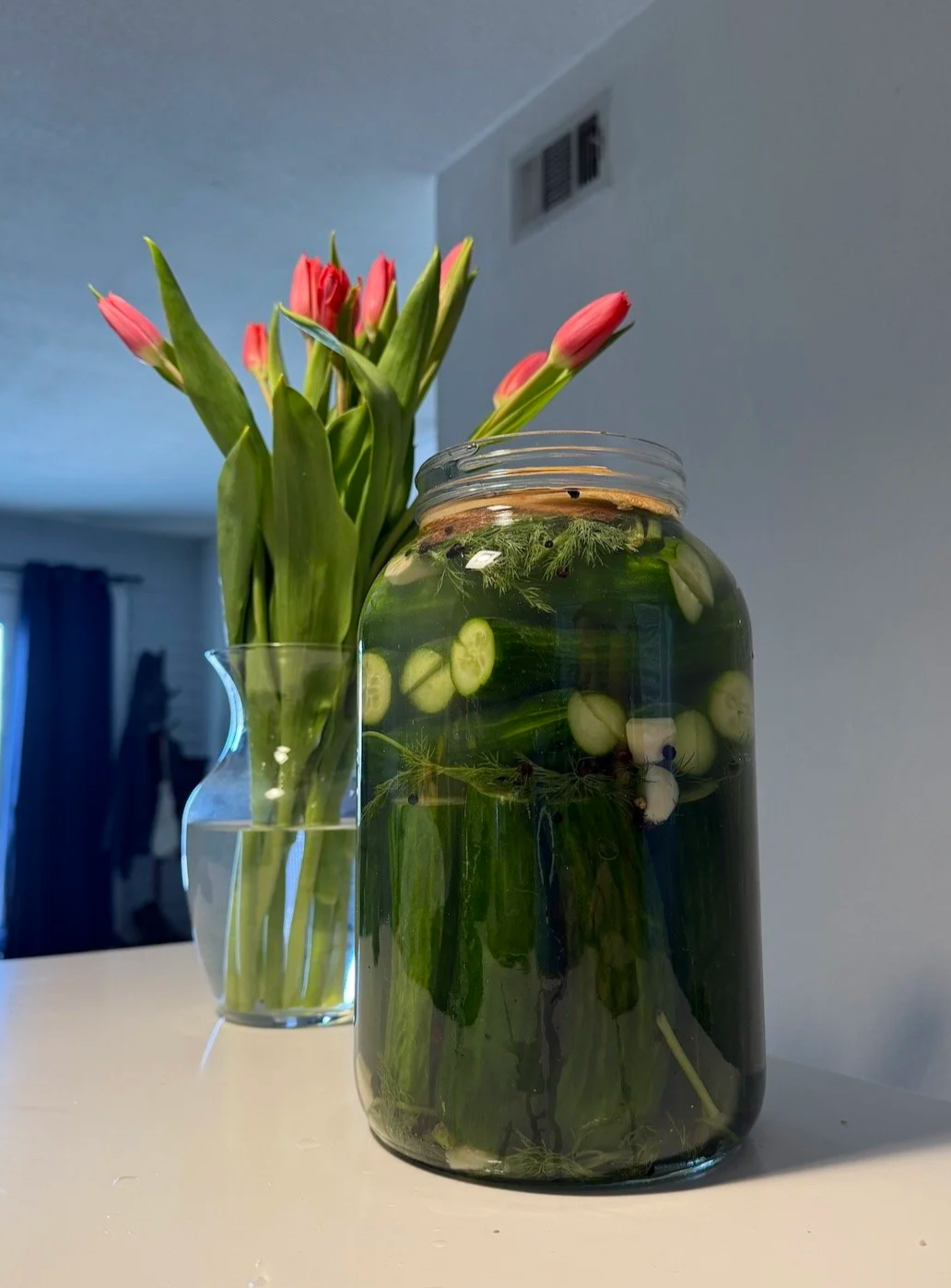
Fresh Cucumbers, Dill, Garlic—and that all-Important Slice of Sourdough Bread
If you come to Budapest between June and August and start paying attention to apartment windows, balcony railings, and the ledges outside kitchen windows, you'll notice something curious: big glass jars filled with cucumbers, sitting right in the blazing sun. Tourists sometimes ask me if it's some kind of decoration. It isn't. It's lunch in progress.
Those jars hold kovászos uborka, one of the most beloved things in the Hungarian summer kitchen, and one of the few foods we genuinely cannot make any other time of year. I want to tell you about it, because it's such a window (pun intended) into how Hungarians eat in the warm months, and then I'll give you the recipe so you can try it at home.
What "kovászos" actually means
The word trips people up. Kovász means sourdough or leaven, the same word we use for the starter in our bread. So kovászos uborka translates roughly to "leavened cucumber," and that's the secret to the whole thing.
Unlike the sharp vinegar pickles you might know from a deli, kovászos uborka isn't pickled in vinegar at all. It's fermented, and the magic ingredient that kicks off that fermentation is a slice of bread dropped into the jar. The wild yeasts and bacteria in the bread, helped along by salt, garlic, dill, and a few days of strong summer heat, turn ordinary cucumbers into something tangy, fizzy, garlicky, and completely addictive. The sun does the work an oven or a long wait would normally do, which is exactly why this is a summer-only food. No sun, no kovászos uborka.
A taste of how Hungarians actually eat
Here's the part I love to share on my food-focused walks. Kovászos uborka isn't a side salad you nibble politely. It's the cooling, sour counterpoint to the rich, paprika-heavy dishes that define Hungarian home cooking.
Picture a plate of paprikás csirke (chicken paprikash) with little dumplings, or a deep bowl of pörkölt, or a piece of crispy fried meat. Next to it, a few spears of cold, fermented cucumber and a splash of that cloudy, savory brine. Some people even drink the leftover juice straight from the glass on a hot day. It's the Hungarian equivalent of reaching for something bright and acidic to cut through something warm and heavy, and once you've had it that way, the logic is undeniable.
Where to spot it (and taste it) in Budapest
You don't have to make it yourself to experience it. In summer, kovászos uborka turns up:
At the market halls. Wander through the Great Market Hall (Nagycsarnok), Hold utca Market, or the smaller neighborhood markets, and you'll find vendors selling it from big buckets, alongside the small firm cucumbers grown specifically for this purpose.
On restaurant menus. Many traditional Hungarian kitchens (étterem) list it as a savanyúság, a "sour thing," to go with main courses in the warm months.
On those famous windowsills. Keep your eyes up as you walk through residential streets in Buda or the inner districts. Those sunny jars are a quiet sign of summer that most visitors walk right past.
If you're the kind of traveler who likes to understand a city through its food, this is exactly the sort of detail a market or food-themed walk is built around. There's so much more flavor to Budapest than the headline dishes.
How to make kovászos uborka at home
The beauty of this recipe is how little it asks of you. No special equipment, no canning, no boiling jars. If you have a sunny windowsill and a few days of patience, you can do it. I've written it so you can make it wherever you are, not just in Hungary.
What you'll need
About 1 kg (2 lbs) small, firm pickling cucumbers (Persian cucumbers in the U.S.) — the smaller and firmer, the better. Avoid the big watery salad kind.
1 liter (about 4 cups) water
1 heaping tablespoon salt per liter of water (non-iodized works best)
4–6 cloves of garlic, peeled and lightly crushed
A generous bunch of fresh dill — use the flowering tops if you can find them, they're traditional
1–2 slices of sourdough bread — rye or a rustic white loaf, slightly stale is ideal. This is your "kovász."
Optional: a few black peppercorns, a slice of horseradish
The method
Prep the cucumbers. Wash them well. Trim off both ends, then cut a deep slit lengthwise down each cucumber (don't cut all the way through). This lets the brine and flavor get inside.
Build the jar. Put a layer of dill and some garlic in the bottom of a large clean glass jar. Pack the cucumbers in upright and snug, tucking in the rest of the garlic, dill, and peppercorns as you go.
Make the brine. Dissolve the salt in the water. You can use warm water to help it dissolve, then let it cool to lukewarm. Pour it over the cucumbers until they're fully covered.
Add the bread. Lay the slice (or two) of bread on top, floating on the surface. This is what makes it kovászos.
Send it to the sun. Cover the jar loosely with a small plate or a piece of cloth (it needs to breathe, not seal). Set it on a sunny windowsill or balcony where it gets strong, direct light.
Wait 3–4 days. You'll know it's working when the brine turns cloudy and the cucumbers shift from bright green to a duller, olive shade. Taste one after day three: when it's pleasantly sour and a little fizzy, it's ready.
Finish and chill. Remove and discard the soggy bread. Strain the brine if you like it clear (I don't bother), and move everything to the fridge to stop the fermentation. Eat within a week or so, and don't throw away the brine.
A few honest notes from my own kitchen: the hotter the spot, the faster it ferments, so in real heat it can be ready in two or three days. If a little white film forms on the surface, that's usually harmless kahm yeast, just skim it off; but if anything looks fuzzy, smells genuinely rotten, or grows mold, throw the batch out and start again. Fermentation rewards a little courage and a lot of common sense.
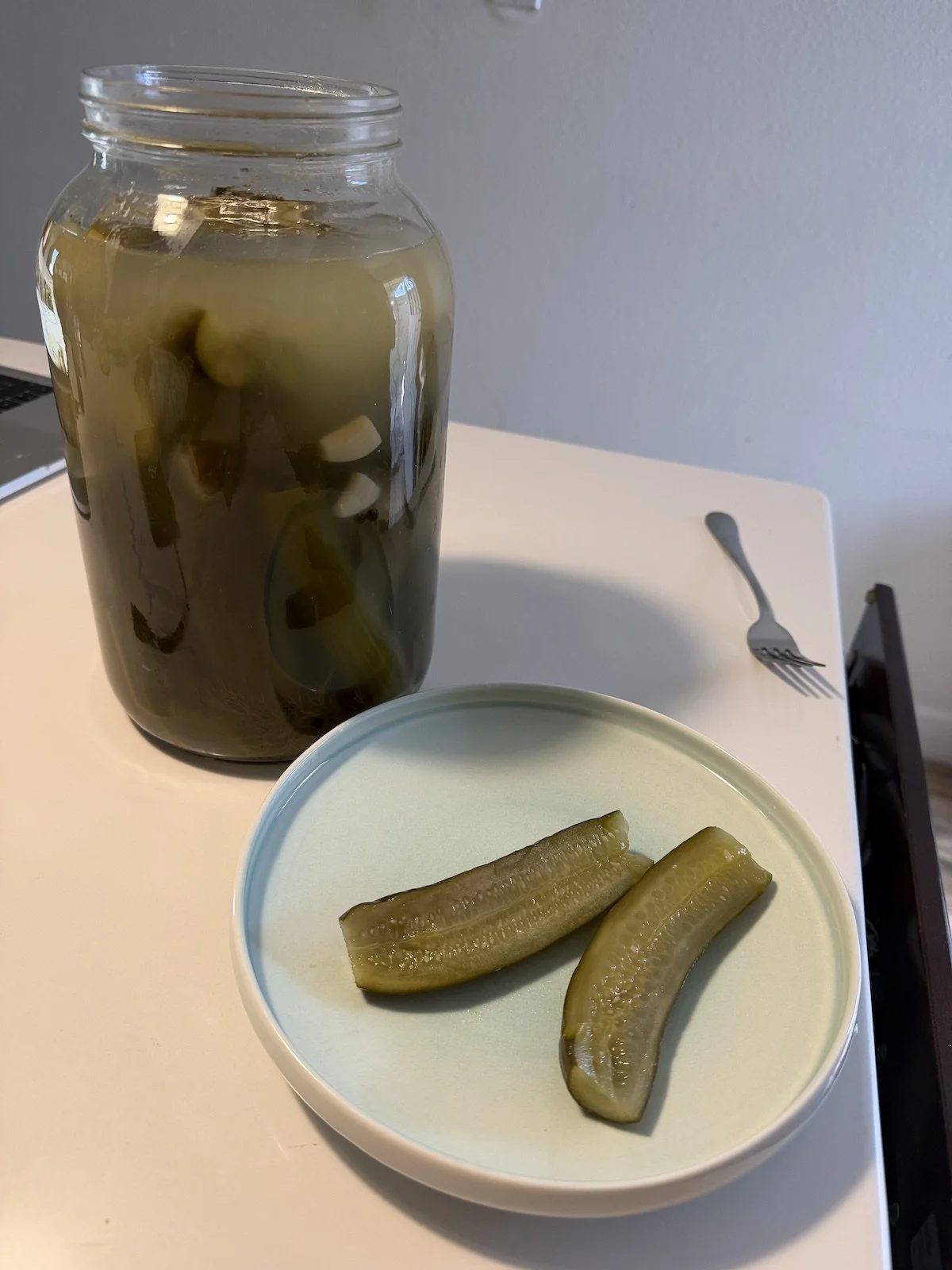
Three Days Later
A small taste of a bigger table
Kovászos uborka is exactly the kind of thing I love showing visitors, because it's humble, seasonal, and deeply Hungarian, the sort of detail that turns a trip into a real taste of how people actually live here. If you'd like to explore Budapest's markets, food traditions, and the stories behind the dishes in person, that's a big part of what I do.
Come hungry. Look up at the windows. And maybe start a jar of your own when you get home.
And if a real Budapest summer is calling—markets, food, and the stories behind every dish—I'd love to show you around in person. You can see my tours [here].
Stay tuned for more Hungarian recipes!
