Paprika — Hungary's Most Famous Spice Has a History That Will Surprise You
It's on every restaurant table, in every market stall, and in every Hungarian kitchen. But paprika isn't originally Hungarian at all — and the story of how it became the soul of a nation is one of the most fascinating in European food history.
Walk into any market in Budapest and the first thing that hits you is the colour. Strings of deep red dried peppers hanging from every beam. Piles of powder in a dozen shades from pale orange to almost black-red. Tins and bags and sachets of the stuff stacked from floor to ceiling. The smell — warm, slightly sweet, faintly smoky — wraps around you like a welcome.
Paprika is everywhere in Hungary. On the tables of every restaurant before you've even ordered. In the goulash, the chicken paprikash, the fish soup, the sausages, the cheese spreads, the snacks. Rubbed onto meat, stirred into stews, sprinkled over eggs. Hungarians use it the way the French use butter and the Italians use olive oil — as the foundational flavour that underpins almost everything.
It is so thoroughly, completely Hungarian that most people assume it has always been here. That paprika grew in these soils for as long as Hungarians have been Hungarians.
It hasn't. Not even close.

Where paprika actually came from
Paprika is made from dried and ground capsicum peppers, and capsicum peppers are native to the Americas. They did not exist in Europe before Christopher Columbus crossed the Atlantic in 1492. Full stop.
The peppers that would eventually become Hungarian paprika arrived in Europe via the Spanish, who brought them back from the New World as botanical curiosities. From Spain they spread slowly eastward through the Mediterranean, carried by traders, travellers, and the restless movement of goods across the continent.
How exactly they reached Hungary is a question historians have debated for a long time. The most widely accepted version involves the Ottoman Empire, which occupied much of Hungary for around 150 years from the 16th century onwards. The Ottomans, who had encountered the New World peppers through their own trade networks, are thought to have brought them into Hungarian territory during the occupation, at first as ornamental plants and only gradually as a food ingredient.
The word itself comes from the South Slavic papar, pepper, which goes back to the Latin piper. But the earliest Hungarian name tells the story more plainly: törökbors, Turkish pepper. That is what it was called when it was first recorded here around 1570, growing as an exotic plant in a noblewoman's garden.
Whatever the exact route, by the late 16th century capsicum peppers were growing in Hungarian soil. By the 18th century they were being dried and ground into powder. And by the 19th century something remarkable had happened: a spice that arrived from the Americas via the Ottoman Empire had become so thoroughly integrated into Hungarian cooking that it felt as if it had always been there.
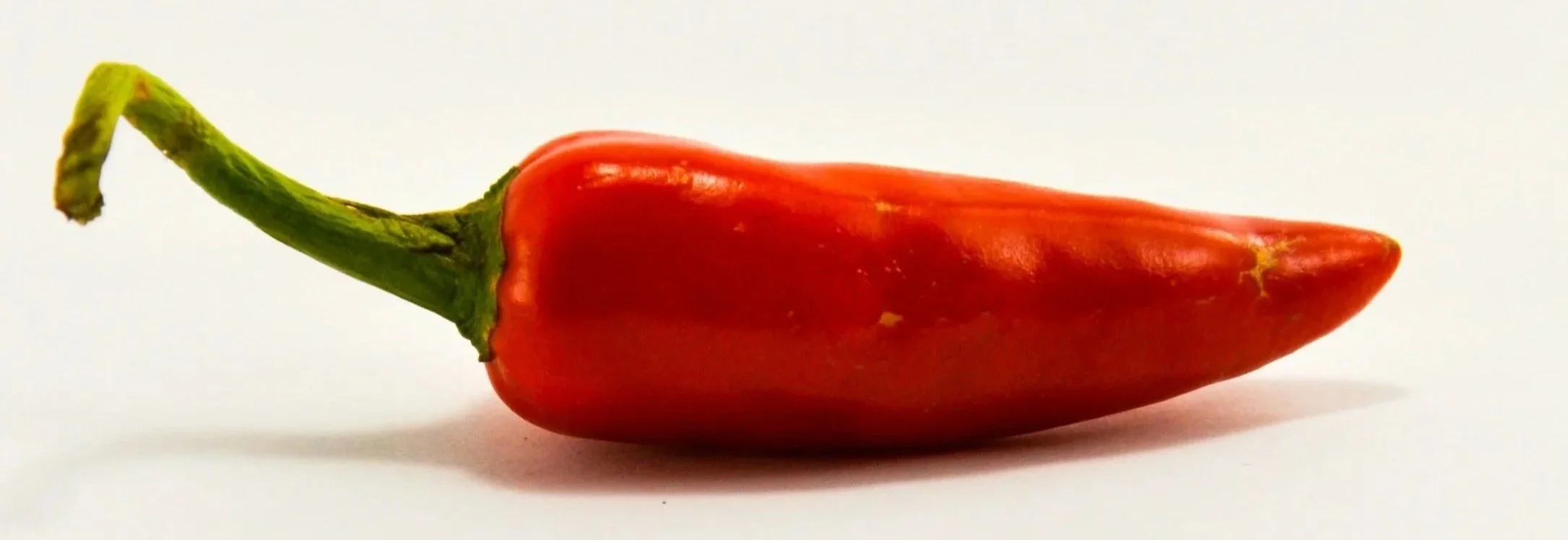
One pepper, a few centuries of history
How paprika became Hungarian
The transformation from foreign import to national symbol happened gradually and then all at once, accelerated by a combination of poverty, geography, and historical accident.
In the 18th and early 19th centuries, paprika was primarily the food of the poor. Black pepper, the dominant spice of European cuisine for centuries, was expensive, imported from the East, and largely beyond the means of ordinary Hungarian peasants. Paprika, which could be grown locally and produced cheaply, offered something that black pepper could not: heat and flavour at a price ordinary people could afford.
So the peasants cooked with it. The herdsmen on the great Hungarian plain, the puszta, stirred it into their meat stews over open fires. The fishermen along the Tisza river built it into their fish soups. The farmworkers of the southern lowlands, particularly around the cities of Kalocsa and Szeged which would become the great paprika-growing centres of Hungary, incorporated it into the daily rhythm of their cooking in a way that the wealthier classes, eating French-influenced cuisine, initially looked down upon.
It even picked up a reputation as medicine. During the cholera epidemic of 1831, people turned to paprika as a cure.
And then something shifted.
In the 19th century, as Hungarian nationalism grew and the country searched for a cultural identity distinct from the Habsburg Empire that ruled it, the food of the peasants became interesting to the intellectuals. The herdsman's goulash, paprika-red, hearty, rooted in the Hungarian plain, began to be reframed not as peasant food but as national food. The cuisine of the people became the cuisine of the nation.
By the time Hungary was receiving international visitors in significant numbers in the late 19th century, paprika was already being positioned as the defining ingredient of Hungarian cooking. In 1879 the great French chef Auguste Escoffier had paprika sent from Szeged and put gulyás and poulet au paprika on his menu in Monte Carlo. Once it was on the grandest tables in Europe, the international reputation was sealed.
A spice that had arrived as a foreign import, been adopted by the poor, and been ignored by the elite had become, in the space of roughly two centuries, the taste of Hungary itself.
Kalocsa and Szeged — the two capitals of paprika
If you want to understand paprika properly you need to know two names: Kalocsa and Szeged. These two cities in southern Hungary, roughly two hours from Budapest, are where the majority of Hungarian paprika has been grown and processed for centuries, and they approach the subject with an intensity that borders on the religious. Both names are now protected in the EU: only paprika grown and milled there can be sold as Kalocsai or Szegedi.
Kalocsa is the more ornate of the two, a town famous equally for its paprika and its extraordinary folk art tradition, where the same red that colours the spice appears in the embroidery, the painted furniture, and the decorative patterns on the walls of traditional houses. The connection between the colour of paprika and the visual culture of the region is not coincidental. It is the same red, expressing the same identity, in different materials.
The Kalocsa Paprika Museum tells the full story of how the crop was grown, harvested, dried, and processed, including the traditional method of stringing the peppers on long threads and hanging them to dry in the autumn sun, which is still done today and creates one of the most visually striking landscapes in rural Hungary.
Szeged, meanwhile, has its own proud paprika identity rooted in slightly different varieties and processing traditions. It is also home to Pick, and to the Pick Salami and Szeged Paprika Museum. Here is a twist most visitors don't expect: the famous Pick winter salami contains no paprika at all. The rivalry between Kalocsa and Szeged paprika is gentle but real, in the way that all the best food rivalries are.
Not all paprika is the same
This is the thing that most visitors to Hungary don't know until they stand in front of a market stall and have to choose.
Hungarian paprika comes in a range of varieties that differ significantly in heat, sweetness, colour, and intensity. The main categories you'll encounter are:
Különleges, meaning special or exquisite. The mildest and sweetest variety, with the brightest red colour and the most delicate flavour. This is what most people mean when they imagine classic Hungarian paprika.
Édesnemes, noble sweet. Slightly deeper in flavour than különleges, still mild, and the most widely exported variety. If you've bought Hungarian paprika abroad, this is probably what you had.
Félédes, semi-sweet. A medium variety that sits between sweet and hot, with more complexity than the milder versions.
Erős, hot. The spicy end of the Hungarian paprika spectrum. Not ferociously hot by global standards but with a genuine kick that builds as you eat. Hungarian food is not generally very spicy, so erős paprika, used with restraint, provides what heat there is.
The colour matters too. The deeper and more vivid the red, the fresher and better the paprika. Pale or brownish paprika is old or poorly processed. Hot paprika is often a shade lighter, because the seeds and veins are ground in with the flesh. In a good Hungarian market the powder should glow.
Most tins and bags in the shops use simpler words than the official grades, so here is a quick decoder:
Édes or csemege: sweet
Csípős or erős: hot
Füstölt: smoked, which is not the traditional Hungarian style
Kalocsai or Szegedi: from one of the two protected paprika regions
And here is a detail almost nobody expects. Until the 1920s, all Hungarian paprika was hot. If you wanted it milder, someone had to cut out the seeds and veins by hand. Then a breeder in Szeged found a plant that grew naturally sweet fruit, and the sweet paprika the world now thinks of as classically Hungarian was born. It is barely a hundred years old.
Standing in front of a wall of red tins and not sure which one to pick? That is exactly what we sort out together on my private food tour of Budapest. Get in touch and I'll help you plan it.
The one rule every Hungarian cook knows
Paprika burns in seconds. When it burns it turns bitter and brown, and no amount of cooking will fix it.
So Hungarian cooks do one thing without thinking about it: they take the pot off the heat before the paprika goes in. The onions are softened in fat, the pot comes off the flame, the paprika is stirred into the warm fat until it turns into a deep red paste, and then the liquid goes in straight away.
There is a reason it goes into the fat first. Paprika's colour and flavour dissolve in fat, not in water, so this is the moment the whole dish turns red.
Those thirty seconds are the difference between a stew that tastes Hungarian and one that only looks it. It is the first step of pörkölt, of goulash, and of my csirkepaprikás.
The science that came from a pepper
Hungary's relationship with paprika produced one of the most significant moments in the history of nutritional science, and almost nobody outside the country knows about it.
In 1932, a Hungarian biochemist named Albert Szent-Györgyi was investigating a substance he had isolated that he suspected was involved in preventing scurvy. He needed large quantities of it to continue his research but was struggling to find a good source.
Then, sitting at his dinner table in Szeged one evening, he found himself unable to eat the fresh paprika peppers his wife had served. He simply didn't feel like them. Rather than waste the food, he took the peppers back to his laboratory and tested them on a hunch.
Fresh Szeged paprika peppers, it turned out, contained extraordinarily high concentrations of the substance he was looking for. Within weeks he had isolated it in pure form and in quantity. That substance was Vitamin C.
Albert Szent-Györgyi won the Nobel Prize for Medicine in 1937, partly for this discovery. He made it because he happened to live in Hungary, happened to be sitting in front of a plate of paprika, and happened to have a scientist's instinct rather than a hungry man's appetite.
Hungary gave the world its national spice. The national spice gave the world one of its most important nutritional discoveries. The pepper that arrived from the Americas via the Ottomans had one more surprise left in it.
What to buy and how to bring it home
If you're leaving Budapest without paprika in your bag you have made a significant error that I urge you to correct immediately.
The Great Market Hall on the Pest side of Liberty Bridge is the most atmospheric place to buy it. The ground floor stalls sell paprika in every variety, beautifully packaged in tins and cloth bags that survive the journey home intact. The quality is generally excellent and the vendors know their product.
A few things to know before you buy:
Buy the tin rather than the plastic packet if you're travelling more than a day or two. It protects the spice better and survives baggage handling more reliably. Look for paprika from Kalocsa or Szeged specifically. It will say so on the packaging and the quality difference is real. Check that the label says the paprika was grown in Hungary, not just packed here. And buy more than you think you need. Every person I have ever met who bought paprika in Budapest wished they had bought more when they got home and tasted the difference.
Don't walk past the pastes either. Erős Pista (hot), Édes Anna (sweet) and Piros Arany in its tube sit in every Hungarian kitchen and every supermarket. They cost very little, travel well in checked luggage, and are about the most Hungarian souvenir you can buy. I have more ideas in my guide to the best souvenirs to buy in Hungary.
And if you want to experience it properly before you leave, order chicken paprikash in a good, non-touristy Budapest restaurant and pay attention to what the spice does when it's used correctly. Not as decoration or afterthought but as the foundational flavour around which everything else is built.
That is paprika in its natural habitat. That is what two continents, one empire, several centuries, and a Nobel Prize-winning biochemist all contributed to putting on your plate.
Frequently Asked Questions
Is paprika originally from Hungary? No. The peppers come from the Americas and reached Europe after 1492. They most likely arrived in Hungary during the Ottoman occupation and only became the national spice in the 18th and 19th centuries.
What is the difference between Hungarian and Spanish paprika? Hungarian paprika is dried and ground without smoking, so it tastes sweet, fruity, and bright. Spanish pimentón is usually smoked over oak, which gives it a deep, smoky flavour. They are not interchangeable in Hungarian recipes.
Is Hungarian paprika spicy? Mostly not. The paprika used in everyday cooking is sweet (édes). Hot paprika (csípős or erős) exists, but it is usually added at the table to taste.
Which paprika should I buy in Budapest? For cooking at home, buy sweet paprika (édes or csemege) from Kalocsa or Szeged. Add a small tin of hot if you like heat. Check that the label says the paprika is Hungarian grown, not just packed in Hungary.
Where can I buy paprika in Budapest? The Great Market Hall has the widest choice and the prettiest packaging. Any supermarket also sells good Hungarian paprika at local prices, which is where most Hungarians buy theirs.
How do I store paprika, and how long does it last? Keep it airtight, cool, and away from light. It is at its best for about a year, then slowly fades to brown and loses flavour. Many Hungarians keep it in the fridge or freezer.
Why does my goulash taste bitter? The paprika probably burned. Take the pot off the heat, stir the paprika into the warm fat and onions, then add liquid straight away.
Want to find the best paprika in Budapest — and understand what you're tasting when you eat it? My food-focused Budapest tours take you through the markets and into the stories behind what Hungary eats. Get in touch to find out more.
Enjoyed this one? A few more from the blog you'll probably want to read next:
Where Budapest Really Shops: Inside the Klauzál Square Market Hall
Szimpla Kert: Is It Still Worth Seeing in Budapest?
Why You Should Visit the Citadella for Sunset in Budapest
Kaptafa Brunch: The Jewish Quarter Spot That Makes Breakfast Fun Again
