Aquincum Budapest: Your Guide to the Roman City Hiding in Óbuda
By Kata | katabudapest.com | Published Oct 20, 2026
Psst… Budapest Is Secretly Roman! Here's something I love telling my guests: long before anyone said "Buda" or "Pest," this stretch of the Danube was home to a Roman city, with public baths, underfloor heating, a governor's palace, and gladiator fights. That city was Aquincum, and you can still walk its streets today in Óbuda ("Old Buda"), Budapest's third district, just a short train ride north of the center. Most visitors never make it out here, which is part of why I like it so much. It's quiet and green, and you can wander 1,800-year-old streets at your own pace.
A Short History of Aquincum
The name: Aquincum most likely comes from a Celtic word meaning something like "plenty of water." The area is full of springs, which the Romans put to good use long before Budapest became famous for its thermal baths.
The Romans arrive: In the 1st century AD, the Romans set up a military camp here to guard the Danube, which was the empire's northern border, the famous limes.
A city grows: Around the camp a lively civilian town sprang up – merchants, craftspeople, families, retired soldiers.
Big promotion: In the early 2nd century, Aquincum became the capital of the province of Pannonia Inferior. A future emperor, Hadrian, even served as governor here before he took the top job in Rome.
At its peak: Tens of thousands of people lived in and around Aquincum. It had paved streets, sewers, an aqueduct, temples, markets, and bathhouses galore.
The ending: By the late 4th and 5th centuries, Rome's grip loosened, the frontier crumbled, and Aquincum slowly faded… until archaeologists brought it back to light from the 1800s onward.
Budapest only became one city in 1873, but people have been living, trading, and bathing here for nearly two thousand years.

What to See at the Aquincum Museum and Archaeological Park
The Aquincum Museum and Archaeological Park sits on the remains of the old civilian town. Think of it as two experiences in one: an open-air ruin garden you wander like a Roman, and a museum full of treasures.
1. The Ruin Garden – Stroll a Real Roman Street
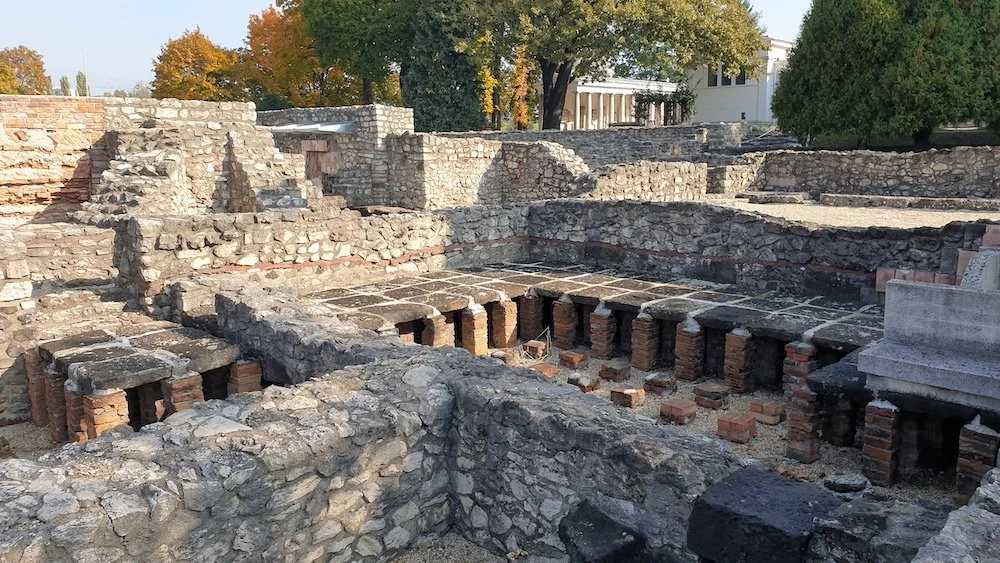
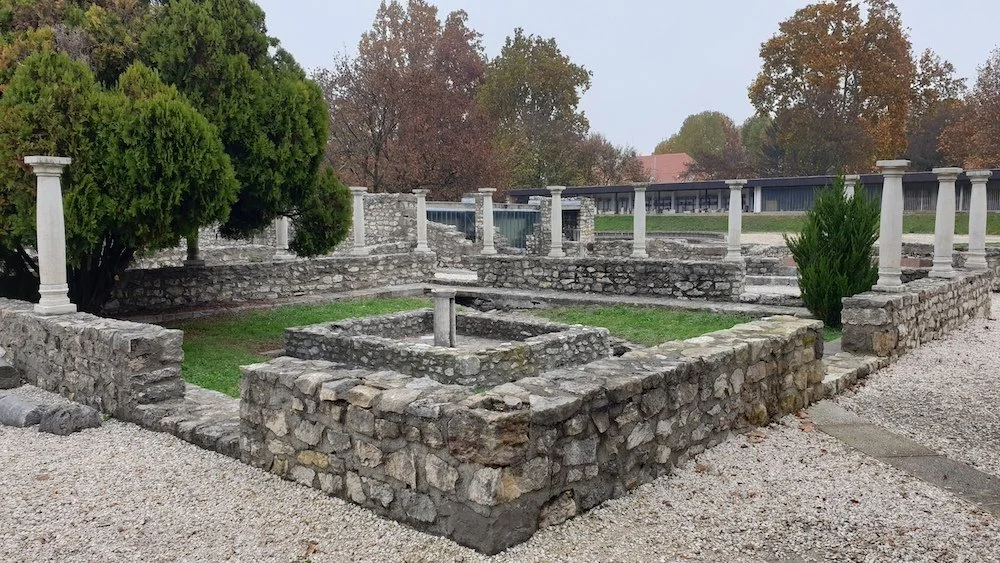
This is the heart of the visit. You'll walk along the original street grid of the civil town, past the foundations of houses, shops, a market hall, sanctuaries, and public baths.
What I tell my guests to look for:
The baths: Spot the low brick pillars (hypocaust) that held up the floors – hot air flowed underneath. Yes, the Romans had heated floors in Pannonia. Many of us in old Budapest apartments are still jealous.
The drainage channels: Roman plumbing, still visible.
The macellum (market): Imagine stalls of olives, wine, fish from the Danube, and gossip.
The column fragments and altars: Lots of carved inscriptions dedicated to gods – and to very proud local officials.
2. The Painter's House – Step Inside a Roman Home
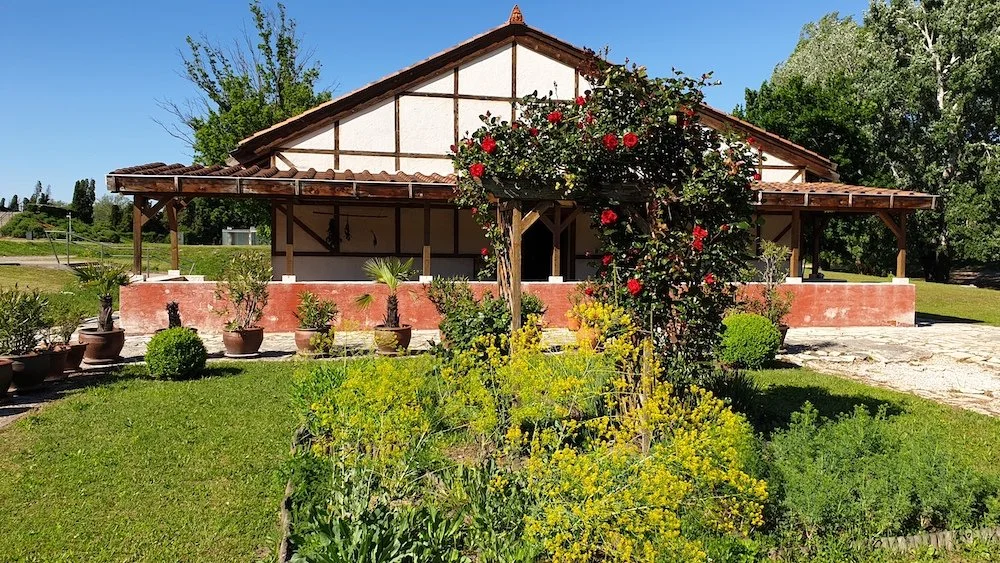
One of my favorite spots for families. The Painter's House is a reconstructed Roman residence with painted walls, furniture, and a kitchen, based on finds from the site. Suddenly the ruins outside make sense: Oh, THAT's what those walls used to look like! Kids love peeking into every room.
3. The Museum – Mosaics, Treasures and the Famous Water Organ
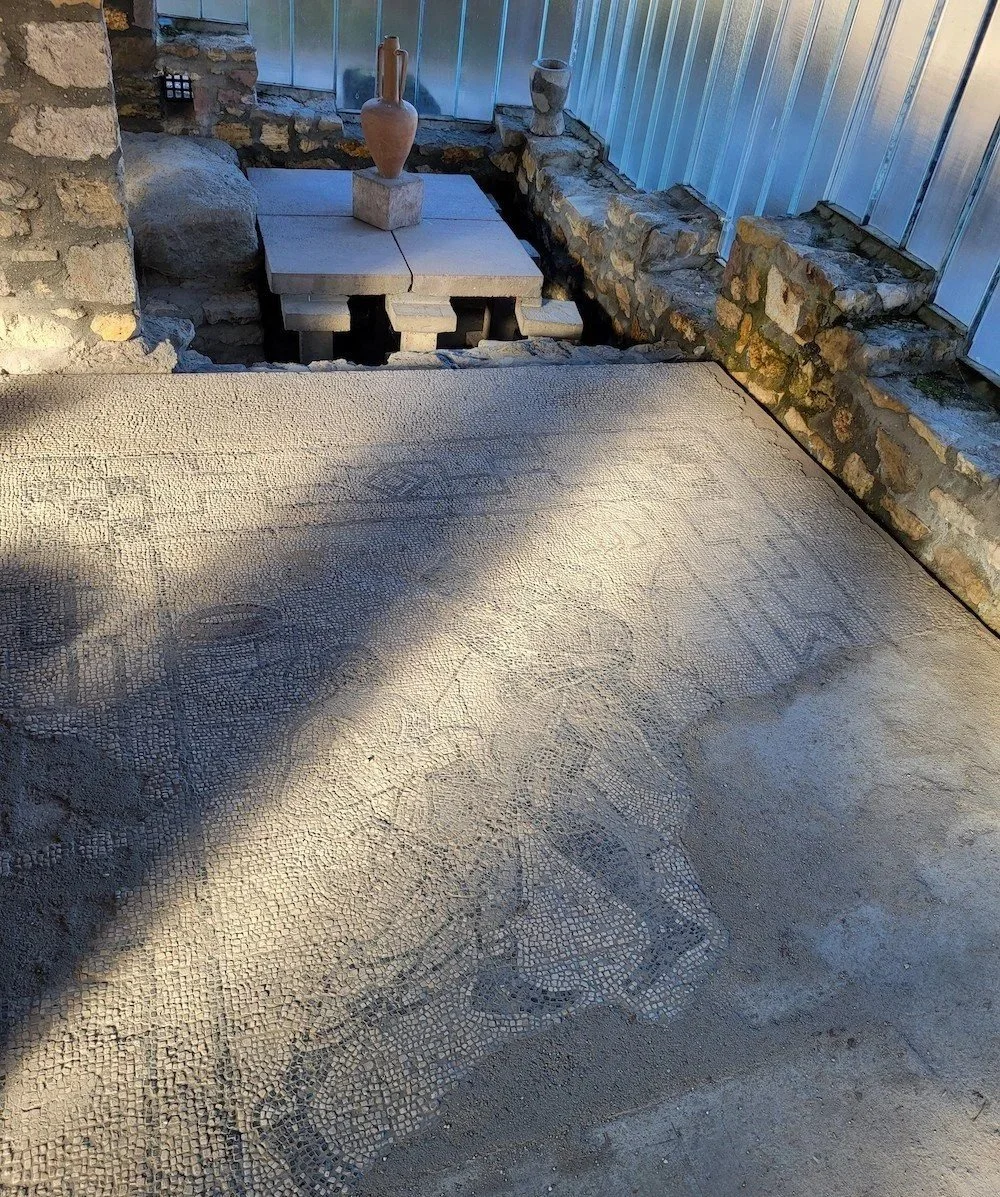
Inside, the exhibitions show everyday Roman life: jewelry, coins, pottery, tools, tombstones, and beautiful mosaics. But the star of the show is:
The Aquincum water organ (hydraulis). Archaeologists found the remains of this instrument in 1931, and it dates back to 228 AD. It's one of the best-preserved Roman organs ever discovered. An inscription says it was a gift to the local firefighters' association. The museum displays a reconstruction, a nice reminder that Roman Aquincum had music, not just stone walls.
4. The Two Amphitheatres – Yes, Two!
Aquincum was important enough to have two amphitheatres:
The Civil Amphitheatre – right across the road from the museum, smaller and charmingly tucked between modern streets. Free to see from outside.
The Military Amphitheatre – a bit further south in Óbuda, built for the soldiers of the legion camp. Its arena was enormous – bigger than the Colosseum's arena in Rome. Look closely for a tiny bronze surprise: "In vino veritas," a mini Roman legionary with a little wine jug by the sculptor Mihály Kolodko, whose small statues are hidden all over Budapest. His twin stands in the Roman amphitheatre of Pula, Croatia.
5. The Aqueduct Pillars
Along Szentendrei út, the busy road next to the museum, you'll see a row of stone pillars – the remains of the Roman aqueduct that brought spring water into the city. Commuters zoom past them every day, which is very Budapest: 2,000-year-old engineering casually sitting next to a bus stop.
Beyond the Museum: My Favorite Óbuda Corners
Once you've had your Roman fix, don't rush back downtown! Óbuda is one of the most charming, small-town-feeling corners of Budapest.
Fő tér (Main Square): Cobblestones, pastel baroque buildings, and a sleepy, village-like atmosphere. Perfect for a slow coffee.
The "Women with Umbrellas" statues: Imre Varga's famous bronze ladies waiting in the rain, right near Fő tér. Most people stop for a photo with them.
Hercules Villa: A Roman villa site with stunning floor mosaics, including Hercules himself. Note: it's a separate site with its own opening schedule – check before you go.
Thermae Maiores: The ruins of a huge Roman bath complex, partly displayed in the underpass at Flórián tér. Finding Roman ruins in a pedestrian underpass is a nice surprise.
Zichy Mansion: A lovely baroque mansion with small museums and a pretty courtyard.
Kéhli Vendéglő: A classic old-school Hungarian restaurant beloved by the writer Gyula Krúdy. Portions are generous.
Kata's tip: After all that walking, you've earned a slice of rétes (strudel) or a krémes. As a home baker, I always recommend a stop at a local pastry shop.
Is Aquincum Good for Kids?
Yes, it's one of my top tips for families visiting Budapest:
Lots of open space to run around (safely – no traffic inside the park)
The Painter's House is like a real-life Roman dollhouse
Amphitheatres = instant gladiator games, plus a tiny Kolodko legionary to hunt for at the Military Amphitheatre
The water organ makes a great "guess how this works?" moment
It's rarely crowded, so little ones can explore at their own pace
My private tours are kid-friendly too, and I love turning Roman history into a treasure hunt for younger travelers. Ask me about a family-friendly Budapest tour.
How to Get to Aquincum from Central Budapest
Getting there is easy and cheap:
By HÉV (suburban train): Take the H5 HÉV line from Batthyány tér toward Szentendre and get off at the Aquincum stop. The ride takes around 20 minutes, and the museum is a short walk from the station. Your regular Budapest public transport ticket or pass covers the ride within city limits – just don't ride past the city border without the right ticket.
By bus: Several buses run along Szentendrei út and stop near the museum (Záhony utca stop).
By taxi or Bolt: Roughly 20–30 minutes from downtown depending on traffic. Ask me for my Bolt discount code before your trip!
By bike: The riverside bike path along the Danube is lovely on a sunny day.
Planning to hop around Budapest? Check out my guide to Budapest public transport for all the ticket tips.
Aquincum Opening Hours and Tickets
Always double-check the official website (aquincum.hu) before your visit, as hours and prices change. Here's the general pattern:
Summer season (April to October): Tuesday to Sunday, roughly 10:00–18:00 (the park often opens a little earlier)
Winter season (November to March): Tuesday to Sunday, shorter hours (roughly 10:00–16:00) – and the outdoor ruin park may be partly or fully closed in winter, so the visit focuses on the indoor museum
Closed: Mondays
Tickets: An adult ticket costs a few thousand forints (very reasonable for what you get), with reduced prices for students, seniors, kids, and families
Budapest Card: Gives free entry to the Aquincum Museum – but not to the Hercules Villa
How long to stay: Plan about 1.5 to 2 hours for the park and museum, or a full half-day if you add Fő tér and a leisurely lunch in Óbuda.
Kata's Insider Tips for a Perfect Aquincum Visit
Wear comfy shoes. The paths are gravel and uneven stone.
Bring water and sun protection in summer. There's not much shade among the ruins.
Visit on a weekday morning for the dreamiest, near-empty experience.
Watch for special events. The museum hosts Roman-themed festivals and family days, especially in spring and summer – think costumed legionaries, crafts, and Roman food.
Combine it with Szentendre. The same H5 HÉV line continues to the artsy riverside town of Szentendre. Roman ruins in the morning, art and lángos in the afternoon?
Visit Aquincum with a Certified Guide
Ruins are lovely, but stories bring them to life. Guiding inside Aquincum requires a special exam and certification, so I've teamed up with a trusted colleague and friend who holds it. He knows every stone of the site and makes Roman life easy to picture, for adults and kids alike. He also took the beautiful photos you've seen here, so you're in good hands. I personally handle your booking and planning.
Get in touch to book a guided Aquincum visit – I'll take care of the rest.
Frequently Asked Questions About Aquincum
What is Aquincum? Aquincum was a Roman city in what is now Budapest's Óbuda district. It was founded around a military camp in the 1st century AD and became the capital of the Roman province of Pannonia Inferior. Today its ruins form the Aquincum Museum and Archaeological Park.
Is Aquincum worth visiting? Yes, especially if you love history, archaeology, or are traveling with kids. It's affordable, rarely crowded, and offers a completely different side of Budapest than the usual landmarks.
How do I get to Aquincum from the city center? The easiest way is the H5 HÉV suburban train from Batthyány tér to the Aquincum stop, about a 20-minute ride.
How much time do I need at Aquincum? About 1.5 to 2 hours for the museum and ruin garden. Add a couple more hours if you want to explore Óbuda's Fő tér and have lunch.
Is Aquincum open in winter? The museum is open Tuesday to Sunday with shorter winter hours, but the outdoor ruin park may be closed between November and March. The best time to visit is April to October.
Is the Aquincum Museum free with the Budapest Card? Yes, the Budapest Card includes free entry to the Aquincum Museum. It does not cover the Hercules Villa, which is a separate site.
What is the Aquincum water organ? It's a Roman hydraulic organ from 228 AD, discovered in Aquincum in 1931. It's one of the most important Roman musical instrument finds in the world, and the museum displays a reconstruction.
Are there Roman ruins in Budapest besides Aquincum? Yes! Look for the Military Amphitheatre, the Hercules Villa, the Thermae Maiores bath ruins at Flórián tér, and the aqueduct pillars along Szentendrei út, all in Óbuda.
Can I book a guided tour of Aquincum? Yes. Through Kata Budapest, your Aquincum visit is led by a certified guide who has passed the special exam required to guide at the site. Contact me to arrange it.
Enjoyed this one? A few more from the blog you'll probably want to read next:
Where Budapest Really Shops: Inside the Klauzál Square Market Hall
Szimpla Kert: Is It Still Worth Seeing in Budapest?
Why You Should Visit the Citadella for Sunset in Budapest
Kaptafa Brunch: The Jewish Quarter Spot That Makes Breakfast Fun Again
